
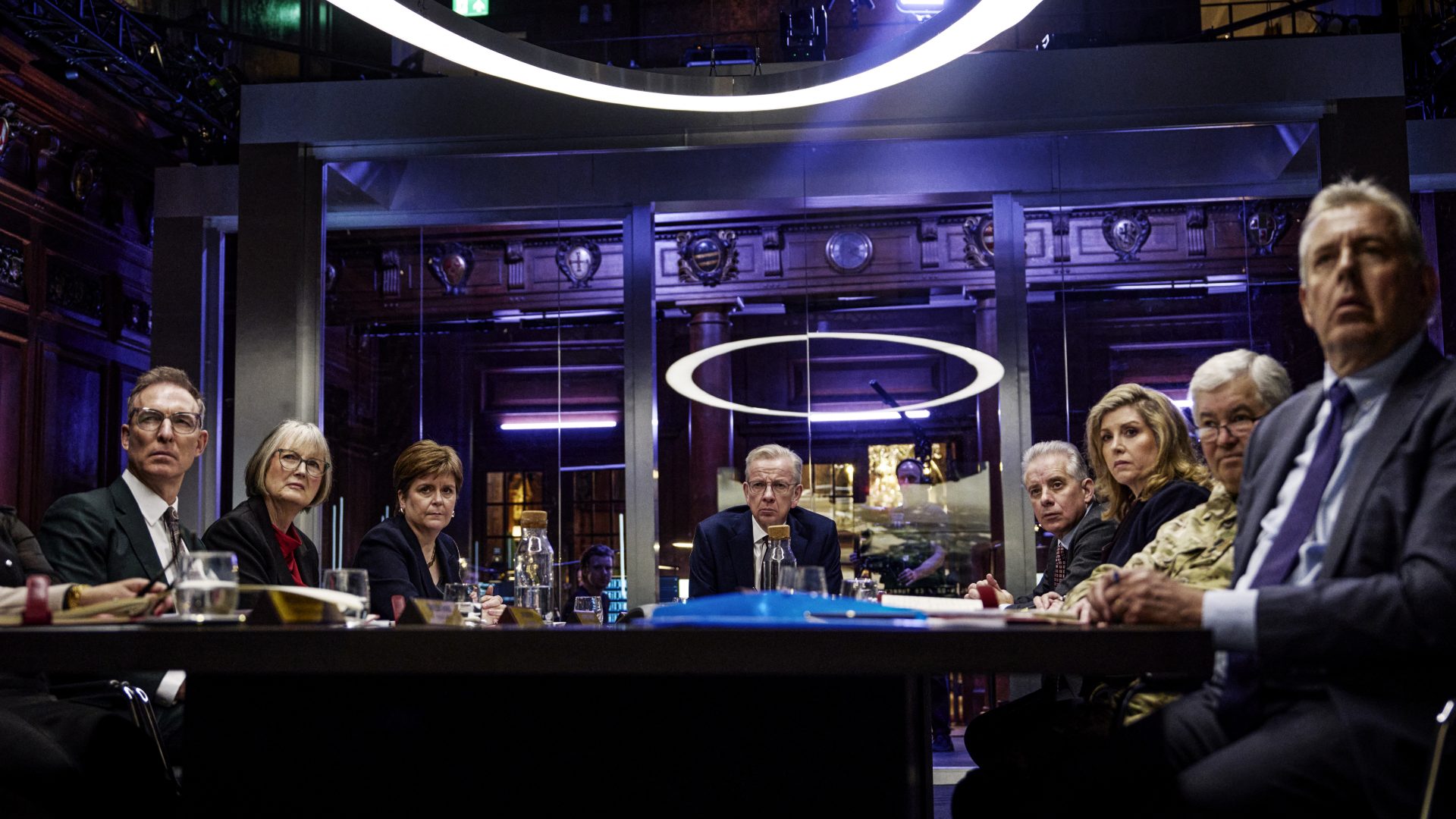
We cannot know exactly what it was like to sit in a COBR room with Boris Johnson in March 2020. But Michael Gove does. While he was filming The Wargame, he no doubt remembered it: the egos, the vacillation, and probably an unspoken excitement at being in the room where it happens and where the fate of thousands, perhaps millions, of people is in your hands.
It was Gove, after all, who put himself forward to be prime minister in 2016 because he did not believe Johnson was up to the job. He tried again in 2019. What kind of a leader would he have been in a crisis?
He must have felt a pang of regret, and satisfaction, when Sky approached him for the role of prime minister in The Wargame. Nicola Sturgeon, who was also involved in managing the pandemic and subordinate to Johnson, probably felt the same way. She plays the deputy PM.
But The Wargame ends up telling us very little about the protagonists. The scenario begins when two RAF pilots are shot dead outside a pub, a cyberattack hits Yorkshire ambulance services and a Russian spy ship enters UK waters. By the end of the fourth episode, Gove is forced to come to a decision no PM has ever had to make.
Suggested Reading


The strangely comforting Britain of Strictly Come Dancing
The characters repeatedly ask themselves what they should do to avoid the situation escalating, but we know it is out of their control. For the sake of dramatic tension, this game must play out.
The Wargame is not really a simulation of how politicians would act if Russia decided to launch an attack on the UK, though it pretends to be. It is an early effort to prepare the British public for the possibility of war.
In March this year, the Centre for European Reform published a policy paper, How to Build Public Support for Defence Spending in Europe, which urged “unconventional approaches… Governments should also engage with cultural institutions and leaders like theatre directors, screenwriters, film producers and museums to better tell the story of why these investments in defence are needed.” The Wargame’s purpose is to do just that.
At key moments, the politicians and defence experts in the Wargame room – including Penny Mordaunt and the author of the strategic defence review, General Sir Richard Barrons – point out that the UK is miserably under-equipped and would only last a fortnight in an all-out war with Russia. Donald Trump is never named, but the action takes place in 2027 and the president is described as “capricious”. We are left in no doubt that NATO’s Article 5 is a dead letter.
Gove has a gift for summing up the threat as it mounts – but no more. The Wargame has its own momentum: would-be peacemakers like Sturgeon submit to the escalating logic of war.
Most war dramas ramp up the tension by showing ordinary people going about their lives, unaware that they may be about to end. The Wargame is more purposeful.
We see people filming themselves for social media, wanting to ignore the threat and desperate for it all to end peacefully. But their ignorance of what is really going on in the COBR bunker and in the North Sea grates on the viewer. And it is supposed to.
Public opinion, the series makes clear, is a thing to be managed and manipulated in wartime. (Readers of The New World will spot contributor Zoë Grünewald playing the press secretary.)
The message is unequivocal. Wake up, sheeple! Britons who have had enough of taxes and cuts to public services will not appreciate The Wargame, and pacifists will hate it. That, Mordaunt and Barron would point out, is exactly what Russia wants.
Is it propaganda, or horribly prescient? Quite possibly both.
The Wargame is on Sky One and streaming on NowTV
 Most popular


Emily Maitlis’s diary: As I was saying to George Clooney just the other day…

A new film about Elon Musk reveals him as so awful it’s almost tragic. Almost

The strange case of the Lib Dem writer who fell for Farage

The right wing media hounded Jason Arday and ignored James Orr. It’s obvious why