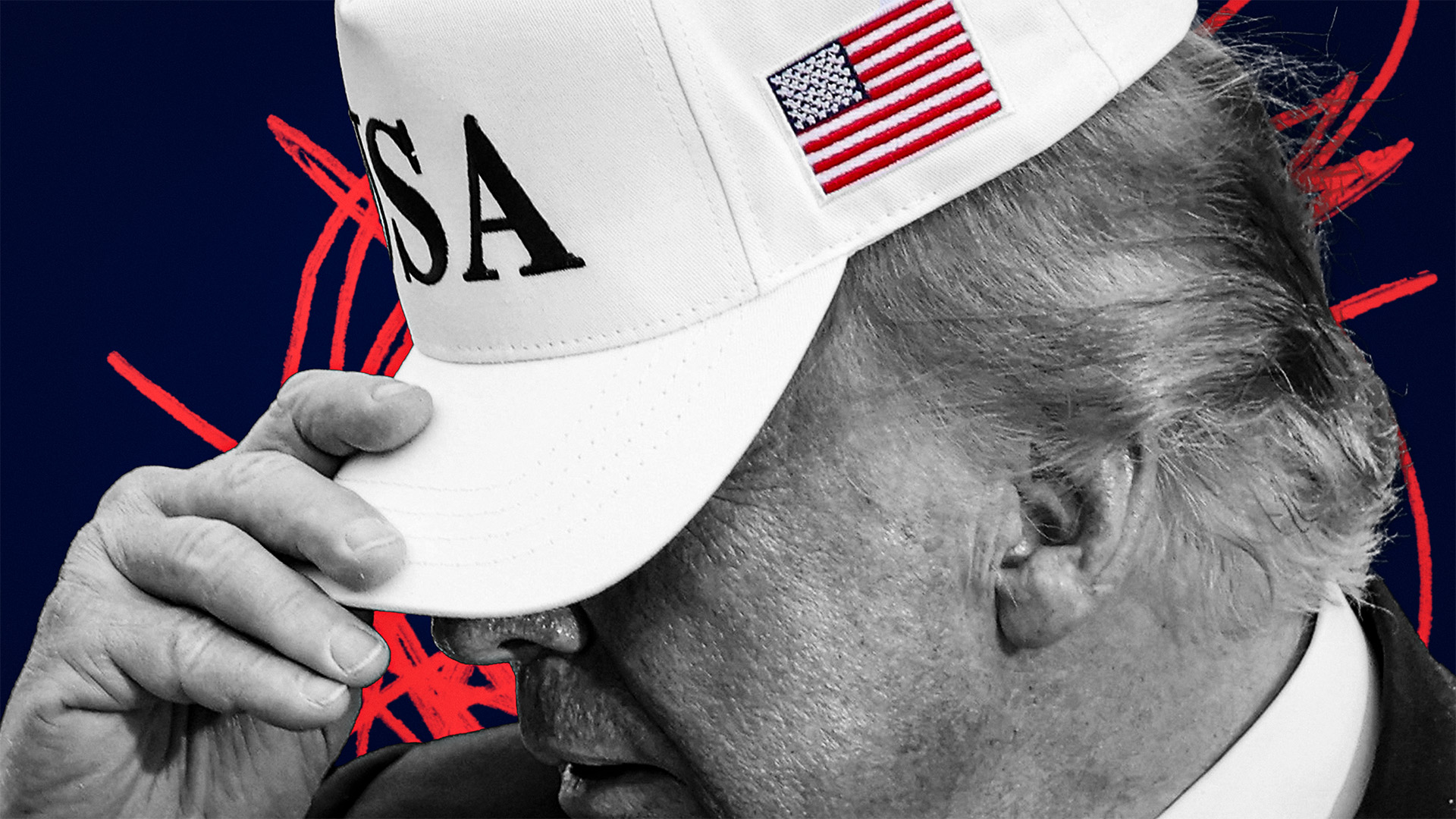
My duty as a philosopher is to spoil the ecstatic relief after the US midterm elections. At first glance, we have all triumphed: not only has Trump lost but he even accepted his loss and promised collaboration with the Democratic majority – no emergency state, no cancelled elections…
In an interview published in 2016, I declared that I would have voted for Trump in that year’s presidential election. I said his victory, despite Trump being absolutely “disgusting”, would trigger a “big awakening”. It would cause a fundamental shock to the American political system and force realignments, the emergence of new political phenomenon.
I preferred Trump to Hillary Clinton, who was a war hawk deeply linked to big banks. Trump is not any better, but with him you could.at least count on (or perhaps hope for) public resistance.
You can imagine the brutal attacks on me that this stance provoked. But I think I was right, although with a delay.
Back in 2016, Trump made the notorious statement: “I could stand in the middle of Fifth Avenue and shoot somebody, and I wouldn’t lose any voters, OK?” Today, he would not only lose voters – he would be instantly arrested.
However, at this point, we should ask the question: where does the obsession and fascination with the figure of Trump come from? To cut a long story short, he is now elevated to the status of a fetish in the psychoanalytic sense of the term.
What is a fetish? The French psychoanalyst Jacques Lacan wrote that, even if what a jealous husband claims about his wife (that she sleeps around with other men) is all true, his jealousy is still pathological: the pathological element is the husband’s need for jealousy as the only way to retain his dignity, his identity even.
Along the same lines, one could say that, even if most of the Nazis’ false claims about Jews exploiting Germans and seducing German girls were true – which they are not, of course – this anti-Semitism would still be (and was) a pathological phenomenon because it repressed the true reason why the Nazis needed anti-Semitism in order to sustain their ideological position.
In the Nazi vision, their society was an organic whole of harmonious collaboration, so an external intruder was needed to account for divisions and antagonisms. The anti-Semitic figure of the Jew is a displacement and condensation of social antagonisms; it is the last thing an anti-Semite sees before he would be confronted with a naked social antagonism.
In this sense, the image of Donald Trump is the last thing a liberal sees before confronting class struggle. That’s why liberals are so fascinated and horrified by Trump: to avoid the class topic.
Hegel’s motto “evil resides in the gaze which sees evil everywhere” fully applies here: the very liberal gaze which demonises Trump is also evil because it ignores how its own failures opened up the space for Trump’s type of patriotic populism.
The US investor Alex Soros told me a very sad Jewish joke from just before Hitler took power. Two Jews meet and talk about what newspapers they read. The first says: “I read a pro-Jewish liberal daily which informs me of the dangers facing Jews today in Germany: we are beaten, thrown out of places, boycotted…”
Suggested Reading
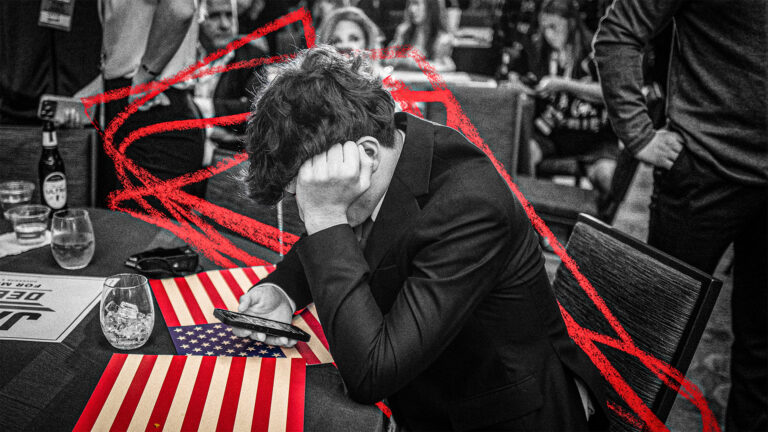

Watching the fall of Trump with New York’s MAGA hardcore
The other replies: “I much prefer to read Streicher’s Der Stürmer.” “Why? Are you crazy? It is full of Nazi anti-Semitic propaganda…” “Yes, but I like to hear some good news. The pro-Jewish daily brings only bad news about us, how we are persecuted, beaten, harassed, but Der Stürmer repeat again and again that we Jews really control the world, manipulate others and exploit them!”
The parallel is clear: Leftists were fascinated by Trump, who repeated again and again that the main threat to America today are Marxist Communists.
For me, the true horror show was Joe Biden’s inauguration which de facto reduced the Trump first reign to an anomaly from which we should return to liberal-democratic normality. The clearest symbol of this stance was The Hill We Climb, the poem read by the Young Poet Laureate Amanda Gorman at Biden’s inauguration.
Describing herself as “a skinny Black girl descended from slaves and raised by a single mother can dream of becoming president only to find herself reciting for one,“ she said:
“And so we lift our gaze, not to what stands between us, but what stands before us / We close the divide because we know to put our future first, we must first put our differences aside. /…/ We lay down our arms so we can reach out our arms to one another. We seek harm to none and harmony for all. / We’ve seen a force that would shatter or nation, rather than share it. / Would destroy our country if it meant delaying democracy. / And this effort very nearly succeeded, but while democracy can be periodically delayed, it can never be permanently defeated in this truth.”
If the term “ideology” has any meaning, this is it: the fantasy of the establishment and progressives all joined together in a sublime moment of unity. When we are immersed into this unity, it effectively appears as if none of Trump really happened – but where did Trump and his followers come from?
Does his rise not signal a deep crack in that unity? If we want to have any future, we must not put our differences aside but do precisely the opposite: focus on the divisions and antagonisms which traverse US society, not the “uncivil war” between the liberal establishment and Trump followers but the actual class antagonism and all its implications (racism, sexism, ecological crisis).
That’s why the calls for unity and healing divisions are false: Trump as such stands for radical division, for us against them (the “enemies of the people”), and the only proper way to beat him is to demonstrate that his division is a false one, that he is really one of “them” (a creature of the establishment “swamp”), and to replace this division with a much more radical one: the establishment in all its faces with the broad unity of all emancipatory forces.
Remember Haley Stevens, the Michigan Democrat who withdrew her support for the Democratic candidate who beat her in the primary contest, Abdul El-Sayed, and gave her last-minute backing to Republican Mike Rogers – the main reason was her advocacy of US support for Israel. Never forget that the mainstream Democratic party is full of Stevenses.
Suggested Reading
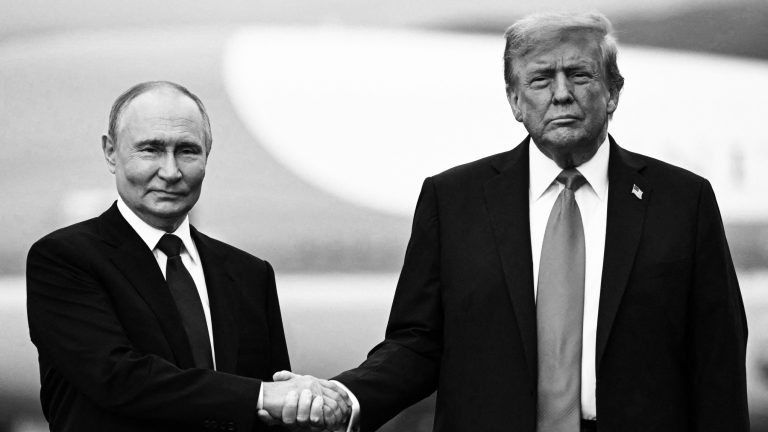
Trump, Putin and the ‘peacemakers’ who make war more likely
Recall that during Joe Biden’s inauguration, there was a lone figure who stole the show by just sitting there, sticking out as an element of discord disturbing the spectacle: Bernie Sanders. The effect was not that of a person left out at a party but rather of a person who has no interest in joining.
Every philosopher knows how impressed Hegel was when he saw Napoleon riding through Jena – it was for him like seeing the world spirit (the predominant historical tendency) riding a horse. The fact that Bernie stole the show and that the image of him just sitting there instantly became an icon means that the true world spirit of our time was there, in his lone figure embodying scepticism about the fake normalisation staged in the ceremony – there is still hope for our cause, people are aware that a more radical change is needed.
Lines of separation thus seemed clearly drawn: liberal establishment embodied in Biden versus democratic socialists whose most popular representative is Bernie Sanders.
It is therefore crucial to leave behind the relief and almost ecstatic hope caused by Trump’s defeat. Ultimately his defeat deprives us of a fetish and compels us to focus on the true struggle that lies ahead. We have no normality to return to: Trump is a symptom of this normality.
Trumpian populism didn’t hit the Earth like a comet (as the German former vice-chancellor.
Joschka Fischer used to claim): its rise is more like a crack in the Earth, a flow of lava streaming out – it is the result of the disintegration of the liberal consensus and the inability of the Left to offer a viable alternative. The first step in fighting populism is therefore to cast a critical glance at the weaknesses of the liberal project itself – populism is a symptom of this weakness.
What are we to do in such a situation? Many commentators hailed Canadian PM Mark Carney’s speech in Davos where he referred to Václav Havel’s essay from 1978 The Power of the Powerless, in which.he asked a simple question: how did the communist system sustain itself?
His answer began with a greengrocer. Every morning, this shopkeeper places a sign in his window: “Workers of the world unite”. He doesn’t believe it, no-one does, but he places a sign anyway to avoid trouble, to signal compliance, to get along.
And because every shopkeeper on every street does the same, the system persists – not through violence alone, but through the participation of ordinary people in rituals they privately know to be false.
Havel, the writer who became Czech president, Václav Havel called this “living within a lie”. The system’s power comes not from its truth, but from everyone’s willingness to perform as if it were true, and its fragility comes from the same source.
But at this point Carney makes a weird comparison: in the same way as, in Havel’s story, the greengrocer decides to take the sign down, we should decide to take our sign down – i.e. to openly renounce the old world order. There is a big difference between Havel’s story and today’s situation: our grocery sign was not taken down by some dissidents who opposed the system but by the big powers themselves, especially the US, which no longer find useful the system they imposed on the world decades ago.
Suggested Reading
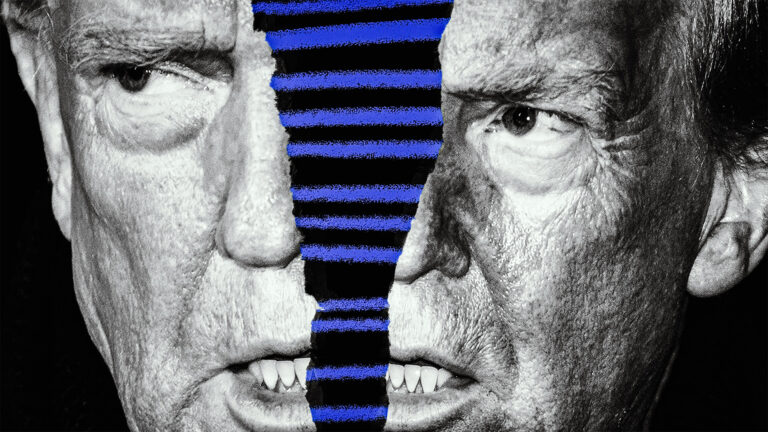

The end of Trump’s empire of madness
Free market competition and other international rules were OK for them as long as they guaranteed their privilege; now they are renouncing because they became aware that in a new situation these rules can undermine their hegemony:
Carney said: “Friends, it is time for companies and countries to take their signs down. For decades, countries like Canada prospered under what we called the rules-based international order. We joined its institutions, we praised its principles, we benefited from its predictability. And because of that, we could pursue values-based foreign policies under its protection. We knew the story of the international rules-based order was partially false, that the strongest would exempt themselves when convenient, that trade rules were enforced asymmetrically. And we knew that international law applied with varying rigor depending on the identity of the accused or the victim.
“This fiction was useful, and American hegemony, in particular, helped provide public goods, open sea lanes, a stable financial system, collective security and support for frameworks for resolving disputes. So, we placed the sign in the window. We participated in the rituals, and we largely avoided calling out the gaps between rhetoric and reality. This bargain no longer works.”
This was a speech with many salient points, but a couple of remarks are needed. Carney idealises the old system way too much: yes, it worked well for the developed West and selected Asian countries: open sea lanes were controlled by the West, a stable financial system (with US dollar as the global currency) clearly privileged big Western powers, collective security and frameworks for resolving disputes mostly worked to neutralise threats from underdeveloped states…
But what will follow the liberal order? All we see now are just morbid phenomena: chaotic economic war, new forms of fascism and techno-feudalism, returns to colonial grabbing of foreign lands, violence which reaches the level of genocide… Even more radically, the “normal” process of our history runs towards (different forms of) a final catastrophe, a self-destruction through ecological collapse, through the uncontrolled reign of Artificial Intelligence, through global wars – these endpoints of our history are the true morbid phenomena.
 Most popular
Watching the fall of Trump with New York’s MAGA hardcore
The end of Trump’s empire of madness

Sixteen ways to make Bonfire Night great again
If Burnham held a snap election, he’d win – but there’s a catch