Alex Gibney is at the centre of a storm. As we sit across the table in his hotel’s breakfast room – he’s just finished eating – this is true in a very literal sense: lightning is striking all around us, as Venice echoes with thunder. But that’s not what’s getting his attention.
“Dog shit is worth more than Alex Gibney,” I tell him. “He has zero integrity,” I add. “Horrible human.”
Gibney is taking this in his stride. It’s the morning after his epic four-hour documentary on Elon Musk – eponymously titled Musk – premiered at the Venice Film Festival, and it is safe to say the subject of the movie is not taking the initial publicity well. Musk has put out the first of what will become an ongoing flurry of posts in response to the film, and I’m the first person to read them out to Gibney, who was not yet aware of them.
This is, however, not Gibney’s first rodeo. Among many other subjects, the prolific documentary film-maker has covered the collapse of Enron, Theranos (and its unnerving founder, Elizabeth Holmes), the Church of Scientology, Benjamin Netanyahu, the Northern Irish, and WikiLeaks founder Julian Assange.
It’s through that last documentary that Gibney and I met, 15 years ago, when I featured as one of its subjects. We have kept in touch ever since, and I played a very small role in the production of Musk, for which I’m credited as a consulting producer. Sitting with Gibney and watching him react to the blowback against one of his films is bringing up memories.
When Gibney published his WikiLeaks documentary, We Steal Secrets, Assange obtained leaked audio of the movie in advance, and published a point-by-point rebuttal. “We were so scared,” Gibney recalls, and his team eventually published a detailed rebuttal-to-the-rebuttal.
By comparison, Musk “behaves more in a corporate manner”, Gibney says with a shrug. “I mean, he’s got a powerful lawyer… and this organised band of bots.” Musk is the richest man in the history of the world, with intimate ties to the current White House, and dominates space itself: Musk owns more satellites than everyone else on the planet combined. That’s a powerful enemy to make. But if Gibney is fazed, he is hiding it well.
Musk and Gibney had not got off to a good start. In October 2023, when the movie was announced, Musk dismissed it as a “hit piece” – even though virtually none of the film had been shot, let alone storyboarded or scripted. Musk then added that “Gibney is a douche”, prompting Gibney to respond “Douché”.
Gibney admits he had spent some time crafting that response, hoping to find something Musk would find funny, and which might prompt him to start a conversation – and maybe even start a conversation that could encourage Musk to participate in the film. “But he didn’t,” Gibney sighed. “Every step along the way, I think I imagined that he was a bigger person than he ends up being.”
Musk the movie is ultimately an attempt to show the audience as much as Gibney can about Musk the man over the course of four hours – it will ultimately be split into two two-hour episodes and aired on HBO – to see if he and the viewer come to the same conclusion.
It is quite the journey, not least because Musk feels like such an inescapable presence in our lives. We may feel as if we know a lot of his story already, some of it brilliant and some of it terrible.
Most of us know that Musk is the genius engineer who founded Tesla and revolutionised the automotive industry, and he founded SpaceX and transformed the whole business of space launch.
He is also the man who bought Twitter for $44bn – seemingly on a whim – and turned it into X, a platform on which far right hate speech goes unchallenged, even as Musk’s AI bot Grok “jokes” about being MechaHitler, and generates sexualised images of children.
He is also the man who funded Donald Trump’s 2024 presidential campaign to the tune of $300m, before entering the federal government like a wrecking ball as the head of the Department of Government Efficiency, or DOGE. Musk crashed out of government within months, but not before gutting USAID, slashing foreign aid at the cost of hundreds of thousands, if not millions, of children’s lives across the world.
That’s just the bit of the story we know. Those who have followed things much more closely know a bit more: Musk invested in Tesla early on, and ousted its original founders in a boardroom coup. His actual engineering contributions to SpaceX are questionable.
A foundational moment in the Musk story – the make-or-break fourth SpaceX rocket launch, after three failures – is exposed as a myth: Musk didn’t face bankruptcy if it failed, after all: Nasa was already approving billions in funding, either way.
It keeps coming: Tesla made hundreds of millions of dollars – right when it most needed to look profitable – from government subsidies by claiming it had a battery-swap programme that never really functioned. One sequence shows footage of a Tesla autopilot crash – in which a Tesla ploughs through a T-junction into a parked car, killing a woman lying next to it and watching the stars, as it explains Tesla had seemingly purposely hidden data it held on the crash.
And then there are parts of the Musk story almost no one knew, not least around his obsession with fathering ever more children. Justine Musk, his first wife, mentions almost casually how those in Musk’s orbit referred to the mothers of his children as an “army of breeders”, as he had formed “an assembly line” for children.
The one-time right wing influencer Ashley St Clair details how Musk’s enforcer had encouraged her to sign a non-disclosure contract in exchange for $40m of child support for the baby she had with Musk. In a voice note, she is told things never worked out well for women who took “the legal route” against Musk – reducing her life, and her baby, to cogs in a very large machine.
Raising the stakes from the personal to the political, Gibney’s film argues Musk’s political turn was motivated by self-interest and self-preservation: Musk and his companies were the target of at least 32 investigations by 11 government agencies. Being such a visible force in returning Trump to power was part of Musk’s plan to get his companies off the hook.
Even if parts of the story are familiar, the cumulative effect of all of it across a relatively short space of time is a lot. As the lights came up after the premiere, a rapt but somewhat shellshocked-looking man sat nearby turned to me, shaking his head as if to clear his thoughts. “Four hours in that man’s head… it’s a lot.”
Alex Gibney has spent three years trying to get in Musk’s head. That’s not something he wanted to subject himself to, or at least not at first. When he was first approached with the idea of doing a movie about Musk – after his purchase of Twitter, but well before his association with Trump – his inclination was very much to say no.
“Well, you were the one who helped persuade me,” he says, in a tone that makes me unsure whether he’s giving me credit for something or telling me it’s all my fault. Gibney had wondered if a film about Musk would just be another film about a “morally ambiguous, powerful man”, and if so, would that just be retreading old territory?
“But then you said in our conversation that it’s a story about 21st-century power, and that was hard for me to resist because there is a difference in the nature of power now,” he says. The combination of financial power, innovation, and data has let a new kind of actor take on the kind of power that was once reserved for nation-states, he muses. That was worth digging into.

The face of what Musk’s brand of 21st-century power could look like became all too apparent during the making of the film. When Gibney began, it was an investigation into the world’s richest man. By the time production was in full flow, Musk appeared to have the full resources of the federal government behind him too – at a time when ICE was snatching people from the streets daily, and Trump was launching prosecutions against whichever of his enemies entered his mind on a given day.
That made getting people to appear on camera difficult, to say the least. “Everyone was terrified, absolutely terrified,” he recalls. “There’s information in the film that I got from people before they disappeared that is valuable, but they were originally going to appear on film.
“Some of them, of course, were immigrants – they weren’t going to come near a film where they could be tossed out of the country. And people were afraid of being sued, very powerfully.”
On one level, Gibney concludes, Musk and Trump’s symbiotic relationship becomes something close to the apotheosis of the military-industrial complex. “Musk had the money to keep Trump in power,” he notes. “Trump had the power to keep Musk in the money.”
The story Musk tells, over and over again, is that everything he does is in the service of humanity – part of a mission to extend the “light of consciousness” beyond one fragile planet, so that it might continue even if our fragile planet Earth was somehow rendered uninhabitable.
Sincere or not, Gibney notes it is a convenient story for Musk, because it lets him frame any criticism of his actions as being in opposition to the long-term survival of humanity. Almost any behaviour can be justified if it’s part of a mission to save us all, can’t it?
Even here, Gibney doesn’t think Musk is all that original: the rich and powerful have thought in such terms for a very long time. On this front, Gibney compares Musk with the steel magnate Andrew Carnegie, who died in 1919. Each man believed he was “uniquely positioned to save civilisation,” Gibney says.
“That’s why he has to accumulate all the money to himself… both of them are guided by this sense that they’re serving a higher purpose, or that in their selfishness they’re actually leading to a better cause. It’s a useful belief.”
There is a question whose answer always feels just out of reach: does Elon Musk believe the messianic stuff that he says? Does it even matter either way? Musk’s companies have delivered some genuinely amazing technology: Starlink satellites, SpaceX rockets, and even Tesla cars perform brilliantly.
But there is always a layer of bullshit around the accomplishments: Musk promises full self-driving, when he doesn’t have the technology to deliver it. He says people will live on Mars within a decade, with no plan to do that. Now, he promises every home will have a robot and he’ll launch data centres into space. Musk even bullshits about his skill at video games.
Why, I ask, does a man with so many real accomplishments have to bullshit all the time? “It’s the bullshit that gets him the money,” Gibney concludes. Musk’s genius, he says, is in financial engineering – in persuading the market to funnel cash his way, based on promises that hold only if you don’t look too closely.
“That’s his genius: his bullshit. It’s because he is a confidence man, and it’s hard to explain that to people,” he continues. “It’s a little bit like The Wizard of Oz. Like when you finally see the man behind the curtain, it’s a little disappointing, right?
“Now, he is a more benign character than Elon Musk is – if you pull back the curtain on Elon, you see a guy contorted with rage, not a nice guy from Kansas.”
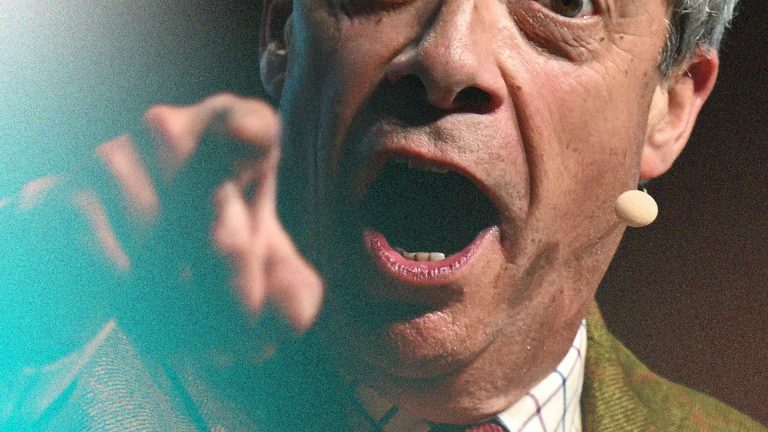

Musk certainly seems angrier with each passing day. Where once he talked about saving the “light of humanity”, he increasingly talks about the need to save European or American civilisation against “invasion”. He endorsed Germany’s far right AfD, and spoke at Tommy Robinson rallies. He spends hours every day raging against his enemies, real and imagined, now including Gibney himself.
That misery, despite his endless wealth and power, might serve as a coda in itself.
“One of the people I spoke to on background was a very powerful Silicon Valley investor, and I said, ‘Give me your, you know, sort of thumbnail sketch or takeaway’… He said: “He’s the most miserable man I ever met.
“Whether it’s his childhood trauma, or his inability to please himself in some way… he just doesn’t appear to be a happy man.”