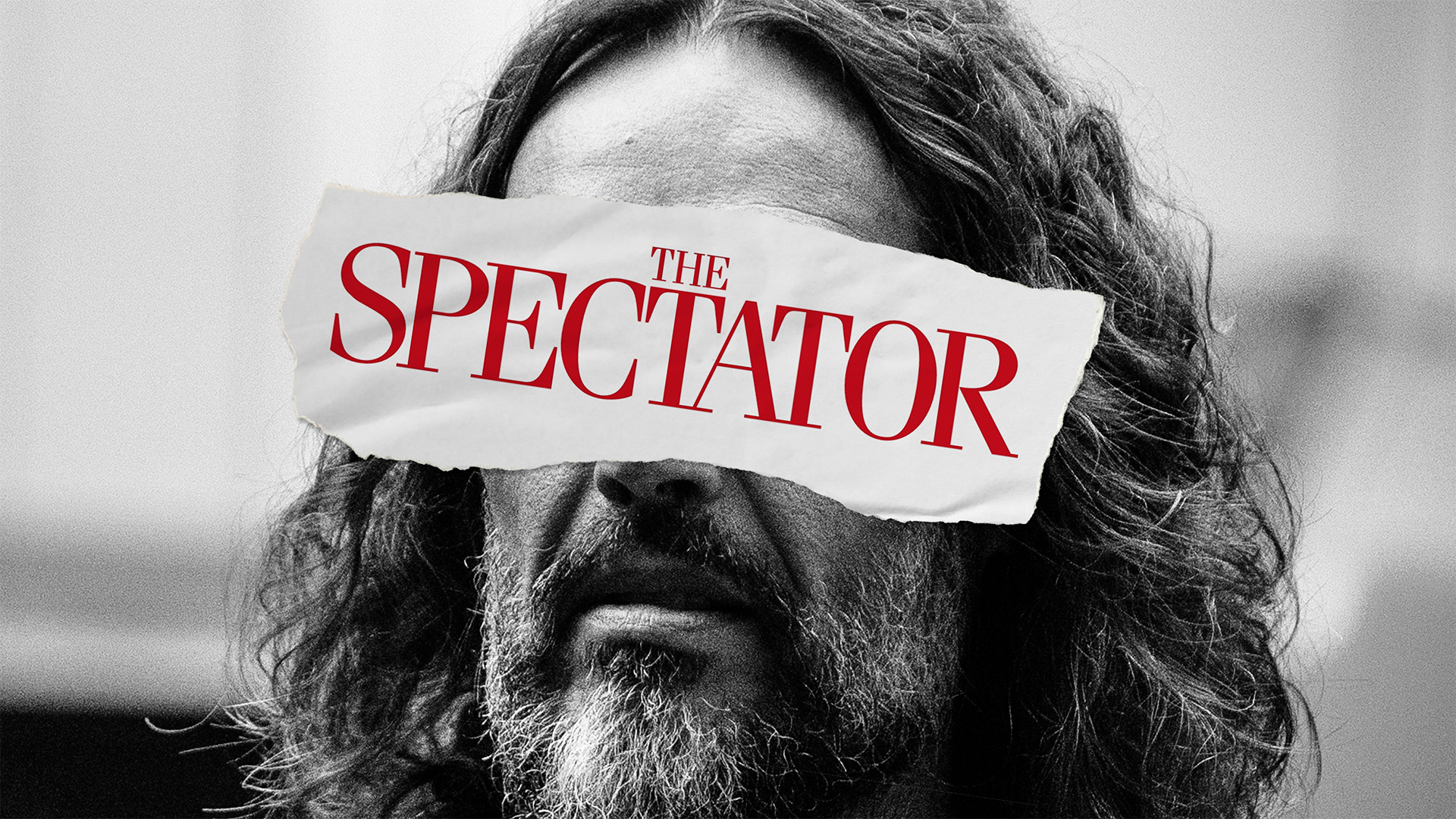
Fraser Nelson was very proud to have secured a piece from Russell Brand. On Twitter, the then-editor of The Spectator boasted that it was the magazine’s most-read article. When The Sun picked up the story and badged it as an exclusive, Nelson was quick to remind the world that The Spectator had it first. That was March 2013. Eight months later, Brand guest-edited The New Statesman.
Last week, The Spectator’s Steerpike column used Brand’s conviction for rape and sexual assault to put the boot in to its rival: “Russell Brand was widely feted by the left-wing press… Brand didn’t exactly hide who he was back then.” Well, credit where credit is due — The Spectator feted him first, but a selective amnesia has set in at its Old Queen Street office.
Steerpike highlighted the first line of Brand’s editorial: “When I was asked to edit an issue of the New Statesman I said yes because it was a beautiful woman asking me.” The first paragraph of Brand’s Spectator contribution, an article on drugs and addiction, reads: “The last time I thought about taking heroin was yesterday. I had received ‘an inconvenient truth’ from a beautiful woman… She told me she was pregnant and it wasn’t mine.”
When Jawad Iqbal now writes for The Spectator that “[Brand’s] army of enablers, the people who gave him the seal of establishment approval, gilded his path to stardom… must not be allowed any hiding place”, he seems to be offering just such a hiding place to the magazine. Its current editor, Michael Gove, was happy to allow Taki Theodoracopulos, who wrote the magazine’s High Life column from 1977 to 2023, back into the fold. What, you might ask, brought Taki’s uninterrupted 47-year run of contributions to an end? He was convicted of attempted rape in 2023. He returned to the pages of The Spectator in September last year.
Also for The Spectator, Julie Bindel writes of “the rank hypocrisy of Russell Brand’s left-wing defenders”. Again, the role of The Spectator is absent from her article.
Suggested Reading
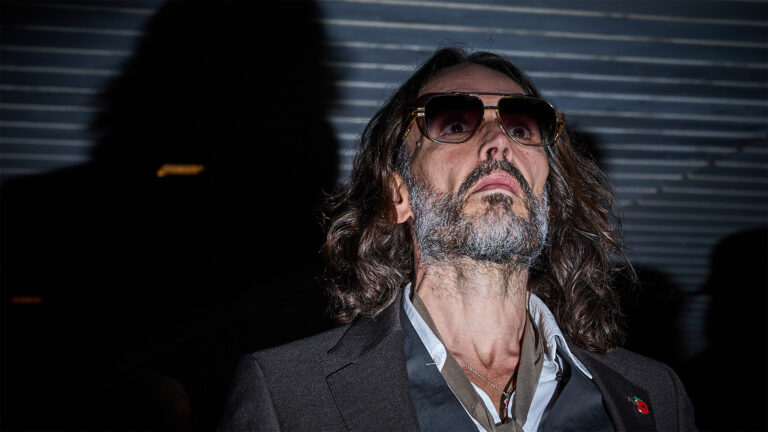

The reckoning I thought Russell Brand would never face
Remembering the incident when Brand interviewed the then-Labour leader Ed Miliband, the piece does not find space for a mention of a Spectator column from the time by Hugo Rifkind headlined ‘Russell Brand is the future, like it or not’. Rifkind was deeply sceptical, writing that Brand’s “schtick – a mix of charisma, justified outrage and intellectual laziness – seems to me to be a mobbish, populist and ultimately cynical way to look at the world”, Yet he also wrote that Brand’s “heart [was] in the right place, almost certainly” and that he had “a direct line to parts of the electorate most politicians cannot get close to”.
Rifkind no more knew about Brand’s crimes than The Guardian’s Owen Jones did, but while he gets a pass for writing under a Spectator byline, Jones is now a living piñata for the magazine’s comment pages. Bindel castigates another Guardian columnist, George Monbiot, for praising Brand in 2014. He subsequently apologised and recanted those views.
Bindel notes that six years before Jones appeared with Brand onstage at a Guardian Live event, “Brand, along with Jonathan Ross, had left obscene messages for the actor Andrew Sachs in which he boasted about a sexual encounter with Sachs’ granddaughter”. Five years later, The Spectator published Brand in its pages.
Steerpike swerved the Spectator’s own hypocrisy back in 2023 after the allegations against Brand first broke. It took a swipe at Marina Hyde for her own post-Sachsgate Guardian column attacking Sachs’ granddaughter, Georgina Baillie, for “banging on about the whole thing”, under the headline “Today in Jesus Wept: The Satantic Slut speaks. Again.”
What had alerted Steerpike’s writer to this grim lapse in sense and good taste from Hyde? She’d written a mea culpa in The Guardian saying she was “mortified” at her own words. The Spectator shows no such shame.
Beyond the simple fact that by its own measures The Spectator should be numbered among Brand’s enablers, its coverage of the #MeToo movement illustrates the utter hollowness of its moral outrage now. In October 2017, Joanna Williams wrote: “Following a weekend crammed with ever more salacious revelations about Harvey Weinstein, hundreds of thousands of women have now taken to social media to share their own experiences of sexual harassment… According to Twitter, this reveals ‘the magnitude of sexual assault’. In reality, it does nothing of the sort. #MeToo tells us far more about the desire of some women to reach victimhood status.” Weinstein is currently serving 15 years in jail for rape.
Of course, nine years is a long time and The Spectator has changed editor since Williams made that contribution. But she was commissioned to write a follow-up last month, with the case of the Cornell Seven, in which a female student alleges she was drugged and raped by seven male students as the hook.
In that article, Williams writes: “Rape is horrific and undoubtedly utterly devastating for the victim. But false allegations must also be taken seriously. Rather than rushing to pass judgement on the Cornell Seven, we should ask why men and women are held to different standards on consent…” We should also ask what the women who bravely came forward to bring Brand to justice would feel if they read The Spectator’s view of the world.
In a Spectator piece headlined ‘What the rise and fall of Russell Brand says about our attitude to sex’, Theo Hobson writes that “for the fifteen years or so of [Brand’s] pomp… almost no one dared to articulate the mainstream view that sex shouldn’t be treated flippantly and hedonistically”. He is making that argument in the magazine which, in 2024, ran a column by its theatre critic, Lloyd Evans, in which he sexualised a professor – who he named – after attending her lecture then wrote about visiting a sex worker.
Suggested Reading

The press’s shameless David Walliams amnesia
The column was an unsolicited sexual review of a female academic (“Her blonde hair spilling over her shoulders absorbed far more of my attention than her political reflections”) followed by another review of a woman he had paid for sex. How’s that for flippant? Evans’ latest contribution to The Spectator was published last week.
In the comments below recent Spectator pieces on Brand, readers howl about his innocence and the character of the survivors: “Free Russell Brand… he did not blow up, rape or knife lots of underage girls”; “It’s one of the most obvious establishment stitch ups I think I’ve ever witnessed…”; “This is “buyer’s remorse” that we see from often extremely manipulative women…”
What is it about The Spectator’s output over the years that might have encouraged its readers to believe these things? As it points fingers at its political enemies and media rivals, the magazine should take some time to consider its own role in contributing to the culture in which Brand marinated. It won’t.
 Most popular
The reckoning I thought Russell Brand would never face
The press’s shameless David Walliams amnesia

Why does everyone hate Laura Kuenssberg?

16 things that will definitely now happen on the British right