Every day I covered the Russell Brand trial, people would ask me the same two questions. My friends, my colleagues, my mum: “How was it today?”
My answers varied. Sometimes it was “grim”, sometimes “depressing”, sometimes “boring, the judge dismissed the jury early”. But the second question was always the same: “Do you think they’re going to find him guilty?”
My answer never changed: “I hope so, but there’s just no way.”
I have never been happier to have been wrong.
On Thursday, November 5, Russell Brand was found guilty on one count of rape and three counts of sexual assault. On Monday, November 9, he was sentenced to 10 years and 6 months in prison, meaning he is likely to serve seven years in custody.
Let’s start at the beginning. Not with Brand’s history of abusing women, or the allegations that eventually brought him to trial. Those stories have already been told, and told better, by the brave people who uncovered them.
I can only tell you what I saw, which was the reckoning for a man who had spent much of his life behaving as though the ordinary rules of society were for other people. And I saw a brilliant and monumental thing happen in a building of farcical mundanity.
I’d covered trials before, but nothing as serious as rape, and certainly nothing involving a celebrity of Brand’s peculiar magnitude. In my imagination, the whole affair would have the atmosphere of a legal drama fitted with mahogany, marble and bewigged grandeur.
This was the first of several things I got wrong.
Brand, as I imagine most people in the country now know, was tried at Southwark Crown Court. It is not, to put it mildly, the Old Bailey.
Southwark Crown Court is a building of almost aggressive plainness. Its carpets were a tired and grotty red, its furniture frequently broken, its electricity intermittent. On one occasion, the power failed while I was in the lift. I spent a few moments panicking that I’d be trapped forever, becoming another unfortunate item of its interior.
Court 3, where the man who had spent so much of his life flaunting his power, and luxuriating in the attention it afforded him, would find himself stripped of both, was an especially dispiriting shade of beige. The prosecution was led by Riel Karmy-Jones KC, who addressed the judge from a lectern held together with police tape.
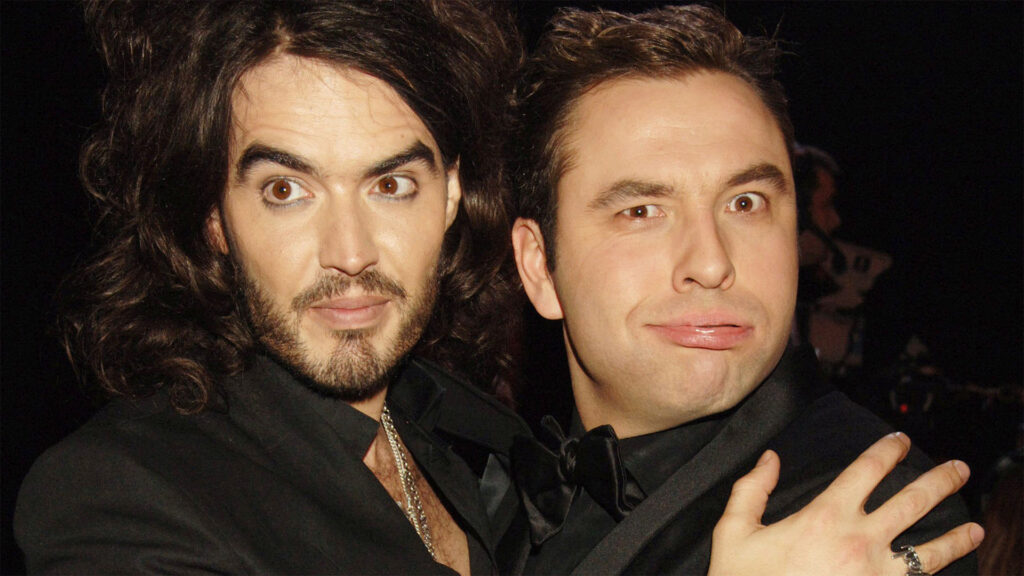
Russell Brand and David Walliams attend the after party following the British Comedy Awards 2006.
Photo by Dave M. Benett/Getty Images
The strangest thing about Southwark Crown Court, though, and perhaps the thing that those who weren’t there will find hardest to imagine, was the proximity of everybody to everybody else. Everyone was mixed together; defendants, lawyers, journalists, hangers-on.
One afternoon I was sitting on the floor outside the courtroom, typing away, when a shiny heeled shoe appeared inches from my laptop. I looked up. Russell Brand was towering above me.
As we shuffled towards the courtroom doors, waiting for the clerk to admit us, I found myself almost shoulder to shoulder with him. He gave me a small smile, the sort one might exchange with a stranger at a bus stop.
One of his entourage asked Brand how he was feeling, as he was due to give evidence that day. “I’ve a long battle ahead,” he replied in a misty, almost weightless voice.
We approached the doors. The clerk was determining which journalists could enter the courtroom and which would have to make do with the overspill room.
(This was where the press and public were sent when the gallery was full. I spent most of my time there, partly because the proceedings were actually easier to hear through the livestream. The room also had its own particular deficiencies: technical failures, broken chairs and, on one occasion, a solitary cube of cheese abandoned on a desk. Perhaps it was a small act of insurrection against the court’s strict prohibition on eating).
As Brand reached the clerk, he jokingly asked, “Am I allowed to go in?”
She laughed with the indulgence one might reserve for a pub regular, before he asked her how her morning had been. I also saw Brand hold doors open for people. Here was a man facing allegations of rape and sexual assault, and in the corridors of the court he could pass, at a glance, for an entirely agreeable fellow. But more on his demeanour later.
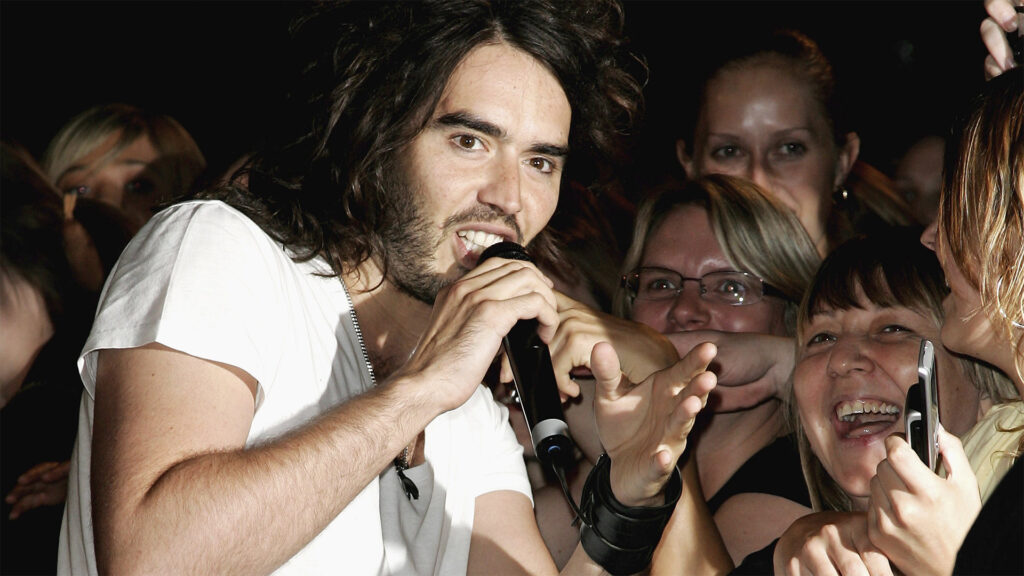
Russell Brand talks to fans outside the Big Brother Seven House on August 04, 2006.
Photo by Gareth Cattermole/Getty Images
The peculiar social arrangements of the court produced other scenes. One afternoon I found myself in a waiting room populated almost entirely by acolytes of Tommy Robinson, who was also on trial at the court at the same time.
Young Bob was doing Donald Trump impressions. Around him, various men, some with walking sticks, some with tattoos, some with both, were conducting furious rants about the broken British justice system.
Having now witnessed the verdicts in both trials, I can report that the only things in Southwark Crown Court that were demonstrably broken were the lifts. And, on occasion, the microphones.
Which brings me to an encounter that left me, for once, lost for words.
I was in the lift with a few fellow journalists and a small, elderly man wearing a hat. We were making the usual small talk, complaining about the building and, in particular, the microphones, which had been especially frustrating on a day when there had been a good deal of testimony against Brand.
“It’s a bloody disgrace,” said the old man as the doors opened and we filed into the lobby.
“The state of the courts?” I asked, assuming we were about to embark on a frank discussion of government underfunding.
“No, this whole thing. Let me tell you, I’m his dad and I was there. I saw it. Women would throw themselves at him. We’d get on a train and two stops later there’d be 30, 40 of them clamouring over him. The truth is that HE was the victim of predatory women.”
Perhaps Mr Brand Senior had not been listening to the same evidence that I, every other journalist, and 12 jurors heard.
Six women, who did not know one another, had come forward to describe remarkably similar experiences of the same man. They had nothing to gain, and an enormous amount to lose.
Why, Karmy-Jones asked the jury, would six strangers invent something like this? And why would they subject themselves to the ordeal of a criminal trial, knowing that their most intimate experiences would be dissected in public?
The evidence was, at times, almost unbearable to hear. The women described being grabbed, groped, kissed, manhandled; the sudden, frightening transformation from charm to aggression. Some spoke of the casualness with which Brand treated them afterwards, as though what had just happened was of no particular consequence. There were accounts of being left in pain, of being made to feel dirty, of being treated like an inconvenience that had briefly served a purpose.
The other witnesses who knew Brand described a man whose preoccupation with sex was practically all-consuming: voracious, acquisitive, and relentlessly self-interested. There was something incredibly pathetic about the scale of his appetite, and the apparently limitless entitlement that accompanied it.
So why, then, had I been so certain he would walk free?
Partly because I knew how difficult rape is to prove. I’ve written in The New World before about how the cultural reckoning of #MeToo seems to be retreating, that the pendulum is swinging back. And partly because I had heard enough of the defence case to fear that it might work.
Suggested Reading

Is this the moment MeToo died?
One evening, after a day in court, I told a group of people about the defence’s questioning of the woman who described being anally raped. The barrister had sought to make much of her previous consensual sexual activity with Brand, including the fact that she had performed oral sex on him.
I thought it was an appalling line of questioning. A few older people around the table, however, thought it might play well with a jury. “Oh shit,” one said, “that’s fucked the case.” It was a useful reminder that the supposedly old ways of thinking are not buried very deep down after all.
There are many people to thank for the hard-won verdicts. The women themselves, obviously, and the journalists who brought the allegations to light. But there is one person who deserves a particular sort of credit: Russell Brand. His own evidence, and the conduct of his defence, did not exactly assist his cause.
I had been watching him in court for weeks. When the women gave evidence, he was generally immaculate in his composure: sitting bolt upright, rarely betraying any sort of reaction. He was not, in other words, the Russell Brand one might have expected to see. Everyone knows the public version: the florid, self-regarding raconteur, forever reaching for the most extravagant word in the dictionary.
I thought the witness box might prove his undoing, that his twattish nature might tumble out of him like vomit. However, under probable advice from counsel, initially, he seemed to have been instructed to do the opposite of everything that had made him famous.
He was terse, almost monosyllabic. He was making a very big show of calling the judge “My Lord”, and answered questions with an emphatic “yes” or “no”.
I had half expected him to make a meal out of being a reformed man of faith, a born-again penitent whose conversion to Christianity coincided with his fall from grace and then was sold to his online congregation.
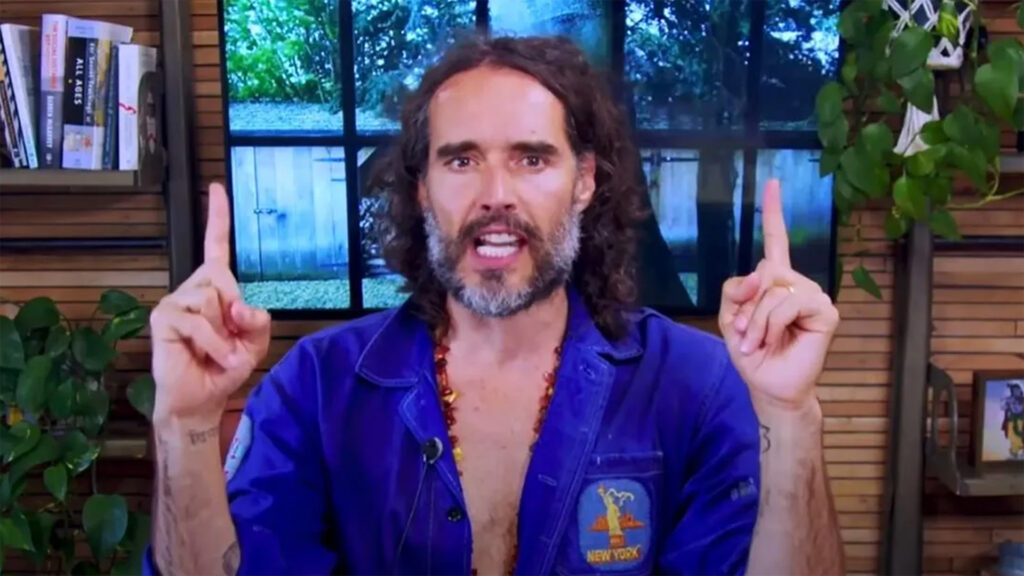
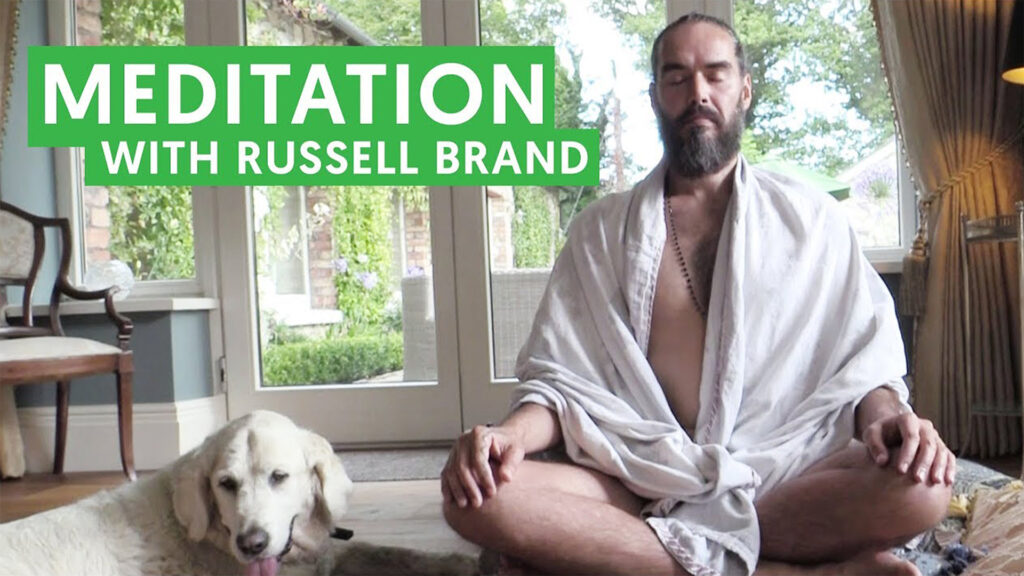
There were flavours of this; he swore on Almighty God, and there were his prayer beads, too. “My entire life has been consumed by these events, allegations, accusations, the impact”, he said. He spoke of being unable to visit his son in hospital. There was, in all of this, a curious absence of anyone else’s suffering.
But the performance was not always sustainable, the familiar Brand would occasionally reappear: a self-deprecating joke, a studied compliment. He described his victims bordered on Nabovok territory – calling them ‘lithe’ and ‘pixieish’. Sometimes he would slip into his usual faux intellectual guff, but a very restrained version. When the questions became less accommodating, however, he grew short, irritable, and occasionally petulant.
At one point, when he was being questioned about anal sex, the judge had to intervene: “Don’t be coy, Mr Brand.” Imagine hearing that sentence 20 years ago.
It was, in the end, the defence case that I found most difficult to stomach. It was, without exaggeration, sickeningly and astonishingly regressive.

The women had given their evidence with incredible composure, asked to revisit experiences that had, in some cases, haunted them for decades, in front of a roomful of strangers (though behind a curtain). Questioned about their clothes, their relationships, their sexual histories, their drinking, their decisions to go home with Brand, their failure to report what had happened. They were asked why they hadn’t fought harder, why they hadn’t screamed, why they hadn’t called it rape at the time.
One of the women, when pressed on why she had not described the incident as rape earlier, heroically dressed down Ian Winter, Brand’s KC. The very attitudes being deployed against her in the courtroom, she explained, were the reason women like her did not come forward in the first place.
Of all the evidence, this woman’s account was particularly difficult to hear. They had previously had consensual oral sex backstage after one of Brand’s shows. He saved her in his phone as a tart. A week later, she went to his house, where they again had consensual sex, until he forcibly anally raped her.
She repeatedly asked him to stop. He did not. Instead, he told her: “I want you to feel my cum.”
Afterwards, she described him looking at the bed, where there was blood and excrement, and telling her to clean up the mess she had made. She did so while he watched television. She was left bleeding for days.
And what, in response to this account, did the defence ask?
‘Did you think you were going to be his girlfriend? You knew the reputation he had at the time? You knew he was extremely sexually active with multiple women? You knew he had won The Sun’s Shagger of the Year award three years running?’
Hearing this, I felt pale. Faint at the account itself, obviously, but also almost shaking with anger at the line of questioning. And, unexpectedly, ashamed.
In the past, when women I knew had told me about dreadful sexual experiences with men whose reputations for treating women appallingly were already well established, I had sometimes found myself wondering why they had gone back. Why they had agreed to see him again. Why they hadn’t been on their guard. I had thought it about other women, and I had thought it about myself. I knew what he was like, what did I expect going into that room?
Sitting in the strip-lit courtroom, I suddenly understood just how absurd, and how deeply ingrained, this way of thinking was. Girls are raised to understand rape as something that will happen to them if they are not sufficiently vigilant. We blame ourselves for not having seen the danger, as though being raped were a little like getting sunburnt: a consequence of having failed to apply the appropriate protection.
And so, I found the verdicts genuinely, profoundly heartening. Not because the jury had done anything extraordinary, but because they had, in the end, seen through the insane but long-lived idea that women are responsible for the prevention of crimes committed by others.
I don’t think I am exaggerating when I say that sitting through this trial changed something in me. It made me reconsider the assumptions I had absorbed from the culture around me, and had quietly carried around. It is not a comfortable realisation. It is, however, an incredibly necessary one.
Within moments of the verdict, Ian Winter KC, Brand’s barrister, confronted Rosamund Urwin, the Sunday Times journalist whose reporting had helped bring the allegations into public view. “I hope you are pleased with yourself,” he told her.
“I’m pleased justice has been done,” she replied. “You fucked it,” he shot back.
He subsequently referred himself to the Bar Standards Board. It seems the instinct to find someone else to blame is shared between Brand and his counsel.
The wider reaction to the verdicts suggested that I was not alone in feeling that something had shifted. The Metropolitan Police Commissioner, Sir Mark Rowley, criticised aspects of the defence questioning as coming close to victim-blaming. There have since been calls for greater clarity in the way juries are directed in cases involving sexual offences, and the government said it would consider changes.
There was, of course, an enormous online appetite for the trial, both serious coverage and massive quantities of memes. One post on X, made shortly after the verdict read “imagine being his cellmate and having to listen to him talk shit 24/7”. At the weekend, one football chant went “Millwall boys are on a bender, Russell Brand is a sex offender”. It’s hard not to laugh.
The conventional press coverage was to be expected, but alongside the daily reporting, I counted at least five major podcasts covering the proceedings day by day.

Perhaps the appetite had been whetted by the huge American celebrity trials, not least that of Sean ‘Diddy’ Combs. Whatever the reason, the trial had become more than a court case – it was content.
I encountered this in the form of a fair number of freelance bloggers. On the first day, I sat next to one who seemed perfectly pleasant, but whose experience was clearly drawn largely from ‘covering’ (a generous term) American trials, where the rules around reporting are far less strict.
At one point I had to explain that, under no circumstances, could he publish the names of the female complainants. He looked genuinely baffled, and a little put out. “That will make the prose much harder to follow on my blog,” he said.
Tough shit, my friend.
There were plenty more ‘citizen journalists’ to contend with, particularly when the Tommy Robinson trial was ongoing. Robinson, who was found guilty of harassing two journalists to the point it caused them fear of violence, had a rather more enthusiastic following than Brand.
There were always people outside and inside the court for him, although one of the bailiffs told me he’d heard some of them had been paid to attend. If true, that is where your money has gone, Mr Musk. Many of those present were self-proclaimed journalists, holding their phones aloft on selfie sticks and delivering frenzied monologues.
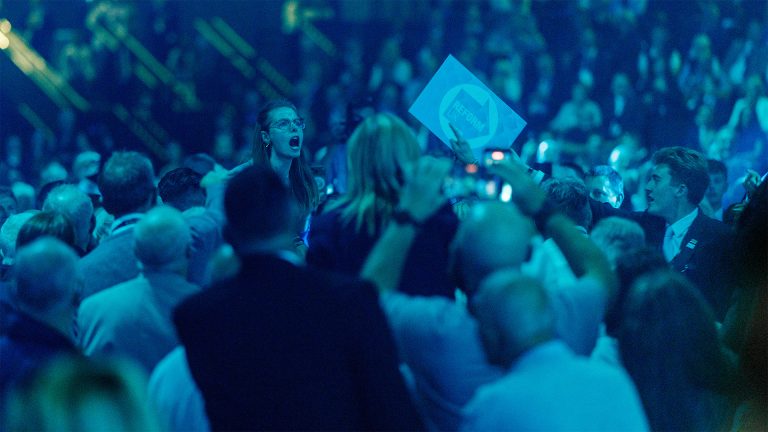
One day, a family of East Asian tourists asked me to take their photograph outside the court. Whether they knew who Russell Brand was, or had simply stumbled upon an unusually unattractive tourist attraction, I couldn’t say.
There is something extremely troubling about the extent to which criminal proceedings have become a form of entertainment. The legal process, with its irritating insistence on evidence and the presumption of innocence, is not always especially well suited to this economy – and I think it is dangerous that there is now a monetised incentive to undermine it.
Speaking of people making money from things they shouldn’t, one of the most infuriating aspects of the trial was Brand’s conduct online. While journalists had to tread carefully around anything that might prejudice proceedings, under the threat of contempt of court, Brand continued making his YouTube show with his wife, Laura. Together, they read from the Bible, played with their cat and presented a picture of domestic piety: Russell the husband, Russell the father.
On several grotesque occasions, he joked about the trial. He would interrupt Laura – he seemed to do this in every episode – to make innuendos about her often tearful evidence in court.
Before the trial, I was perhaps too young to appreciate how famous Brand had once been. By the time I knew who he was, he had already become a sort of pariah. It has been startling to discover just how thoroughly embedded he once was in British culture.
He was not some obscure contrarian lurking on the fringes of public life. He was hailed as an anti-capitalist, anti-establishment, anti-intellectual messiah. Hindsight is, admittedly, a marvellous thing, but I find myself asking how anyone of any merit fell for this, as so many newspapers, radio and TV producers did.
Some who once championed him are conspicuously quiet. Others seem content to rewrite their own histories. And then there are those for whom the new Christian, anti-vaxx, right wing incarnation was always going to be more appealing than the old libertine.
GB News’s Bev Turner, for example, defended Brand when the allegations first emerged, suggesting he was the victim of an establishment witch-hunt. One does wonder what sort of threat Russell Brand posed to the global capitalist order that it would go to the extraordinary lengths of fabricating a rape case against him, particularly when sexual offences are notoriously difficult to prosecute successfully.
Now, some of the same people who were so quick to defend him are eager to identify everyone else who might have enabled him. This appetite for accountability, it seems, has arrived rather late.
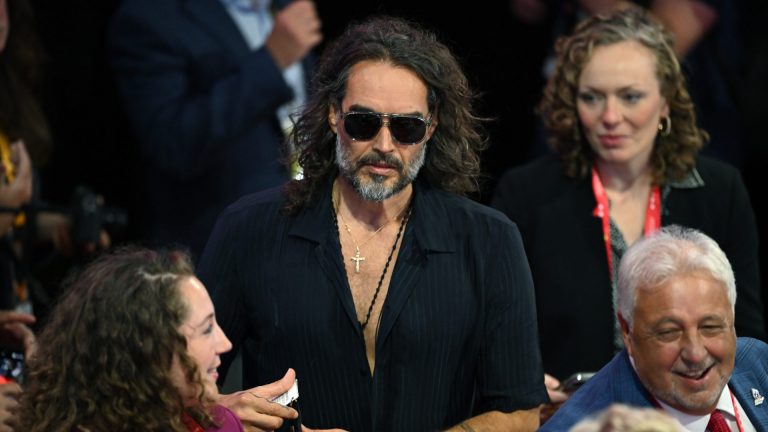
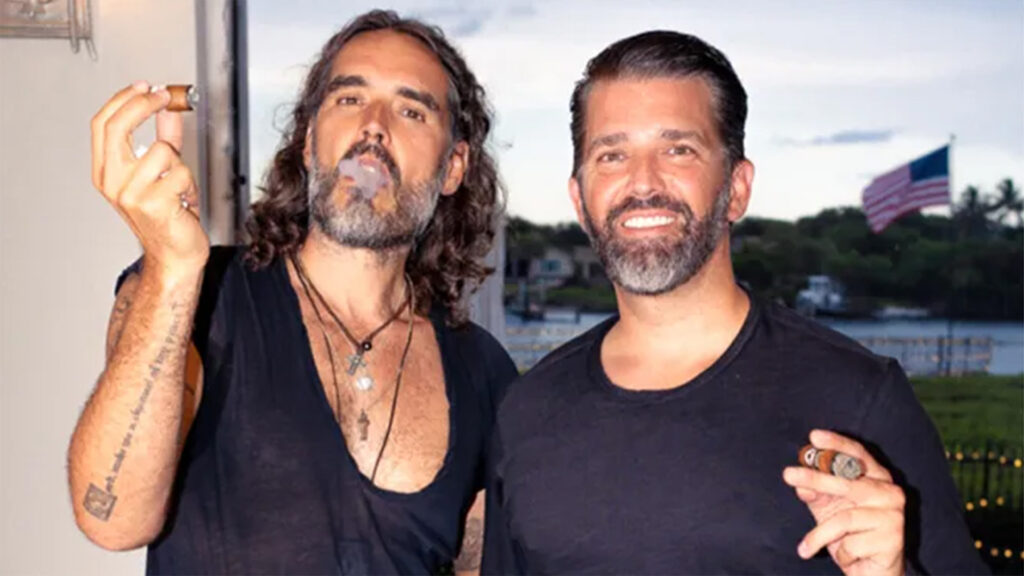
Even as Turner and others like Allison Pearson declared their support, Brand retreated from the mainstream. Then the populist backlash against so-called woke gave him an opening. He spent much of the last few years praising Jesus and rubbing shoulders with the likes of Tucker Carlson and Roger Stone at Mar-a-Lago, finding an enthusiastic new audience among Robert F Kennedy Jr’s conspiracy driven MAHA (Make America Healthy Again) movement, being photographed with Donald Trump’s sons.
The guilty verdicts followed soon after Trump senior’s midterm humiliation. After two rebukes to men who seemed so certain that the world would always be theirs to play with, it was difficult not to feel that, for once, events were moving back in the right direction.
Too often, young women and girls are told that they have a voice, that they will be safe, that men no longer get away with these things. And too often, they discover that none of it is quite true.
But the trial of Russell Brand showed that fame, money and the passage of time do not put anyone beyond accountability. That someone may still fight for you. That, when you finally find the courage to speak, someone may still believe you.
In his sentencing remarks, Justice Bennathan declared: “No matter what women wear, what they drink or where they go… they have the right to say no… they have the right to demand justice from sexual predators like you Mr Brand.”
For all of us who have ever been given reason to doubt those promises, that is no small comfort.
 Most popular
Slavoj Žižek: Beating Trump isn’t the wild triumph you all seem to think

How Trump stole Venezuela’s oil money

Britain’s poppy day cult has gone too far

The uncomfortable truth about Ariana Grande