How do you talk about something that seems to get worse both the more you talk about it — and if you don’t talk about it at all?
Ariana Grande is one of the biggest pop stars in the world. She began on Nickelodeon, has scored ten number one singles and six number one albums, and starred in the blockbuster Wicked films.
Her career has also been marked by extraordinary trauma. Many readers will know her name because it was her concert that was targeted in the Manchester Arena bombing in 2017. The following year, her former partner, Mac Miller, died of a drug overdose.
Now Grande is back in the headlines for another unfortunate reason. She recently announced she would be stepping back from public life after her current tour, withdrawing from the planned 2027 London revival of Stephen Sondheim’s Sunday in the Park with George at the Barbican. The reason? “Endless, ongoing public scrutiny.”
Suggested Reading

Why are Gen Z so ready to forgive Kanye West?
This is where things become difficult.
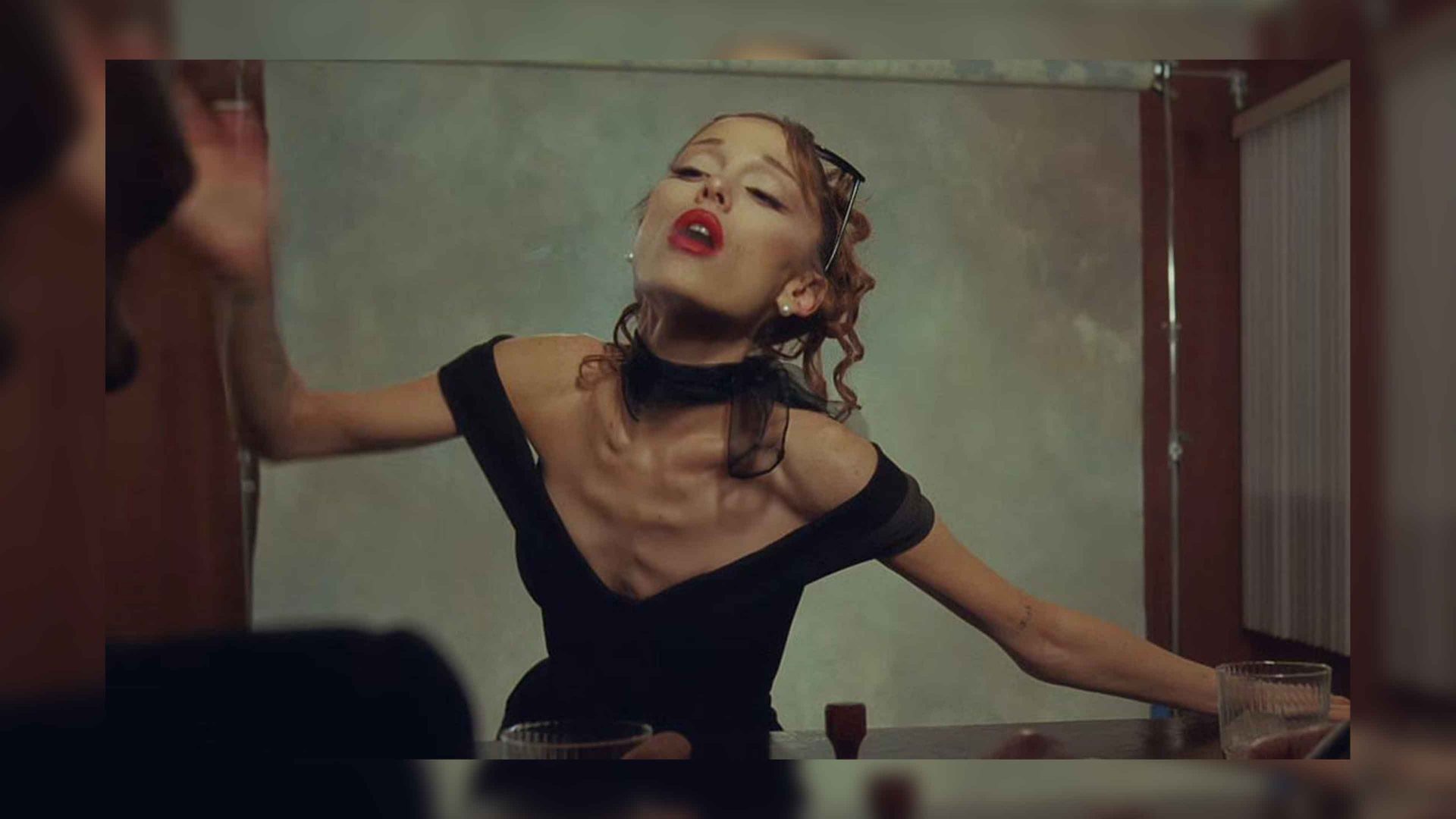
Grande’s weight has been the subject of intense speculation since the 2024 Wicked press tour, when she and co-stars Cynthia Erivo and Michelle Yeoh all appeared noticeably thinner.
Since then, Grande has appeared to lose more weight still. She has been described as skeletal and emaciated by critics and concerned fans. Photos from her current tour have prompted widespread concern, while her recent music video Petal had to have an Instagram trigger warning imposed for viewers affected by eating disorders. The video itself references Grande needing to “lose a few pounds.”
Much of the conversation has been cruel. People have mocked her appearance, reduced every discussion about her to her body, and treated her as an object of morbid fascination. That is plainly wrong.
But what, realistically, is the alternative? Say nothing?
Many fans insist that “no one has the right to comment on anyone else’s body,” echoing Grande’s own insistence that she is healthy. Any discussion, they argue, is intrusive regardless of intent.
So what happens, then, when someone who appears visibly unwell is also one of the most recognisable women on the planet, with millions of young fans watching her every move?
We live in an era where widespread access to GLP-1 drugs has helped usher in the return of heroin chic, eating disorders are rising, and social media platforms — as I found in an investigation for The New World — continue to recommend pro-eating disorder content to children.
Much of what I’ve seen online hasn’t been mockery at all. It’s people sharing their own experiences of eating disorders, saying Grande’s appearance reminds them of the darkest periods of their lives.
It is undeniable that constant public scrutiny of someone’s body can damage their relationship with it. The move away from policing women’s bodies has been a needed cultural correction – no one wants to return to the days when tabloids branded pop stars “fat” for being anything above a size two. But have we become so afraid of saying the wrong thing that we’ve lost the ability to express genuine concern?
How do you tell someone you think they may be struggling without making them struggle more?
Lucy Johnson, a psychotherapist who specialises in eating disorders, said: “We don’t know whether Ariana Grande is experiencing an eating disorder, and it would be inappropriate to speculate. Eating disorders are incredibly complex and cannot be diagnosed based on someone’s appearance alone.
“While expressions of concern are often well intentioned, repeated public commentary about someone’s body has the potential to be harmful. It may reinforce the idea that their appearance is being closely monitored and evaluated by others. For someone who is struggling, these experiences can inadvertently reinforce the thoughts or behaviours that maintain the illness.
“Perhaps the more productive conversation is not about any one individual’s body, but about the wider culture that continues to equate thinness with value, success, or desirability. Challenging those broader beauty ideals is likely to be more constructive than publicly scrutinising the appearance of any individual.”
Suggested Reading
Why Britain still doesn’t know how to treat George Michael
We must also remember that the people around stars have responsibilities too, particularly when someone appears to be struggling in full view of the world – a point made by Jameela Jamil who argued that Grande’s stylists purposefully choose outfits that accentuate thinness.
Jamil, an anti-diet culture advocate asked “when will it be time to intervene as a public and stop normalising, glamorising, and on some occasions championing this? When we lose a young woman in the public eye?”, but has received so much backlash herself she then deleted the post.
There is an uncomfortable truth at the heart of this story: the worst response is voyeurism. The second worst is pretending there is nothing to see.
I still hear women of my parents’ generation talk regretfully about Karen Carpenter. No one can say whether Ariana Grande is facing anything similar, and it would be wrong to speculate. But if we’re only willing to have difficult conversations in hindsight, then we’ve learned very little.