
Should Andy Burnham call an early election? He has four things going his way. First, his personal ratings are far better than his rivals’. Second, Labour has established a clear lead in voting intention. Third, voters on the right are evenly divided between Reform and the Conservatives. And fourth, tactical voting is likely to help Labour hold seats they would otherwise lose.
The graphic shows my estimate of the number of seats that each party would have won had the election been held last week. It takes account of the latest voting intention polls, MRP analyses of each constituency and the willingness of people to vote tactically (though I assume the impact will be more modest than the maximum indicated by polls).
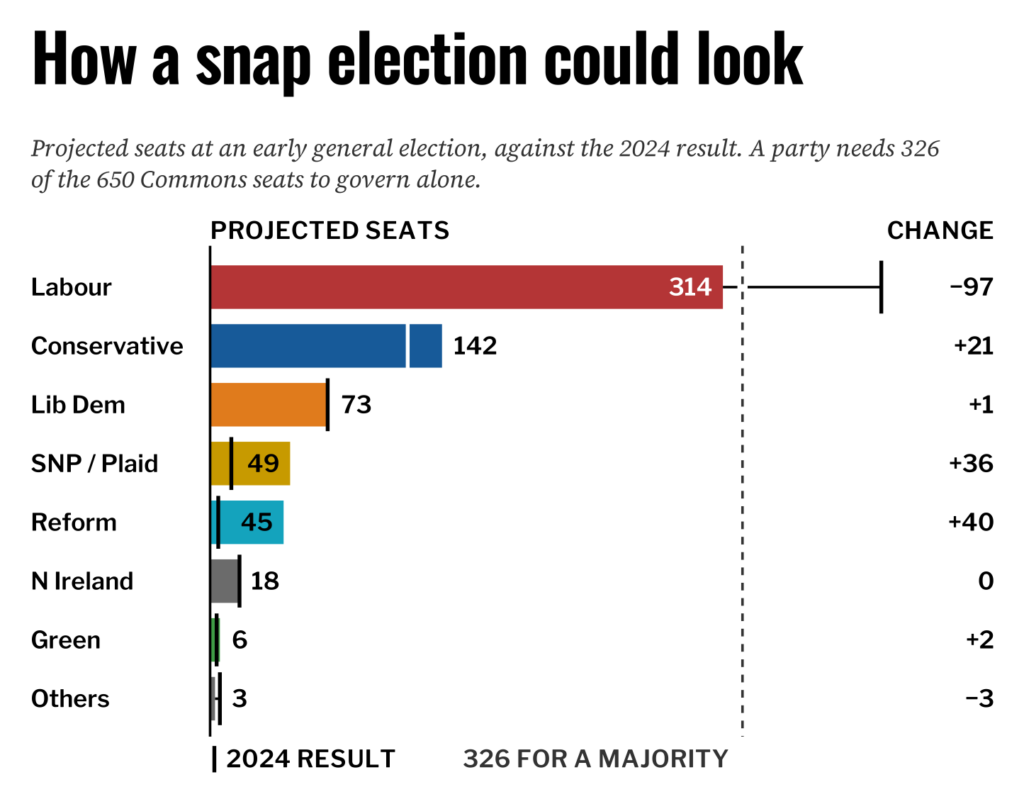
On these figures, Labour would be 11 seats short of an outright majority. It would retain five in every six seats it currently holds in England, but lose most of its Welsh and Scottish seats. However, it would remain by far the largest party. If Burnham’s main aim is to remain in office, the election would be a success. Labour MPs who lose their seats might think otherwise.
This projection involves a number of assumptions that cannot be guaranteed. The polls may be overstating Labour’s support, as they all did in 2024. Small voting differences will matter. In a multiparty election, more seats than usual will be won and lost by small margins. Each one point dip in Labour’s national vote share could cost it 20 seats.
Suggested Reading
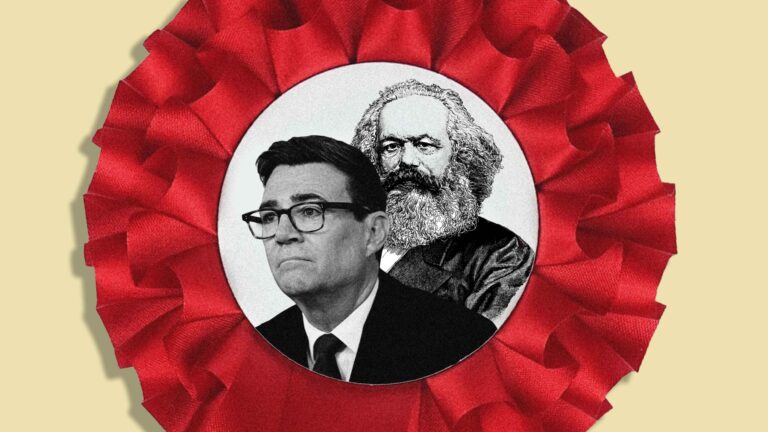

It’s time for Burnham to kill off old Labour
A Labour optimist would hope that the party gains support during the campaign. Labour might recover more in Wales and Scotland than recent polls suggest. Against that, there is a clear risk that the party will fall short of my seats projection, not only if its support slips during the campaign, but also if the currently divided right-of-centre vote lines up behind either the Tories or Reform, and one of them manages to overtake Labour in its marginal seats.
The nearest I can offer to a firm prediction is that a majority in the new parliament will favour a change in Britain’s voting system, if it is promised in both the Labour and Lib Dem manifestos. An early election could be the last fought under First Past The Post.
 Most popular

What happens to Trump if he loses the midterms?

It might not look like it, but a motoring miracle has now happened


How Abdul El-Sayed became the man who can break Trump

The truth that Northern Ireland has never confronted