To two of my favourite cities last week, Edinburgh and Dublin, and though the trips were for different reasons, a link emerged. In Edinburgh, I was speaking at an event organised by Levy, a major events and hospitality company. If you don’t know the company by name, you’ve almost certainly come into contact with their work, as they look after the food and drink at many of the best-known venues in the country: the O2, ExCel, the QE2, the Liverpool conference centre where Labour recently held their party conference, Twickenham rugby, Wimbledon tennis, and the most iconic venue of all, Turf Moor, Burnley.
Speaking at the same event was Paul van Zyl, who is today engaged, among other things, in helping big sports stadia serve their communities all week round, not just when the major events are on. If you’re interested in the history of apartheid South Africa, you might know him as the then young lawyer who was executive secretary of the Truth and Reconciliation Commission, which sat from 1995 to 1998, and is often seen as a model for how to bring enemies closer together in the aftermath of violence, division and war.
I have long been interested in its work, and took the advantage of being in the same place, same time as Paul to interview him for an upcoming episode of The Rest Is Politics LEADING, in which he told some remarkable stories about Nelson Mandela, Desmond Tutu, FW de Klerk, but also about the “ordinary people” who gave their testimonies.
And we discussed a question I have often pondered – should we have done something similar to the Truth and Reconciliation Commission after the Good Friday Agreement was reached in Northern Ireland?
Suggested Reading

My truly deranged encounter with Trump apologist Kellyanne Conway
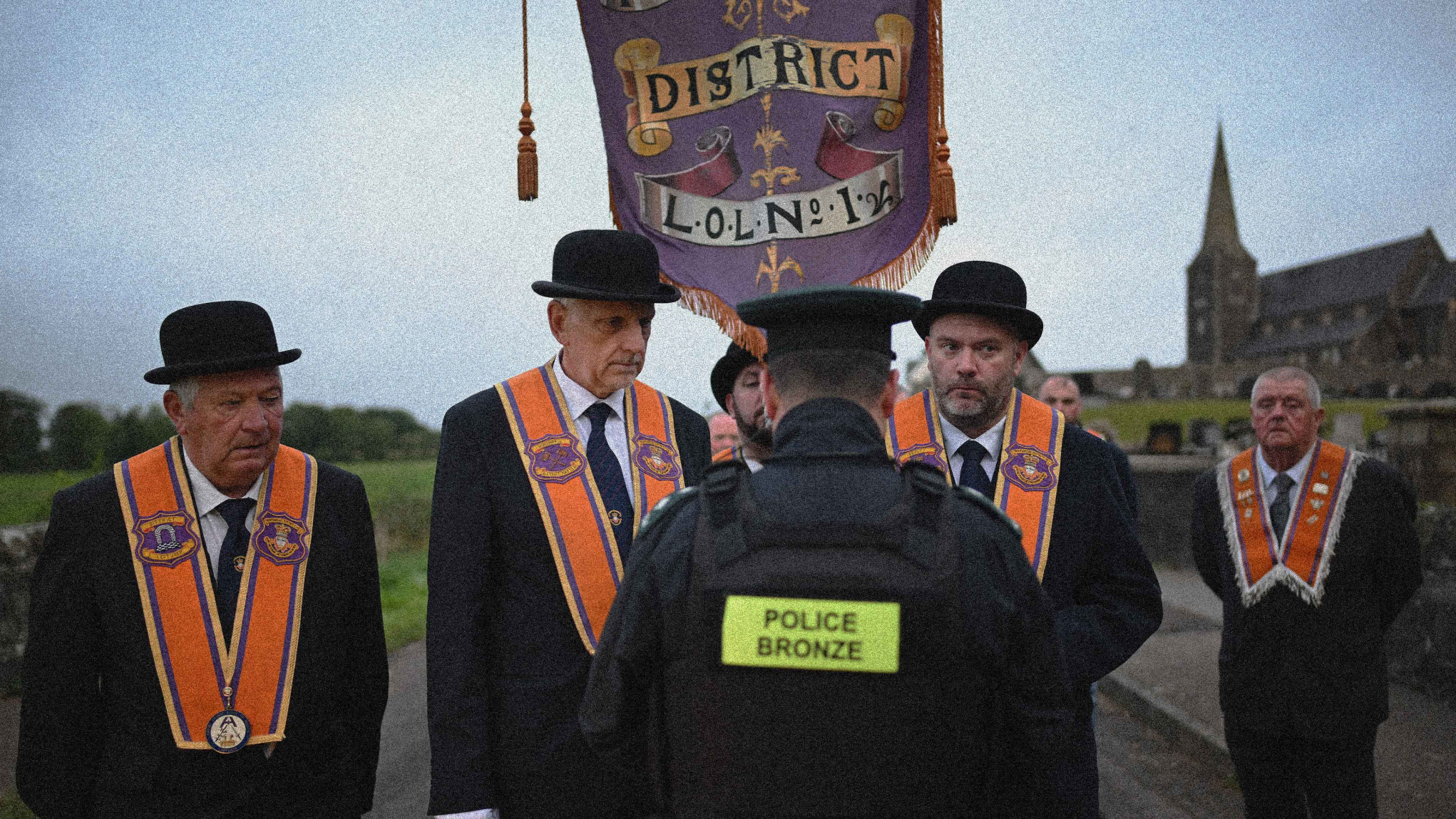
So to Dublin, (where incidentally there was a public-sector strike going on,) to speak at another event and do some media about my new book. In every engagement, I was asked what I thought about the continuing difficulties being caused by the Drumcree march; the Protestants’ determination to walk through a predominantly Catholic area as part of the route, and the Catholics’ determination to stop them.
My answer was that had we gone through the kind of process the South Africans did, would it be too much to hope that we could have moved beyond a march, whose purpose dates back to the Battle of the Boyne in 1690, becoming the cause of an annual political crisis that puts pressure on a process which has allowed a generation to be raised in relative peace?
I have had several interactions with the NHS in recent weeks, with my GP and also in a couple of London hospitals, and I have to say every single one of them has been superb. Now it might be that well-known and much-loved national treasures such as myself, even in an organisation as democratically founded as the NHS, get special treatment.
This was Fiona’s suggestion, when I went in for an 08.20 weekend blood test at the Royal Free, and was out by 08.10. I saw this as reward for my lifelong obsessive approach to time-keeping – 10 minutes early counts as late in my book – as I had arrived at 8am, and was seen well before my allotted time.
In any event, I could later inform Fiona to debunk her theory, one of the medics at University College Hospital, where I was discussing a part of my body you really don’t want or need to know about, clearly knew nothing about me beyond my medical history. As we went through his questionnaire, and reached “employment”, aware of my age, 69, he asked if I was retired. I said No.
“What do you do?” he asked. I rarely get asked that, and when I do, I never know what to say. The box on his form wasn’t really big enough for “a bit of this, a bit of that, and a bit of the other”.
So instead I found these dreaded words leaving my lips: “I’m guessing you don’t know who I am?” Even though I formulated this to sound less entitled and arrogant than “Don’t you know who I am?” it nonetheless does come over as a bit winky-wanky when you suggest that a complete stranger might be expected to know you, by name, face, voice, or all of the above.
“No,” he said, “I don’t.” He said he was from the Philippines. I gave him a potted version of my current life, at the end of which he decided “writer” should go into the box on the form. That’ll do, I guess, though it doesn’t tell the whole story.
My point is that regardless of who I am, I had excellent care at every stage of two different medical processes. One of them related to a part of my body I don’t mind talking about, namely the talking part, my vocal cords. The doctor in this case, Dr Hamilton, not only knew me, but was a subscriber to The Rest Is Politics, and said he was not surprised to see me, because he listened to the ups and downs of my voice every week, and could tell there were one or two issues.

As it happened, his tube-down-the-nose-with-a-camera-on-the-end examination did not confirm his original suspicions about what was happening in my larynx; instead, it revealed simply that my vocal cords were a lot thinner than they should be, which means I am putting my voice under strain pretty much every time I speak. Given the life I lead, which involves a lot of talking, I felt how I imagine footballers feel when they’re being shown the medical evidence to confirm the manager’s suspicion that “your legs have gone”.
As always with the NHS, however, there is good news. I will shortly be adding vocal therapy to the long list of different services within the NHS that have kept me, in the main, fairly sane, fit and healthy over seven decades. We are so, so lucky to have it, and whilst it may not be perfect, it is bloody good, and remains a big part of what makes Britain great.
The talking was especially intense last week and this, with more podcast episodes than usual, another trip to another of my favourite cities, Oslo, lots of speaking events and interviews for the new book, most importantly of course the launch event hosted by The New World, which the Lord Kitchener-style ad reminds you is offering a signed copy to every new subscriber. So if you’re not a subscriber already, I strongly recommend you become one; and if you are, what better present for a friend than signing them up for what you already have, and getting Persevilience thrown in for free?
PS: I know I am doing too much at the moment, and I have promised Fiona that after a trip to Australia next month, I will undertake an activity audit!
My first job in newspapers was as a trainee on the Tavistock Times in Devon; indeed that is where Fiona and I met, almost 50 years ago. The office was in the town centre, the paper’s masthead painted above the main door, a memory which returned as I visited the new offices of The New World last week, circumnavigating a ladder as a signwriter painted the TNW masthead above the door of our new offices near King’s Cross station.
It was just the latest sign, both that print journalism done well still has a future, and that The New World is here to stay.