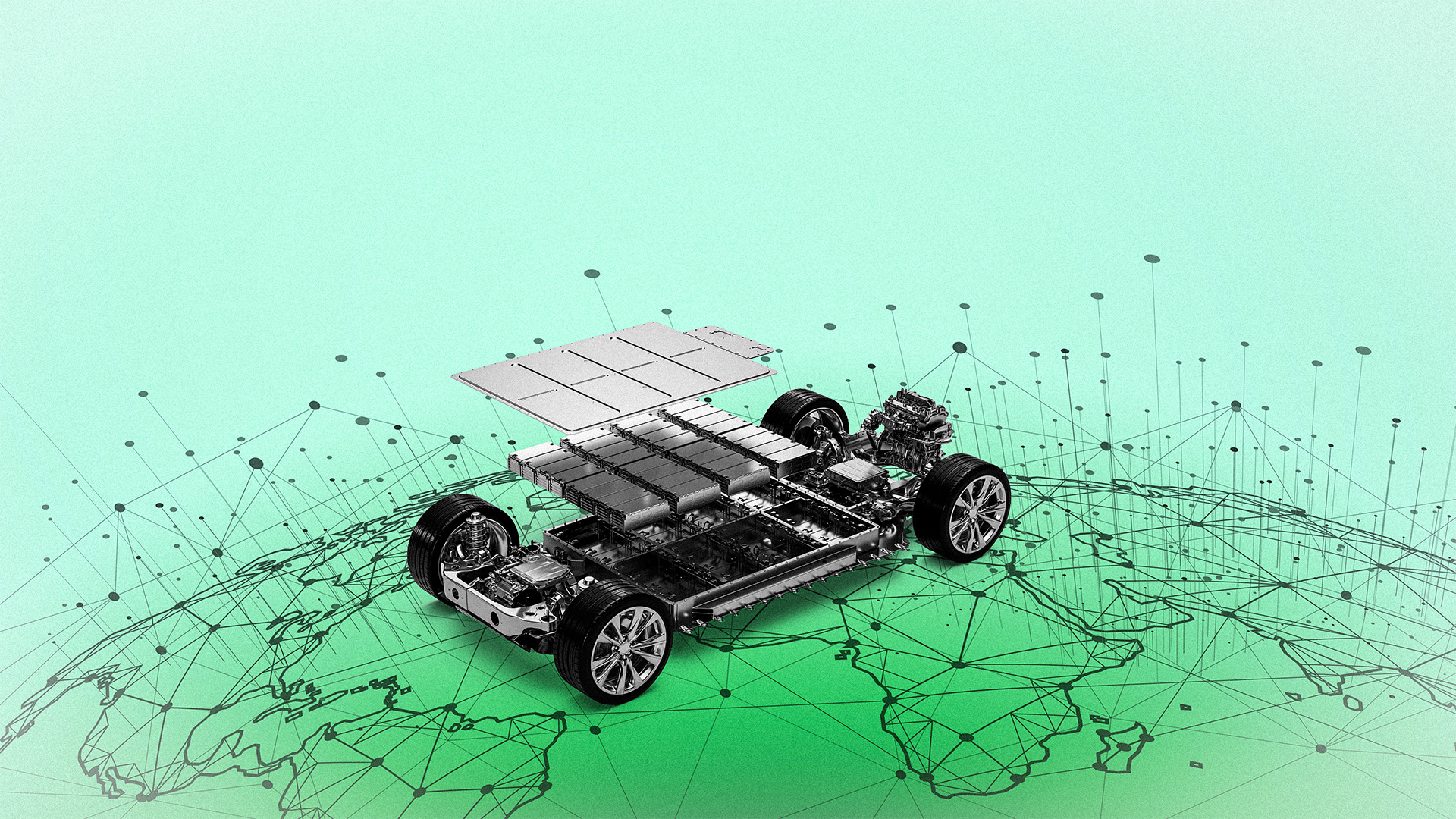
For years, electric vehicles were treated as an interesting experiment. Critics argued they were too expensive, batteries would never improve enough, charging infrastructure would always be inadequate, and consumers simply preferred petrol and diesel cars. Today, that debate is largely over. The question is no longer whether EVs will take over the market, but how quickly.
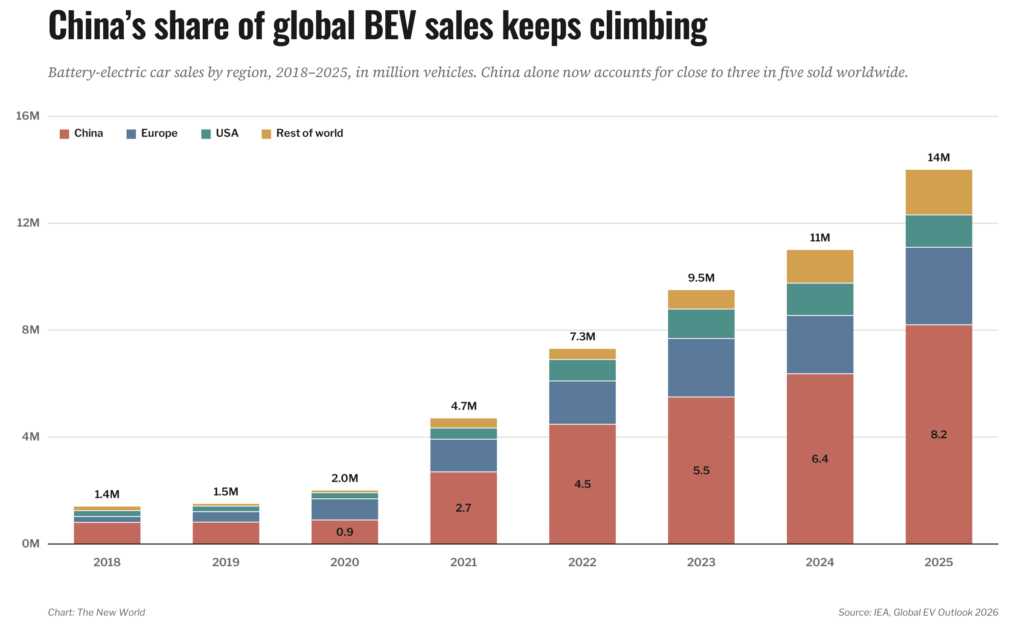
After a rocky start, the transition to electric vehicles now seems unstoppable. Battery prices have fallen by roughly 90% since 2010. The International Energy Agency (IEA) had to revise its projections upwards again and again because deployment kept surpassing previous forecasts. In 2015, 330,000 fully battery electric cars (BEVs) were sold globally, or around 1% of all new cars. In 2025 it was 14 million, a 27% increase from the year before and nearly double the figure of just three years earlier.
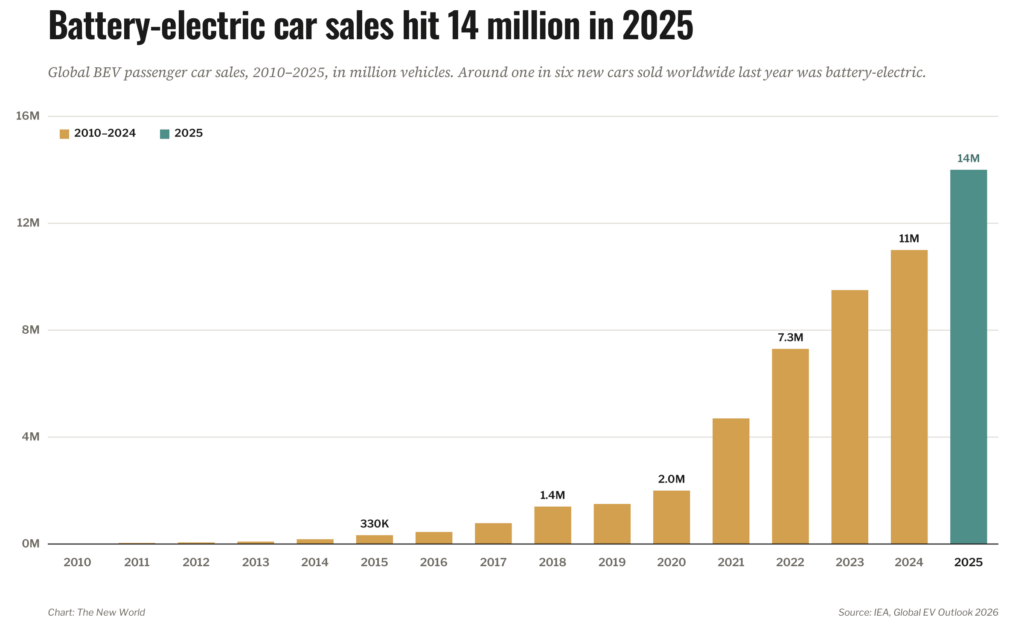
That was close to a fifth of all cars sold globally. When we include plug-in hybrids, 5% of the world’s car fleet is now electric and more than two thirds of all electric cars sold are now fully electric. Most recent analysis by the International Energy Agency (IEA) shows electric car sales prove resilient despite a weakening global car market.
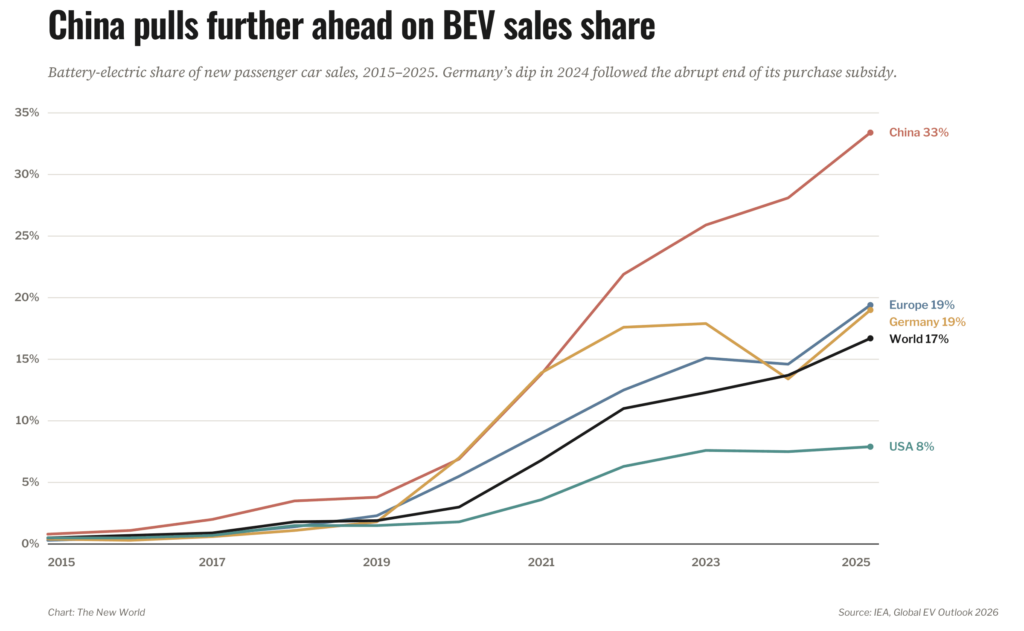
Critics will point out that the internal combustion engine still rules both in terms of new car sales and the stock of cars in operation today. And they are right. But it is worth reminding ourselves how quickly the progress we have seen has happened.
In 2008 the Tesla Roadster was launched, an expensive concept car that managed a 200-mile range. This was followed by the Nissan Leaf, the first widely successful mass-market car still in production today. Other smaller and more affordable cars entered the market with the Renault Zoe in 2011. The Tesla Model S offered the first premium long-range saloon in 2012 with lasting commercial success until the present day.
But it was Tesla’s Model 3 launched in 2017 that would transform the car market and reach truly high production volumes. Many carmakers followed and by 2025, there were around 650 different fully electric car models globally and this number keeps increasing every year.
The people who ran the car industry did not see this coming. In 2015 the former CEO of Daimler, the company named after one of the inventors of the modern automobile, publicly dismissed Tesla as a joke, not a serious company, an enterprise that would never take off. This was not an outlier view. It reflected the prevailing perspective in an industry that developed for more than a century perfecting the internal combustion engine. A rapid shift away from it seemed inconceivable.
Reality proved the incumbents wrong: within a few years Tesla was the world’s most valuable carmaker by market capitalisation. In 2023, the Model Y became Europe’s best-selling car, the first battery electric vehicle ever to do so.
The endgame
If you want to see where this ends, look at Norway, which is often portrayed as a special case. It is one of the richest countries in the world with vast oil and gas resources, which certainly helps. But it is not the full story. Norway had been incentivising EVs since the early 1990s, decades before most countries developed policies to support EV uptake.
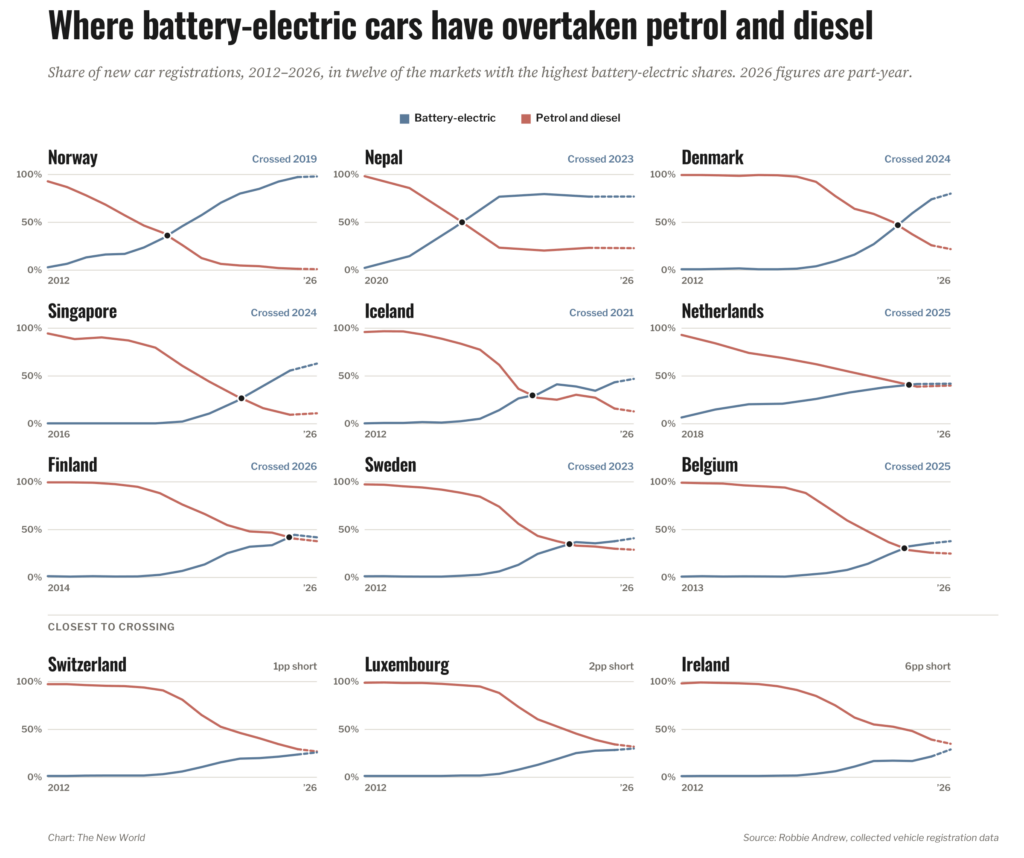
The results are impressive. In the first quarter of 2026, fully electric cars accounted for 98% of all new sales. That’s of course only cars sold – but out of the nation’s total stock, 32% are now fully electric.
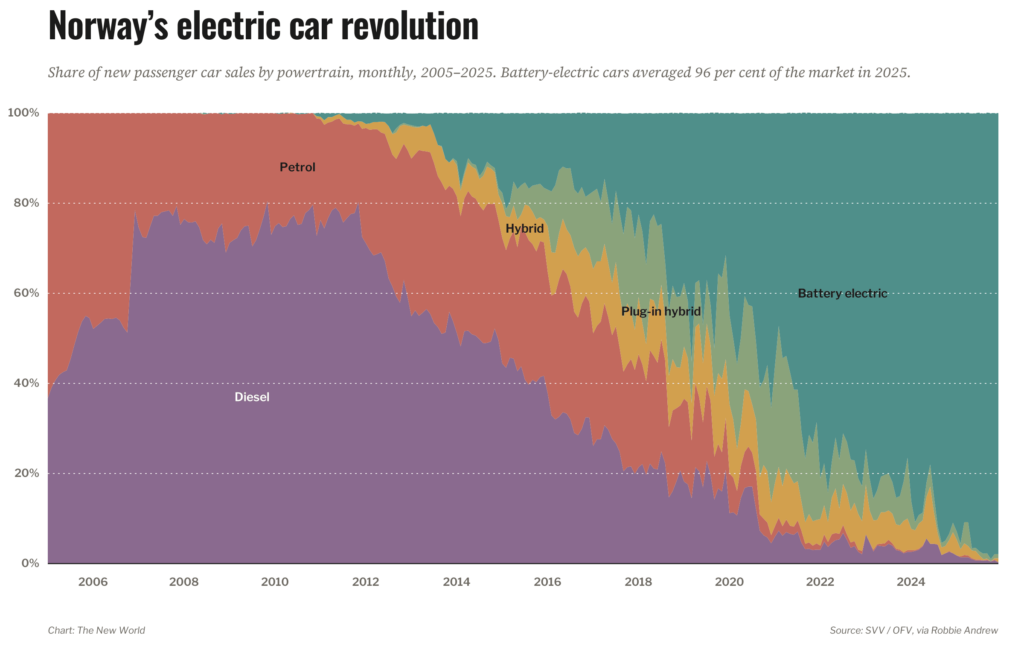
How did they achieve this? It was a combination of different measures. Electric cars were exempted from the purchase taxes imposed on conventional cars. Electricity is cheap relative to petrol. Free parking, reduced tolls, access to bus lanes, and cheaper ferries were all softer measures deployed to make EVs more attractive to people.
China dominates
As with so much of the clean energy industry, China dominates global electric car markets. In 2025, 8.2m fully electric cars were sold in China – more than half of global sales. China built an industry that barely existed fifteen years ag and has now risen to the world’s number one car exporter by volume. BYD, a company most Europeans had never heard of five years ago, has overtaken Volkswagen as the best-selling brand in China.
Emerging markets
The real issue with EVs is the growth we are seeing in emerging markets. Take Ethiopia. In January 2024 it became the first country in the world to ban the import of petrol and diesel cars. It also introduced a zero customs duty on locally assembled electric cars. By the end of 2024 more than 60% of new cars sold were fully electric.
The logic was not so much climate policy but energy security: Ethiopia spends a lot of money every year on imported fuel while its own grid runs on more than 90% renewable electricity. But Ethiopia is a small country in terms of the numbers of cars being sold and could be an outlier. Just that it isn’t – there are many other countries in emerging markets now where electric cars are catching on.
Nepal, another mountainous country rich in hydropower and dependent on imported fuel, went from electric cars making up less than 1% of new four-wheeler imports in 2019–20 to more than 75% in 2024. It took only four years. Norway needed almost two decades to achieve something similar.
The pattern that is emerging is that in more and more countries, electric vehicles start to outsell petrol and diesel vehicles following the typical X shape of transitions. Robbie Andrew helpfully tracks this below.
Where next?
By 2035, the IEA expects close to 50% of all cars sold globally and close to 30% of the car fleet to be electric.
The consequences will reach far beyond the car industry itself. Road transport accounts for nearly half of global oil demand. Every electric car that replaces a petrol or diesel car permanently removes a small amount of continuous oil consumption. Over time, it all adds up.
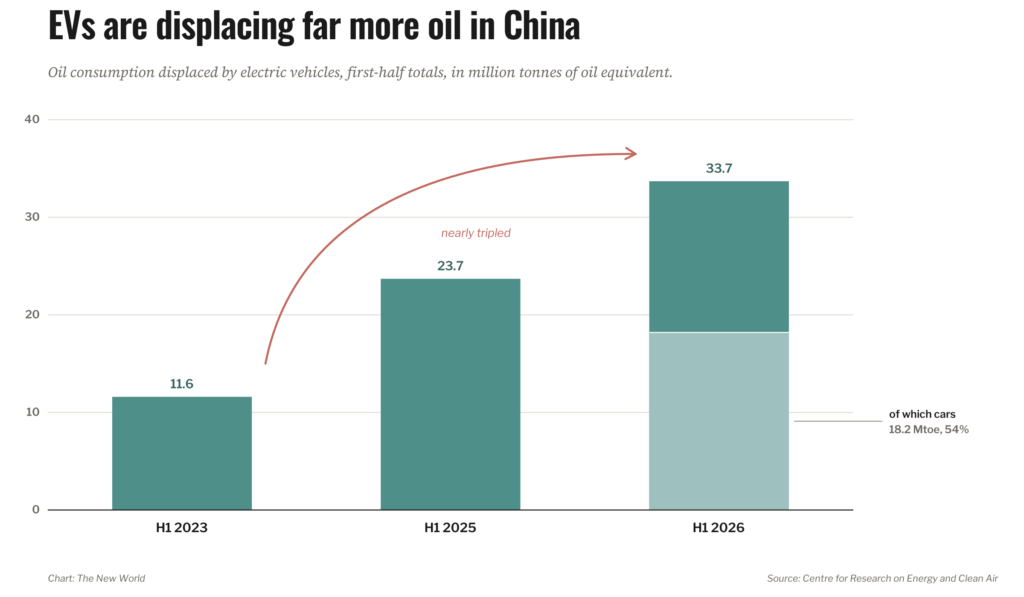
A good example is China: in the first half of 2026, EVs displaced an estimated 33.7m tonnes of oil consumption, up 42% from 23.7m in 2025. This is more than three times the EV-driven oil displacement in the equivalent period in 2023 which was 11.6m. The fossil fuel displaced by EVs in the recent six months was roughly equivalent to 6% of China’s total crude oil imports in 2025, around 22 days of imports at last year’s average rate.
Anyone today who judges the future of transport from the current share of electric cars on the road will be surprised. The fleet on the road tells you more about the past. The sales figures tell us about the future and they are only going in one direction.
Jan Rosenow writes at Substack here
 Most popular


Liz Truss’s new mini-book is every bit as bad as her mini-budget

His dad tried to overthrow Putin – now Pavel Prigozhin runs an African country

I was at Eton with Charles Spencer – this is how it explains his battle with the royals


Forget the Terminator – the age of AI weaponry is already here