
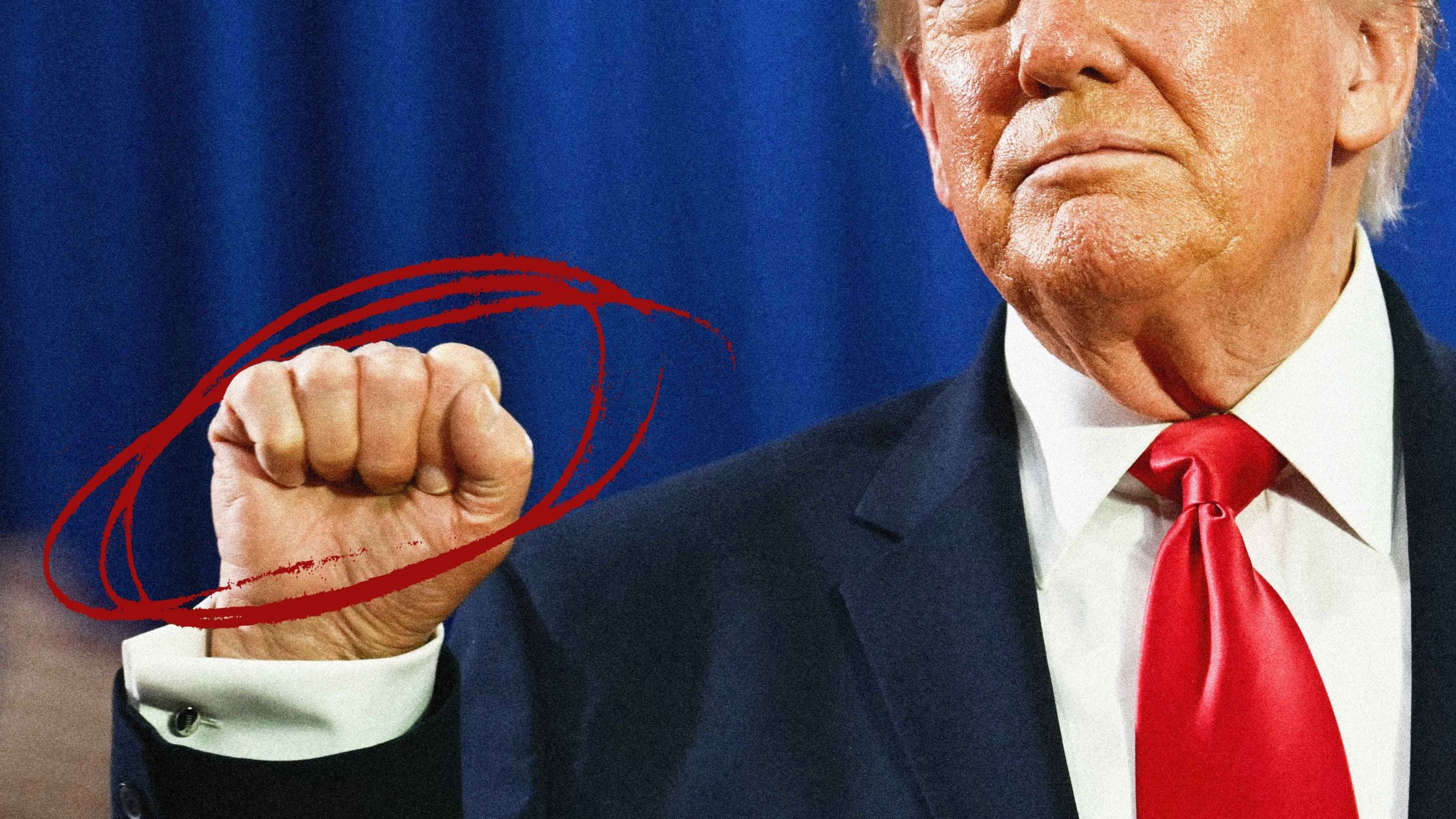
President Donald Trump has peered into his crystal ball, and he seems to see something very different to the rest of us.
Predictions that Republican candidates will fall like dominoes at the upcoming midterm elections are based on “fake polls”, the President said last week, insisting that he felt great about the crucial Senate and House elections which will take place on Nov 3.
“A lot of the polls are rigged, just like the journalists are rigged,” he huffed with his usual grace and tact when asked about the elections, when 35 Senate seats and all 435 seats in the House of Representatives are up for grabs.
The Democratic Party needs to flip at least four Senate seats to win back control of the upper house. Right now, their candidates are polling ahead in key races in Michigan, Maine, Ohio, New Hampshire, North Carolina, and even solidly red Texas. Pollsters are also predicting that the Democrats will claim a majority in the House of Representatives, as voters look to punish Trump’s party for the soaring cost of living and the deeply unpopular war on Iran.
If Trump is right and all the polls are wrong, then everything is rosy for the 47th US President, and he can get back to running roughshod over democratic norms while relying on a largely compliant Congress to rubber-stamp his agenda.
But should the predictions of a Republican rout prove correct, and Democrats take control of one or both houses, America could be in for a very rocky ride, given this is a president who loathes losing and has a demonstrated taste for revenge and retribution.
The first concern is whether Trump will escalate his claims that the polls are rigged and start questioning the veracity of the results themselves. A recent survey by The Washington Post, ABC News, and Ipsos found that seven in ten Americans were not confident that Trump would accept the result should Republicans lose the midterms.
We have been here before, of course, when Trump’s false claims that he was robbed of the 2020 election incensed the mob that went on to ransack the US Capitol building on January 6, 2021.
Trump pardoned more than 1,500 rioters and protesters who were convicted of Jan 6 crimes ranging from insurrection to assaulting law enforcement, securing lifelong loyalty from a motley crew including conspiracy theorists, militia members and far-right rabble-rousers.
The White House has already been laying the groundwork for claims of electoral fraud with an incessant campaign of misinformation casting doubt on the sanctity of mail-in ballots and voting machines and alleging widespread voting by undocumented migrants.
Across the country, local election officials are putting in place contingency plans in case there are attempts to send federal agents to ballot stations, seize ballot papers and voting machines, or challenge the vote in any other way.

Last Thursday, the Justice Department pre-emptively applied to block certification of the crucial Alaska Senate race if the Democratic candidate won by a close margin, citing the appearance of two Republican candidates with similar names on the ballot paper.
Whether he recognises the result or not, Trump will inevitably look for someone to blame other than himself, and that includes members of his own inner circle. Disastrous midterms often prompt a cabinet reshuffle, and US media have been reporting an atmosphere of foreboding and in-fighting in the White House as people try and save their skins.
“It’s more brutal than any other situation in modern times in the White House,” one Trump ally told CNN, with another advisor adding “everyone is fair game”.
Politico reported that Trump’s chief of staff Susie Wiles may be in the firing line, while another potential head to roll is defense secretary – or war secretary, as he prefers to be called – Pete Hegseth. He has become a lightning rod for the Democrats, who will try to launch impeachment proceedings against him, and if Trump is looking for a scapegoat over Iran, he could be the ideal candidate.
As well as turning on his own, Trump will scale up his attacks on his opponents.
The Democrats have been coy about whether they will launch impeachment proceedings against the president should they gain control of either house, but Trump’s life-long strategy in business and politics has been to attack first, and attack hard.
“They’ll probably go after me, and I’ll go after them,” Trump told TIME magazine in an interview on October 1, when he also declined to rule out deploying the military or invoking the Insurrection Act after the midterms.
While those are the nuclear options, Trump has shown a willingness to use the Justice Department to pursue personal vendettas, and he could instruct its lawyers to investigate Democrats who launch congressional probes into his actions as president.
So all-out war on the home front is a possibility, but what about overseas? With his domestic powers stymied, Trump could go all in on foreign interventions, and the New York Times has reported that he is considering a fresh wave of strikes in Iran immediately after the midterms.
Ensuring his legacy is one of Trump’s chief concerns, and he would not want that legacy to be leaving the United States mired in an intractable war in the Middle East.
He also promised to end the Ukraine war within 24 hours of taking office, but he is edging close to 24 months into his second term, and there is no sign of success.
Wrapping up a foreign conflict would be appealing to a President looking for something positive to crow about, leading to concerns that hasty concessions could be made to the detriment of Ukraine, especially given Trump’s recent cosiness with Vladimir Putin.
But for all the potential fire and fury, there is another less dramatic option for Trump should he be hobbled in his policy goals: attention-seeking and legacy-building.
Suggested Reading

I went looking for Trump’s America – this is what I found
Trump likes all eyes on him, but those eyes will shift towards the 2028 Presidential elections as soon as the midterm results are known, and attention will be on the candidates to succeed him. Vice-president JD Vance and secretary of state Marco Rubio are currently the frontrunners, but Trump has so far held back from endorsing anyone.
Expect a drawn-out tease as he relishes his role of kingmaker – and perhaps some insinuation that he wouldn’t mind an (unconstitutional) third term.
Or the 80-year-old president could become increasingly insular. Already his many Washington construction projects seem to interest him more than the everyday annoyances of governing. Barely a speech or public appearance goes by without Trump referencing his White House ballroom, or another of the vanity builds taking place in the capital.
Given that his political and foreign policy legacy is looking precarious, the former real estate mogul may decide he wants to concentrate on a physical legacy that will stand in Washington DC long after he has departed.
But the ballroom won’t be built before the end of Trump’s term, and the Democrats could use a majority in Congress to investigate or halt the vast $600 million vanity project, so most likely it will end up as another flashpoint in a tumultuous two years ahead in Washington.
Any hopes of a quiet retreat for Trump into his bunker-like ballroom seem woefully optimistic.
 Most popular


Liz Truss’s new mini-book is every bit as bad as her mini-budget

His dad tried to overthrow Putin – now Pavel Prigozhin runs an African country

I was at Eton with Charles Spencer – this is how it explains his battle with the royals


Forget the Terminator – the age of AI weaponry is already here