Western officials were, in private, apprehensive before Nato’s Ankara summit. Would Donald Trump unleash a tirade against the departing Keir Starmer over defence spending? Would he pull more troops out of Europe or even – and this was seriously feared – step away from the basic Article 5 commitment to mutual self-defence?
In the end – apart from a verbal onslaught against Spain, against whom he called for a trade boycott, and an outburst against Iran – the summit ended without fissure.
Trump privately assured European leaders, “we want to remain with you”. He signed a deal to allow Ukraine to produce Patriot missiles, and rubber-stamped a European-Canadian plan to provide €70bn of aid.
Crucially, he signed a short declaration reiterating America’s commitment to Article 5. Having railed against Nato for its members’ refusal to join the Iran war, all was now peace and light.
Why? Because in every other sphere of the world, Trump’s foreign policy has produced only defeat, retreat and the diminishment of US power. He needed a win at Ankara because, in the 18 months he’s been in power, he has lost – over and over again.
In Gaza, where the Board of Peace is supposed to be presiding over a technocratic government and reconstruction process, there is only blood, pulverised concrete and continued misery.
In the conflict with Iran, where Benjamin Netanyahu bounced Trump into an unwinnable regional conflict, consuming years’ worth of ammunition, the results have been catastrophic for the world. Trump has destabilised the Gulf, left Tehran in control of the Strait of Hormuz, and the peace deal he signed with maximum flourish at Versailles on June 17 was toast by July 7.
Suggested Reading


A Critical National Infrastructure superministry could fix Britain
For the horrified remainder of the world, the true cost of this spectacular folly is only beginning to be felt. The global fertiliser shortage triggered by the closure of the Strait will lead to food shortages and price rises in British supermarkets well into next year, even if the blockade ends now.
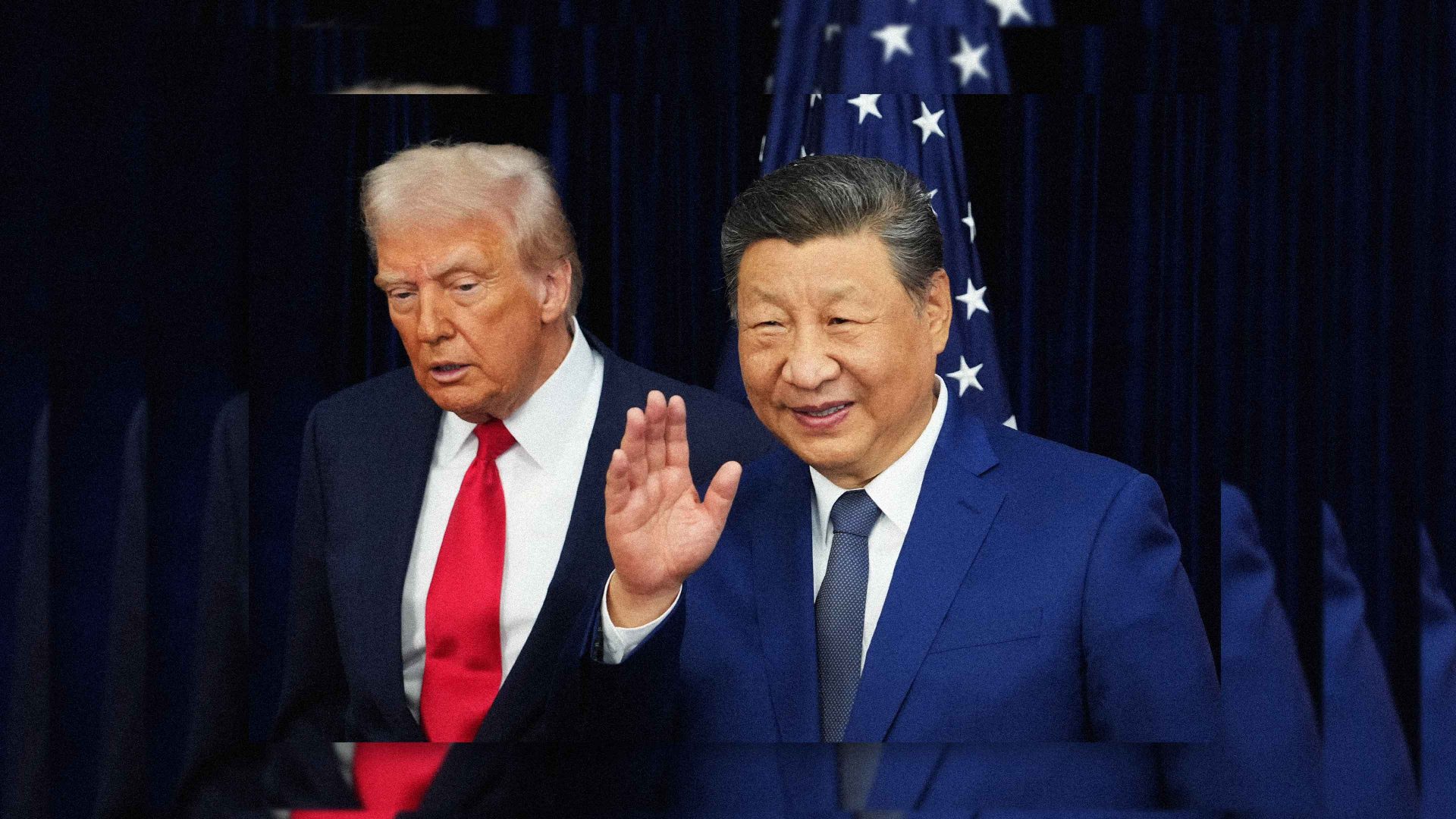
But Trump’s most far-reaching failure has been the trade war with China, which he lost so badly that, at a summit in Beijing, he was forced into language that left Washington’s China hawks with their jaws, privately, on the floor.
Let’s recap. On April 2, 2025, Trump used emergency powers to declare trade war both with China and the rest of the world. He slapped 34% tariffs on Chinese imports, escalating to 84%, 125% and finally 145% as China matched him tit-for-tat. Beijing banned Hollywood films and severely restricted exports of critical minerals known as rare earths.
Though the parties de-escalated after May, and declared a one-year truce at the Busan summit last October, Trump went into his Beijing meeting with Xi Jinping chastened. And then the real reckoning began.
China wanted access restored to US-manufactured jet engines and it got them. Trump wanted China’s ban on rare earth exports lifted – but it wasn’t even mentioned in Beijing’s readout from the talks. China wanted access to US semiconductors and software, and again achieved that outcome.
In total, China paused its aggressive regime of export controls while the USA abandoned its own, leaving the final showdown to take place this coming November.
But it was over Taiwan that Beijing scored its biggest diplomatic victory. Trump basically adopted Chinese diplomatic language over the conflict and called into question a major arms deal with Taiwan, which he said he had “discussed in great detail” with Xi himself.
And while outcomes in Beijing remain clouded by non-announcements, and are disputed by analysts, one thing is clear: Trump has detached the issue of Taiwan from America’s “alliance management” in the Pacific.
In Beijing, he was dealing direct with Xi, regardless of the interests of Taiwan itself, the Philippines (whose ships are regularly rammed by China’s coastguard), South Korea and Japan.
And while that is par for the course for Trump, it has shocked America’s allies in the region, who have become used to Washington taking great care to inform, include and coordinate with its Pacific allies.
Suggested Reading
Why have we let Putin get away with it for so long?
There is an Act of Congress, passed in 1979, which pledges the USA to supply Taiwan with the material needed to defend itself. In 1982, Ronald Reagan famously made six “assurances” to Taiwan, including that it would neither mediate between Beijing and Taipei, nor negotiate with the PRC over the legitimacy of arms sales.
For Trump to describe the arms deal as “a very good negotiating chip” violates the spirit and the letter of US foreign policy towards the region. The fear throughout the region is that Trump is prepared to trade Taiwan for US soya bean exports.
Where has the past 18 months left American power in the world? The indubitable answer is: diminished. Trump has failed over Gaza, failed against Iran and was forced to go cap in hand to Beijing to conclude one of the most unequal truces in the history of trade conflict. He has reneged on an essential moral component of American power in the Pacific – Reagan’s “six assurances” – and it’s not over.
The result is to destabilise the world. Which if Trump had set out to do might be deemed some kind of perverse victory. But the entire tenor of his foreign policy statements – the National Security Strategy and National Defense Strategy – has been to seek stability at the cost of diminished American power and reach.
We should resist the temptation to pin it all on the man himself. He is still surrounded by a US foreign policy apparatus of formidable sophistication, and the strongest armed force on earth.
This is about the decline of American power tout court. A semi-senile and indecisive Biden has been replaced by a helpless Trump. The “tilt” of American power away from Europe to the Pacific has, in the 15 years since it began, revealed only the extent of its decline relative to a rising China.
So I read Trump’s behaviour at the Nato summit – erratic as it was – as an act of clinging to what endures.
Suggested Reading
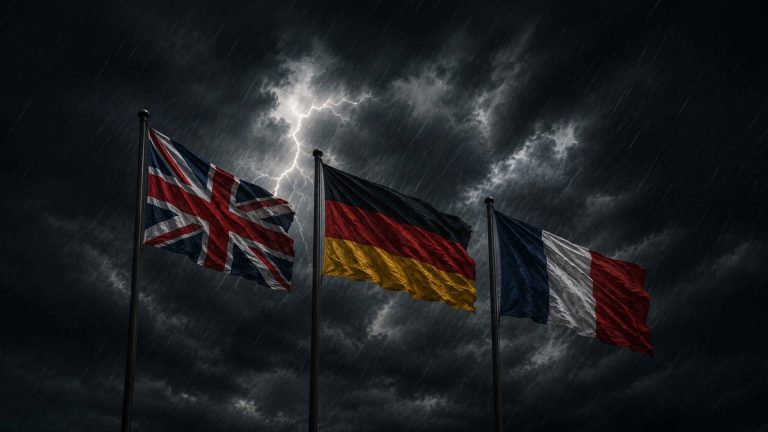
France, Germany, Britain: which one’s in the deepest shit?
Among our European neighbours, the summit itself enhanced solidarity. In the final days of his premiership, Keir Starmer put together a 12-nation project to build “deep precision strike” weapons, costing £37bn. Nato itself will create a single “front door” for equipment suppliers and declassify its requirements, allowing suppliers a clear and open marketplace to fulfil them.
And the reintegration of Türkiye into Nato arms sales, galling though it is given Erdoğan’s suppression of democratic rights, has to be seen as progress compared with the years when Türkiye’s deals with Russia precluded such collaboration.
Europe stronger, America chastened, China calling the shots and the rest of the Pacific hung out to dry by a weak and disorientated Trump administration. That’s the interim report on 18 months of the Mar-a-Lago method.
What it means for Europeans should be clear. The Open Strategic Autonomy project is the only path that leaves us capable of defending our interests in the world – whether against Russian aggression, Chinese industrial competition or America’s moral decrepitude.
The sooner Britain redoubles its efforts to seek a customs union with the EU, and a larger security treaty involving all European states plus Ukraine, the better.