The two most important German words doing the rounds are: die Shitshow and der Shitstorm. But if you use them, make sure you get the definite articles right.
The latest example of maudlin humour doing the rounds in Berlin testifies to a country ill at ease. But then you ask yourself – indeed I ask myself all the time – when was the last time a German responded to the usual “how are you?” with the answer “great thanks, nothing to complain about”?
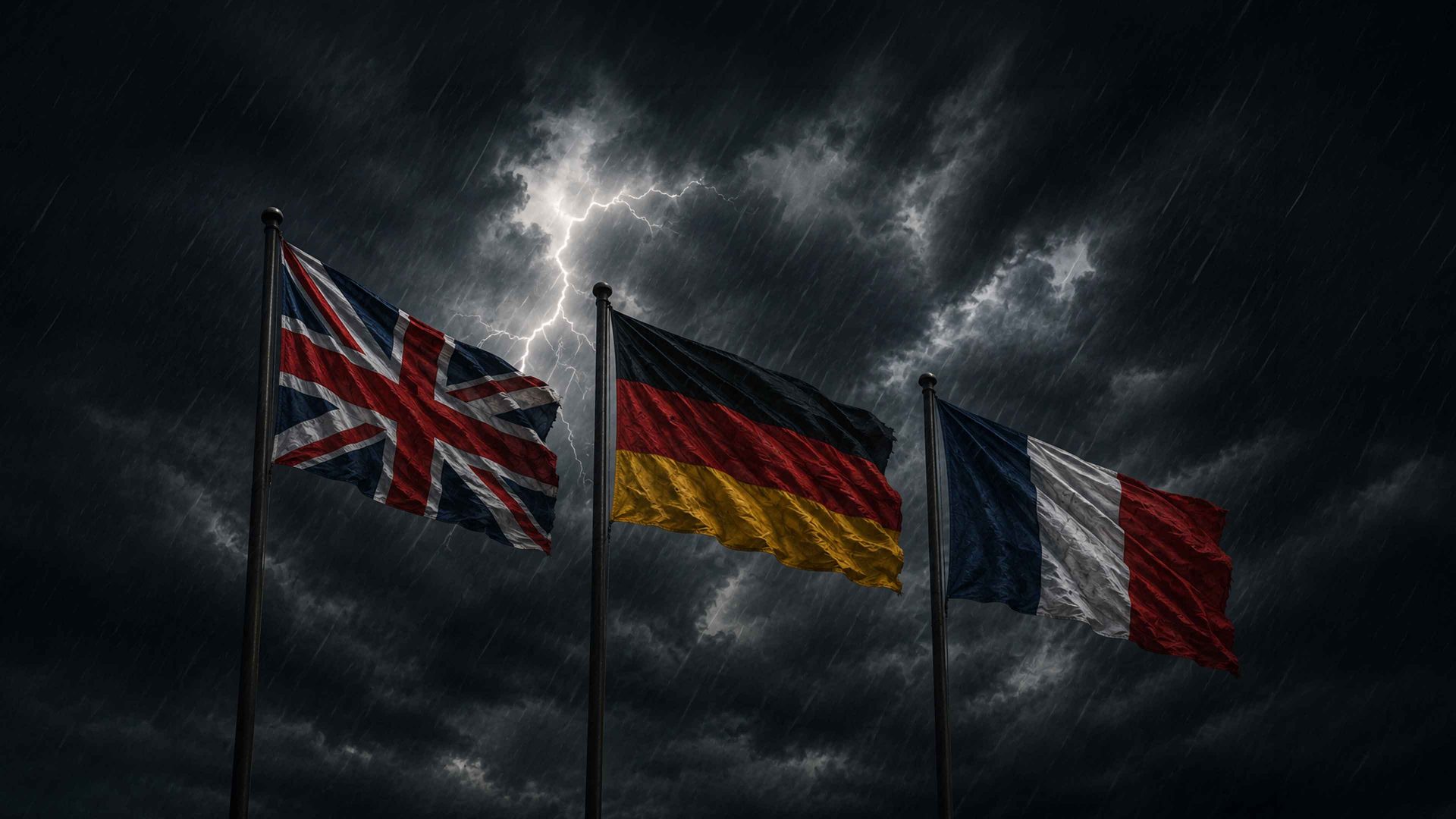
Now the Germans have a real reason to complain: the state of their politics and the state of their economy. They also have two rivals for lugubriousness – the French and the Brits. Indeed, it’s become a ritual among a certain set to debate which of the three countries is in the deepest shit.
The fundamentals are broadly similar between the ailing trio – stagnant growth, non-performing governments, surly populaces, the poison spread online with the help of Elon Musk, and the seemingly inexorable rise of far-right populists. But the extent of the danger fluctuates on a weekly basis.
France is the easiest of the three to read. Everything begins and ends with the two rounds of voting next April and May, which could see Marine Le Pen take office with arguably more executive powers than in any other western system, including the US. It is a binary outcome. Disaster strikes or disaster averted.
This spring and summer have not been kind to Trump. He and his friend in the Kremlin, Vladimir Putin, have suffered a series of setbacks in Iran and Ukraine respectively; they are seeing their first stirrings of discontent at home as a result. The only tangible victory for Trump was getting a US footballer reinstated in the World Cup. And even that didn’t end well.
However, a victory for the far-right in France, the European Union’s second largest economy and its only nuclear power – would reverse the dynamic entirely, giving the populist movement the boost it sorely needed. It would further jeopardise Nato and the EU.
The decision of the court earlier this month to shorten Le Pen’s sentence for her embezzlement conviction has paved the way for the leader of the National Rally (RN) to pull rank on the 30-year-old upstart, Jordan Bardella, and stand in the presidential elections, with or without an electronic bracelet on her ankle.
Such a stigma might deter a conventional politician, but for the far-right it is a badge of honour, enabling leaders such as her to portray her fight as against the establishment, the blob, the swamp. Nigel Farage is doing it; Alice Weidel has long done it. They have all taken their cues from Donald Trump.
Suggested Reading

Why the papers say Burnham is stuck in Life On Mars
There was hope in Brussels, Berlin and elsewhere that the younger Bardella might be a more amenable president than the veteran bruiser, a Francophone version of Giorgia Meloni. That may have been wishful thinking. In any case that is now gone.
Le Pen and Bardella will be a formidable electoral duo (if they can campaign together without acrimony). But as the Gilets Jaunes protests of 2018-2020 attested, the anti-establishment movement extends beyond the RN itself, incorporating elements of the France Unbowed movement of Jean-Luc Mélenchon – the classic case of the horseshoe, of far-left and far-right converging.
The prospect of a final round between Le Pen and Mélenchon would provide the ultimate proof of the failure of the centre to cut through. The fact that mainstream parties have yet to produce a convincing candidate – at least 30 are touting for support – has given the two extremist movements the early initiative.
Even if the centre alights on a single name, will he or she have time to catch up? And in any case, many voters have had enough of being pressurised into opting for the “whoever isn’t a Le Pen” candidate, as has happened in three of the last five run-offs dating back to 2002.
France has nine months to ponder Armageddon. In Germany, the danger is more immediate. On September 6, voters go to the polls in the small eastern German Land of Saxony Anhalt. The AfD is on course for 40% and no matter what comes the party’s way – the vagaries of Trump, the cosying up to Putin or ongoing allegations of spying and corruption – there are no signs of its appeal fading. Not yet anyway.
It is the new Teflon party. Depending on the vote distribution to smaller parties, the AfD could end up running the state on its own. That would have seismic consequences locally – changes to certain aspects of school and cultural life and ensuring an even more hostile environment for immigrants. It would make it more difficult for the administrations across Germany’s other 15 regions to share information. And it would send ripples across national politics.
Even if the AfD falls just short, the only way to keep it out of government would be for the other three or even four parties to cobble together an unwieldy coalition that would look terrible for democracy – and would almost certainly collapse.
Two weeks later, elections will be held in another eastern state, Mecklenburg Vorpommern. The AfD is also consistently in the lead but will be unlikely to garner enough votes to govern there.
Nevertheless, the progress is consistent, the pressure relentless – and, crucially, the AfD doesn’t depend on the popularity of an individual. I have yet to meet anyone who votes for the party because of the personality of Alice Weidel, less still the co-leader Tino Chrupalla. This makes it potentially more durable.
The only positive news for mainstream politics is that Friedrich Merz’s ruling coalition in Berlin is likely to last the course, simply because his Christian Democrats and their junior partners, the Social Democrats, know that a collapse would lead to electoral humiliation.
The reform package they announced shortly before the summer recess may have been nine months late; it may have included some measures that have already led to mirth (such as a requirement that anyone needing a sick note from work will have to go in person to an already over-stretched doctor’s surgery).
Suggested Reading
A Critical National Infrastructure superministry could fix Britain
Nevertheless, it marked the biggest set of tax and welfare changes since the early 2000s. Merz is counting on this to kickstart the sluggish economy and demonstrate to voters that they have a functioning government. And slowly but surely – langsam aber sicher as the Germans would say – that might persuade enough back into the fold by the time the next general election comes around in 2029.
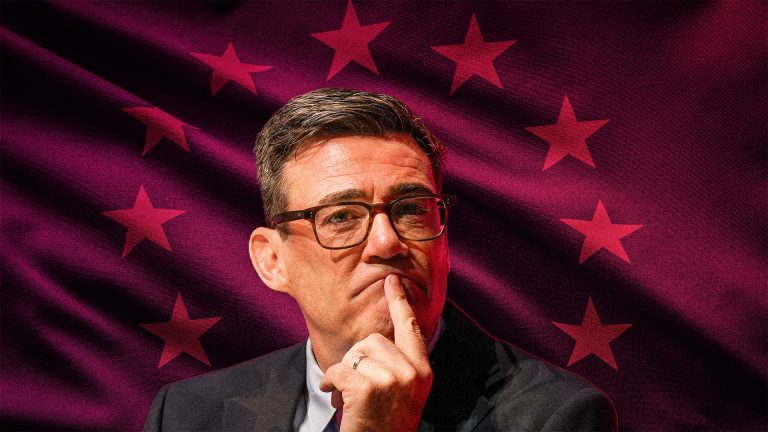
Which leaves Britain, remarkably the source of the most optimism, or rather the least pessimism. Has the UK finally alighted upon someone with charisma and competence? Who would have thought? The arrival of the King of the North, the seventh prime minister in 10 years, has certainly given Labour a new lease of life.
Andy Burnham has certainly been dealt a fortunate hand with Farage’s descent further into the abyss of grievance and self-delusion. Might he ever recover from defeat by a man with a rubbish bin over his head? And even if the great burghers of Clacton renew their vows with him, will his stunt buy him time and give him ammunition to fight the various allegations of financial misdemeanours?
There are other reasons to predict that the Reform bubble may have burst. Its polling numbers have flatlined for some time, coming off their peaks. It has not won a (serious) by-election for more than a year. As for Farage, as he has shown more than once in his career, he is not wedded to conventional politics; the allure of money-making and showbusiness is at least as attractive. If Liz Truss can earn tens of thousands for speeches to the MAGA crowd, imagine what Farage could trouser if he devoted himself to addressing the faithful full-time.
The parties he has led (in the early years UKIP and the Brexit party) have always been entirely dependent on him. As a result, Reform UK appears structurally more fragile than its French and German counterparts.
Suggested Reading

The unravelling of Nigel Farage
Yet before Brits get ahead of themselves – and even lefties enjoy a bit of Schadenfreude when it comes to the French and Germans – they would be advised to reflect on the recent past. The advent of Keir Starmer in Number 10 might not have had people dancing in the streets in a replay of Tony Blair c.1997, but it did give rise to hopes that the sheer fact of having a grownup in office would repair all the ills bequeathed by a decade of the clowns.
Burnham will have learnt from Starmer’s mistakes, but he will make his own, and he will be operating in an environment that is more hostile than it has ever been. He will need to show the kind of courage and long-term conviction that eluded his predecessor.
He will also need no reminding that the reports of the death of populism are greatly exaggerated. Just as Trump I morphed into Trump II, so Trump II could morph into Trump III/Putin, or into Vance. Just as Viktor Orbán was seen off in April 2026, an even greater threat could emanate from France in 2027.
In Germany, the AfD is waiting in the wings. Farage might eventually be seen off, but that does not mean that the far-right in the UK is down and out. Think Restore, think Tommy Robinson, think Musk and a trillion.
It will take boldness, resilience and imagination to see off these various threats. The next round in the existential fight is only beginning.
John Kampfner’s latest book, Braver New World, is published by Atlantic.
 Most popular

How Trump and the Republicans screwed it all up

Suella Braverman’s book has sold only 106 copies. This is why

Trump’s snuff politics is a new low in American cruelty
I was at Eton with Charles Spencer – this is how it explains his battle with the royals