It was, I assume, cosmic payback for my proud decision to boycott America’s World Cup, followed by my failure to actually stand by my word. I’d told both myself and others that I wouldn’t tune into the tournament, for all the obvious reasons, and though I did manage to resist the temptation for much of the group stages, my resolve ended up breaking. In my defence, all three of my teams – France, Morocco and England – had made it to the group of 32. I just couldn’t bear missing what’d happen next.
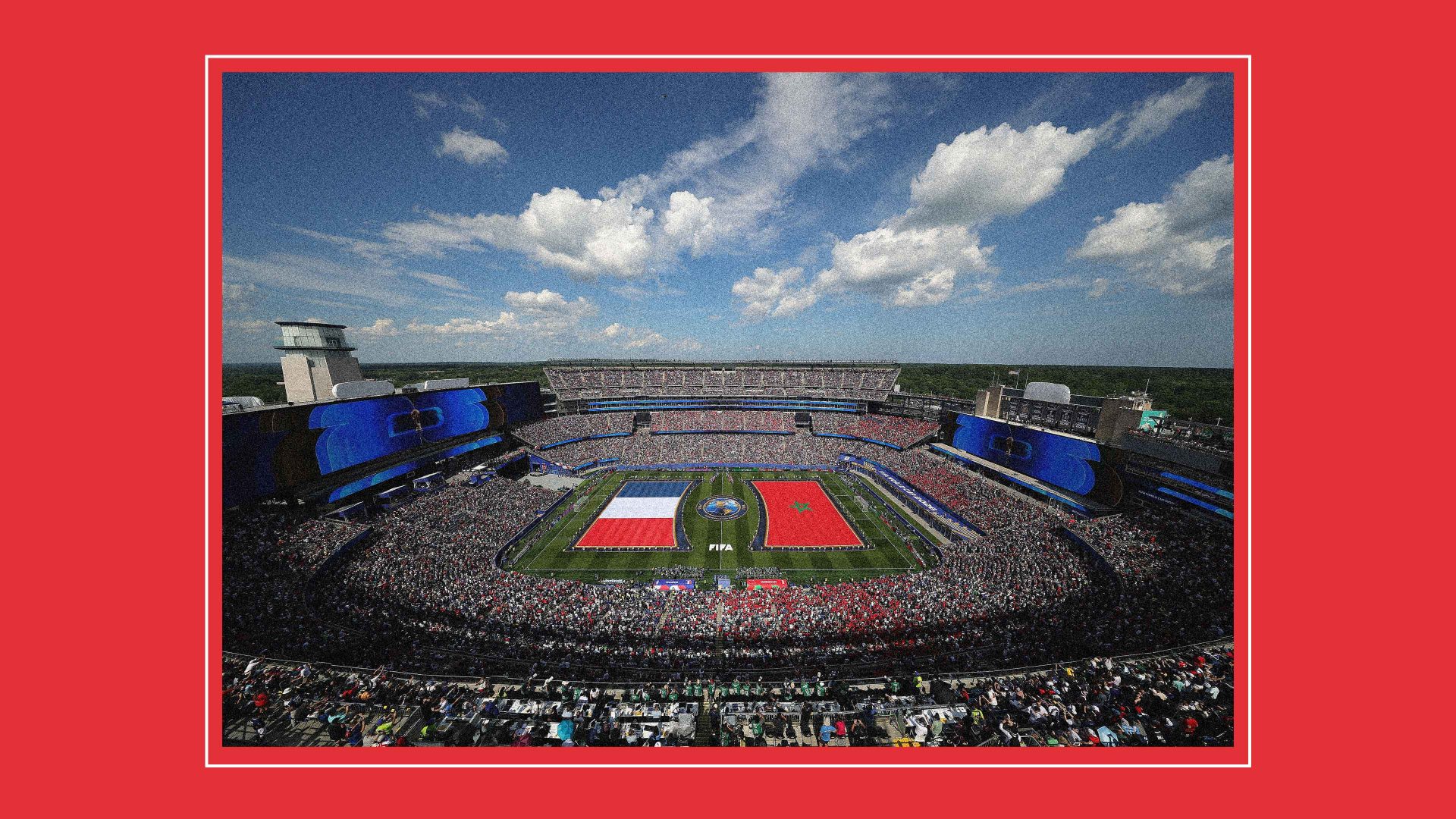
Of course, what that ended up meaning in practice was turning up to a pub just before 9pm on Thursday, joined by a group of friends, to watch the fatherland and the motherland battle it out. (My dad grew up in Normandy, and my mum was born in Marrakech).
Most of the English contingent backed Morocco, letting the entente-not-always-so-cordiale down, and my one French pal was all in for Les Bleus. I was… huh. What was I?
A lot of people had asked me about it beforehand. Acquaintances, colleagues and online followers alike had spent days wondering who I’d be backing, how I was feeling, and what I wanted to happen. I’d merrily told them that I was choosing to be a “glass half-full” gal, and was embracing the fact that I would win no matter who lost. My plan, I explained, was simply to hope everyone would have a good time.
Suggested Reading

I boycotted Eurovision.. now the World Cup is next
Amazingly, my optimism survived kick-off, and I spent the first ten minutes or so of the France v Morocco game genuinely having fun. Both sides were playing well, and it felt nice to see that they’d left the bad, unruly vibes of the Canada and Paraguay games behind. This was solid, skilled and enjoyable football.
Really, it’s what everyone wanted. The two countries’ relationship goes way back, though not in ways everyone will always find comfortable. Even in the years and decades following decolonisation, successive French governments belittled and patronised Morocco, taking its status as a lesser but gently cooperative country for granted.
For much of that time, what happened in politics and diplomacy mirrored what happened on the pitch in international tournaments. France thrived, while Morocco tried and struggled.
Things have changed now, though. The Moroccan economy is flourishing, and its national teams – both men and women – have been getting better and better. Things aren’t perfect in the north African kingdom – are things perfect anywhere right now? – but it feels like a place on the up. Really, all it needed was not to repeat the defeat it suffered at the hands of France at the last World Cup.
It’s what hit me as Yassine Bounou, arguably one of the team’s biggest stars, saved the first more-than-decent French shot of the match. I could have cheered, complained or done neither, but my instinctive reaction was to celebrate the missed chance.
Suggested Reading
The World Cup of Afrophobia
Slowly but surely, my position became firmer: fond as I am of the Gallic side, I knew the country didn’t need the win quite as much as their opponents did. David and Goliath were going head-to-head, and who wouldn’t back David?
Obviously, Goliath won in the end. I wasn’t exactly sad about it, as they really had played better and deserved the win, and their victory didn’t feel overwhelming enough to be crushing. You can recover from a 2-0, especially against a side everyone agrees is the year’s best.
Oh, and in any case, we all know that Morocco’s eyes are already elsewhere. In 2030, the nation will be one of the hosts of the World Cup, and preparations are already well underway for the tournament. Both the country and the team have four years to get ready for their turn on the main stage.
I hope to make it there and watch at least one of the games in person. In the meantime, I guess I’ll have to steel myself for the possibility of Les Bleus going against my beloved English boys. When will this end!