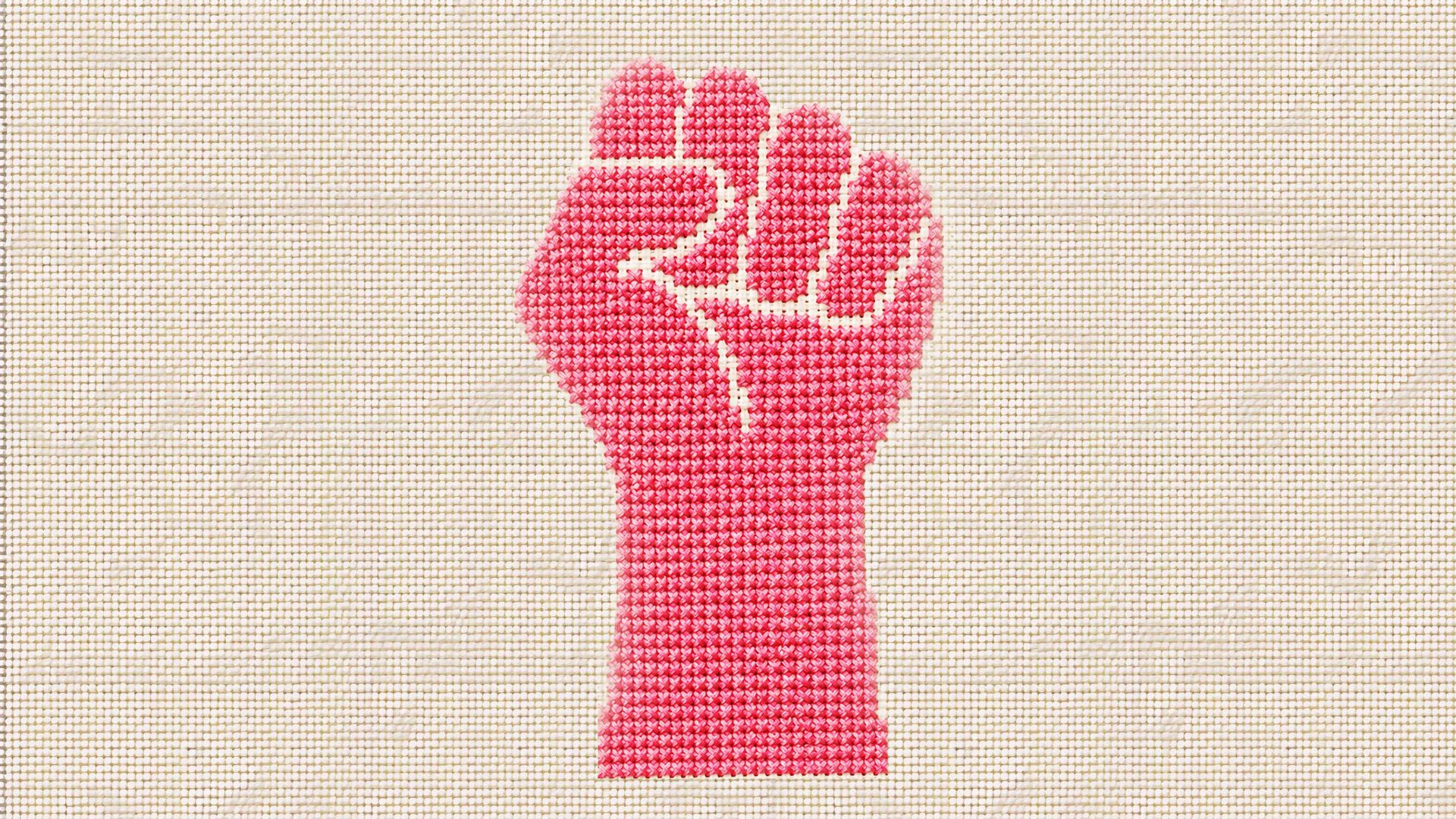
It has crept in slowly, like a tide lapping gently unnoticed one minute, surging into an unstoppable wave in time for America’s 250th birthday party.
As a passionate knitter and crocheter, I’ve used social media for my craft over many years, seeking new patterns, solutions to woolly conundrums and, of course, inspiration. It would never have occurred to me to test the national political pulse on so-called ‘yarn’ forums – not in the UK, the US, nor any other nation for that matter.
And yet that is exactly what has happened in recent months, as the everyday outrages posed – and posted – by Donald Trump have hit a chord deep within the global knitting community, sparking a ferocious resistance movement increasingly vocal and intent on fighting peaceably back.
I noticed it first in January when Minnesota-based wool shop Needle and Skein designed a knitting pattern for what became known as its “Melt the ICE’” hat. Posted first on Ravelry, the world’s biggest knitting platform, the shop charged US$5 for the instructions, donating it all to local immigrant aid agencies. It has raised over $700,000 (around £530,000) by selling the pattern to knitters from 48 countries – and still counting.
On Facebook, a page named after Ravelry – which, incidentally, has stayed not-for-profit since a young Boston couple, Jessica and Cassidy Forbes, coded and launched it from their kitchen way back in 2007 – exploded in protest when a user posted the question: “Can we just leave politics out of knitting yarn and crocheting?”
One user replied: “Crafting has always been a political act. The question is, can you take your politics out of knitting or crocheting?”
“Can we just numb our brains and ignore the reality of this long national nightmare and soothe ourselves by crocheting doilies? No, we cannot,” posted another.
A third said: “NO NO NO! We are rage knitting & crocheting against this abysmal administration. This is not the right time in history to be polite and quiet. But it is the right time to protest and be loud… lives literally depend on us fighting to save our democracy.”
A version of the same question – possibly posted by a bot – now appears with regular monotony, but every time, the community pushes back loudly and forcibly. Overnight, just as I finished writing this, 1,600 knitters took to their keyboards defending their right to mix wool with politics.
Suggested Reading


America’s 250th will be a Trumpian orgy of self-indulgence
Knitters Against Fascism, created in February in Portland, Oregon, call themselves “craftivists wielding weapons of mass construction” and now have more than 6,200 members, spawning a sister branch in Seattle, with, apparently, more to come.
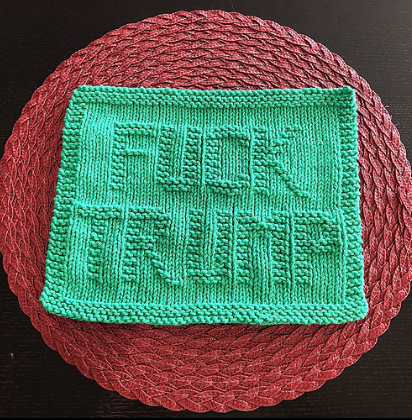
Their pattern for a beanie emblazoned with “Be Pretti good” in memory of Alex Pretti and Renée Good, killed by ICE agents, raises funds for US advocacy group Move On, while instructions for a quick and easy washcloth with the words “Fuck Trump” camouflaged into the stitches has gone viral.
It’s fair to say that despite British Olympian Tom Daley and several other high-profile male knitters and influencers, led by Scandi duo Arne and Carlos (143k followers on Instagram), putting a masculine spotlight on this ancient craft, it remains a predominantly female pastime. And if you look back in history, there are many examples of the use of knitting as a tool for protest, allowing women to use what appears at least at first glance to be a benign, domestic craft to communicate their own style of non-threatening dissent.
During the French revolution, the so-called tricoteuses – the knitting women – gathered, admittedly rather ghoulishly – around the guillotine to protest restrictions on their own participation, knitting ‘liberty’ caps as a way of demanding reform. Charles Dickens immortalised their fictional ringleader, Madame Defarge in A Tale of Two Cities.
And in the 1940s, Norwegians of both sexes threw themselves into their own woollen subversion, making and wearing a red wool knitted, pointed hat with a tassel on top as a form of visual defiance against Nazi occupation. The Nazis made these protest hats illegal and punishable by law within two years, leading to even greater subversive protest. You can see a couple of examples in the Norwegian Resistance Museum in Oslo.
Needle and Skein’s owners say the Norwegian story was their inspiration and as purveyors of a traditional craft, they simply “felt it appropriate to revisit the design.”
Suggested Reading

How to stop the next Trump
The US too has its own knitting-as-protest tradition, and in the 1770s, colonists boycotted British goods by creating homespun quilts and knits as a form of symbolic independence against British imports.
During both world wars in Europe, knitting was used to transmit covert messages, woven or knitted into the fabric itself, to allies. The wider practice of using ordinary objects to evade detection has a name: steganography.
Phyllis Latour Doyle, a British secret agent in world war two is the most famous practitioner, and used silk threaded onto her knitting needles to conceal knotted coded messages. She fed this into a shoelace and then used it to secure her hair. If you think about it, in its most simple form, making fabric from wool requires a sequence of binary stitches known as knit and purl, which lend themselves perfectly to simple codes like Morse.
More recently, in the 1980s, the women of Greenham Common women’s peace camp knitted and crocheted blankets to drape around the fences of military bases, turning symbols of war into flamboyant, colourful and soft messages of pacifism. And in 2019, I was just one of many thousands of women who took to the streets of London wearing what we had knitted into ‘pussy hats’. Bright pink and unmissable, these symbolised an international, female resistance to Trump’s first election and his notorious “grab ‘em by the pussy” video published by the Washington Post.
Extraordinary as it may seem, the quiet, meditative act of knitting may even have applications in new methods of covert communication: Dr Elisabetta Matsumoto is an avid knitter as well as being a physicist at the Georgia Institute of Technology in Atlanta. Her research is diving into the possibility that yarn could be the basis for creating a programmable material.
Yarn on its own isn’t particularly elastic, but knitted up it can stretch by more than twice its length while barely stretching the thread itself. Just by varying the 100 or so stitch combinations available, knitters can alter the elasticity, mechanical strength and 3-D structure of the resulting fabric, says Matsumoto, and teasing out the mathematical rules that dictate how stitches impart such unique properties to fabrics offers myriad potential modern applications.
From politics to 21st-century physics, it seems old-fashioned handicraft skills have a long life ahead of them yet.
Paola Totaro’s books include On the Scent: Unlocking the Mysteries of Smell – and How Its Loss Can Change Your World