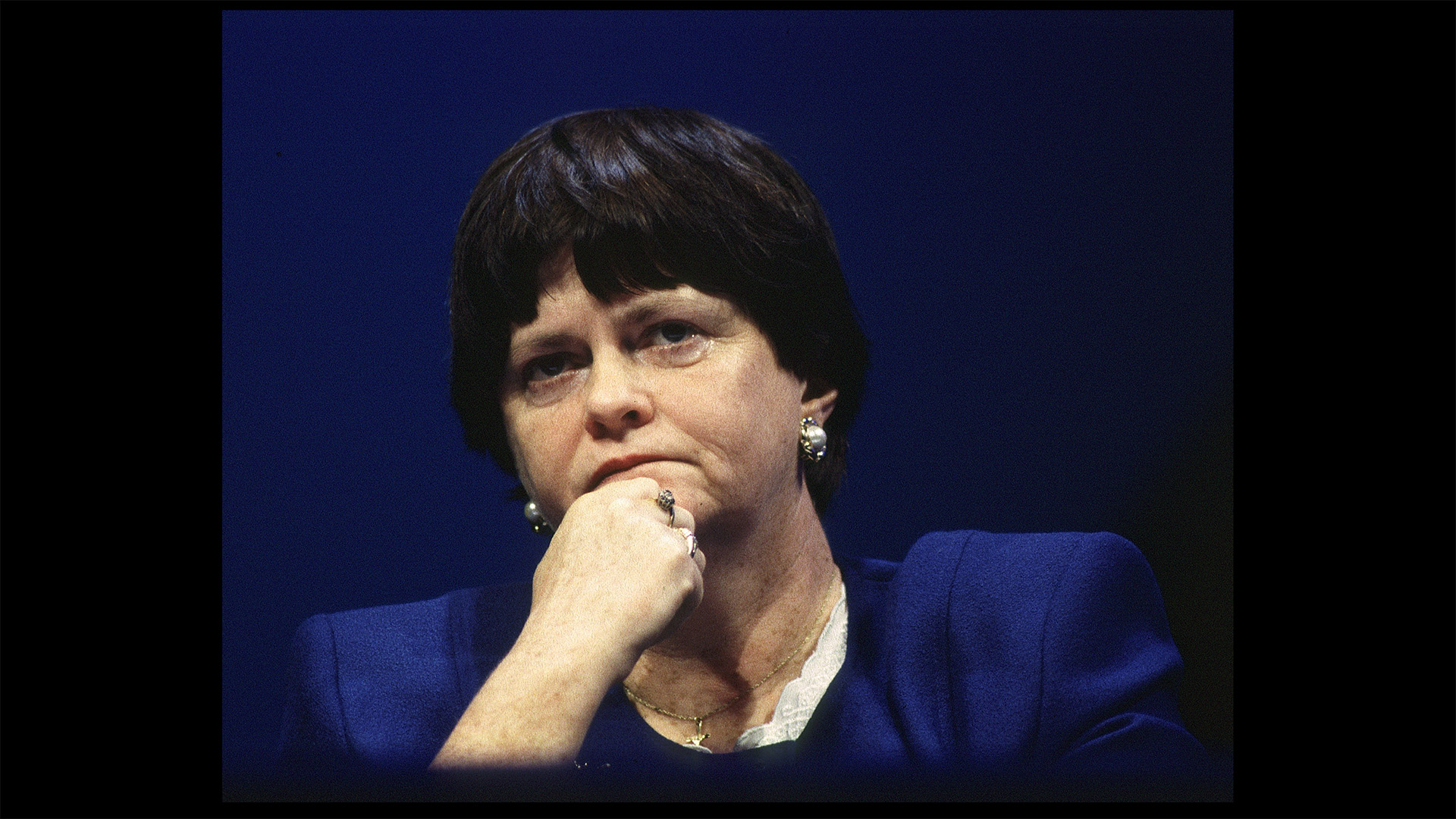
“Do you know anything about feet?” These were the first words that Ann Widdecombe ever spoke to me, when I went to see her at the Home Office in late 1995. All of five foot one-and-a-half, the recently appointed minister of state for prisons and immigration walked around her desk to shake my hand – sporting a pair of well-worn Dr Scholl’s sandals.
I had to confess that podiatry was not among my specialist fields. Rachel Whetstone, who had replaced David Cameron the year before as special advisor to the home secretary, Michael Howard, hovered warily in the background.
Widdecombe frowned, but in the absent-minded manner of a 1970s sitcom character rather than with real irritation. The rest of our conversation, as I recall, was all about her plans, which were serious: she meant to reform the penal system and managed to visit 135 prisons before the Tories lost power in May 1997; she saw the looming crisis of illegal immigration long before it became a headline issue; and she talked about religion which, it quickly became clear, was the basis of all her opinions.
Since the news of her horrific murder broke on Friday, I have read plenty of warm personal tributes and seen far too many vile social media posts expressing glee at her violent death (anyone who tells you that the brutalisation of contemporary politics is entirely the work of the right is either a fool or a knave). What is under-appreciated, I think, is how consequential a political figure she was: her story is the story of how we got here.
After our first meeting, we stayed in touch: cordially, rather than as friends. Though she never had a following in the parliamentary party, her fanbase among the Conservative faithful and in the Tory press was devotedly loyal. One right wing journalist I knew was so in awe of her that he asked me bashfully to introduce the two of them. This I did, ending up as the gooseberry at Shepherd’s restaurant in Westminster as Widdecombe and her media admirer bonded over their shared love of Oliver Cromwell and his severity.
We disagreed on plenty: immigration, gay rights, Europe, Tony Blair (she was not a fan). But she was always civil, liked an argument and was often amusing. Was the eccentricity performative? Hard to say: she was clever enough to see that personality was going to become increasingly important in politics and leant into precisely the aspects of her public profile that others saw as weaknesses.
When the Labour MP Paul Flynn nicknamed her “Doris Karloff”, and the name stuck, she started signing off calls with journalists with the line: “That’s it. Karloff has spoken.”
Suggested Reading
Burnham must run fearlessly into the future – and this is how
More than a decade before the Brexit referendum, she was drawn to the idea of leaving the European Union, but always fretted about how, precisely, such a sundering could be successfully achieved. In her 2013 memoirs – published four months after Cameron’s speech announcing his plan for a vote on British membership – she warned: “yes, I would like us to be free of it but we need then to ask, ‘What next?’… Foolish is the man who jumps ship before knowing if he will swim or sink.” Well, exactly.
Having converted to Catholicism in 1993, she loved talking about theology, referred to the Archbishop of Westminster, Cormac Murphy-Connor as “Cormac”, and knew scripture back to front. And since I had written a bit about all that, it was the natural – and always interesting – focus of our discussions. Truth to tell, I am sure she regarded me as an opponent in the raging argument about the future of the Conservative Party.
In this respect, she was absolutely correct. After their defeat in the 1997 election, the Tories were plunged into a civil war between two factions that were quickly labelled “mods” and “rockers”. The so-called mods – modernisers – were impressed by the vigour with which Blair had transformed Labour and, on the basis of plenty of polling data, argued that the Conservative Party itself had become the problem: seen as old-fashioned, illiberal, unwelcoming and judgmental.
This struck me as common sense. Politically, the main event was still Blair’s ascendancy – and his battles with Gordon Brown. But it seemed to me desirable that the country should have two electable parties of the centre ground (how hopelessly dated that aspiration now sounds) and backed the modernisers in my columns.
Ejected from his Commons seat, Michael Portillo embraced a transformative agenda that, in fact, was much closer to his long held private opinions than was widely appreciated. In November 1999, he was elected to represent Kensington and Chelsea, following the death of Alan Clark, and was quickly appointed shadow chancellor by William Hague. Which was when the trouble really started.
Backed by Francis Maude, the shadow foreign secretary, and Archie Norman, the shadow environment secretary, Portillo launched a campaign to detoxify the Tory brand and make it fit for purpose in the 21st century.
“We are for people whatever their sexual orientation,” he said at the party conference in Bournemouth in 2000. “The Conservative Party isn’t merely a party of tolerance, it’s a party willing to accord every one of our citizens respect. Why should people respect us if we withhold respect from them?”
Widdecombe had been a junior minister at employment when Portillo was secretary of state and found him “a joy to work for: incisive, decisive, calm and humorous.” She had planned to support him in a future leadership contest.
But she was appalled by the trajectory Portillo was now proposing for the Conservatives and rejected out of hand the idea that the party required modernisation modelled on Labour’s. “[Blair] has been responding to a complete rejection by the electorate of the socialist agenda,” she later wrote, “By contrast we had comprehensively won the agenda and had the problems of a party that had been in office too long.”
At the same conference, it all came to a head after the speech in which, as shadow home secretary, she proposed fixed-rate penalties for possession of any illegal drugs. The members loved it, gave her a standing ovation, and sang “Happy Birthday” as a bottle of champagne was uncorked onstage (it was October 4, the day she turned 53).
But the modernisers were outraged by the hardline signal this sent, and a sabotage was quickly orchestrated. In the Mail on Sunday, seven shadow ministers confirmed that they had tried cannabis, making Widdecombe’s tough stance politically unsustainable. The policy was quickly diluted into nothingness.
Suggested Reading
Farage is in trouble – polls show voters think he’s a danger to Britain
After the Tories’ second electoral disaster in June 2001, Widdecombe was unable to amass sufficient support amongst MPs to make a serious bid to succeed Hague as leader and announced that she would not be standing. To her satisfaction, Portillo failed to make it into the final two – though her preferred candidate, Kenneth Clarke, was beaten in the run-off by Iain Duncan Smith.
Though the rockers had thwarted Portillo, the leadership of IDS lasted only two years. Michael Howard – whose bid for the job in 1997 had been scuppered by Widdecombe’s legendary “something of the night” remark – now succeeded Duncan Smith without challenge.
Though he lost to Blair in the 2005 general election, Howard steadied the violently lurching Tory ship, paving the way for Cameron, his chosen successor. At last, the modernisers had their candidate in the top job and, for a while, the rockers seemed to have been consigned to the history books.
Meanwhile, the rebadged “Cameroons” forged ahead: “hug a hoody”, the young leader posing with huskies on a glacier, the campaign for same-sex marriage, the A-list of candidates to increase the number of female and ethnic-minority Tory MPs, the slogan “Vote Blue, Go Green”, the “Big Society”.
After 23 years as MP for Maidstone, Widdecombe stood down in 2010 and looked on as Cameron formed a coalition government with Nick Clegg’s Lib Dems. For a time, it seemed that the Tories had settled in the most favourable electoral quadrant for a right-of-centre party: socially liberal, fiscally conservative.
Widdecombe thought this was precisely wrong. As the aftershocks of the 2008 financial crash continued to reverberate through the less prosperous parts of the country, the social order buckled and groaned.
Resentment of London and the metropolitan elite soared. Turbo-charged by the new force of social media, tribalism and nativism found a fresh foothold in the popular imagination. The electoral sweet spot for the parties of the right shifted sharply towards a combination of social conservatism (why are our communities changing so fast without our consent?) and economic populism (why is the government doing nothing for me?).
In 2015, the Conservatives were braced for defeat and would have lost had it not been for Ed Miliband’s dismal leadership of the Labour Party – a movement to which he contributed net zero, other than paving the way for Jeremy Corbyn. One year and one month later, the country voted to leave the EU and the era of the modernisers (amongst much else) was officially over.
The point is: Widdecombe had foreseen all this. As Portillo and Maude pursued fiscal prudence, she had warned that the Tories must promise to match Labour spending on health and education in the 2001 election, and steer clear of the weeds of economic jargon. “I will tell you this, Francis [Maude],” she said, “down at the Pig and Whistle they do not talk about aggregate expenditure levels.”
Five years before Nigel Farage became UKIP leader, she was already designing the political software that he and his followers would use to win the referendum and to mount their high-octane campaign for power after the 2024 general election.
On the run-down Arden estate in Hackney in June 2001, as she announced her withdrawal from the Tory leadership contest, she had explicitly identified the new electoral demographic that would eventually dominate political discourse, calling them “the Forgotten Decent.”
As she put it: “They are people like us but with only a fraction of our resources and all they want to do is live normally but instead their lives are made a daily hell by drugs, thuggery, intimidation and degradation of the environment.”
Widdecombe went on: “I regularly meet people like those I have met here all over the country and none of them feels that anyone is sticking up for them… Where is the peace and tranquillity for the people who live here?”
At the time, nobody took much notice. Her decision not to stand was a sideshow to a sideshow: New Labour, soon to confront its greatest challenge in 9/11 and the US war on terror, remained the main event. But she had foreseen the future, a future that people like me on the centre right had not come close to spotting.
She understood, too, that the partition between politics and entertainment was collapsing. Plenty of people in Westminster sneered when she took part in the first season of ITV’s Celebrity Fit Club in 2002 – that’s 21 years before Farage turned I’m a Celebrity… Get Me Out of Here!, in which he finished third, into a relaunch of his political ambitions.
The sneering continued when she appeared on Strictly Come Dancing with Anton Du Beke as her partner, in 2010, lasting until the tenth week; but, as she said to me on more than one occasion, “if certain people sneer at you, you know you’re winning.” In 2018, she finished second on Celebrity Big Brother.
In 2019, she left the Conservatives after 55 years and was elected an MEP for Farage’s Brexit Party: a movement that, on law and order, immigration, conservative social values and anti-elitism, was making full use of the playbook she had been finessing for a quarter-century.
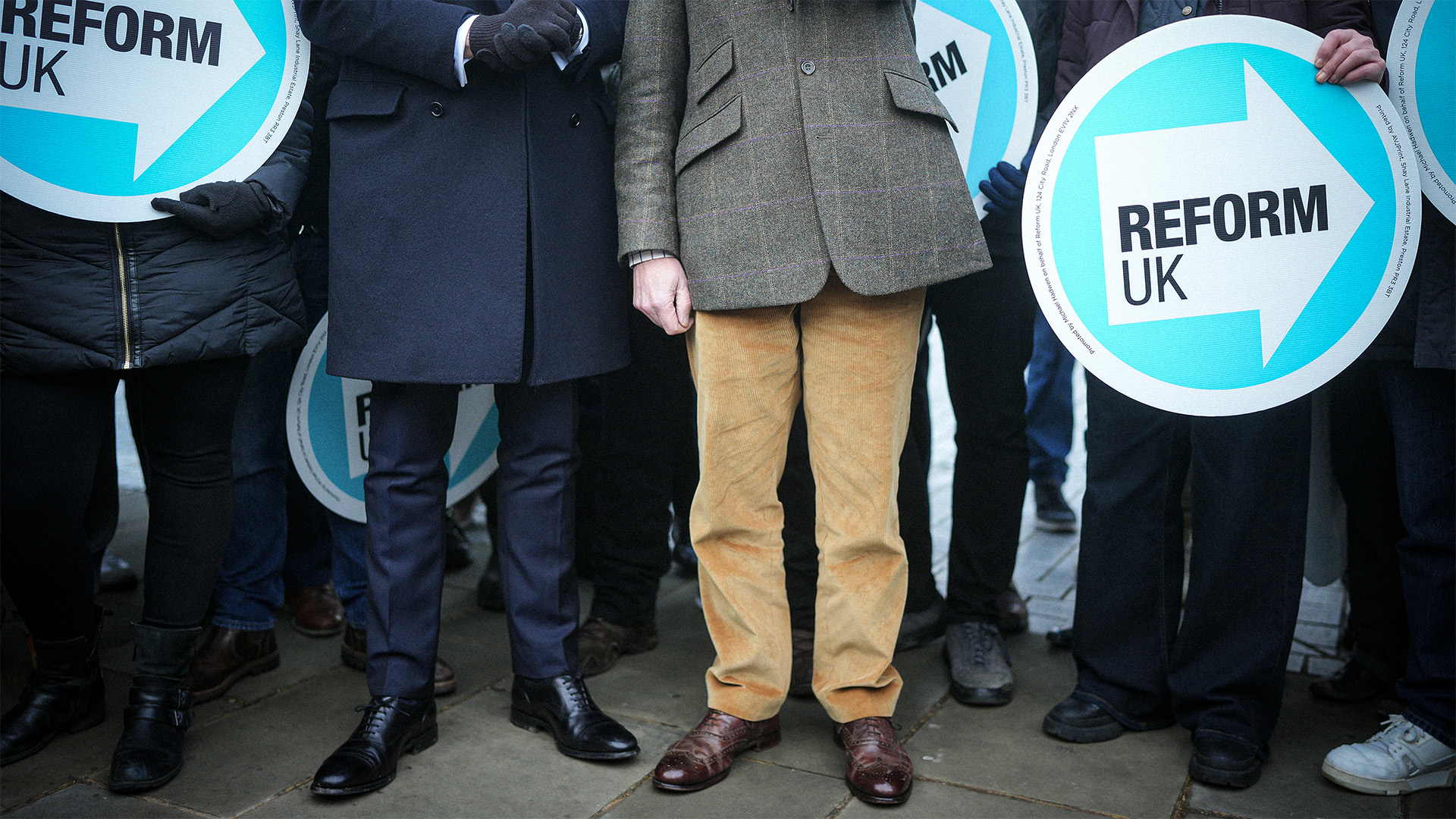
After she joined Reform UK in 2023, she quickly became a big favourite of the fledgling movement in its strongholds, many of whom had left the Tory fold for all the reasons she had forecast. It might be Farage’s party. But everyone knew who the true pioneer had been.
The modernising position that I once espoused simply doesn’t exist any more. In the battle for the soul of the right, she lost the battle but definitely won the war.
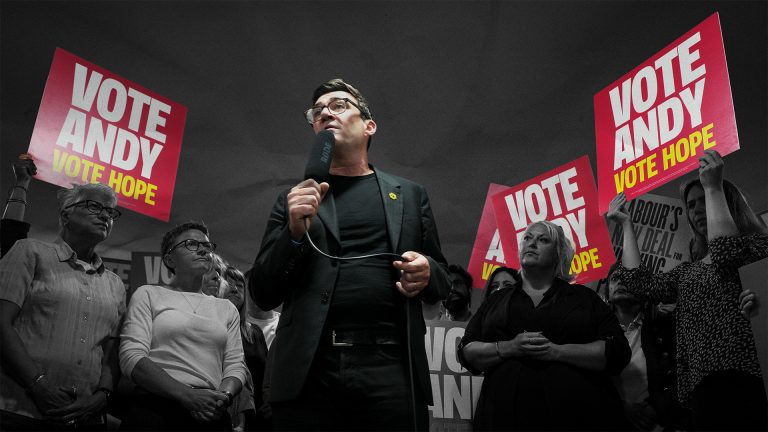
There is no doubt that Reform is on the ropes and Farage is rattled by the collapse into absurdity of his by-election gambit. Andy Burnham has the initiative and fully grasps the importance of kinetic energy, authentic messaging and shock therapy. I am tentatively optimistic.
But we should be realistic, too: in spite of everything, Reform is still ahead in the polls, and it will take more than one aristocratic bin and a £5m donation to finish the job. The populist politics of which Ann Widdecombe was a principal architect has been nourished by performative wokery and seen off both the centre right and technocratic Labour. Burnham is, to borrow Lincoln’s words, the last best hope.
Let’s see how he gets on, shall we?