
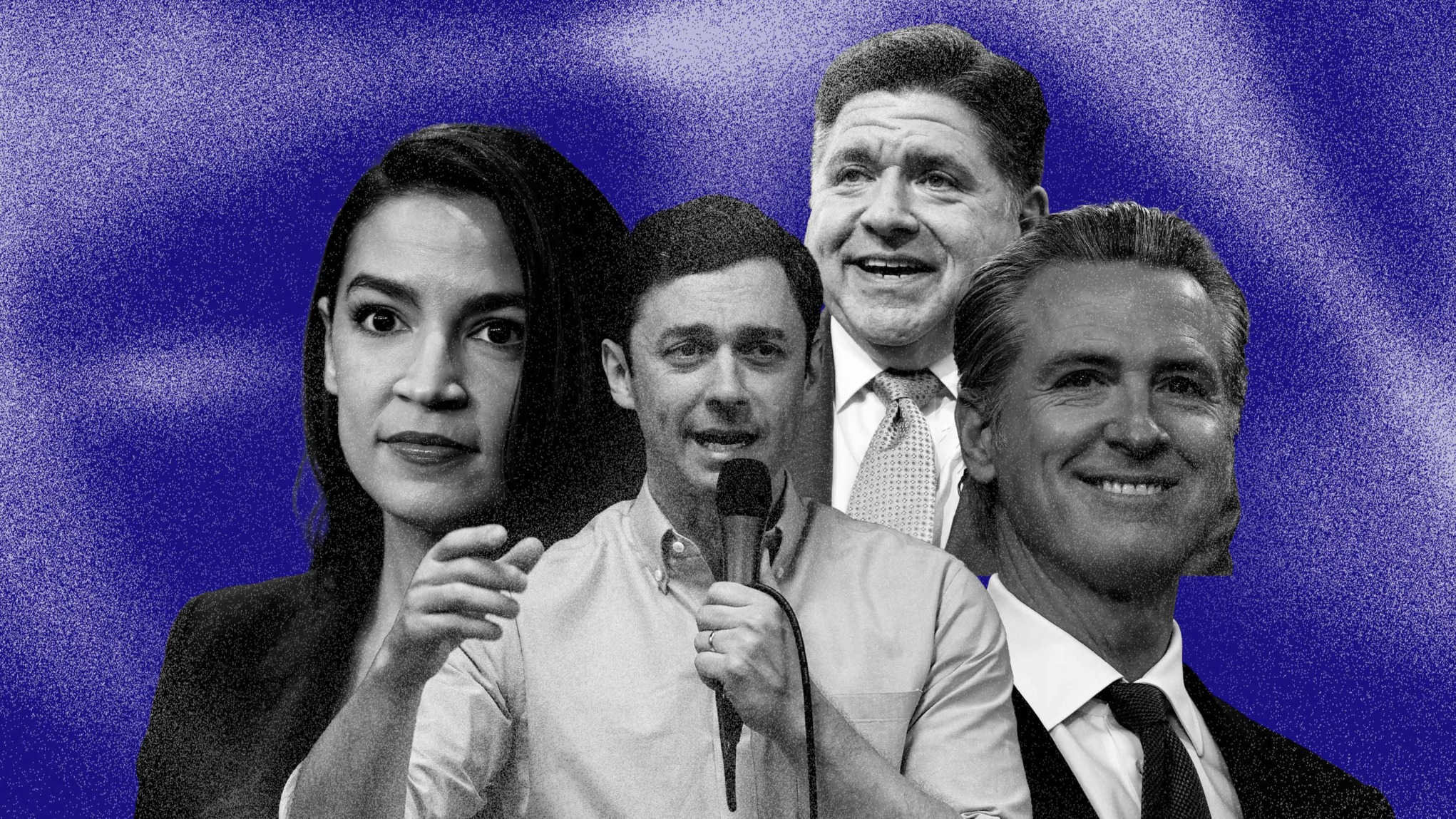
You may not have spotted it – it was pretty quiet, nobody’s really been talking about it much – but there was a midterm election in the United States last week. And it was, not to put too fine a point on it, an absolute bloodbath. The Democrats swept the board, winning in places like Kansas which haven’t sent a non-Republican to the Senate in almost a century.
It is a long-held US political tradition that, immediately after a midterm election, eyes almost immediately turn to the next presidential election. Americans go to the polls to pick the next occupant of the White House in exactly two years, but the horse-race starts pretty much right now. And after the midterm blowout, and with Trump currently the most unpopular president in modern history, the Democrats have their eyes firmly on the prize.
The first Democratic primary will take place in South Carolina in January 2028, so candidates who want to be on the ballot for their party have about a year to jostle for position, raise their profiles, and make their case to voters. A year is usually considered a long time in politics – when it comes to making a presidential bid, this is very much not the case.
The newly-elected Democratic-majority congress will be seated in January, and ambitious candidates from the legislature will want premium chairs on powerful committees to get TV time, take some political scalps, and position themselves as champions of the people.
State governors will need to compete, so they’ll want to be making high-profile actions too. And there’s always the chance of a wildcard candidate coming out of nowhere. It has, as we all know all too well by now, happened before.
Obviously, this is going to be a very fluid year, with a huge amount of unknowns – and we’ll be following it closely – but this is a good time to run down a few of the big Democratic presidential contenders as of right now, because you’ll be hearing their names a lot in the coming months. So let’s dive into it.
Jon Ossoff
Ossoff tops most lists of contenders at the moment. Upsettingly, he is younger than me – when he won his seat in 2020 he was aged just 39. That made him the youngest person elected Senator since 1980. Georgia used to be a Republican-leaning state, but Ossoff won reelection with a stonking majority; Georgia is now solidly and comfortably blue.
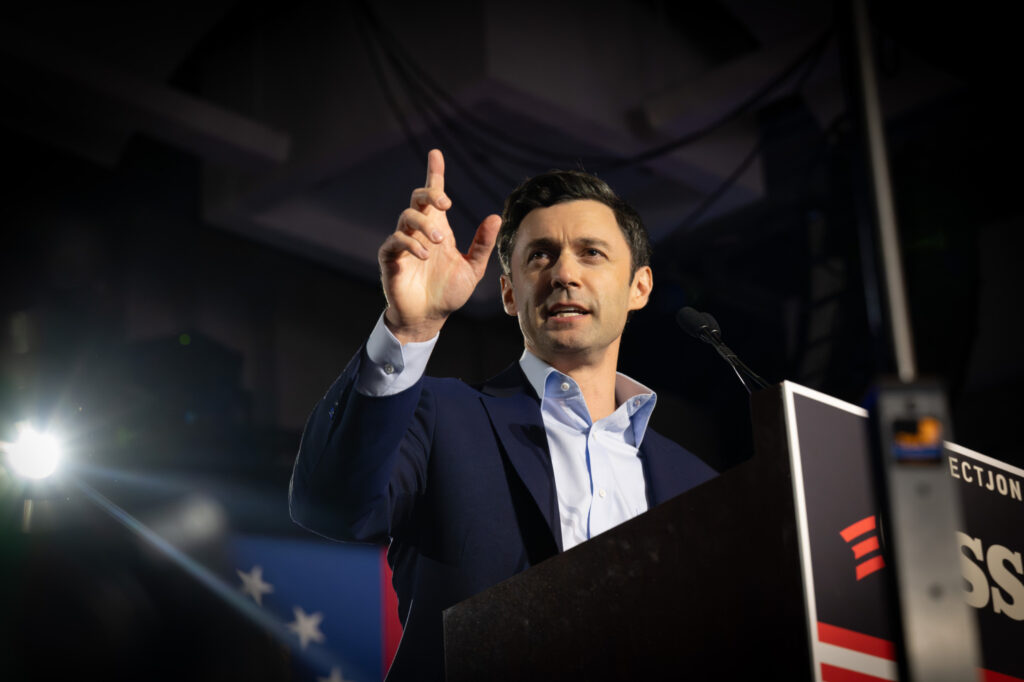
Ossoff is almost comically presidential-looking: youthful, handsome, and energetic, he’s got the gravitas to be president – but, more importantly, he’s angry. No “reach across the aisle” rhetoric; he’s consistently been one of the president’s fiercest and most biting critics. It was clear in his post-election victory speech. His skewering of Tulsi Gabbard, Trump’s director of national intelligence, in a committee hearing back in March, was another fierce performance.
During the midterm campaign he said he has “zero interest” in running for president. I don’t buy that. Everyone says that sort of thing before a midterm.
Alexandria Ocasio-Cortez
A former bartender, unapologetically left-wing, and a fierce campaigner who won a stunning upset when she defeated a 10-term incumbent establishment Democrat who had chaired the Democratic caucus in the 2018 primary. But you know that already, because the representative for New York’s 14th congressional district launched to stratospheric fame when she won.

Progressives are already begging her to run: a group, “Ready for AOC,” launched on November 9th and is promising to gather a million signatures to call for her to make a presidential bid, and prepare a community organising structure of thousands in preparation for a possible campaign.
Here’s the thing, though. I don’t actually think she is going to run for president. I think she’s going to primary the Senate majority leader (for the moment) Chuck Schumer, whose seat is also up for reelection in 2028. Schumer, who will be almost 78 by then, represents a centrist Democratic tradition that is on the way out. People don’t want machine politicians; they want people who will stand up unapologetically for progressive values.
If Schumer has the lack of self-awareness to run again, AOC – who is even younger than Ossoff – will absolutely obliterate him in the primary. But there’s no downside for her in letting presidential speculation float around in the meantime.
JB Pritzker
Presidential candidates historically tend to be either senators or state governors. There are upsides and downsides to both: the Senate is a national platform, but governors are actual executives rather than part of a bigger lawmaking body, so they have more solid achievements to point to. As governor of Illinois, Pritzker has built a national platform: a legit billionaire (his family founded the Hyatt hotel chain) but with unapologetic progressive politics, he’s been a vocal Trump opponent, speaking at protests against ICE activities in Chicago and trolling Trump relentlessly on social media.
He’s got a lengthy record of progressive and popular laws which will serve him well in a national primary: legalising cannabis, protecting abortion rights, cutting down on data centres and regulating AI, strengthening gun control laws, raising the minimum wage, and expanding funding for public education. He’s a vocal supporter of LGBTQ rights. He’s a really good governor, is what I’m saying. And he’s got a standup-comedian’s speaking style, and comes off as very affable – he’s the candidate you’d want to have a beer with. I like Pritzker a lot.
Gavin Newsom
The outgoing governor of California is slick, charismatic, and has his eyes on the prize. First as San Francisco mayor and then as state governor, he’s built a legacy of progressive positions, pushing to end the death penalty (and though the legislation failed, following the election of his successor this November he commuted the sentences of all 548 people on California’s death row, which is a baller move. He was also a key part of legalising weed in the state.
He’s not always shown good political judgement, though. Last year he started a podcast and had Steve Bannon on as one of his first guests. He also hosted Charlie Kirk – that’s the kind of thing that’ll come back to bite him in a primary campaign. He’s got down and dirty with the social media trolling of Trump – but isn’t as good at it as Pritzker. When the right-wing activist Benny Johnson (rumoured to be gay) said he was announcing a “fraud investigation” in California, Newsom’s press office tweeted: “We’ll make sure Grindr servers are ready”. Not great.
After appearing on Newsom’s show, Kirk himself – who was shot and killed at a rally later that year – wrote that he “has a shark’s instincts” and “wants to be president more than any living person (and possibly every dead person, too),” which is pretty on point. Newsom oozes ambition, which tends togive people the ick. Me included, if I’m honest.
Kamala Harris
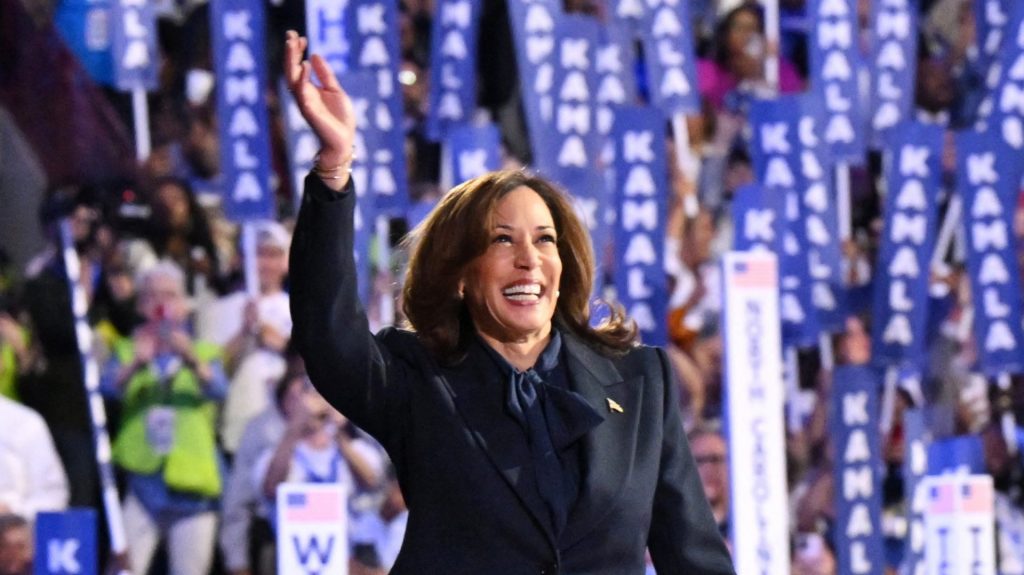
No. Just no. She’s ahead in some early polls because of name recognition alone, and has floated the idea, saying she hasn’t made a decision on whether to run. Unfortunately, having lost once, she’ll find it really hard to make a case that she’ll be a winner now. I don’t think she’ll run.
Andy Beshear
Another governor: this time of Kentucky, another red state that, in the last few years has turned very purple indeed. Previously the state’s attorney-general, Beshear has a record of working to prosecute child abuse cases and drug dealers.
He is seen as more moderate, and may appeal to the centre more than people like Pritzker and Ossoff. But there’s a lot for progressives to like as well, like his 2019 executive order restoring voting rights to people convicted of non-violent felonies and his consistent support for widening access to pre-school programs. He is also a strong supporter of abortion rights, a much harder position to hold in Kentucky than in Illinois. He didn’t legalise recreational cannabis, but he did legalise it for medicinal use in 2023.
Despite governing a traditionally pretty conservative state, Beshear is extremely popular, with a 65% approval-rating. That might partly be down to his response to several natural disasters in the state – quickly activating the national guard during massive flooding in 2022 and managing the emergency response to a series of tornadoes in 2021. He’s a solid candidate, but may lack the national profile of some of the others.
Josh Shapiro
Another governor: Pennsylvania this time, the swing state that notoriously locked in Trump’s presidential victory in 2016. And, like Beshear, another former attorney-general, too – but this is less of a boon for Shapiro: a story that could surface in a campaign is the saga of Operation Outfoxed, a massively-hyped million-dollar drug bust that Shapiro’s prosecutors colossally bungled.
Still, that didn’t turn into an issue for Shapiro’s 2022 gubernatorial campaign, so maybe it wouldn’t come up now. He just won reelection by a big margin, too. But parts of his policy record are a little shaky: he flip-flopped on supporting a GOP private school voucher scheme, flip-flopped on data centres, and has failed to secure budget funds for his public transportation proposals, and he may also have some issues on environmental policy. He does have a Republican state legislature to deal with, though.
Suggested Reading

The three Cs that can keep Democrats winning
Israel is also a tricky topic for Shapiro. He isn’t the only Jewish candidate on this list – Pritzker and Ossoff are too – but is, possibly unfairly, by far the most linked with the issue. When he was a potential candidate to be Kamala Harris’s running-mate in 2024, critics pointed to his 2021 support for enforcing anti-BDS (the Israel protest movement known as “boycott, divest and sanction”) laws against the ice cream company Ben and Jerry’s, after they announced their refusal to sell their products in Israel.
Defenders point out that Shapiro has also criticised the Netanyahu administration, and call the fact that he has been singled out on this issue unfair or even anti-Semitic. Either way, though, it’ll be a “thing” for him on the campaign-trail.
Rahm Emanuel
Obama’s first chief of staff, later mayor of Chicago and then Biden’s ambassador to Japan, Emanuel has been an influential presence in US politics for a long time as a political strategist and kingmaker – perhaps the ultimate party insider. He played a strategic role again in the November blue wave election and has floated himself for a potential run – but he’s a long shot. As the New York Times pointed out in a September profile, a long-time machine Democrat currently working at a Wall Street investment firm is unlikely to excite the ascendent progressive wing of the party.
Jon Stewart
It’s just me banging this drum, really. But as I wrote for this magazine last October, I think there would be a pretty plausible path to victory for Stewart if he decided to get into the game. The massive midterm swing makes it less likely, though – he’d have been framed as a saviour of last resort, and the rise of people like Ossoff means there’s less of a call for someone like Stewart.
Now there’s a decent number of people who can win, and a lot of momentum behind progressive Democrats already out there, there isn’t really a need for him to run.
There’s a long way to go, and some other names are gonna get thrown around. Here’s a few.
Chris Murphy
Popular senator from Connecticut who has built a big profile as a powerful Trump opponent. Really really good, but having health problems at the moment – here’s hoping for a full recovery. He could be a lot higher on this list, but probably and sensibly he needs to put his wellbeing first. This sounds sarcastic but it isn’t, I like Murphy a lot.
Pete Buttigieg
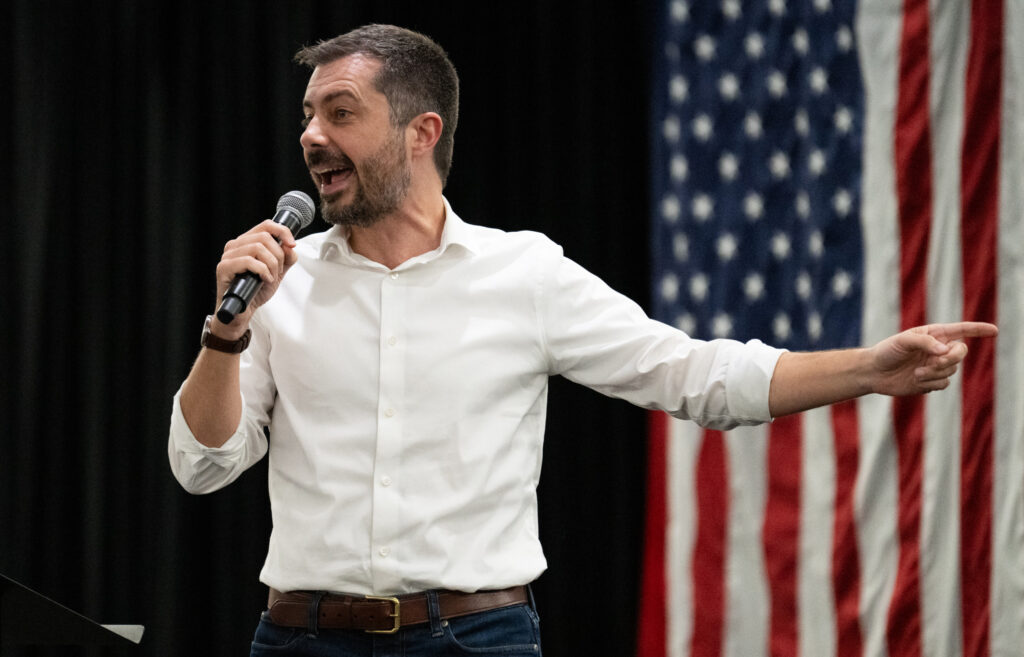
“Mayor Pete” has always had more political gravity than his CV suggests: a surprise win as mayor of South Bend, Indiana, an unlikely run for president in 2020 that went further than anyone expected and put him in the limelight, and then service as Joe Biden’s secretary of transportation. He’s not got the CV – so who knows? He’s really good on TV.
Gretchen Whitmer
She’s also good on camera. About to finish her final term as governor of Michigan, loathed enough by the far right that she was almost kidnapped by them in a plot stopped by the FBI in 2020. She could make a real run of it.
Abdul El-Sayed
He’s really good. Won a Senate seat in Michigan, making him the first Muslim senator. Became kind of an avatar of the blue wave. Early days though. Next cycle or the one after? Maybe.
Corey Booker
Run a couple times before. I dunno that he has the juice.
Ruben Gallego
Popular Arizona senator. Not a huge national figure but it’s an open primary, who knows.
Mark Kelly
Arizona senator. An astronaut who has orbited the earth 186 times. Seems like an absolute legend, could be a dark horse candidate. Again, literally an astronaut.
Chris Van Hollen is another plausible senator. So are Elissa Slotkin, and Raphael Warnock. James Talarico just swung the Texas senate. Like El-Sayed he’s only just won, but like El-Sayed there’s going to be buzz. Same with Adam Hamilton, who just became the first Democrat to win a senate seat in Kansas in almost a century. Or Wes Moore, governor of Maryland. Businessman and TV presenter Mark Cuban might run.
It’s a wide open primary. Oh, and if Michelle Obama decides to throw her hat in the ring that would overturn the whole race completely.
 Most popular

The reckoning I thought Russell Brand would never face

The Spectator’s brazen hypocrisy over Russell Brand

Why does everyone hate Laura Kuenssberg?
Slavoj Žižek: Beating Trump isn’t the wild triumph you all seem to think