
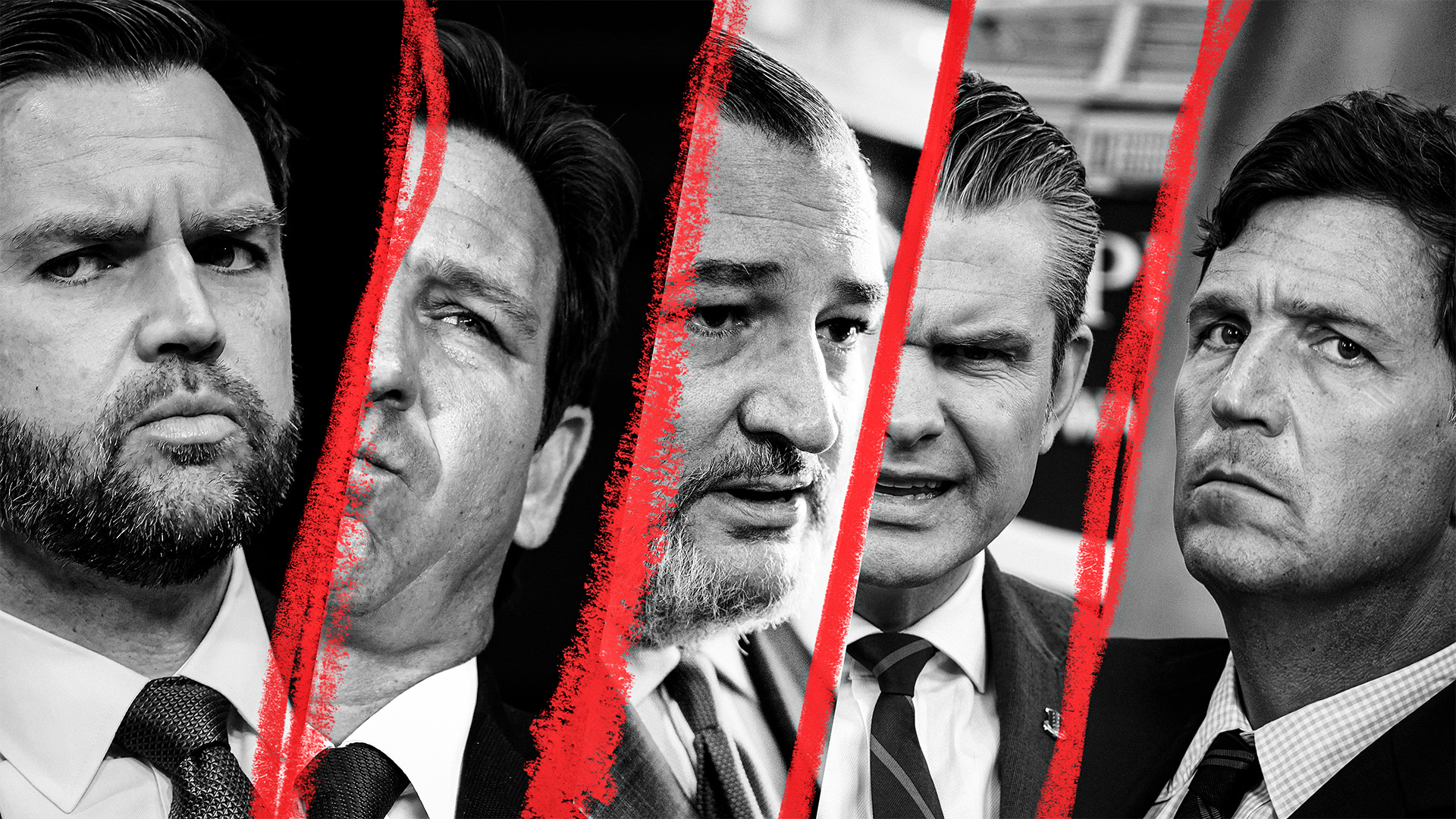
Pity the poor Republicans who fancy a stab at the 2028 nomination to run for US president. This was a midterms loss on a crushing scale. The Democrats flipped at least seven Senate seats and 26 seats in the House of Representatives, giving the Republicans a very rocky ride into the next election.
The MAGA coalition is beset by infighting and most of Donald Trump’s hand-picked candidates tanked at the polls on Tuesday. The voter enthusiasm that propelled Trump to electoral success nearly two years ago has evaporated.
The individual most likely to be crying into his cornflakes is vice president JD Vance, who campaigned for Trump with absolute conviction during the campaign, visiting swing states and promising economic glory days ahead. That makes the tone of his lengthy X post the morning after the rout quite striking.
“The real reason we lost is obvious to almost everyone… the reason we lost is the war,” Vance concluded, apparently declaring open season on his boss, who – it should be remembered – launched that war.
Trump may genuinely believe that Republicans lost control of both houses of Congress because his name was not on the ballot, but no one else does. And Vance was shockingly quick in distancing himself from Trump in the interests of self-preservation.
It is unlikely to work. It is very difficult for a vice president to succeed a boss with such dismal approval ratings. Just ask Kamala Harris, whose nadir in her campaign to succeed Joe Biden as president came when she struggled to articulate what she would have done differently.
Despite being an early doubter about the war in Iran, Vance took on a key role in attempts to negotiate its end, so Trump can hit back at Vance and blame any failures on him.
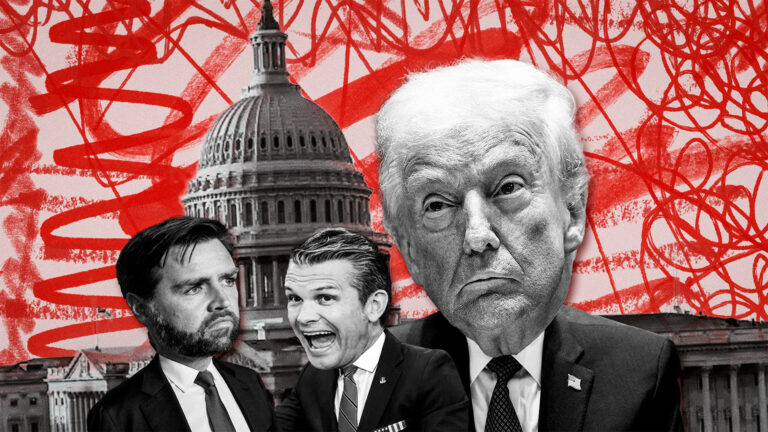

But Trump seemed unmoved at a public appearance on Wednesday afternoon, saying that he thought the vice president’s analysis on X was “good”. But he did not give Vance any endorsement, telling reporters: “maybe he won’t run, I don’t know who is going to run”.
While Vance is now linked in voters’ minds with Iran, another Republican front runner – secretary of state Marco Rubio – has been cannier in picking his battles. He has been less of a public face in the Iran negotiations, instead pinning his name to the more successful military raid to capture Venezuelan president Nicolás Maduro in January.
As of Wednesday afternoon, there were no words of reflection from Rubio. The sooner he jumps from the sinking ship, the greater his chance of being able to distance himself from the administration. But if he stays on in his role, he too may be dragged under by Trump.
Surveying the battlefield, there is only one state where the sun still shone on Republicans on Tuesday night, and that was in Florida, where they won all the statewide contests. This gives at least one potential 2028 contender a bit of good news.
“This is close to an extinction level event for Republicans in many parts of the country,” said Florida’s Republican governor Ron DeSantis, who challenged Trump for the nomination in 2024 and is expected to run again.
“It’s the political equivalent of a meteor strike that went all around the United States – blue states, red states, everything in between – and the one state that was able to hold the line and withstand that is right here in the free state of Florida,” he boasted.
While DeSantis was not on the ballot on Tuesday, and the Florida races were closer than expected, his political clout in the Sunshine State gives him a strong standing as someone who can weather voter dissatisfaction with the commander in chief.
The same can’t be said for Texas Senator Ted Cruz, another leading figure weighing a 2028 bid. Democrats made huge gains in Texas on Tuesday, winning both a Senate seat and the governorship. Cruz campaigned hard for the Republicans, so it doesn’t reflect well on him.
Should Trump’s approval ratings continue to nosedive, the Republicans might look for a candidate who can claim to have had longstanding concerns about Trump that predate the Iran war. That candidate would be Chris Christie, the former governor of New Jersey.
He came out fighting on Wednesday, saying that Vance was a “disgrace” for supporting a controversial attack ad, broadcast in the Ohio race. This was potentially an early jab at a presidential rival.
But Christie has already lost the nomination twice – in 2016 and 2024 – and even with Republican soul-searching about their future direction, it seems unlikely that someone so far outside the president’s orbit will be able to win over a party in which loyalty is revered.
Suggested Reading
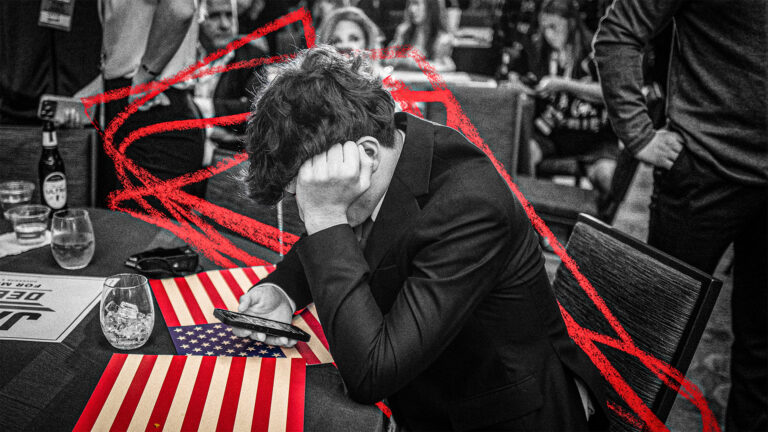

Watching the fall of Trump with New York’s MAGA hardcore
Conversely, Republicans could choose to swing far to the other side of the political spectrum, and back someone even more MAGA than Trump himself. His fiercest allies-turned-critics like former Fox News host Tucker Carlson and former Georgia congresswoman Marjorie Taylor Greene claim Trump abandoned his America First doctrine with the Iran war. Greene made clear on Wednesday that she believes the GOP lost their majority because of the war.
Carlson and Greene have formed a breakaway faction but could in theory return to the Republican fold and lead a revolution within the party. The prediction markets seem to like this theory, with Carlson currently the fourth favourite as the 2028 Republican candidate on Polymarket, even though he has said he has no plans to run.
He is not the only wild card. Right now, defence secretary Pete Hegseth is being touted by pundits as a potential sacrifice as Trump seeks to apportion blame for the disaster. Trump says he still supports him, but Hegseth will also be a target for impeachment proceedings by a Democrat-majority Congress.
With his rants about “trannies”, “woke bullshit” and his open hatred for the media, he seems like a super-charged Trump, and US media has reported that he is discussing a 2028 bid.
Were he to leave the administration, Hegseth could claim to be the new MAGA martyr and offer up an even more extreme political message to disaffected voters.
But on Tuesday the electorate seemed to reject candidates who traded in hate. From Ohio to Texas, Republican candidates who ran personal attack ads against their opponents found themselves being beaten by Democrats who ran more hopeful, upbeat campaigns.
Perhaps it’s wishful thinking, but it feels like US politics lost a little of its nastiness on Tuesday night, and that doesn’t bode well for any Republican candidate raised on a diet of Donald Trump’s fire and fury.
 Most popular
Watching the fall of Trump with New York’s MAGA hardcore

The end of Trump’s empire of madness


Sixteen ways to make Bonfire Night great again


If Burnham held a snap election, he’d win – but there’s a catch