It was always going to be Donald Trump that did for Donald Trump. Two years ago, though a convicted felon, twice impeached, found liable by jury for sexual assault and under federal indictment for attempting to overturn the 2020 election, he achieved one of the great comebacks in political history: greater than Churchill in 1951, greater than de Gaulle in 1958. And then, with no less gusto, he blew it all.
The deranged tariffs, the shameless dynastic grift, the Epstein files fiasco, above all the war on Iran: it was as though, having constructed one of the most unlikely and heterogeneous electoral coalitions in presidential history, he just couldn’t stop himself from wrecking it.
Two years ago, he was like Elvis Presley in his electrifying 1968 NBC special, defying the odds to reclaim the spotlight. Now he is more like Elvis in the notorious Albert Goldman biography, metaphorically doped to the eyeballs, gorging himself on deep-fried peanut butter and jelly sandwiches served up at Mar-a-Lago – MAGA’s own Graceland – by his fascistic new chief of staff, Stephen Miller.
In August, I wrote with dismay about the bin-fire of the Democratic primaries and the party’s apparent decision to “dump the boring old ‘administration-in-waiting’ stuff for the behaviour of a campus sit-in and Maoist ‘struggle session’.” So it was a relief as well as exhilarating to watch the “bluenami” surge across America in the small hours of last Wednesday, as Democrats stormed to reclaim the House and the Senate and, for the first time since 2010, to seize a majority of the nation’s governorships.
It has become orthodox to claim that the midterms were a referendum on Trump, and this is true; but it is not the whole truth. The Democrats themselves got important things right, too.
In this night of triumph are three clear lessons for the party as it embarks upon the great task of winning the White House in 2028 (as well as maintaining its grip on the legislature). Let’s call them the three Cs: Charisma, Corruption and Competence.
First of all, it is time for progressives everywhere to accept that Max Weber was right in Economy and Society (1922) to identify the centrality of charisma to transformative leadership. As a personal characteristic, it takes many forms – Trump’s primal energy, now in sharp decline, is very different from Barack Obama’s wit, cerebral charm and natural authority.
But, as Weber observed, it is a gift bestowed upon very few, “outside the realm of everyday routine.” And what exactly is that gift? As Quentin Crisp put it, “charisma is the ability to influence without logic.”
Senator-elect Abdul El-Sayed of Michigan is a political phenomenon not because of his views on Gaza but because he is a star communicator who combines warmth with a streak of defiant rhetorical pugilism (watch his full interview with the excellent conservative commentator Ross Douthat on 60 Minutes, available on YouTube).
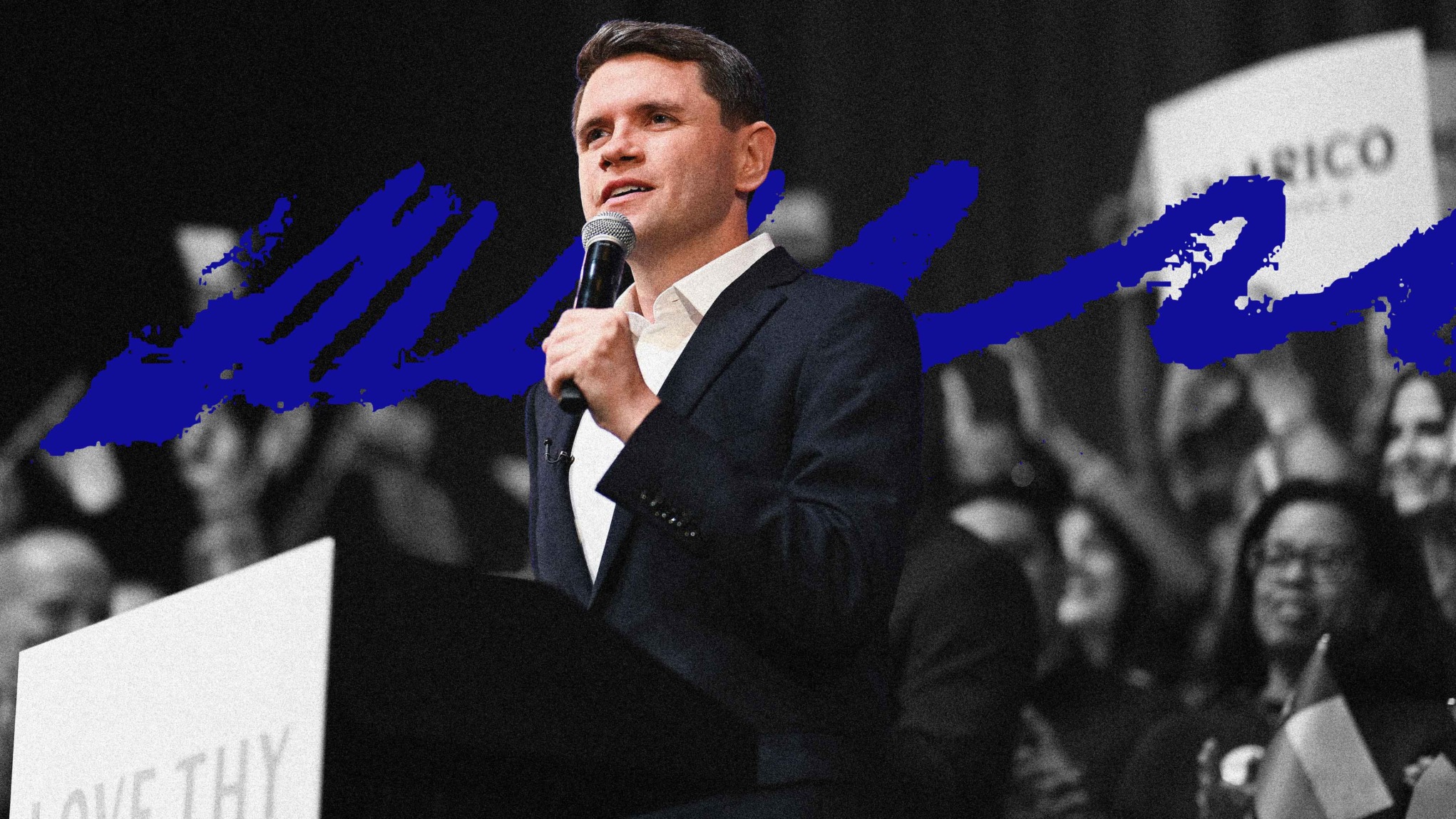
James Talarico, the first Democrat elected as a senator for Texas since Lloyd Bentsen in 1988, is already being spoken of as a future president not because of his location on the ideological spectrum but because he has transformed his talents as a Presbyterian lay preacher into a form of political rhetoric that is both open-hearted and strong in the demands it makes of every citizen.
The current bookies’ favourite to be the 2028 Democratic nominee, Jon Ossoff – re-elected as senior senator for Georgia – manifests a quite different form of charisma: compelling, often sardonic, charged with urgency. In particular, his destruction of his Republican opponent in a televised debate in Doraville on October 8 was a masterclass in muscular liberal showmanship.
“If John Lewis [the great civil rights activist and Ossoff’s mentor] were marching today from Selma to Montgomery,” he said, “Mike Collins would be grabbing a billy club” – adding that “you’ve hired half the Third Reich to staff your congressional office” and taunting Collins over his claims that the 2020 election was stolen (“What do you say, Mike?”).
Among the most dismal responses to the first wave of right wing populism was the claim that what voters really wanted was for politicians to be “boring” again, or for the “grown-ups to be back in the room”, or “less style, more substance” – as if the two were axiomatically in tension.
As a public service to the rest of the world, this country recently carried out a comprehensive laboratory test of this theory by electing Keir Starmer: a prime minister so mind-blowingly boring and technocratic that he made the Monty Python accountant Herbert Anchovy look like Iggy Pop. And, having granted him a landslide victory, the voters turned on him almost immediately.

It looks as though the Democrats have grasped – or are starting to grasp – the realities of hypermodern politics. If you want to secure and stay in office, you need to be a strong swimmer in the perilous waters of contemporary political showmanship. Alexandria Ocasio-Cortez, another probable contender for the nomination, and Zohran Mamdani, who would also be in the running if he had been born in the US, both have this talent in abundance.
One of Kamala Harris’s biggest mistakes in 2024 was declining to appear on Joe Rogan’s podcast – unlike Trump, who put in a three-hour shift on the show, only 11 days before the election. Talarico, who is as ambitious as he is amiable, was not going to make the same mistake, and appeared opposite Rogan in July 2025.
“You need to run for president,” the king of Podcastistan told him. “We need someone who’s actually a good person.” Talarico seems to agree: at the weekend, he did the cold-open on Saturday Night Live.
Second, it is now overwhelmingly clear that “corruption” – as opposed to bigotry, lawlessness or Hitler-adjacency – is the charge that hits the populist right hardest. It was so when Péter Magyar defeated Viktor Orbán in Hungary in April; it is the mud that is sticking most effectively to Nigel Farage; and it was the attack that gave coherence, vigour and bite to the Democratic campaign this autumn.
Why? Because, in politics, certain words can become what Jacques Lacan called a “master signifier”: anchoring a network of meaning, acting as a proxy for multiple ideas. In the past 20 years, the right has used the word “immigration” to inflame not only straightforward xenophobia but also much broader anxieties about social upheaval; overstretched public services; community cohesion; wage suppression; and crime, especially sexual violence.
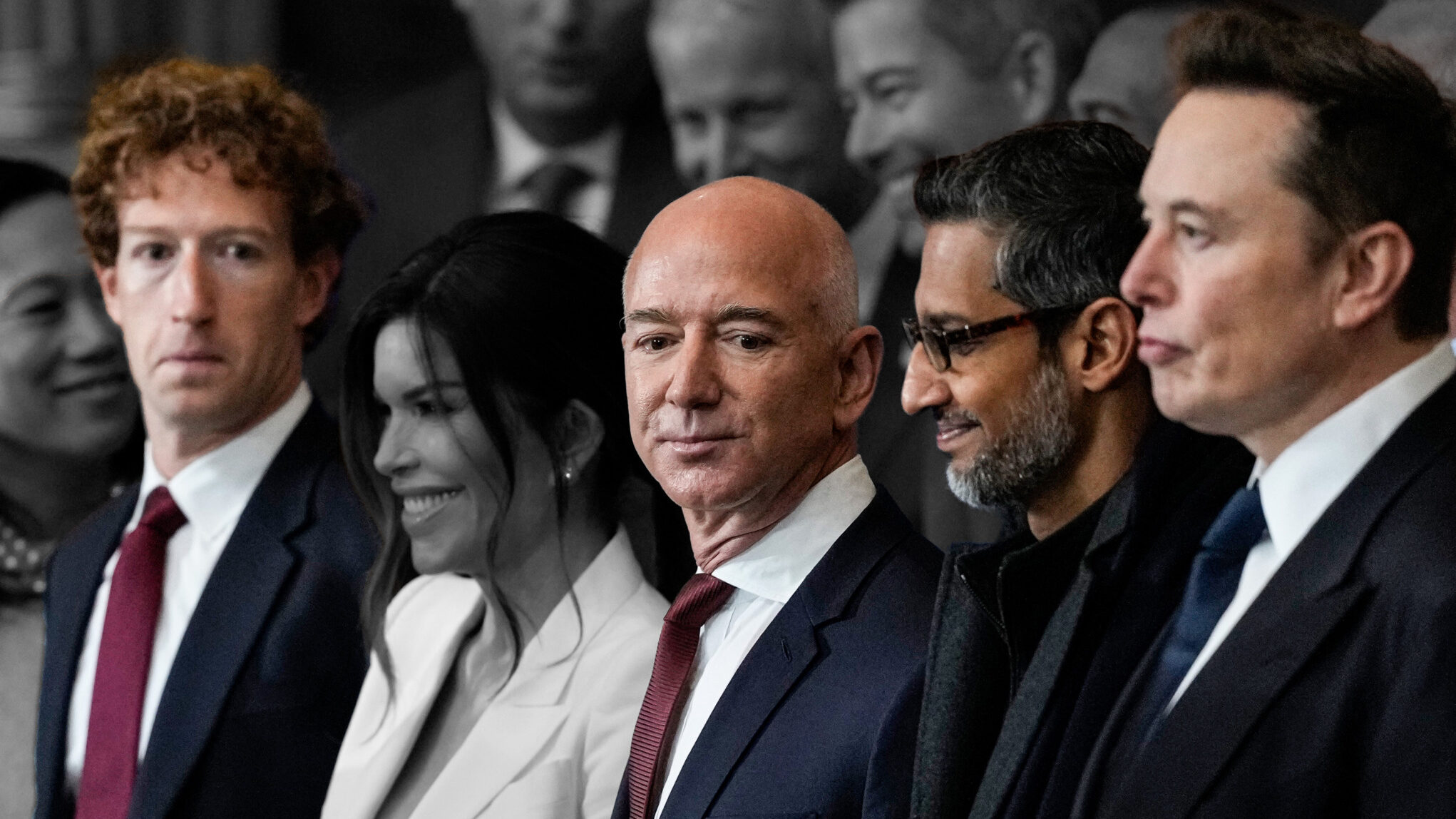
“Corruption”, it turns out, is also a very powerful catch-all word that, in the case of Trump and MAGA, captures the president’s flagrant self-enrichment even as voters struggle with the affordability crisis which he insists is a “hoax”; his empowerment of an unaccountable oligarchy, notably the tech tycoons who were so prominent at his 2025 inauguration; his feeble mismanagement of the Epstein files and leniency towards what California congressman Ro Khanna has adroitly called “the Epstein class”; his deranged fixation with personal monuments; his transformation of ICE into a quasi-private militia, responsible for the fatal shootings of Renée Nicole Good and Alex Pretti in Minneapolis in January; and, in general, the egregious contrast between his promise to “drain the swamp” while conspicuously rigging the system himself.
Suggested Reading
Slavoj Žižek: Beating Trump isn’t the wild triumph you all seem to think
In 2024, Joe Biden and Harris made a related attack but did so in the abstract language of constitutional principle. “Nothing, nothing can come in the way of saving our democracy,” said Biden when he announced his withdrawal from the race. At the Democratic National Convention in Chicago, Harris promised “to hold sacred America’s fundamental principles, from the rule of law to free and fair elections.” In her closing argument at the Ellipse in Washington DC, she celebrated “a country rooted in freedom for every American.” The rhetoric was stirring. But she still lost, bigly.
In contrast, the charge of corruption – in the broadest sense – really hit home this year. In a Fox News poll, published on October 14, it even ranked ahead of inflation, gas prices, leadership and healthcare among the voters’ main concerns.
In this respect, message discipline was every bit as important as the message itself. “We just sent a message to every billionaire mega donor, every trillionaire mega donor,” said Talarico in his acceptance speech in Austin. “Every corrupt defender of this broken political system in this state, in this country, power belongs to the people.”
More than 1,150 miles away in Detroit, El-Sayed made the same point: “We showed that in a battle between the money and the many, that the many really can win” (my italics). And, in Atlanta, Ossoff gave voice to the spirit of the whole night and what his party was really fighting.
“While the wealthy and well-lobbied feast on inside information and official favours,” he said, “America’s forgotten families are treated to systemic corporate disrespect and official indifference, working harder and harder while the treadmill just gets faster and steeper and the bills get higher and higher.”
All of which leads to the third prerequisite of continued Democratic success and victory in 2028, which is competence: not in the dull, soul-sapping sense of political managerialism but a laser-like focus on the voters’ preoccupations. Hakeem Jeffries has been an uninspiring minority leader, but he was one of the true heroes of this campaign, insisting that candidates stick remorselessly to the themes of affordability, the cost of the Iran war to taxpayers, healthcare, and the newer but mounting resentment of data centres and AI.
Yes, there is a limit to what Democrats can do without control of the executive. But it’s a limit they should be testing. In addition to all the investigations that will begin once the 120th Congress convenes on January 3, senator Chuck Schumer has prepared more than a dozen bills to reduce household costs and tackle corruption; Jeffries has an extensive slate of draft legislation addressing the Iran war, healthcare, tariffs, data centres and AI regulation.
Both are well aware that Trump will veto anything he doesn’t like. But their hope is that such moments of conflict between White House and legislature will further dramatise the point that Democrats are no longer distracted by luxury beliefs or identity politics and are straining at the leash to get into office and start the daunting repair work that awaits whoever follows the Big Orange.
Of course, in 21st-century politics two years is 10 lifetimes. It is still much too early to say who is best equipped to be the nominee in 2028 – though we shall not have to wait long before the contenders start to break cover officially.
During what will be, at minimum, a feisty process of selection, the Democrats could blow it just as Trump blew it; squandering a historic opportunity and reverting to the futile, drearily familiar civil war between centrist and woke, between establishment liberals and “Bernie bros”.
Feuding is easy and lazy; winning is hard. As Talarico said last week: “The real fight in this country is not left versus right. It is top versus bottom.” That’s the cause. And in Ossoff’s words: “This moment is an opening not for restoration, but for reformation.” That’s the framing: don’t even think of looking back.
It’s theirs to lose.