PICK OF THE WEEK
Fatherland (selected cinemas)
Why is Thomas Mann so comparatively neglected in the English-speaking world today? True, some still read Death in Venice (1912), usually after seeing Luchino Visconti’s 1971 movie adaptation; others have been encouraged by Colm Tóibín’s wonderful epic novel The Magician (2021) to try Buddenbrooks (1901) or The Magic Mountain (1924).
Yet, compared to, say, Dostoevsky, Kafka, or Camus, Mann is among those great masters who still have canonical status but a much-diminished cultural impact. With the exception of Nietzsche, his intellectual ancestors – Schiller, Goethe, Schopenhauer, Fontane – are not in vogue, leaving him adrift in our time. As long ago as 2000, Harold Bloom lamented that Mann’s work exemplified “the high culture that is now in some jeopardy”.
All of which is a shame, given the contemporary resonance of his preoccupations: civilisational decline, the power of irrationality, the complicity of elites in their own undoing, and the perilous ease with which freedom is surrendered.
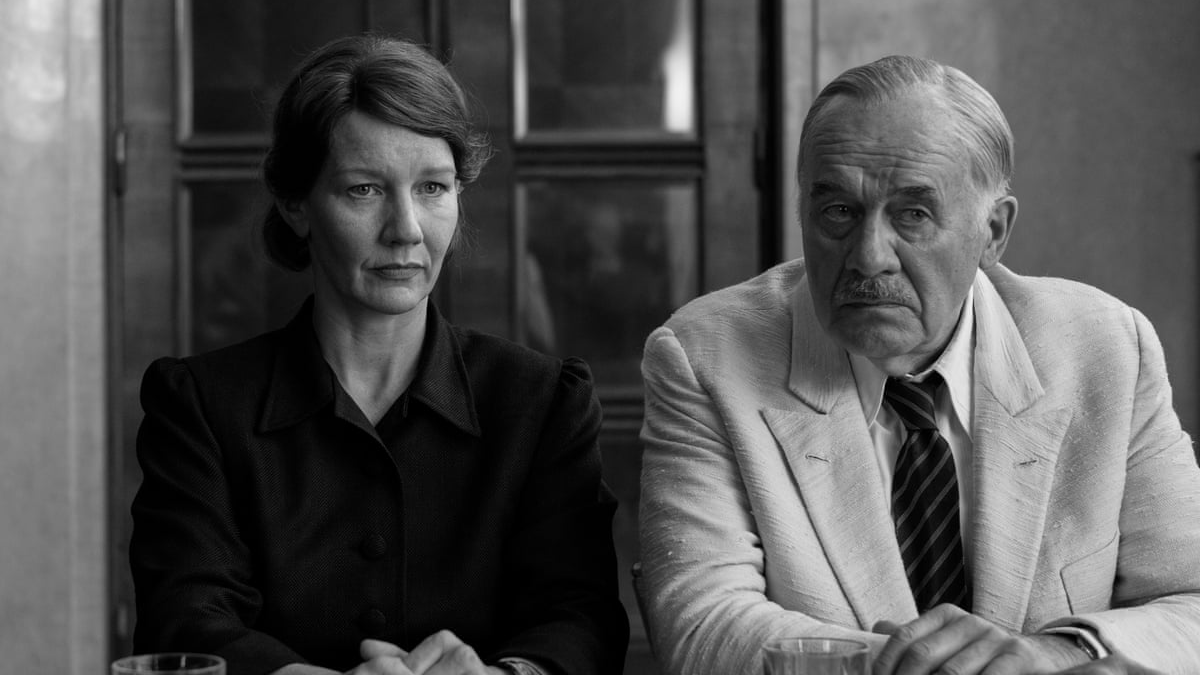
So Pawel Pawlikowski’s exquisite account of the writer’s return to Germany in 1949, after 16 years in exile, is especially welcome: a miracle of cinematic compression and a compelling portrait of life in political, geographical and emotional limbo.
In reality, the 74-year-old Mann (Hanns Zischler) was accompanied on the five-day trip by his wife Katia, but the Polish director’s decision to replace her with his first-born Erika (Sandra Hüller, superb) pays off magnificently; lending the film’s title a second meaning, as father and daughter clash, sulk, and then fret together over his eldest son, Klaus (August Diehl), living in drug-addicted despair in Cannes.
The occasion is the 200th anniversary of Goethe’s birth and Mann controversially decides to accept memorial awards in both west (Frankfurt) and east (Weimar). Approached by Wagner’s grandsons, Wieland and Wolfgang (Enno and Theo Trebs), for help in their quest for rehabilitation, he tells them that “the Bayreuth opera should be razed to the ground and your mother put on trial”.
In the east, they are greeted by an honour guard of young pioneers – “your future readers”. Though Mann warns his hosts that “revolution is not my metier”, his old literary acquaintance Johannes R Becher, now a senior cultural official, still tries to recruit him to the cause. But when a distressed local tells Mann at his hotel that Buchenwald is being used by the communists to intern political prisoners, he is strongarmed out of the room.
“Which side are you on?” Klaus asks Erika. “Stalin or Mickey Mouse?” For Mann, the choice is a dismal one, and, as loyally as he declares fealty to German culture and Goethe’s “open gaze”, his moments of baffled aphasia suggest that the immune system of his artistic confidence is desperately depleted by time and the grinding wheels of history.
Only in the final scene in a ruined church, in which the music of Bach plays an unforgettable role, does his faith in beauty recover sufficiently to allow the weary patriarch to grieve openly for all that is lost.
Suggested Reading

There’s no reckoning for Zuckerberg in The Social Reckoning
STREAMING
The Audacity (HBO Max)
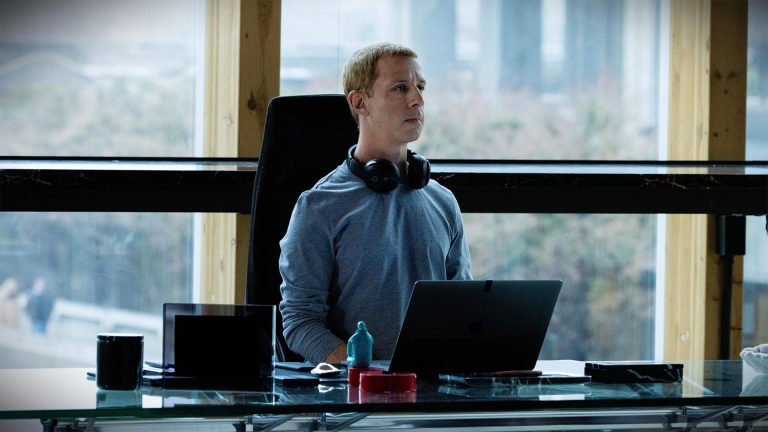
“That sounds like a slur!” says Duncan Park (Billy Magnussen) when a psychologist declares him neurotypical. “I think different! Also, I have zero sense of humour and zero empathy.”
As CEO and co-founder of data analytics firm Hypergnosis, Duncan is affronted to be so categorised, having assumed that, as a well-established tech tycoon in Silicon Valley, he must at minimum have ADHD. The diagnosis (or lack of one) continues to rub him wrong in this terrific dark comedy created by Jonathan Glatzer, an alumnus of Succession and Better Call Saul.
By coincidence, Magnussen also plays the part of a menacingly smooth media executive at Facebook in the recently released The Social Reckoning – and the contrast is illuminating. Aaron Sorkin’s movie is set on the Olympus of the digital revolution, where companies consider themselves “post-government” and CEOs take decisions of geopolitical consequence.
But Duncan is not a pioneer of extra-planetary travel, a self-styled hunter of the antichrist, or a would-be creator of AI consciousness. Though still a one-percenter, he’s much lower down the food chain: a data dealer in a gilet, miserable in an open marriage to Lili (Lucy Punch), inclined at moments of extreme stress to take ayahuasca by his pool. “Help me!” he says to the hallucinated ghost of his father. “Help me stay rich!”
Almost 30 years after Google first made the Internet globally intelligible, Duncan and his peers no longer move fast and break things; they just break things, including their families and themselves. Which is why he is so dependent upon his therapist, JoAnne Felder (Sarah Goldberg) – who has her own side-hustle as an insider trader, exploiting the market-sensitive information her wealthy clients confide in her.
Though the show is set in sun-bleached Palo Alto, its drab palette – grey, beige, taupe – matches the tawdriness of the lives these people lead. “When was the last time we saw tech… help?” Duncan’s on-off lover Anushka Bhattacharya-Pfister (Meaghan Rath) says in a moment of dismal candour. “I know tech changed the world… but so did the bubonic plague.”
In this parade of sell-outs, only her husband Martin (Simon Helberg), an AI developer, retains a sense of quiet wonder as he patiently teaches Xander, a talking “neuro-companion.” Integrity of a different, battered sort is personified by Rob Corddry as Tom Ruffage, the deputy under-secretary of veterans affairs; a gay, alcoholic ex-soldier who fought in the first Gulf war and has what he imagines to be a prestigious government contract to offer to Duncan.
His reward is disdain. “I’m not begging the ugly girl to go out with me,” says the CEO – adding that he doesn’t want any elderly experts from the veterans’ department around: “No walkers in my war room!” This is an America with no pride in past sacrifice, and no pride in itself (as opposed to a surfeit of narcissism).
That said, the eight-episode series is consistently funny – not least because of Duncan’s epic malapropisms: “I don’t know the stock’s going to fall,” he tells JoAnne. “I’m not Nosferatu!” I also enjoyed “Schroeder’s Cat” and “Once more unto the beach!”
Best of all is the authentically sinister performance of Zach Galifianakis as Carl Bardolph, another client of JoAnne and a legend of the tech sector, furiously resentful that his colossal wealth is not accompanied by public acclaim. “Where’s our parade?” he says, lying on her carpet in the “starfish” position. “All I see is pitchforks and ingratitude.”
One of the best streaming shows of the year. Season two is already in the works.
FILM
Clayface (general release)
Are the superhero cinematic franchises really in terminal decline? Bear in mind that Destin Daniel Cretton’s Spider-Man: Brand New Day, released in July, is already the highest grossing movie ever at the north American box office.
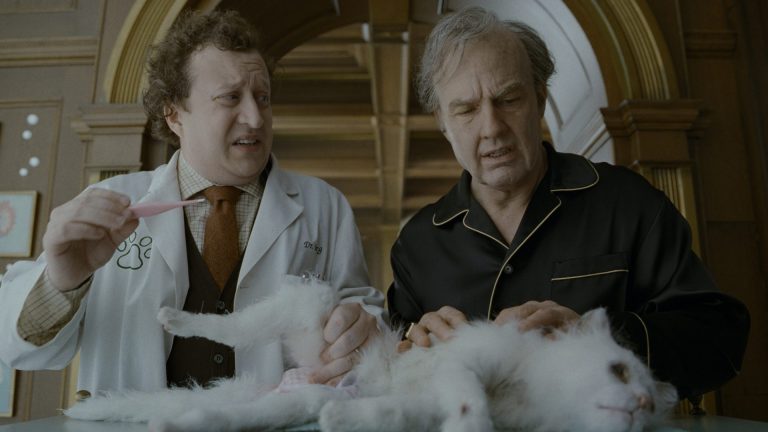
What has undoubtedly been lost is the energy, ingenuity and unpredictable cross-pollination that, 15 years ago, still made these world-building adventures exciting. So a minor entrant like James Watkins’s Clayface, starring Tom Rhys Harries as Oscar-nominated actor Matt Hagen, is best approached on its own terms – in this case, as an entertaining pulp body horror flick, rather than the next chapter in James Gunn’s laborious DC reboot.
After Matt sleeps with Mia Torrez (Joana Ribeiro), her mob boss boyfriend Markos Szabo (David Dencik) and his psychotic henchmen gruesomely carve up his face – the first of many sequences that are definitely not for the squeamish. Finished as a screen idol, he is ditched by his agent and fleeced of his fortune by his manager Frank (Eddie Marsan), now in league with Szabo.
In desperation, he offers himself as a human subject to maverick scientist Dr Caitlyn Corr (Naomi Ackie), whose revolutionary nanotechnology uses AI to regenerate organic tissue. The results are miraculous – until, of course, they aren’t, and Matt’s face starts to melt, sag and mutate in the most inconvenient situations.
Clayface undoubtedly has fun at the expense of looksmaxxers, Instagram glow-up merchants and GRWM influencers, but the comparisons with Coralie Fargeat’s The Substance and Aaron Schimberg’s A Different Man (both 2024) are overstated. The movie’s true antecedents are David Cronenberg’s The Fly (1986) – pointedly so in its final act; and, less obviously, John Carpenter’s The Thing (1982). Whether or not it counts as a superhero movie – and frankly, who cares? – Clayface is very enjoyable Halloween fare.
BOOK
Cormac McCarthy: A Legacy Revisited by Tracy Daugherty (St Martin’s Press)
Remarkably, this is the first full-length biography of the great novelist and chronicler of fallen America, who died in June 2023. Drawing upon assiduous research in the McCarthy archive at Texas State University, Tracy Daugherty, author of fine books on Donald Barthelme and Joan Didion, has set a high bar for those that follow.
Born in Providence, Rhode Island, in 1933, McCarthy was four when his family moved to Knoxville, Tennessee – the Appalachian backdrop to his most comic novel, Suttree (1979). But it was his relocation to El Paso in 1978 that inspired McCarthy’s most important pivot: not only to the possibilities of the Western genre but also to the imaginative landscape of the desert, which he often saw through the eyes of the early Christian fathers.
Daugherty is excellent on his subject’s artistic selfishness, his love of solitude (leavened by the company of outlaws and the desperate), his dandyism and the debt he owed to his Random House editor Albert Erskine – a relationship as significant as that between Maxwell Perkins and Thomas Wolfe or Charles Monteith and William Golding.
He is also scrupulous in his account of the posthumous #MeToo controversy over McCarthy’s long relationship with Augusta Britt, who was only 16, and 26 years younger than him, when they met in 1976.
Astonishing to reflect that Blood Meridian (1985) – the masterwork that is now essential reading in the American land of wolves of 2026 – was considered a dud on publication (“hyperbolic violence, strained surrealism”). Next up: Isolato: An Intimate Portrait of Cormac McCarthy by Laurence Gonzales, written with the cooperation of the author’s family and due for publication in May.
 Most popular

I went looking for Trump’s America – this is what I found
18 things that will absolutely, definitely happen if Trump gets whopped in the midterms


Emily Maitlis’s diary: Why are we turning away the people who could make Britain richer?

‘The deep state stole my mini-budget’: An exclusive extract from Liz Truss’s new book