
PICK OF THE WEEK
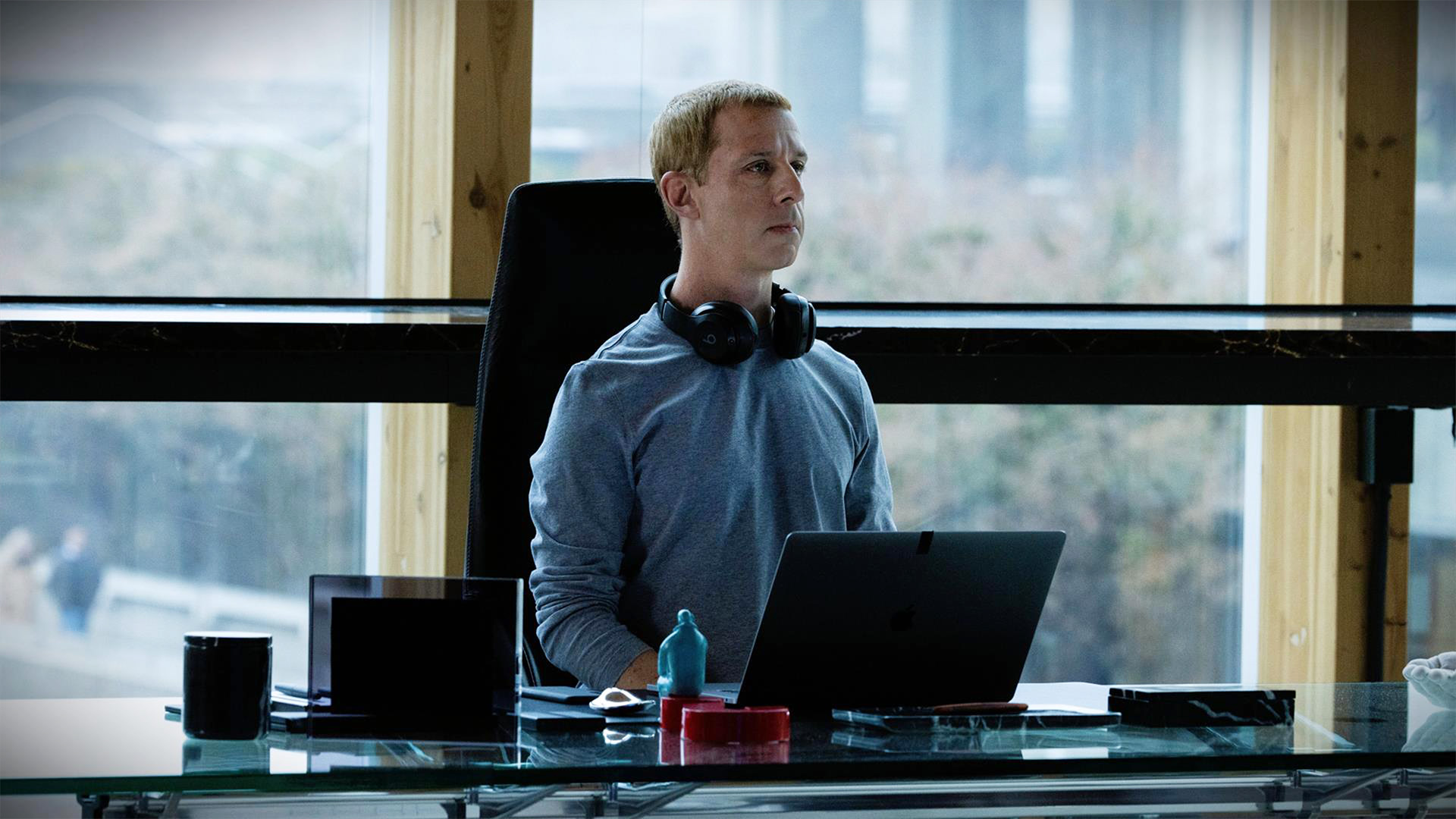
The Social Reckoning (general release)
“Prologue: White Girl Wasted” reads the chapter card. Stranded beside her broken-down car on a highway in San Mateo, California, Kayleigh (Portia Doubleday) taps at her phone, as she waits for a tow-truck from AAA.
A police patrol car pulls over, and two officers ask if she needs assistance. They smell alcohol on her breath but decide to “let it slide”. At which point, the exchange escalates into an ugly confrontation as she unleashes a torrent of racist abuse, accuses the cops of targeting “a hot white girl”, and starts video recording for her “Voice of Reason” Facebook page (“Watch me own DEI cops”).
When Frances Haugen (Oscar-winner Mikey Madison), a civic integrity product manager at the social media platform, sees the post, she is startled to recognise Kayleigh from her Pilates class. How did this hitherto progressive woman become radicalised?
Meanwhile, investigative reporter Jeff Horwitz (Jeremy Allen White) arrives at the San Francisco bureau of the Wall Street Journal with a brief to dig up Silicon Valley’s secrets. His new boss Kris (Betty Gilpin) is dismayed that he doesn’t know how to work the GPS in his car. Yet, as Horwitz points out, the digital revolution has long outgrown the world of geeks and gadgets: “This is no longer a tech beat. It’s a political beat.”
Director and writer Aaron Sorkin is emphatic that this is not a sequel, but “a companion piece” to The Social Network (2010). If that sounds pedantic, it isn’t. David Fincher’s movie was an origins story, tracing the meteoric rise of Facebook from the “Facemash” prototype, a boozy stunt at Harvard by Mark Zuckerberg (Jesse Eisenberg); its launch in 2004 as “TheFacebook”; the prodigious growth of the platform (which became plain “Facebook” in 2005); and the spectacular falling-out between Zuckerberg and his collaborator Eduardo Saverin (Andrew Garfield).
The original was a film about the convergence of seething college resentments, status anxiety and hardcore neurosis with a new technology heading for the stratosphere. But by 2019, when The Social Reckoning begins, that era is long past: Facebook and its sister apps reach nearly three billion people a month and Zuckerberg – now played with chilling detachment by Jeremy Strong – stands atop a company that considers itself, as one of the characters says, “post-government”.
Concerned that Facebook is driving its users towards extremist content, turbocharging lies and damaging the mental health of young people, Haugen makes contact with Horwitz. Whereas Zuckerberg was the focus of The Social Network, it is the initially fractious relationship between reporter and whistleblower that frames the new movie and supplies its principal entertainment.
Madison and White deliver Sorkin’s screwball shtick with panache as they argue over what the story means. For Haugen – not yet drained of tech idealism – it is a chance for Facebook to heal itself. For Horwitz, it proves that the whole enterprise is rotten to the core and that social media is destroying not only the industry to which he has devoted his life but the health of democracy.
“My bias isn’t because tech is taking journalism jobs,” he tells his source. “It’s because you are doing them so badly.” Which matters when 43 per cent of Americans use Facebook for news. We see the real-life impact of online medical disinformation during Covid. And – of course – all roads lead to January 6.
Since The West Wing, the throughline in Sorkin’s work has been a bruised hope in the capacity of decent Americans to save the republic from its worst impulses, or at least to limit the damage. To his credit, he includes a self-deprecating reference to Frank Capra: the cinematic laureate of against-the-odds optimism. But this time even Sorkin’s irrepressible liberalism may have met its match.
The Social Reckoning is gripping, scary and often very funny (Bill Burr is terrific as Charlie, a disillusioned investor brought in to help Zuckerberg prepare for congressional testimony).
It is also, incredibly, a period piece. Though the movie ends only five years ago, the world it describes – when social media dominated our anxieties – already feels like a memory from the distant past. In 2026, the existential threat of AI – not only to our species, but to our souls – dwarfs everything that has preceded it.
Horwitz won widespread acclaim for his work and published a bestseller Broken Code: Inside Facebook and the Fight to Expose Its Toxic Secrets (2023), while Haugen has become an accomplished campaigner for higher standards in the digital sphere.
And Zuckerberg? True, Meta, Facebook’s parent company, had to strike an $18 billion settlement in August over claims that its products had damaged teenagers’ wellbeing and fostered online addiction. But how painful is that really for a company with a market capitalisation of more than $1.8 trillion?
In other words: what “reckoning”? Mr Sorkin: your work is not yet done.
THEATRE
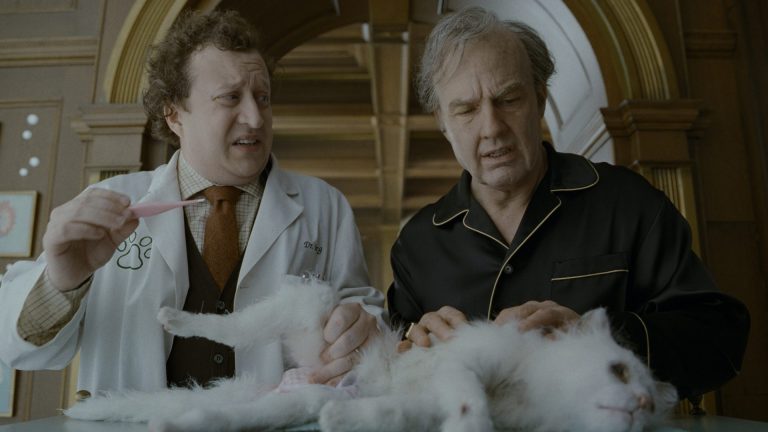
The Cherry Orchard (Harold Pinter Theatre, London, until January 9)
Less audacious than the Benedict Andrews production at the Donmar two years ago, Conor McPherson’s adaptation of Chekhov’s last play – directed by Ian Rickson – is still engrossing, intelligent and fun.
Though the cast is uniformly strong, Kristin Scott Thomas is exceptional as Ranevskaya, the debt-ridden landowner returning from Paris to her estate in provincial Russia and facing its loss at auction. At the preview I attended, the audience clapped her first appearance on stage – an instance of the “entrance applause” common on Broadway, well-meant but clumsily confusing celebrity with artistry.
And an artist Scott Thomas most certainly is, nimbly capturing the protean moods of Ranevskaya: her longing to remain the heart of her ramshackle family; her grief over the young son she lost six years before; her yearning for the lover who jilted her in France; and her traumatised inability to confront the turn-of-the-century wave of radical social change championed by the idealistic student Trofimov (Jack Riddiford) who woos her daughter Anya (Anastasia Martin).
Stephen Mangan, a comic actor whose tremendous range deserves more parts like this, also excels as Lopakhin, the wealthy businessman whose father and grandfather were serfs on Ranevskaya’s estate. “What would they say!” he says, in a moment of triumph laced with bitterness. “Me! Yermi, that used to have to walk behind the cabbage cart, barefoot, bloody and beaten, for twenty miles in a day. What are you gonna say now, you dead old fucker”?
As rooted as it is in the Russian past, The Cherry Orchard remains bracingly contemporary as a chamber piece about the perennial human struggle to lead a grounded, meaningful life in a season of roiling change.
Suggested Reading

How Salman Rushdie rose again
TV
Pierre (Channel 4)
It is nothing short of scandalous that an actor of David Harewood’s stature has had to wait so long (he is now 60) for a leading role in a television series. His Othello is one of the great interpretations of our age; as William F Buckley in the premiere production of James Graham’s Best of Enemies, he was no less memorable. And, as David Estes, director of the CIA’s Counterterrorism Center, in seasons one and two of Homeland, he showed how versatile a performer he truly is.
Anyway: in Pierre, he plays a duty solicitor working all hours to represent suspects at his local west London nick. The down-at-heel legal firm that he set up with his friend Charlie Manners (Michele Austin) – think Slow Horses for lawyers – can’t afford the electricity bill, let alone meet payroll. He is trying to kick a gambling habit, while facing up to a diagnosis of type 2 diabetes and the strain his demanding work life imposes on his wife Celeste (Sara Powell) and stepson Eli (Dylan Ennis).
None of which stops him getting drawn in to the case of a young Black client Michael Felton (Ezrae Maye), who alleges that the cops in his neighbourhood – and especially PC Mark Tanner (Tom Rhys Harries) – are racist thugs.
Harewood has a fine foil in Jason Flemyng (can it really be 28 years since Lock, Stock and Two Smoking Barrels?) as Pierre’s lifelong best friend DS Ronnie Miller, who advises him: “Watch your arse, brother, and keep out of this.” Well, we know that isn’t going to happen.
The six episodes of this superior drama end on something of a cliff-hanger. It would be cruel of Channel 4 to deny us a second series.
BOOK
Vermeer: A Life Lost and Found by Andrew Graham-Dixon (Allen Lane)
The paperback release of this majestic study of Johannes Vermeer (1632-1675) is important for two reasons. First, it should ensure the widest possible audience for what has fast become recognised as the best book to date on the Dutch painter, whose recognised body of work comprises just 35 records (though Graham-Dixon adds a 36th),
Second, it features a new afterword on a fresh trove of documents that add further lustre to the author’s compelling thesis: namely that “Vermeer was not a painter of things but of ideas.” Categorised for so long as the visual chronicler par excellence of the “Dutch Golden Age” and its exquisite homes and artefacts, he was – in Graham-Dixon’s radically revised account – a devotional artist, animating his paintings with the religious vision of the Collegiant community that rejected the unconditional predestination of mainstream Calvinism and acknowledged the individual’s freedom to embrace or resist God’s grace.
Obscure as that sounds, Graham-Dixon turns this intellectual argument into a page-turning detective story, exploring Vermeer’s close connection with an affluent Collegiant couple, Pieter Claesz van Ruijven and Maria de Knuijt, for whom he painted 20 of his surviving works.
Seen through this sacred prism, The Milkmaid and Woman Holding a Balance (both c. 1659) are inspired by the Gospel figures of Mary and Martha; View of Delft (c. 1665) is a prophetic vision of heaven on earth; and, the most famous of all Vermeer’s paintings, Girl with a Pearl Earring (c.1667-8), represents Mary Magdalene beholding the risen Christ.
This is an extraordinary book, cementing Graham-Dixon’s status as the most important interpreter of art for a wider public since Robert Hughes.
 Most popular
I was at Eton with Charles Spencer – this is how it explains his battle with the royals

Emily Maitlis’s diary: My deep dive into Jeffrey Epstein’s hidden empire – and the network that let him get away with it

The linguistic logic behind dropped syllables
Putin’s wartime economy is heading for catastrophe