Woop woop woop. I check the mirrors of my Harley-Davidson to confirm. Sure enough, blue flashes.
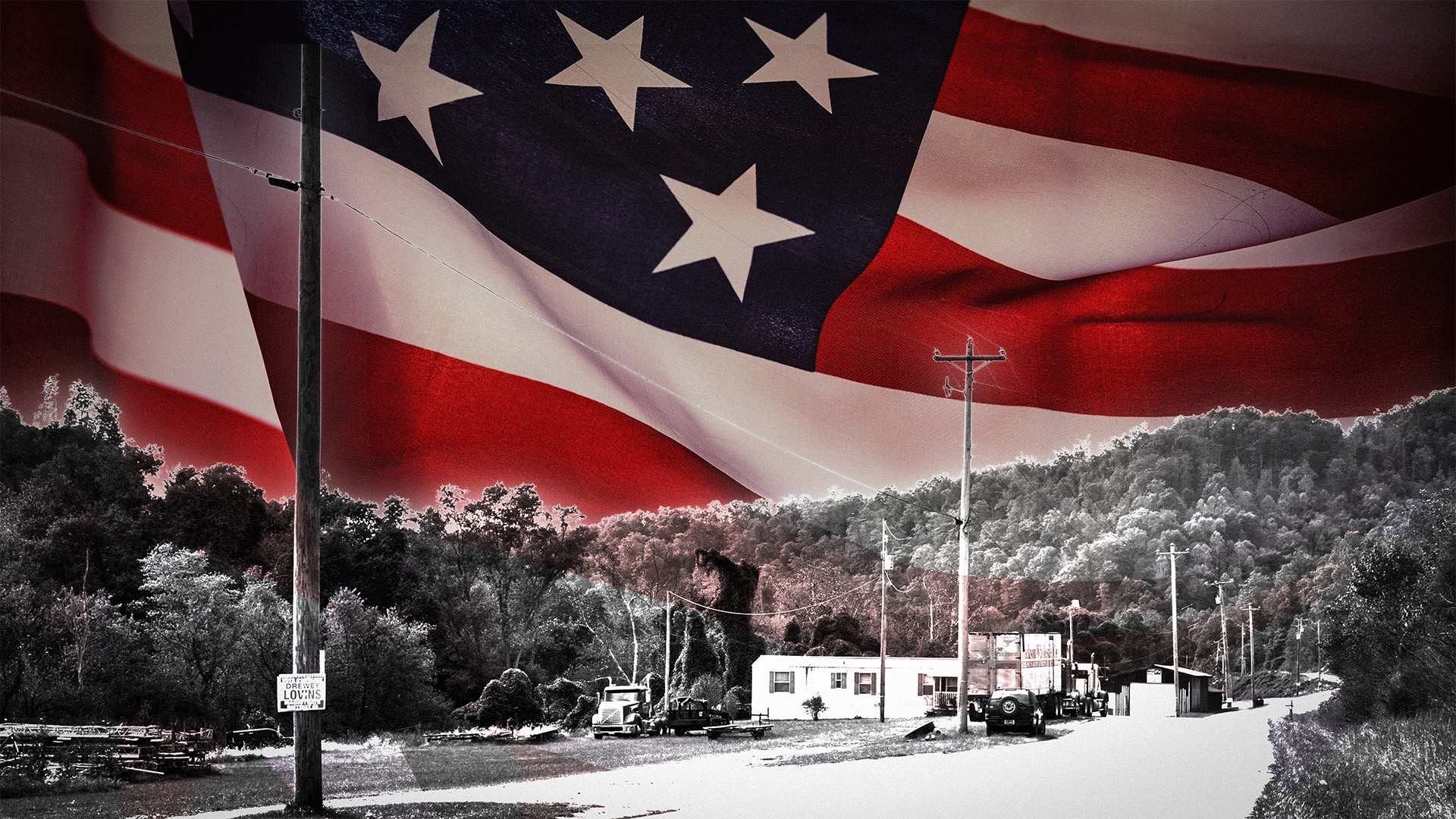
Maybe I was speeding. Kentuckians seem not to mind the limit, and I know I’ve been following their ways. I pull over as dawn glows on the rolling forests of Appalachia, the dew on the sculptural forms of the kudzu vines beginning to rise as mist.
I put my hands on the fuel tank. “Raise your hands, keep ‘em where I can see ‘em,” the officer says. I ask if I can raise my visor – it’s already beginning to fog with my anxious breath. He nods. “So where you from, friend? Tennessee plates. But you ain’t from there, are ye now?”
He jabs a finger at me, sniffs, and leans on his hip. The leather of his gun holster squeaks. I explain, and he says not many come to visit eastern Kentucky wherever they’re from.
“You want to see my licence, passport?” I ask. He shines a torch on my tyres, peers into my eyes quizzically for a moment, and sighs. “Nah. You get back to what you were doing. I was just bored.” He saunters off.
Intrigue and scepticism. I’ve found a lot of that in the South, even more so when people realise I’m a journalist.
After initial delight that I’ve bothered to make the trip – most scribes just phone from an office somewhere far away – there’s a qualification. A plea that I’m not just in search of poverty porn. “Tell me you’re not here to paint us as a bunch of barefoot hillbillies,” says Missy Sexton, a farmer.
To look beyond the portrayals of JD Vance’s Hillbilly Elegy and the South generally as a place of backward conservatives is precisely why I am here. I, like many, have come to view America with disdain. How could so many vote for such a government? They must be ignorant.
It is a conclusion all too easy to reach. But I realise that, beyond my awareness of the daily vomitus of Washington, I am ignorant myself.
And so I have embarked on what I am calling the Harley Conversations, my route dictated only by those I meet on the way. In the spirit of the late Alistair Cook and his close American contemporary, Studs Terkel, I am here for 10 weeks and 10,000 miles to document the everyday experience of everyday people in the American South.


My steed is a growling black Road Glide belonging to a man called Mike. I found him via Riders Share, a bike-sharing platform. He sends me on my way from Nashville with a couple of holy cards in my saddlebag.
“You gotta count your blessings,” he says. I leave him with my blessing – a box of English breakfast tea and some shortbread.
Riding along twisting forested roads to Florence, Alabama, the stake boards for candidates contesting the midterm elections are all over the lawns. But there are just as many signs averring that Jesus is the only true leader.
I see Amish people trotting down the side of the road, their dresses and top hats reminiscent of the 19th century. Cotton fields with the crop ripe for harvest. Roadkill armadillos supine, their stunned legs outstretched. A gang of prisoners in striped jumpsuits clearing rubbish from a verge, a bored guard kicking the dust behind them. In the sepia haze of early autumn, it feels like a Coen Brothers film.
Florence is a small city with an outsized musical footprint. Famous for its Muscle Shoals recording studios, it has been a creative melting pot for decades and is one, still, where the old guard play with the new talent.
I meet Andy Baxter, a musician himself and one half of the folk-rock duo Penny & Sparrow. Originally from Texas, he grew up in the strict Baptist church so typical of the small-town South. A community where the world beyond seemed only ever a place to observe in picture books, he says.
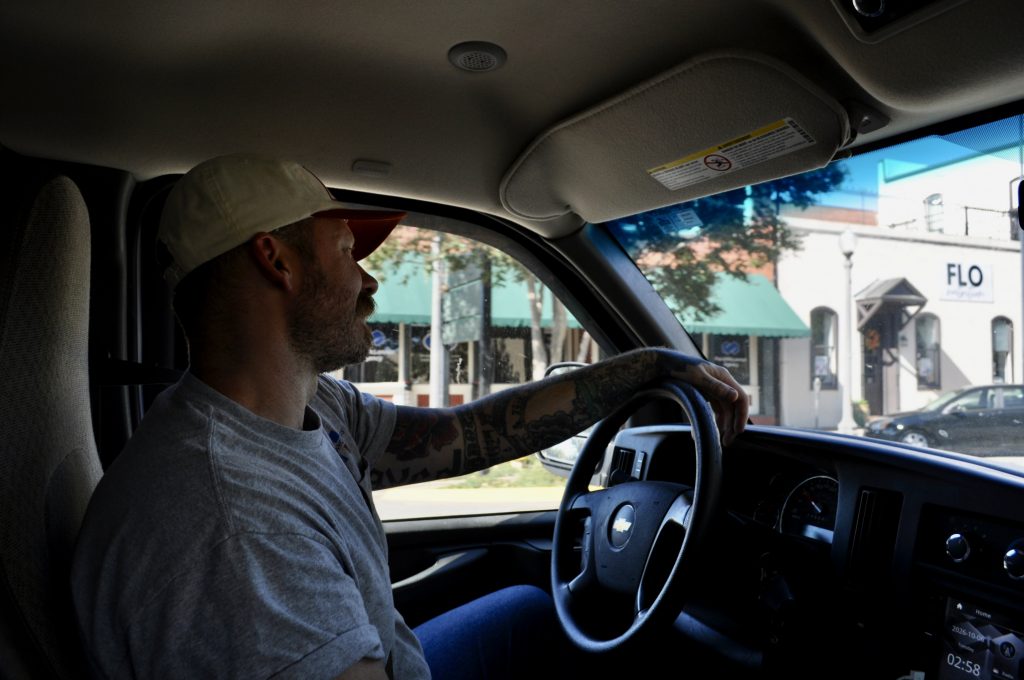
But that upbringing instilled in him the primacy of kindness and gentility, and I have indeed found every Southerner to be a person of unbridled hospitality and generosity of spirit. Andy treats me to a meal from Bunyans, a true Alabama barbecue joint and Florence institution.
As we dip our pulled-pork potato buns in pools of white sauce, the mustard slaw oozing out over our fingers, he admits to the discomfort of having the absolutist Christian worldview of home dismantled during his college days, where he was for the first time in his life among people who didn’t “eat, sleep, shit, talk and fuck” like him. About having to become “comfortable with grey”.
Andy reckons some people in the South are becoming more at ease with the idea of people and notions forbidden by the tenets of religious conservatism. There is still widespread racism and homophobia, but it is perhaps more remote these days.
Within families, he says, the capacity for empathy has grown. But beyond the boundaries of that familiar group, hostility towards those with atypical habits, backgrounds and persuasions does remain rife – at least in public.
In private, some are willing to challenge the diktats of the church and conservative society. To listen to Rebekah Hogan, a Republican mayoral candidate for Beattyville in eastern Kentucky, is to feel that the liberal, civil war flavour of Republicanism, when the party opposed slavery and espoused equal rights, perhaps never quite disappeared.
This more progressive approach champions state grants and funding for community development along with philanthropic donations and pay-what-you-can personal contributions. It rejects predatory lending – interest of 30% or more – in favour of loans with rates half as much provided by funds capitalised by government grants.
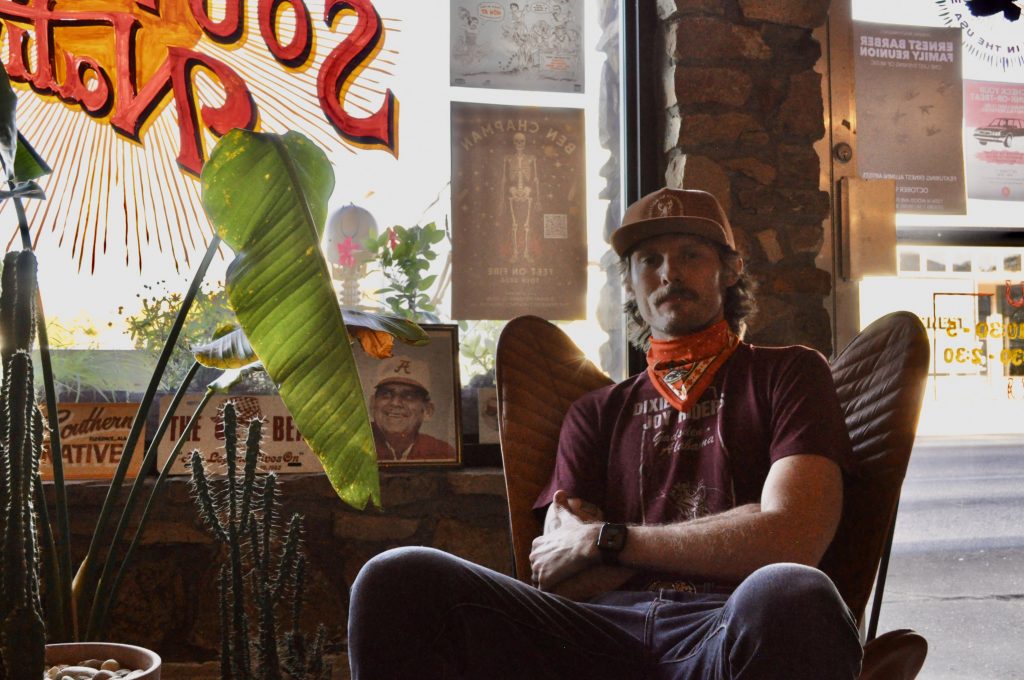
Back in Florence, Andy’s friend Guy Phillips runs an apparel store called Southern Native – a collection of curiosities related to Southern life. The front window is boarded up. A thief broke in the night before.
Guy squeezes past a clothes rail with an outstretched hand. We shake.
“Just so happens I was up. I could see him on the camera and so I came with my pistol and chased him down. The cops got him – I didn’t lose any of my money. But his leg was pretty cut up.”
In the back room of his shop are presses for printing T-shirts. Many of the designs are inspired by Southern legend and lore – including Appalachian snake handling, a sect of Pentecostalism where congregants dance with venomous species such as copperheads.
Another is the story of the 19th century-outlaw Mountain Tom Clark – a “really bad dude… Lauderdale County got a posse together, killed his gang, lynched him – and then buried him under Tennessee Street in downtown Florence so people could drive daily over his grave,” Guy says.
I ride on to visit Pat Banks. As the Kentucky Riverkeeper, she works to unite all groups with an interest in the watercourse. I arrive on the back porch to the tune of the Appalachian dusk, a thick symphony of insects and roosting birds. She didn’t know me from Adam but, curious about my reporting project, she invited me to stay for a couple of days.
We talk over dinner about eastern Kentucky’s coal industry. Kentuckians were promised riches, that mining would bring prosperity. But after the industry’s demise, they are just as poor. The proceeds left in the pockets of corporate management and investors. There is enduring bitterness – that almost every family’s menfolk risked their lives for a pledge that was broken.
Suggested Reading


Trump’s going to lose it
This backdrop goes some way to explaining why so many have voted Republican in Kentucky in recent years. Democrats historically enjoyed strong support here but, with the loss of the economic mainstay and no significant alternative to replace it, many felt left in the lurch and ready to take a punt on the reds.
It also tells us why, despite many acknowledging climate change, there is reluctance to attribute it to fossil fuels. To do so would be to speak out against the lifeblood of these eastern Kentucky communities.
Add to that the seductiveness of MAGA and the Republicans’ skilful harmonisation of conservative policy with faith, and it becomes clearer still why Kentuckians have supported representation that is in many ways against their best interests.
Cuts to Medicare and Medicaid, the two pillars of government health support, and also federal grants for rural development and housing support, are crucial here. Lee County is reckoned to be the poorest white (majority Caucasian) county in America; according to county clerk Tommy Hall, 70% of children here are not being brought up by their parents because they have fallen victim to opioid addiction.
When life remains hard, fatalism endures – and the notion that God’s will is all becomes entrenched, says Mindy Miller, a born-and-bred resident of Hazard. She, like most in these parts, comes from a family of miners.
In spite of the coal-mining backdrop, renewable-energy projects are finding a foothold. Hydropower plants are now installed in repurposed locks in the formerly navigable upper reaches of the Kentucky River.
The brainchild of David Kinloch, these facilities feature several innovations to protect riverine species, such as turbines that do not impinge fish and also allow dynamic integration with the rest of the grid, which is dominated by the electromagnetic forces of big generation plants.
This being Kentucky, where gun-carrying is widespread, the facility is also protected against pot-shots by sheet metal.
Renewable energy is also on the minds of the parishioners at the St Elizabeth Catholic Church in Ravenna. During Sunday’s Bible study, the talk centres on the difficulty of accommodating both divine and earthly law in everyday life. We discuss the fate of Thomas More – but agree that, in spite of best efforts, he didn’t manage to strike the right balance.
Of greatest concern is whether insurance will be granted for an EV charger at the church, which already has a roof covered in solar panels.
Jack Stickney, whose farm lies nearby at the end of a long track nearby, speaks fondly of the church’s late priest, who responded enthusiastically to Pope Francis’ climate-change encyclical.
“Father Al was a great environmentalist, he’s the reason for all this,” Jack says. But he cautions against concluding that all dioceses are following the same path. “There are some very conservative bishops out there, they don’t care,” he says.
Jack and his family are Democrats and are enthusiastic about local Democrat candidates’ chances in the upcoming elections. They speak regretfully of “Trumpers” – even though there are plenty within their own wider family. “He’s just so rude, he’s an embarrassment to our country, I don’t like him at all,” says Teresa, Jack’s wife. “The guy’s an asshole,” Jack confirms through a mouthful of burger.
The Stickneys have been working their homestead since 1987, and have focussed hardest on reconstituting the farm’s silviculture, which could be a commercial success in the future when their son Caleb takes over the reins. They also grow mushrooms, produce maple syrup, and rear cattle.
Suggested Reading

Trump, Putin and the ‘peacemakers’ who make war more likely
The biodiversity of the Red River, which runs down the valley below their farm, has become richer over the years as the Appalachian forest has continued to recover from centuries of resource exploitation. There are even too many large herbivores now. The deer proliferate in spite of the arrival of coyotes and bears in the region.
Others, too, notice improving wildlife populations. Steve Ross, a boatman on the River Kentucky, talks of more and more rookeries and opportunities to noodle catfish. “You stick your fist down their necks while they’re in the bank hollows and draw ‘em out. ‘Less there’s a snapping turtle in there, then you lose your thumb,” he says.
As I leave Kentucky, I meet Linda Pack, a former teacher, who shares a smattering of Appalachia’s most common idiomatic expressions – As cold as a well-digger’s butt, Uglier than home-made sin – and explains the region’s rich tradition of superstition. Even today, farmers refer to almanacs full of charts like celestial maps from the Middle Ages to organise their cultivation and husbandry.
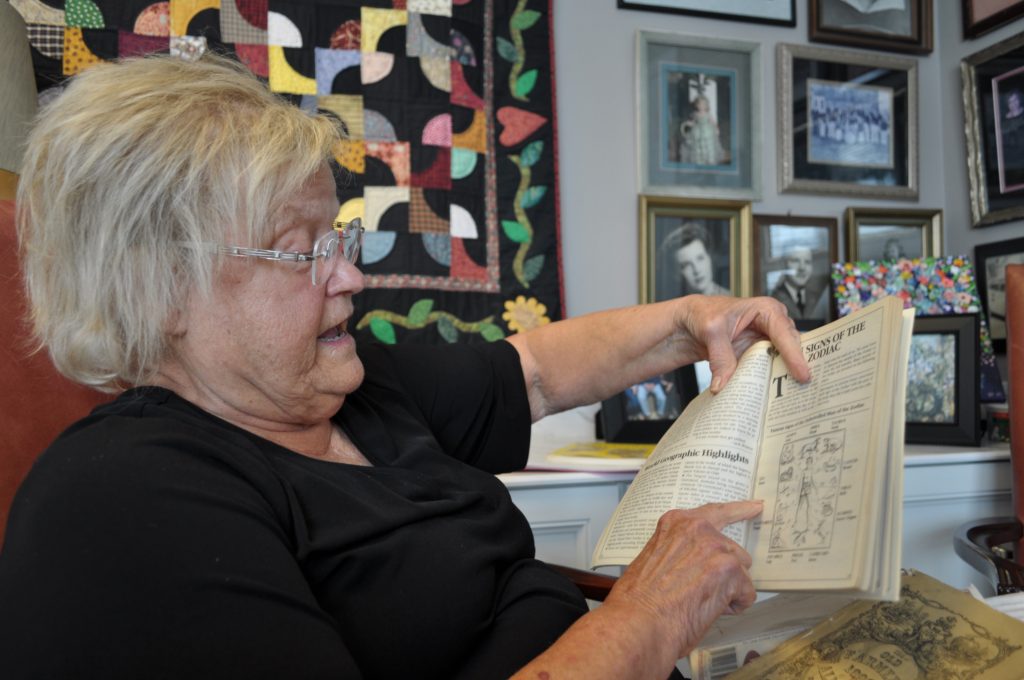
The woolly worms – caterpillars of the Isabella tiger moth – are everywhere and their colouring is thought to predict winter weather to come. Appalachians say that, the more black they are, the colder the winter will be. This year’s beasts are brown all over. It will likely be a warm winter.
As we say our goodbyes, Linda muses about dreams. Not a notion of the American dream, but about America being a place where any dream can come true.
“Of course, all that’s going away now,” she says, “with all this socialism coming in.”
Guy Kiddey’s Harley Conversations podcast is available now
 Most popular


Suella Braverman’s book has sold only 106 copies. This is why

The Brexit majority has gone for ever – rejoin now has a majority of 9 million

The mask has slipped – now we can see the real, shameful face of Reform


The riots in France are being stoked by Russia and Iran