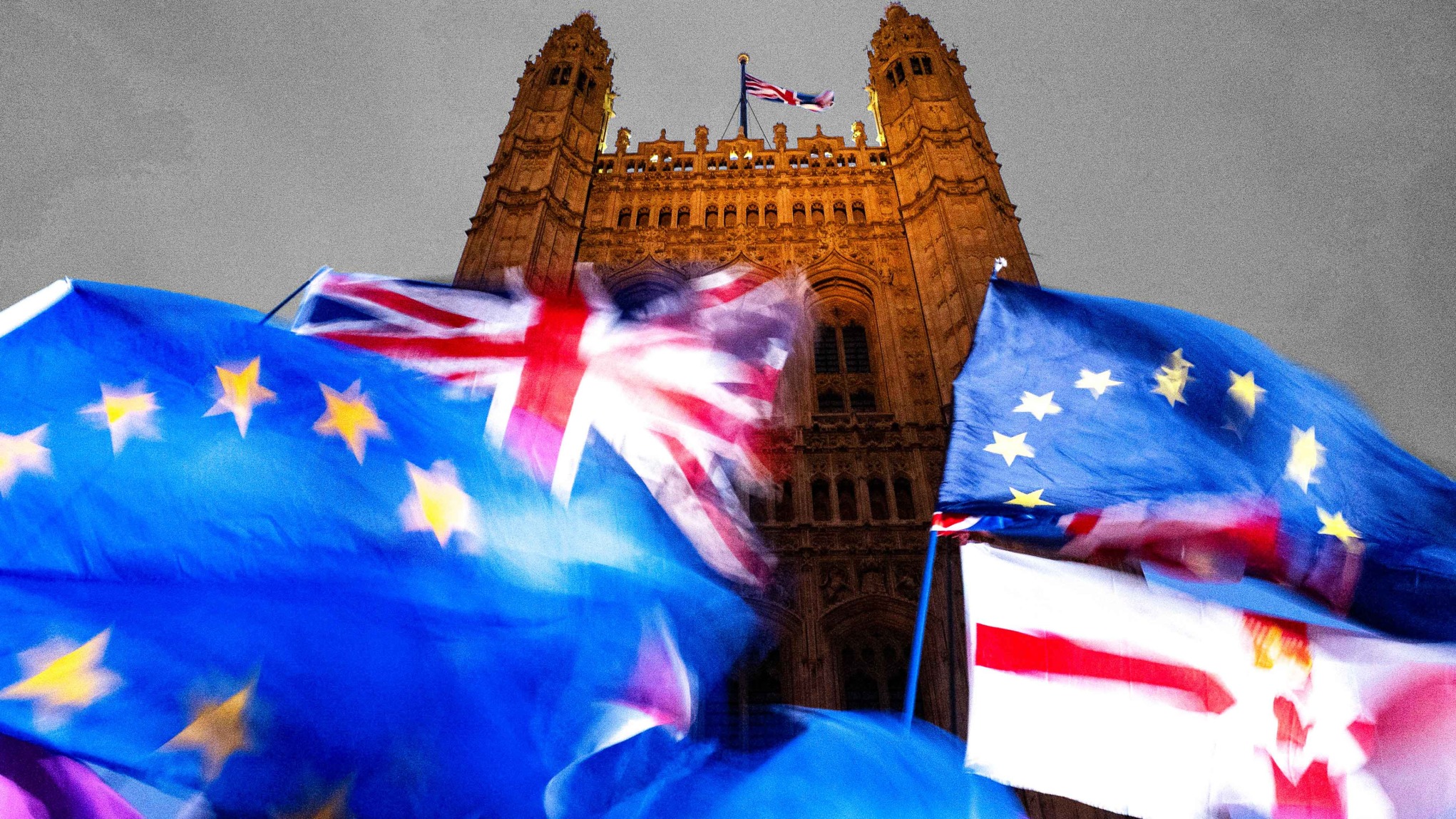
Well, now we’re talking. The UK-EU summit in Brussels on November 20, at which Andy Burnham will meet António Costa, president of the European Council, and Ursula von der Leyen, president of the European Commission, will kick-start a process that could make his premiership seriously consequential, perhaps even historic.
On the agenda are a series of amendments to the Brexit deal, embracing food and drink products, emissions trading, energy policy collaboration, a new youth experience scheme and a closer partnership on immigration.
Yet the true political significance of the meeting is much deeper. As Burnham declared at Labour’s conference on September 29: “Brexit has done more harm than good… So I will take the opportunity around the summit to lay out to you, to lay out to the country, what I believe the different options are for Britain’s long-term relationship with our European partners.”
Even more striking was the interview with the Sunday Times on October 25, in which the PM leapt audaciously on the third rail of Brexit politics and said he wanted an “open discussion” on freedom of movement and “a very factual, quite evidence-based debate about this.”
Freedom of movement? This was like starting a game of Jenga by pulling out the bottom brick.
Not some tentative language about examining the case for joining the customs union, but only after the next election. Or a livelier, TikTok-friendly version of Keir Starmer’s dismal pledge to “make Brexit work”. Burnham had started the conversation about a new role for the UK in the EU where most prime ministers would have nervously ended it.
After 10 years of “Brexit means Brexit” (Theresa May), “Get Brexit Done” (Boris Johnson), “seize the opportunities of Brexit” (Rishi Sunak) and Starmer’s pretence that the worst idea since chocolate teapots could be made viable, the crust of nonsense has been broken and a genuine public debate made possible.
In a seminal 1996 paper, the pioneer of behavioural public policy Cass Sunstein identified “norm entrepreneurs” who are ready to question what may appear an inviolable social convention or political consensus, and, by creating a permissive environment for others to join in, set in motion “norm bandwagons” and trigger “norm cascades”.
This exactly describes what the PM has already achieved. At the weekend, the former chancellor Rachel Reeves wrote in the Sunday Times: “There is a debate to be had about our future relationship with Europe, and I welcome Andy Burnham’s leadership in facing up to this.
“No one in the Treasury ever doubted where my instincts were. I do believe Britain’s future lies in the European Union.”
All of this is unambiguously good news. But those who want this country to have a seat at the top table of the new Europe (and it will be significantly different to the Europe we left on January 31, 2020) need to match Burnham’s courage, confront the difficulty as well as the urgency of the task ahead and hug the cactus of reality.
For a start: like it or not, any meaningful shift in the UK’s relationship with the EU will require a referendum. Yes, me too: the very thought triggers Vietnam flashbacks to that terrible moment at 4.40am on Friday June 24, 2016, when the BBC’s David Dimbleby announced: “The British people have spoken and the answer is: we’re out!”
But anyone serious about the project that Burnham has launched must, right now, accept what it would entail.
To deal with the most obvious objection: if the debate after November 20 goes as well as the PM hopes, Labour will indeed need to seek electoral permission in its manifesto to negotiate some form of accession. But, in the ferocious context of hypermodern politics, victory in the next general election would not in itself give full popular legitimacy to the deal that followed.
Why? Because the last time that a party won more than half of the vote in such a contest was 1931 when the Conservatives under Stanley Baldwin secured 55.5%. In 2024, Labour won a 172-seat majority with 33.7%. Even if Burnham wins a second term for his party, it will come nowhere close to the 50% mark that could at least be presented as a mandate for significant constitutional change.
Suggested Reading
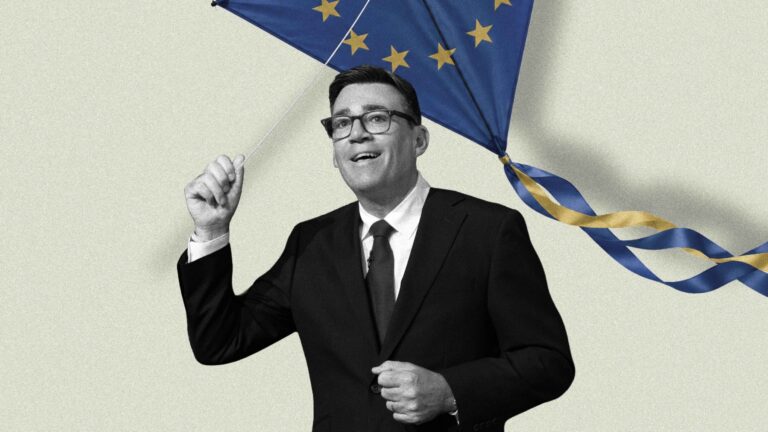

Andy Burnham thinks he has found Britain’s Brexit escape route
The routinisation of referendums in British political practice is indeed a recent phenomenon. The great constitutionalist AV Dicey (1835-1922), regarded such votes as a conservative device, “the people’s veto” and “the best, if not the only possible, check upon ill-considered alterations in the fundamental institutions of the country” – especially Irish Home Rule, which he passionately opposed.
For most of the 20th century, such votes were vanishingly rare. In 1920, Scottish communities held referendums on the local prohibition of alcohol. In 1973, the border poll on Northern Ireland’s future was rendered politically meaningless by a nationalist boycott.
The first nationwide referendum on the UK’s membership of the EEC in 1975 was, by Jim Callaghan’s admission, a tool of party management, “a rubber life raft” into which the bitterly divided Labour tribe could clamber. No such nationwide vote was held for 36 years.
It was Tony Blair who drove the shift in political convention. Having done much to force John Major to accept the need for a referendum on the euro, Blair discovered, in office, a taste for such votes and held no fewer than five: in Scotland and Wales in September 1997; in London, on the new mayoralty and assembly, in May 1998; in Northern Ireland on the Good Friday Agreement (in the same month); and on a regional assembly for the north-east in November 2004. Only in the last instance was the PM’s will thwarted, thanks in large part to a 31-year-old right wing campaigner named Dominic Cummings.
It suited a politician of Blair’s generation to turn the UK, or a part of it, into a grand focus group. Parliament was never his comfort zone, his allegiance to representative democracy eclipsed by his dedication to what his polling strategist Philip Gould (borrowing the phrase from Bill Clinton’s adviser Dick Morris) called the “daily mandate”.
On the one occasion that Blair tried to resist this approach to political legitimacy, refusing a public vote on the 2004 EU constitutional treaty, he was forced into a U-turn in April of that year. When the French voted the treaty down in May 2005 (closely followed by the Dutch), and the treaty collapsed, he knew that he was, as he later wrote in his memoirs, “off the hook”. But he had already entrenched referendums as part of our uncodified constitution.
Once the constitutional treaty was repackaged at Lisbon in 2007, Gordon Brown paid a political price for refusing to hold a public vote on its ratification. David Cameron, having offered the “cast-iron guarantee” of a referendum on the treaty, was roundly mocked when he withdrew his promise in November 2009 on the grounds that Lisbon was now written into EU law.
In May 2011, prime minister Cameron – as part of the coalition deal with the Lib Dems – held the second nationwide referendum in UK history, on electoral reform at Westminster; decisively rejected, as the Conservative leader had hoped. In September 2014, he also got his way in the Scottish independence referendum.
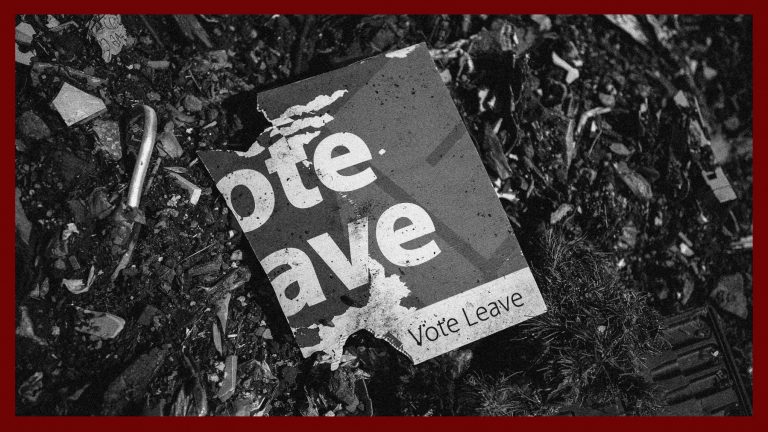

Of course, it was Cameron’s decision in 2013 to hold an in-out vote on membership of the EU that led to his own downfall in 2016 and the disaster of Brexit – a sundering by which political posterity will define him. But it is worth noting, as evidence of the extent to which referendums are now baked into our political culture, that he was by no means the first to propose such a vote.
As Jonathan Powell, Blair’s chief of staff and national security adviser to Starmer and Burnham, told Tom McTague, author of Between the Waves (2025): “He [Blair] had this idea that he could tie everything up together: in or out. This was his great idea.” And, as long ago as 2010, the Lib Dems were committed in their manifesto to an in-out referendum if Britain “signs up for fundamental change”.
To summarise: if Burnham’s project bears fruit, there will be no avoiding another such vote. It is important to absorb that reality now rather than waste energy in the coming years seeking to squirm out of it.
Joining the EU, perhaps in phases, will also be much the hardest task undertaken by progressives in the UK since the long path to power in 1997 and possibly since the creation of the NHS in 1948.
Yes, the auguries are promising. When it comes to political communication, Burnham is a generational talent.
This time, the defenders of Brexit will be the establishment, with next to nothing to show for the UK’s secession from the EU and consequent isolation. Recent polls indicate a clear plurality or majority in favour of membership.
Here, though, caution is required. Just because the voters have turned, perhaps decisively, against Brexit doesn’t mean they are enthusiastic about another round of all that, consuming political oxygen and energy for years. The battle to show that joining the EU will have a profound real-world impact upon the UK’s immigration management as well as the cost of living begins now: which, to be fair, I think Burnham grasps.
Suggested Reading

Burnham is already winning the new Brexit wars
Furthermore: political psychology shows that it is perfectly possible, emotionally, to hold two positions that are rationally inconsistent. On the one hand, voters can feel deeply disappointed by Brexit; but also, on the other, deeply suspicious of anything that looks remotely like an elite attempt to overturn their past decisions.
The work of Dan Kahan at Yale has demonstrated the power of “identity-protective cognition” in which such decisions become part of a person’s deep political identity rather than simply a rational calculus made in the past that can be easily superseded by new information.
It is this vulnerability that the pro-Brexit campaign (its slogan will be something like “Keep Britain Independent” or “We’re Not Going Back”) will exploit. And bear in mind how radically the political landscape has changed since 2016.
The Tory Party is no longer conveniently split. However bad Nigel Farage’s predicament may be, Reform UK is now a significant force in British politics, around which a whole constellation of new and more extreme groups now orbits, including Rupert Lowe’s Restore Britain, Tommy Robinson’s Unite the Kingdom and Danny Tommo’s Patriot Platform – amplified by an ecosphere of right wing podcasts that did not exist last time.
So this will absolutely not be a pleasant canter back to normality (as if such a thing exists in 2026). It will be a mighty reckoning. The exogenous forces – social media algorithms, foreign state actors engaged in cyber-attacks, AI-generated misinformation – will be bad enough. But so will the suspicion of the public if they sense anything that looks like corner-cutting or an elite stitch-up.
In every sense, this cannot be a rerun of 2016. Nor is there any reason to think it necessarily will be. But the fully justified sense of exhilaration among those who want the UK to have a place once more at Europe’s top table should be matched by a rigorous recognition of how hard it is going to be.
Buckle up.
 Most popular

What happens to Trump if he loses the midterms?

It might not look like it, but a motoring miracle has now happened


How Abdul El-Sayed became the man who can break Trump

The truth that Northern Ireland has never confronted