
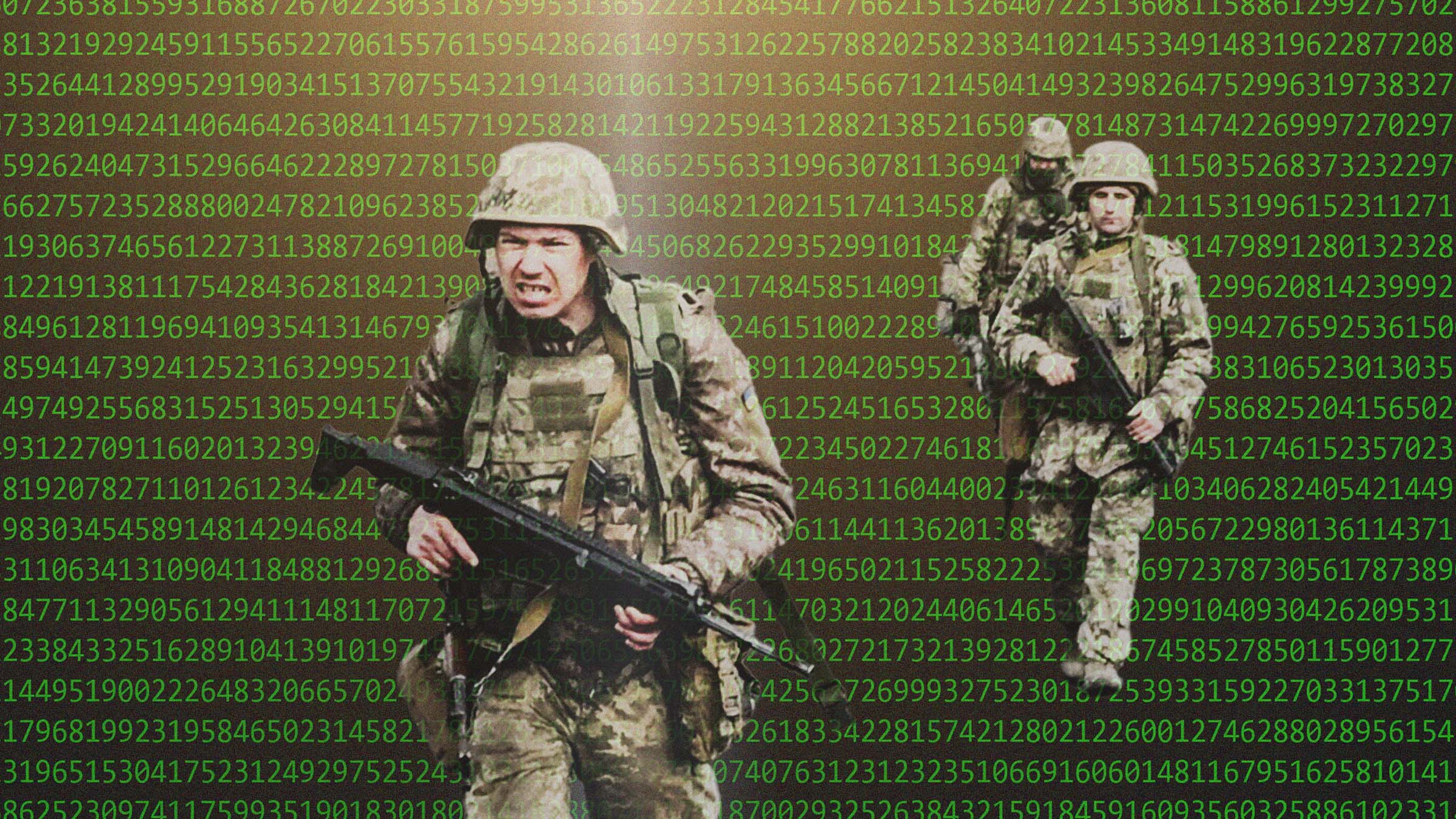
On 6 July, a Russian drone attempted an attack on a petrol station in Zaporizhzhia, in Ukraine. The machine crashed, with the resulting explosion killing three people. This was the first documented case of civilians being killed by a fully AI-guided Russian drone.
Investigators found that the drone was equipped with Nvidia processors and an onboard AI targeting system trained to identify and eliminate particular combat units or structures. While humans sent it towards a particular petrol station, the final choice of exactly what to strike was the machine’s own.
In the popular imagination, the AI-driven apocalypse will be brought about by red-eyed robot armies. But the reality in theatres of war worldwide is significantly more prosaic – and it is already here.
AI is not itself a new addition to conflict. “Sensor-fused artillery shells that hunt for vehicles” have now existed for a quarter of a century. But the AI developments of the past few years, with cheap chips and far better computer vision systems, have supercharged its military role.
For the purposes of killing, two applications matter most. The first is AI that recommends targets. This “decision support” software ingests and analyses drone video, phone intercepts and satellite images and intelligence data of all types, and proposes who or what to strike, with a human taking the final decision on whether to act. These are the sorts of systems involved in the targeting process that culminated in the US strike on a girls’ school in Minab, Iran, which killed 120 children.
The second use of AI is inside the weapon itself. This amounts to software on board drones and missiles which navigates, recognises a target and steers towards it. AI can also be incorporated into systems such as automated gun turrets, to identify and track targets. Ukraine’s AI interceptor drones and Russia’s camera-equipped Shaheds both work this way.
Charles Forrester, a ten-year veteran of the defence industry bible Jane’s Defence Weekly and now an independent journalist and analyst, explains: “There’s what I call a disaggregation of AI now. It was previously this huge, amorphous catch-all phrase, and it’s now being drilled down into, ‘Okay, so what is it we need it to do? Do we need it to do image analysis? Do we need it to do workflow processing, workflow optimisation, finding information?’”
Suggested Reading


Tobias Ellwood’s book on defence is a total misfire
“And the other one is autonomous piloting… The Russians have been putting AI technology on their drones in Ukraine, which means that as they lose control of it, which they do because of jamming, the onboard AI then takes over and it can identify, ‘Okay, this is a tank. This is in an area I need to be blowing stuff up.’ So if it sees the tank – bang. Down it goes.”
Much of the technology’s implementation tends, at present, towards the mundane-sounding. A longstanding defence industry contractor who worked on a bid by “a major technology company” to supply AI services to the MoD last year tells me that “they needed just the same kind of things that you use AI [for] around the office: summation of stuff, doing big amounts of analysis, all of that kind of thing, to reduce the workload on a lot of the people in the staffing function.”
“The armed forces have dropped their numbers,” the contractor told me. “In order to make up for that, they need to automate.” Whatever sector you work in, it seems, the siren call of AI as a driver of savings is impossible to ignore.
There is, of course, a lot of money in this. In March, the Pentagon made Palantir’s Maven AI system an official programme of record, locking its weapons-targeting technology into long-term use across the US military. Anduril Industries, the drones-and-autonomy firm owned by the founder of Oculus VR and former Facebook employee Palmer Luckey, raised $5bn in May, valuing his firm at $61bn. Anduril has contracts with both the US Air Force and has also provided autonomous surveillance technology for use on the US’s southern border. Luckey also happens to be a Trump donor.
Europe’s answer is Helsing, which is chaired by Spotify founder Daniel Ek (that famous music-to-guns pipeline!), whose HX-2 strike drones are cleared for frontline use in Ukraine and have already hit Russian targets. Helsing closed a $1.8bn round of fundraising in July, which values the firm at $18bn. Anthropic, OpenAI, Google and xAI each signed Pentagon contracts worth up to $200m to bring their AI models into military operations.
Britain is also buying. The Defence Investment Plan published in June commits £5bn to autonomous systems for sea, land and air defence, including £220m for Project NYX, which will build armed autonomous drones to fly with Apache attack helicopters. The MoD says it will prioritise “sovereign British AI and autonomous technology” and export it abroad.
We are, though, some way from implacable robot armies marching in deadly lockstep, mainly because building them is beyond our current capabilities. While the web is awash with videos of humanoid robots dancing, running, jumping and lifting, they are all stage-managed and limited in scope – it is a long way from this to something that you can just drop onto a battlefield with instructions to “kill the other guys”.
“In order to do a Terminator-type thing, you’re likely to need major innovations in steering and hydraulics, and compact ways of powering things,” explains the contractor. “If you can build a nuclear reactor the size of a pack of Silk Cut, that would be just one of the things that would be very useful.” Until physicists can solve problems like that, much of it looks insurmountable.
It’s not just the mechanics that are out of reach. Truly autonomous robots also need enough onboard computing power to perceive and make sense of a chaotic physical environment in real time, without relying on a permanent connection to a remote computer. Every processor added competes with batteries, armour, ammunition and everything else the machine has to carry.
Then, of course, there’s the issue of cost and budgets. As the contractor explains, “with defence, there is a constant trade-off between the cost of making something and deploying it, and the cost of losing it. A lot of the stuff that we get within Nato and the States, and even a lot of the Chinese stuff, is what’s known as ‘exquisite’. So it is leading-edge technology. It’s reassuringly expensive, and it’s an absolute fucker to the taxpayer.” It is, in other words, not the sort of tech you want wandering around the battlefield and being blown to bits.
Just because the murder robots aren’t an imminent danger, though, doesn’t mean that the current military uses of AI aren’t already problematic. As Forrester notes, “The scary bit is people getting lazy with AI. If AI says it’s true, then it’s true, and I’m just not going to bother checking it because, frankly, the AI said it’s fine.” While that might not matter too much if you work in marketing, it matters a lot when you’re working out whether a target is legitimate or whether it’s a school.
Another source, an AI researcher in the defence space, says it is “not particularly difficult” to program a drone with “what you think a Russian soldier looks like”. “That’s not hard. The problem is distinguishing between a muddy Russian soldier and a muddy civilian, or indeed a muddy Russian soldier and a muddy Ukrainian soldier.”
What matters, then, is less whether these AI weapons systems have achieved anything resembling human intelligence than what happens when we give imperfect machines permission to act as though they have. The researcher is notably pessimistic: “Do I think autonomous weapons or semi-autonomous weapons are going to happen soon? Yes, I do… unfortunately. Because I think they’re going to be badly designed and deeply flawed.”
The problem isn’t necessarily teaching a machine to kill. As Ukraine is demonstrating, getting a cheap computer to recognise something sufficiently tank-shaped and to steer an explosive towards it is increasingly straightforward. The hard part is teaching it when not to.
Suggested Reading

India’s lessons for the world on defence, trade – and Trump
“Everyone always underrates humans in these things,” the researcher continues. “AI is really bad at unexpected context, whereas humans – that’s kind of our superpower. If things stop making sense around us, we step back and go, ‘Hang on, none of this is making sense. Let’s try and work out from first principles what’s actually happening.’ Whereas algorithmic intelligence is just bad at that.”
Which makes the increasingly ubiquitous assurance that there will always be a “human in the loop” rather less comforting than it sounds. Humans were in the loop at Minab in an operation that ended up killing all those Iranian school children; the software didn’t fire the missiles itself.
Machines can now find and rank targets, sift the supporting intelligence and compress hours of analysis into minutes before presenting a recommendation for approval. Elsewhere, a human can specify the mission while software handles navigation, target recognition and the final attack.
There is, as yet, no binding international treaty on autonomous weapons, and UN talks in Geneva in November will decide only whether to begin negotiating one. Britain’s own rule requires “context-appropriate human involvement”, but even that may be less reassuring than it sounds. Shortly before leaving government in June, the armed forces minister at the time, Al Carns, argued that while “there must be a human in the loop”, militaries “must have the ability to take the human out of the loop when required.”
Perhaps, then, we’ve been looking out for the wrong thing. There probably won’t be a morning on which someone unveils Skynet and announces that humans have formally handed machines the power to kill. Instead there will be hundreds of smaller decisions to automate one more task, remove one more operator and shave another few seconds and a few thousand quid from the process.
What’s a bit of collateral damage in the face of fast-paced, frictionless warfare at half the price?
 Most popular

His dad tried to overthrow Putin – now Pavel Prigozhin runs an African country


Liz Truss’s new mini-book is every bit as bad as her mini-budget

I was at Eton with Charles Spencer – this is how it explains his battle with the royals


18 things that will absolutely, definitely happen if Trump gets whopped in the midterms