The India International Centre (IIC), in leafy Lodhi Estate in New Delhi, serves as a metaphor for Indian foreign policy. Independent and non-aligned, it is based in a building that blends the ancient and the modern to unique effect.
The geometric designs of its buildings include concrete shells that bring to mind Mughal domes, and the gold of its lattices complement the luscious green of its lawns. Its members include artists, academics, government officials, lawyers, doctors, social activists, and journalists. The IIC was completed in 1962, in the final years of independent India’s first Prime Minister, Jawaharlal Nehru.
I visited to meet its current president, India’s former foreign secretary, Shyam Saran, who also served as the prime minister’s special envoy for Indo-US Civil Nuclear Issues. Until 2015, Saran was chairman of the National Security Advisory Board.
Suggested Reading
The people hanging by a thread in India
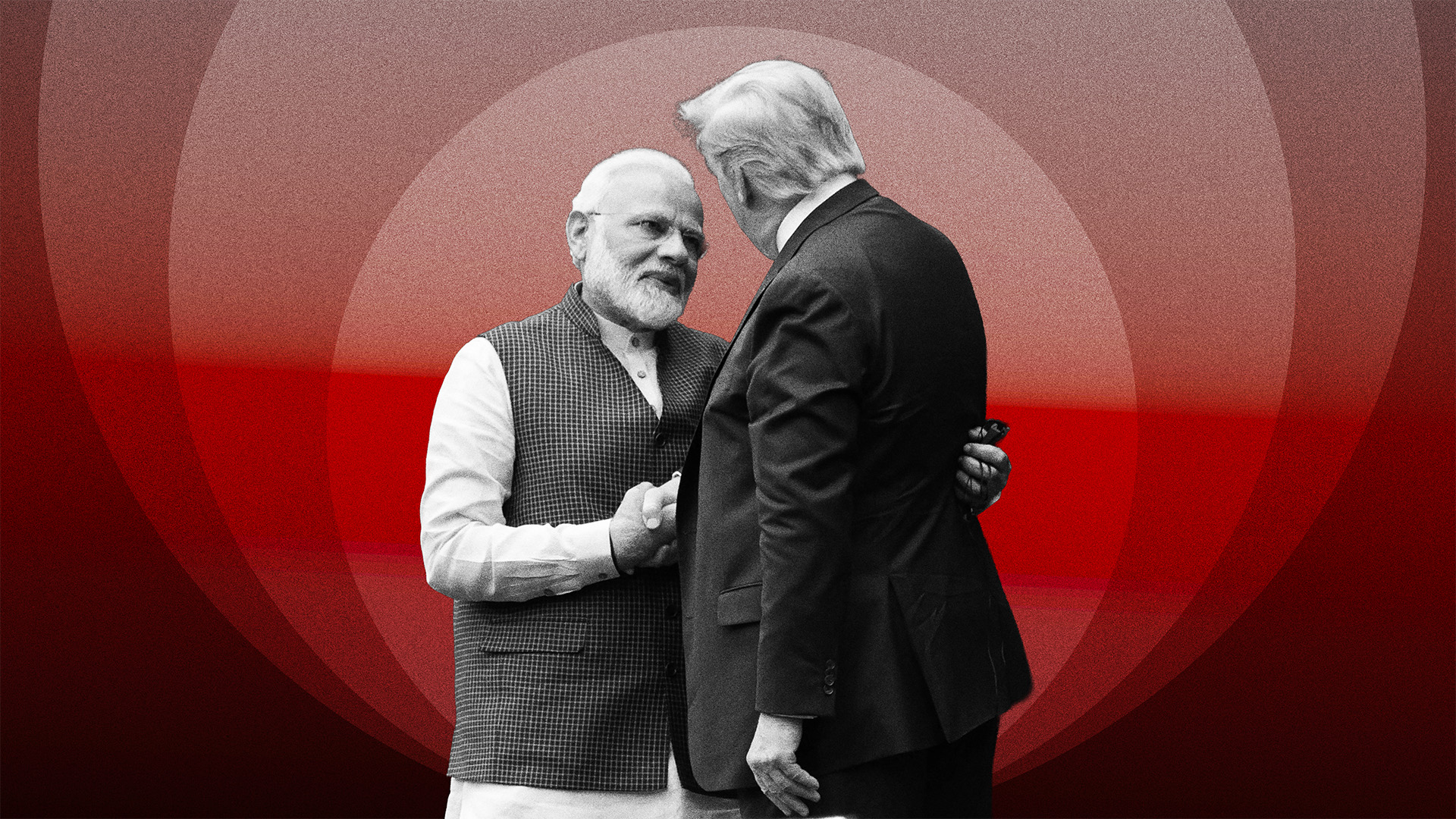
Sitting in his first floor office, Saran tells me that over the past 25 years, India has become used to improving relations between India and US and, because Trump and Modi shared similar worldviews, many Indians expected that to continue. This view was supported by Marco Rubio holding his first meeting as secretary of state with representatives of the Quadrilateral Security Dialogue (or Quad) countries.
Then came Trump’s tariff wars. India was hit with a 25% reciprocal tariff and an additional 25% penalty for purchasing Russian oil. This was followed by Trump’s statements in which he called India a “dead economy”. Trump’s outreach to Islamabad in the aftermath of the India-Pakistan conflict last year, took US-India relations to a low point.
India refused to yield on many US demands but was careful to avoid any public acrimony with Washington. Key components of the relationship remain intact. This includes defence and technology partnerships – Indian PM Modi is bullish on AI and there seems little concern of the impact on India’s call centre economy or India’s insufficient power grid). But the scarring will take a long time to heal.
There has been a recent reset, which Saran describes as “carefully orchestrated to deflect as much as possible and resist without provoking”, which reflects the view that the new geopolitical landscape will persist beyond Trump’s tenure. He agrees that the US National Security Strategy provides clues about that new landscape.
Saran tells me it has left Indian policymakers wondering about the future of the Indo-Pacific strategy. Saran believes that the current US administration no longer seeks to dominate China militarily in the Indo-Pacific – calling into question their commitment to Taiwan – but is instead focused on balancing Chinese economic power and staying ahead in technology.
Suggested Reading
Trump is quietly destroying Cuba
There is no doubt that a shift has taken place. There appears to be a greater willingness on Trump’s part to manage Sino-US relationship through economic competition and coercion, even though the impasse achieved at Trump’s recent visit to Beijing calls into question whether a coercive approach can work. When Trump stated that he would finally allow the export of large quantities of powerful Nvidia chips to China, president Xi said he’d think about it.
Saran believes that India must recognise this shift. “We have to really look at it in terms of the current geopolitical situation and our judgment with regard to how this geopolitics is going to evolve in the foreseeable future. Where should India locate itself? You know which partnerships are going to be more important, which partnerships may be less important, which countries we will find that our interests are more closely aligned?”
This is the case for India’s relationships with its near neighbours and its global partners. India’s foreign policy has traditionally focused on its borders, where it still faces disputes, instability, competition and conflict, with Pakistan, Bangladesh, Nepal and China. The peace with Pakistan is a negative one, where despite the current absence of violence, there is little trust between the two, and the historical causes behind the conflict remain.
Many commentators believe a resumption of fighting is inevitable. Saran believes that China’s role in assisting Pakistan in 2025 during a tense confrontation with India, may act as a future challenge. China provided direct intelligence and logistical support that enabled Pakistani forces to perform better than India expected, including the reported though unconfirmed downing of a newly delivered French Dassault Rafale fighter jet.
India and China also have a disputed border, which led to the 1962 Sino-India War and has regularly produced skirmishes ever since, most recently in 2024. The latest flashpoint, however, could be over water. More than 600 million Indians face high-to-extreme water stress, and demand is projected to double by 2030.
Erratic monsoon patterns, inadequate infrastructure and the expansion of water-intensive crops mean India is heavily reliant on groundwater, yet China is building upstream dams that could allow them to control much of this groundwater to northern states, such as a series of dams on the Yarlung Tsangpo river, high on the Tibetan plateau.
Despite these tensions, current American policies are pushing India towards a better relationship with China in other areas. India is able to compartmentalise its relationships, seeing China as an adversary in some areas, competitor in some spheres and an ally in others. In 2025, bilateral trade hit a record high of $155bn. Modi and Xi have seemingly cultivated a warm personal relationship.
However, India is not anchoring itself to China as the emerging geopolitical pole in a multipolar world. It is attempting to build a wide network of bi-lateral relationships with multiple countries. French president Macron’s visit earlier this year to India resulted in the elevation of the relationship to a Special Global Strategic Partnership. A joint statement covered cooperation including in defence, space, critical minerals, technology, and combating terrorism. Both sides view the relationship as essential to expand each other’s “sovereignty and decision-making autonomy.”
Suggested Reading
Welcome to AI city
Despite recent US pressure, India also maintains a relationship with Russia. There is a historic loyalty from support for India’s independence, as well as a reliance on Russian military equipment, up to 40% of which is still Russian, including some equipment, such as nuclear submarines, that India can only get from Russia.
However, the overall trajectory is one of managed decline, reflecting the erosion of Russian power and India’s disapproval of their attack on Ukrainian sovereignty. But even here Modi is keen to show balance, visiting both Moscow and Kyiv, offering support to Ukraine while limiting criticism of Putin.
Saran describes the current approach to foreign policy as essentially “Nehruvian in character”. Nehru’s foreign policy was one of “non-alignment” and “strategic autonomy”, refusing to let India become fully aligned with the US or the USSR during the Cold War, not accepting a binary world of grand alliances. Ideologically it was based on principles of mutual respect, non-aggression, non-interference, equality, and peace.
Saran notes that the approach has been consistent since independence, despite different governments. Modern India continues to follow the core tenet of “strategic autonomy”, even while Modi describes his approach as “multi-aligned” rather than non-aligned, with India a great power among other great powers.
“You know in diplomacy, terms like friends or enemies, I think these are quite irrelevant,” says Saran. “Countries work on the basis of their interests. So you are our friend as long as our interests are aligned.”
Trump’s lashing out at those who did not support his war on Iran shows his expectation of blind allegiance. Maintaining a multi-aligned approach in an interdependent world that Trump’s can only see as zero-sum, will be challenging. However, the fluidity of global events suggest that this cornerstone of Indian foreign policy is more important than ever.
Building on Trump’s outreach to Islamabad in the aftermath of last year’s India-Pakistan conflict, Pakistan may have stolen a march on India by becoming the key interlocutor in negotiations between Iran and the US. However, Trump cares little for other’s intent – he only cares about what is for his personal benefit. Pakistan may be tainted by the failure of these negotiations despite their valiant efforts. India may yet be a key mediator to conflicts to come, but should not expect Trump’s gratitude for doing so.
As the post-1945 world fragments, states will need to develop complex new relationships with different and sometimes contradictory, partners on security, trade, and energy. For decades, India has been delicately managing its strategic partners, while prioritising action in its own neighbourhood. As such, Indian diplomacy offers a timely lesson to Europe’s floundering policy makers.
 Most popular

I was at Eton with Charles Spencer – this is how it explains his battle with the royals
Emily Maitlis’s diary: My deep dive into Jeffrey Epstein’s hidden empire – and the network that let him get away with it


The linguistic logic behind dropped syllables
Putin’s wartime economy is heading for catastrophe