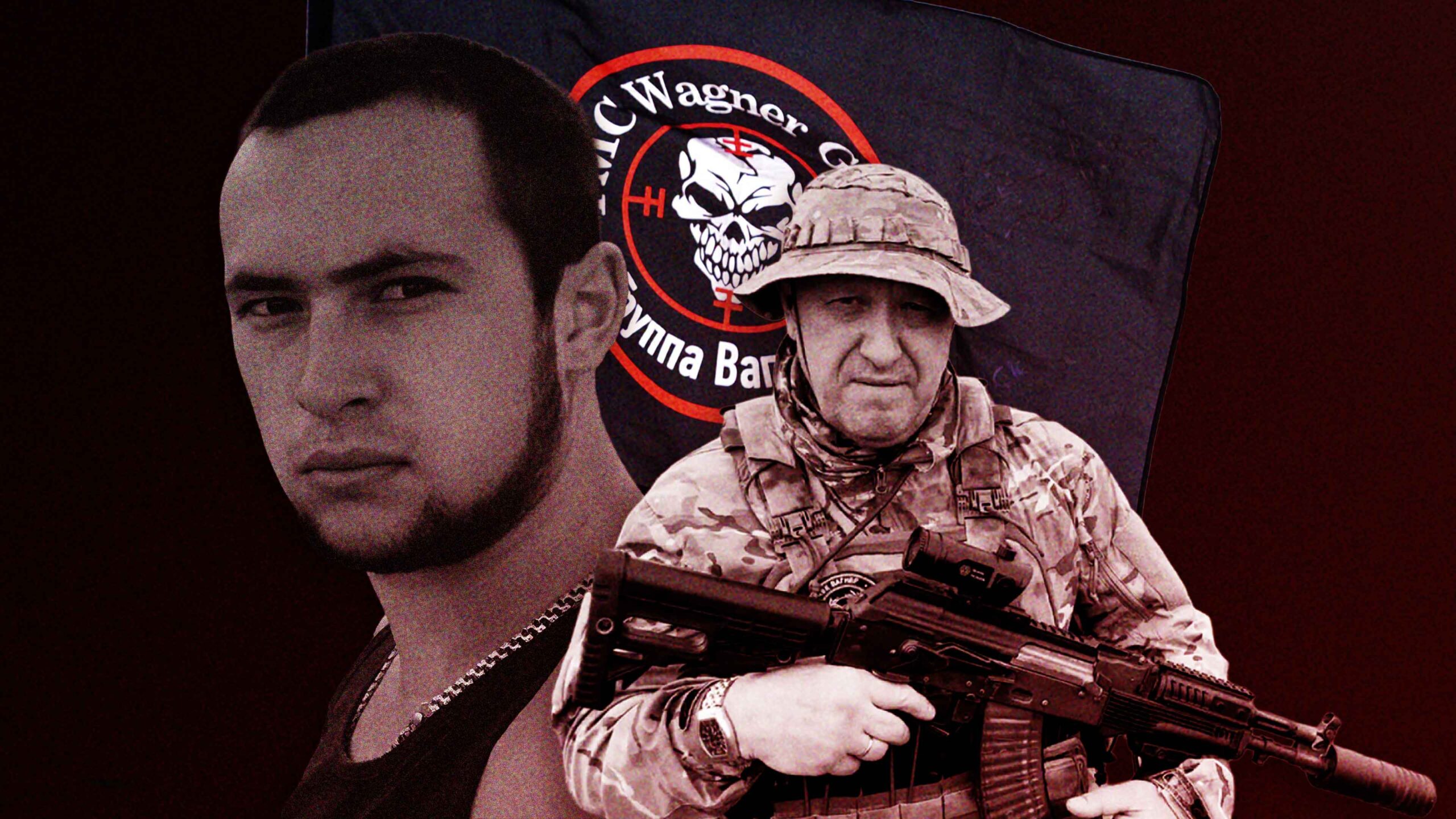
The only person who ever came close to landing a blow on Vladimir Putin was Yevgeny Prigozhin, head of the Wagner Group, the Russian mercenary organisation. Deployed to Ukraine with 50,000 fighters under his command, Prigozhin became infuriated by the mishandling of the war and the corruption of the Russian authorities. In 2023 led a mutiny against the Russian state.
Prigozhin announced his intention to march on Moscow and the Wagner Group easily took the Russian city of Rostov-on-Don. Putin went into a frenzy of negotiations and eventually the rebellion was called off. Two months later, Prigozhin was killed, along with nine other people, when a bomb went off in his private jet.
You might think that engaging in a coup plot against Moscow would have been the end of the Wagner Group. Not so. The mercenary outfit is alive, kicking and making millions as a mercenary force in the Central African Republic (CAR), one of the poorest countries in the world. Wagner is still being run by a Prigozhin – Yevgeny’s 28-year-old son, Pavel.
This revived Wagner Group is much smaller – it has 500 mercenaries in the CAR. But the money involved is substantial. Wagner receives $90m a year to provide a personal guard for president Faustin-Archange Touadéra, an autocrat who, in 2023, controversially abolished the term limits for presidents.
But the real money comes from natural resource deals – the CAR is cursed with substantial deposits of uranium, diamonds and rare minerals including cobalt. The Wagner Group is believed to earn $250m from mining concessions, particularly gold, and from its interests in timber and in trafficking the addictive opioid tramadol.
Pavel, it seems, is doing well for himself. The goldmine he controls is the largest in the CAR, and his African beer and vodka businesses are both thriving. Old man Yevgeny would be proud, if it weren’t for that bomb on his plane.
Suggested Reading
Putin’s wartime economy is heading for catastrophe
Perhaps even more remarkably, Pavel has managed to hold on to some of his father’s Russian-based empire. The Wagner Group still owns restaurants, shopping centres, and apartment buildings across Russia. In October 2026, the Global Initiative Against Transnational Organised Crime reported that the Prigozhin family generates more than $400m a year in revenue.
This is highly unusual. Putin does not let the families of disgraced oligarchs retain control of the patriarch’s assets. Cedar Research reported that between 2022 and 2025 the Kremlin seized private assets on 170 occasions, many of those seizures involved the property of those who had crossed Putin.
And no one betrayed Putin more deeply than Yevgeny Prigozhin. Long before the rebellion attempt, Yevgeny was a restaurateur who ended up providing catering facilities to the Russian army and government offices. He became so entwined with Moscow’s ruling elite that he became known as “Putin’s Chef”, an association that helped him to acquire a string of restaurants, apartment buildings, shopping centres, media companies.
Most importantly, he also started a mercenary company, which gained a reputation for acts of sadistic horror, which included conducting executions using sledgehammers. At its peak, Wagner had tens of thousands of combatants from Ukraine to Syria, to Libya and then throughout Africa. In 2022, Fortune Magazine estimated that Yevgeny Prigozhin’s Wagner group was worth more than $1bn.
After Yevgeny’s death, the Kremlin redistributed his government catering contracts. But Pavel, who is now 28, managed to hold onto most of the retail and restaurant outlets in St Petersburg, where he continues to base himself while commuting to the CAR.
Suggested Reading
An all-new breed of online secret agent
But the break-up of Wagner’s mercenary army was the most important question. Its operations in Ukraine, where the mutiny originated, were quickly brought under the control of the Russian ministry of defence. The problem was that some African rulers had developed a personal loyalty to the Wagner group, making control of its African operations much harder to re-assign.
The Kremlin’s Africa Corps was established under the command of Generals Yunus-Bek Yevkurov and Andrey Averyanov. They managed to take over Wagner operations in Libya, Mali, Equatorial Guinea, Burkina Faso, Niger, Togo and Sudan. But in the Central African Republic they encountered a brick wall of loyalty to the Prigozhin family.
In September 2023 (the month following his father’s death), Pavel flew to the CAR capital Bangui for talks with president Touadéra. Despite his youth, Pavel was already well-versed in the mechanics of the family business. At 20 he was managing the group’s luxury villas. After compulsory military service, Pavel joined the Wagner army in Ukraine where he won the company’s Black Cross medal for bravery.
Pavel’s discussions with president Touadéra were all-important. The Central Africa Republic suffers from endemic political instability. Fighting has raged for decades as various factions have seized and lost power. Touadera has been president since 2016.
Since then, he has morphed into the typical African dictator. He has cracked down on dissent, human rights and the media, and has rewritten the constitution to suit his ambitions. The government is also fighting the Seleka Muslim rebels and their Christian counterparts, as well as splinter groups who use the instability to line their pockets. It is a perfect environment for a mercenary force to exploit.
Several thousand Rwandan troops are in CAR as part of a UN force, but they are peacekeepers, not backers of the regime. That is why Touadéra became so dependent on Wagner.
Pavel’s mercenaries suit Touadéra’s political project, because the relationship is entirely transactional. Accepting support from a government would mean political tradeoffs and compromises. But mercenaries are only interested in cash which Touadéra provides in the form of mining concessions and also by turning a blind eye to Wagner’s opioid trafficking operation, even though the drug is causing havoc among the CAR’s own soldiers.
Putin’s rival Africa Corps has managed to establish an office in the CAR. But it is small and ineffective, squeezed out by the Wagner Group. Here, it seems, Pavel has finally succeeded where his father failed – he has outmaneuvered the Kremlin and taken power.
 Most popular
Nigel Farage’s attack on the RNLI and co is a new low even for this bottom-feeder
I was at Eton with Charles Spencer – this is how it explains his battle with the royals
‘The deep state stole my mini-budget’: An exclusive extract from Liz Truss’s new book

18 things that will absolutely, definitely happen if Trump gets whopped in the midterms