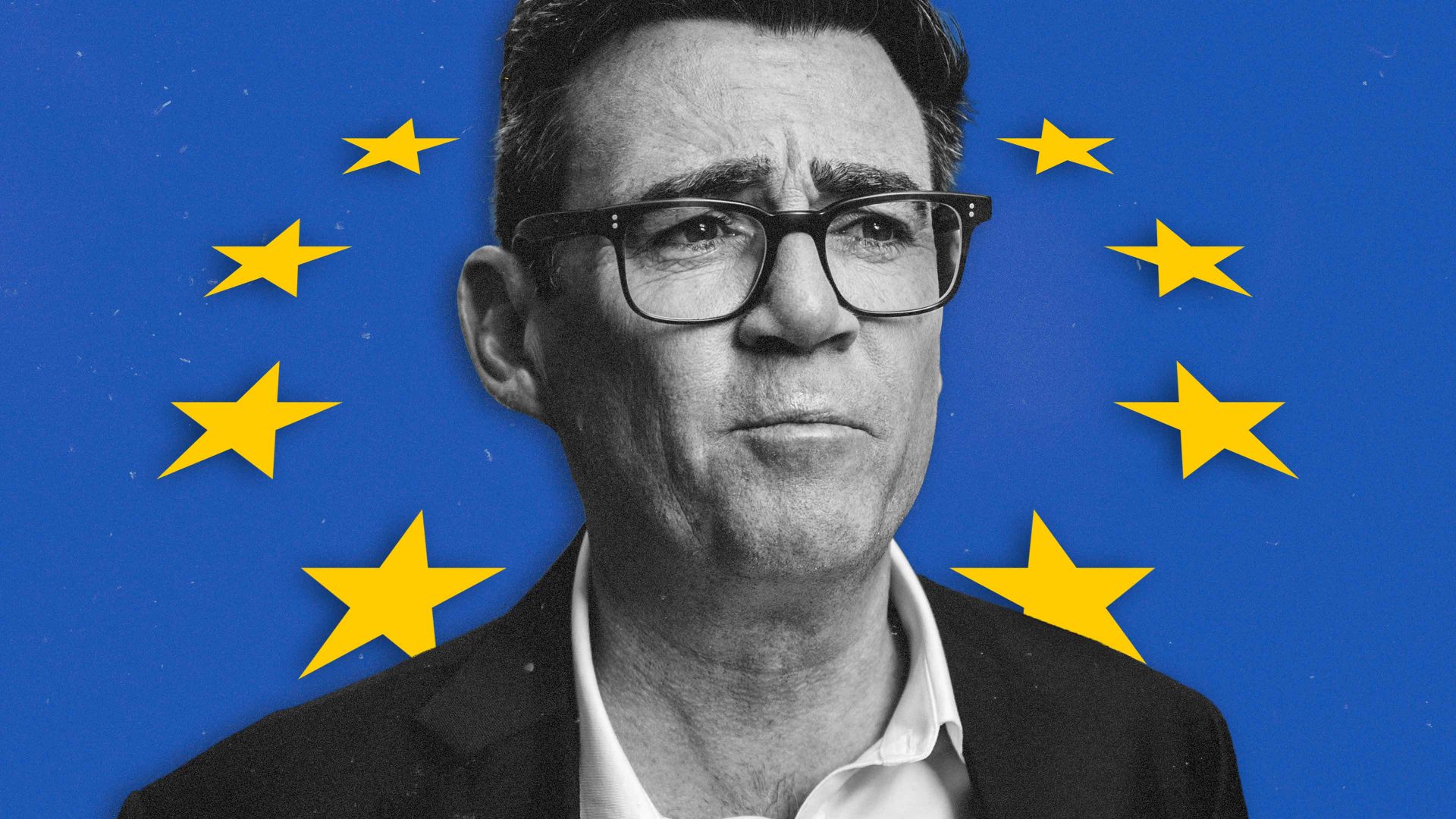
Andy Burnham may be the most pro-European prime minister to lead Britain since Tony Blair. But in Brussels, that matters far less than it once would have. The EU no longer judges the UK by what its leaders promise – it judges them by whether it believes they will still be in office long enough to deliver.
Despite Burnham’s previous comments that Brexit has been a “disaster” and that he would like to see the UK rejoin the EU “in my lifetime”, few in Brussels expect a drastic shift from the limited Brexit reset ambitions of Starmer.
Burnham’s new public position is that he will not look to “re-run” the old Brexit arguments for fear of Britain becoming “stuck in a permanent rut if we’re just constantly arguing”. British supporters of rejoining might hope that position will change once he’s settled into the job. Indeed, there is plenty of credible evidence that coming out with some kind of plan to put EU membership back on the table would drag a significant number of disaffected voters away from the Lib Dems and Greens back to Labour.
However, there are very few in Brussels who think this is on the cards for a while yet. Some are upbeat that Burnham will carry on and possibly broaden the reset strategy. These optimists are hopeful that it will include joining up to European projects like the SAFE (Security Action for Europe) scheme, a loans for arms programme designed to boost joint procurement.
“He certainly seems to be in favour of strengthening ties with the EU, and if he can bring fresh energy to that task it could be very positive,” says a senior commission source. However, the same person adds: “On the other hand he has relatively little international, diplomatic, or geopolitical experience,” and suggests that Europe is simply not going to be much of a priority for the new PM.
Suggested Reading


France, Germany, Britain: which one’s in the deepest shit?
This is among the more favourable views of Burnham currently on offer from EU counterparts. And one needn’t look too far to hear a dimmer view of Britain’s new leader and government.
A veteran European diplomat from an Anglophile member state described Burnham as a “man without a plan.” They explained that “on this side of the pond we are mostly concerned that he seems surprised he succeeded and has not had the preparation necessary to make it a success.”
By “it”, the diplomat doesn’t mean a plan to rejoin the bloc, just the continuation of Starmer’s reset plan. Which brings us to one of the most common fears of multiple Brussels officials: Burnham will botch the EU relationship so badly that he becomes yet another prime minister to be brought down by Brexit.
Multiple people spoken to for this article expressed very little confidence that Burnham would be able to stabilise the government and do not think it is certain that he will even remain in power until the next general election. “This is not our first rodeo,” says a second diplomat. “As you can imagine,” says another Commission official, “there’s a regular amount of eye-rolling here about the frequent turnover of PMs.”
Something Brexit veterans in Brussels are fully aware of is that British politicians are adept at using the EU as a punch bag, often to great effect. They are following the current discourse in the UK about immigration and are tracking the rise of Reform UK and are in many cases resigned to Nigel Farage being prime minister at the next general election.
This is why so many are reluctant to roll out the red carpet for Burnham. Even if the new PM were to suddenly support a much more ambitious reset – or even come out in favour of rejoining – they are reluctant to change the relationship in any substantial way that could be easily undone by whoever follows Burnham.


It cannot be overstated how little Brussels wants to give oxygen to Brexit. For those who lived through them, the negotiations over Britain’s exit were painful and sucked up far too much of the EU’s attention and resources. If you ask virtually any official or diplomat where the UK and EU relationship ranks in their priorities, few will place it in the top 10. In some cases it doesn’t even make the top 20.
Yes, the EU would like to see Britain back one day, but not at any cost. In fact, most would want any British return to be skewed so that it favours the EU more than Britain. For most EU member states and officials, the third-party status that is defined by the post-Brexit trade deal and Windsor Framework is a perfectly good place to keep Britain until it has a stable and unified consensus about what place it wants within the EU. That applies both to rejoining the bloc in full and deeper integration in the single market.
The common view is that this can only truly be achieved if the British public is able to vote on an election manifesto that has a clear position on the UK’s relationship with the EU, a referendum that produces a more conclusive outcome than the one held in 2016, or possibly even both. Short of that absolute certainty about what Britain wants, there are very few in Brussels willing to indulge more of our nonsense.
Of course, Burnham could very well put a commitment to hold a referendum in the next Labour Party manifesto. He could win over his MPs and attract a voter base that rallies behind a real push to put right what they – and Burnham – see as the disastrous error of 2016.
But for many in Brussels, the past 10 years has been a story of British prime ministers making promises they cannot keep, a revolving door of leaders and belligerence at every interaction. No matter how much they may like Burnham, betting on a British leader is a risky game to play. And it will take a lot of work for Burnham to convince even Britain’s European friends that he is worth that risk.
 Most popular

My truly deranged encounter with Trump apologist Kellyanne Conway

The moral depravity of Robert Jenrick

Is this the real reason Trump keeps falling asleep in public?

Suella Braverman’s book has sold only 106 copies. This is why