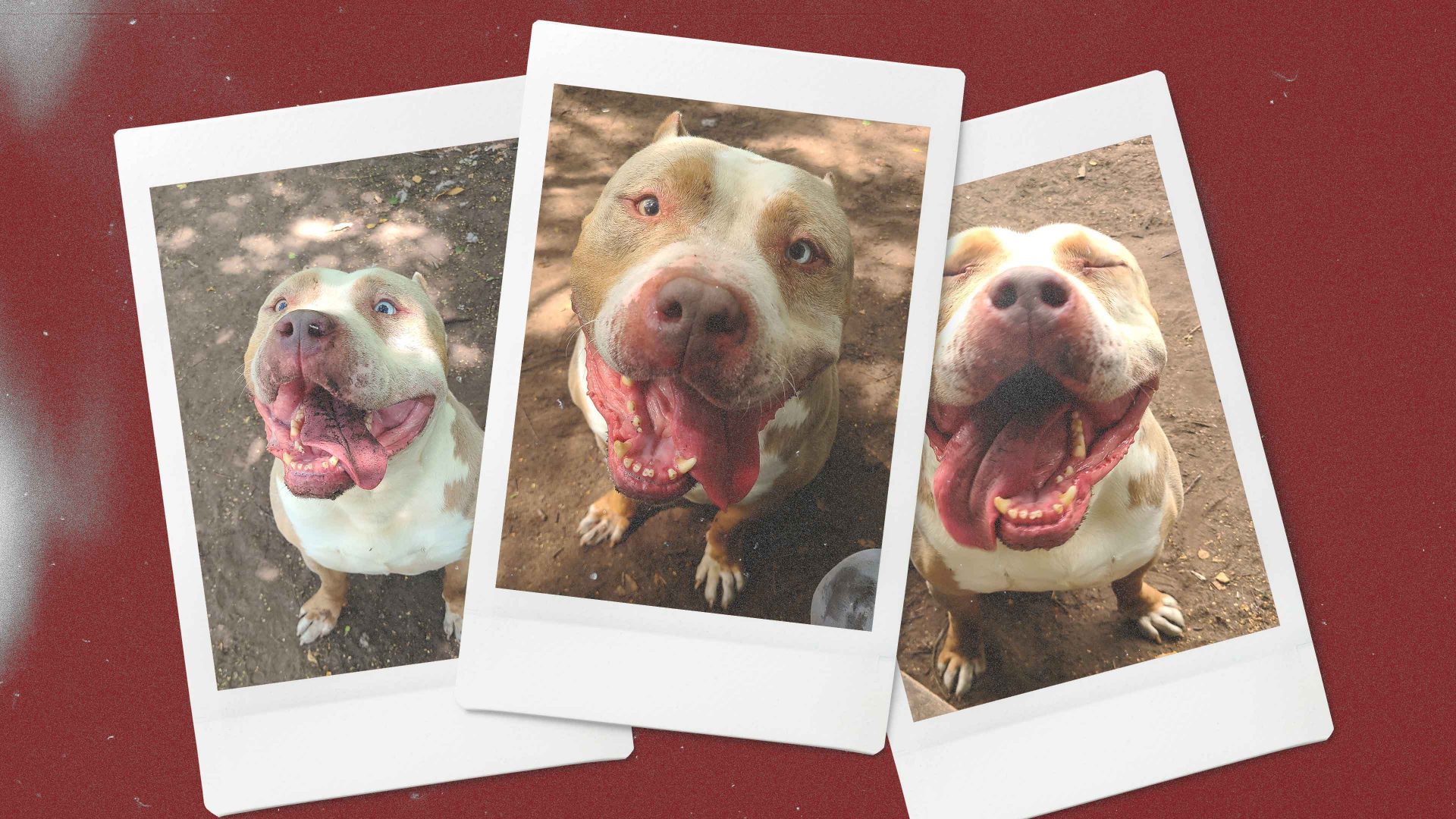
RIP Mushy P. You died the latest victim of the Dangerous Dogs Act (DDA), although a less dangerous dog would be impossible to find. You touched the hearts of everyone who met you. You wagged your tail fit to burst, and your massive smile lit up your face. You were full of joy, and assumed – quite rightly – that all people (and other dogs) were your friends.
On August 12, the Dangerous Dogs Act turns 35, but you’ll forgive me if I don’t celebrate. There is nothing to toast about this law. The act was brought in to protect people following a series of serious and sometimes fatal dog attacks. But sadly, it has done nothing to stop them: 31,920 dog attacks on people were recorded in England and Wales in 2024, many of them involving dogs of breeds or types not prohibited by the law.
Section 1 of the Act states that four breeds of dog are outlawed in the UK: the American pit bull terrier, Japanese tosa, Fila Brasileiro, and Dogo Argentino.
In February 2024, the XL bully was added to the list, in the wake of several fatal attacks involving the big, powerful dogs that were fairly new to the UK.
The government received 58,000 applications to “exempt” XL bullies before the deadline; in the first year after the ban, more than 4,500 illegal XL bullies were seized by police.
Suggested Reading

Why Britain still doesn’t know how to treat George Michael
As it is illegal not only to own but also to breed any of these dogs, the idea of the 1991 legislation was that they would die out within a generation. But I have friends who own (legally exempt) pit bulls. If breeding them was banned 35 years ago, where have these young dogs come from?
The answer is backyard breeders. People who profit from selling pups, without a licence, without vaccinating or microchipping, without paying tax, keeping the parents in often horrendous conditions. They are the scourge of the dog rescue world, the reason it is overwhelmed, and the source of untold suffering.
What can be done? The government’s decision to ban certain types of dog under breed-specific legislation, instead of dealing with backyard “greeders”, is the main reason the number of attacks is still rising. Many dogs of banned breeds have wonderful temperaments; dogs of “safe” breeds often do not. And there is concern that constant mixing of breeds, especially large ones, is producing dogs whose temperaments are unknown.
Until the root cause of the problem is tackled, nothing will change. Dogs Trust and other welfare organisations would like to see a moratorium on any breeding for five years. Failing that, the government and local authorities need to exercise their powers to crack down on the backyard breeders who are flooding the “market”, and hence rescue centres, with dogs.
Suggested Reading

Calling it a “tradition” is no defence
Caroline Lewis, a dog behaviourist and expert witness for court cases, says: “It is important to address the other end of the lead. We need to put in place more education for dog owners. When the dogs are over a certain weight – say 40kg – people should have a practical as well as theory session with a behavioural professional and undergo a test.
“This would ascertain whether they are able to competently handle the dog and provide for its needs. This happens already in some regions of Germany.” She adds: “This will stop the ease with which people can take on dogs they cannot manage due to their size and strength. It would also ensure the dogs are handled correctly, with a reduction in aversive techniques, thus preventing dogs becoming dangerous through poor handling.”
And so to Mushy P. He was brought in as a stray to the rescue centre where I volunteer, and immediately the manager, staff and volunteers were afraid for him. He was big. He looked like an XL bully. But none of us are qualified to decide this, so we had to wait for an expert assessor to come to say whether a dog is a banned breed or not – that is, whether it will live or die.
In the meantime, in the hope that he was merely lost and his owner would claim him within the statutory seven days, we took Mushy P for walks, we played with him, we made sure his time at the kennels was as happy as possible; and what a happy boy he was! By the time the assessor came, we were all in love with Mushy P.
But it was bad news; he was certified an XL bully, which meant his fate was sealed.
There are some exemptions, but in this case the options were limited. I spoke to Trevor Cooper, one of the best dog-law specialists in the country. We discussed section 4B of the law, whereby in certain circumstances a dog can be “exempted” if it has a good temperament and a responsible owner comes forward; someone who can prove hands-on experience of the dog.
But the application to go to court has to come from the police, and in this case they were unwilling to consider Mushy’s case. His temperament was not taken into account. All that mattered was his size and physical characteristics.
So we threw a sausage party for our gentle giant, and he made his final trip to the vets. Everyone was heartbroken.
No doubt next month there will be another Mushy, as a new wave of friendly dogs are washed in like rubbish, the dogs discarded in their hundreds week after week, sometimes emaciated, sick, abused, suffering mental trauma. It takes a long time, and sometimes a lot of money, to repair them. Sometimes, you cannot. And the rescuers, vets and volunteers involved in this process are left broken, too.