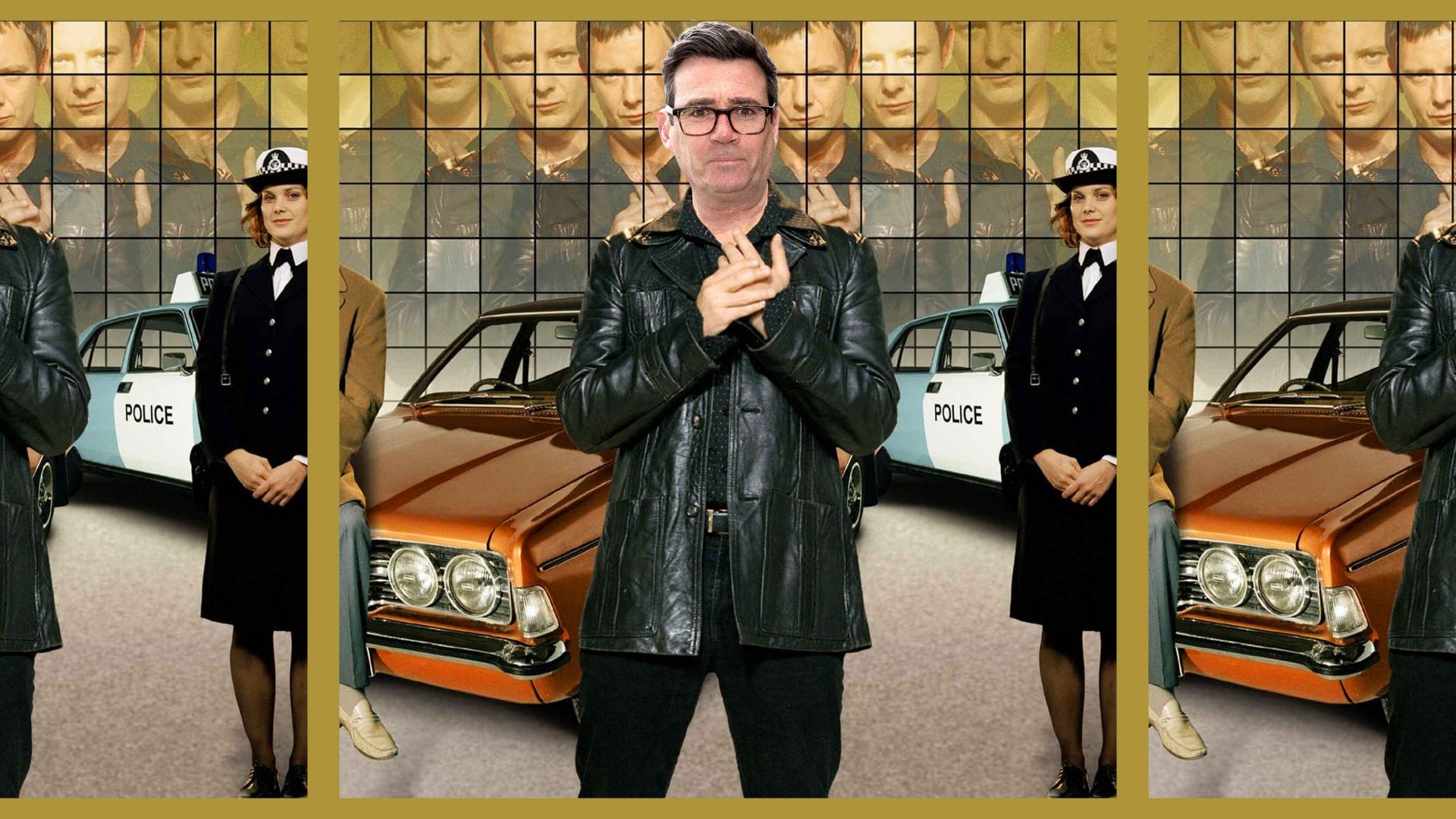
Andy Burnham was born on January 7, 1970. As Britain’s right wing newspapers scratch around for the lines that they hope will undermine the PM-in-waiting, several seem convinced that he pines for a decade he spent in nappies and short trousers.
As far as they are concerned, the image of the putative prime minister as a Game of Thrones-influenced King of the North should be replaced by a caricature of him as the political equivalent of Sam Tyler in Life on Mars, a modern man cast back into the era of glam rock, brown corduroy, strikes and Watneys Party Seven.
You could picture The Sun’s Leo McKinstry turning ever more vivid shades of puce as he wrote: “Burnham wants to turn the clock to the dark days of the 1970s, when large sections of the economy were nationalised and the unions were invited into No 10 for beer and sandwiches.” In the same column, he sought to enrage readers by jumping ahead a decade to compare Burnham with “Red Ken Livingstone”.
Over at the Daily Telegraph, the desire to evoke the 1970s was even stronger. The day after Burnham made his debut as the only candidate to replace Keir Starmer, the paper’s leader column chuntered: “[He] delivered his first major speech since returning to Westminster looking and sounding like a throwback to the 1970s. In his trademark black t-shirt, sporting a badge and speaking in Manchester’s People’s History Museum, he was almost a parody of a Citizen Smith-style Left-wing politician.”
Citizen Smith, the sitcom starring Robert Lindsay as Wolfie Smith, Marxist revolutionary leader of the Tooting Popular Front, ran from 1977 to 1980. You need to be well into your sixties to have a decent memory of it. But that’s precisely the Telegraph’s audience – people who can be terrified by the thought that Burnham might do anything to undermine the legacy of the sainted Thatcher.
Suggested Reading
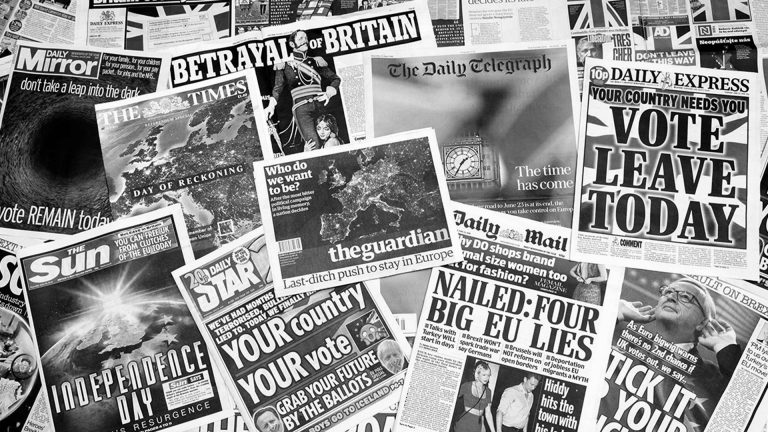
Meet the media Brexit cheerleaders who can’t admit they got it wrong
Under the almost commendably blunt headline “Burnham to take Britain back to the 1970s”, the Telegraph’s deputy political editor Daniel Martin thundered: “[He] plans to take Britain back to the 1970s with state intervention in the markets, a mass social housing programme and renewed focus on technical education.”
In his column for the same paper, Lord Frost, the former government Brexit negotiator turned Telegraph doom purveyor, conjured his own scary story of the past, although as ever with Frost he got things wrong, forgetting the 1970s and instead opting for an avatar of 1980s left wing politics as the monster at its heart.
“[Burnham’s] entire speech was something of a museum piece, an artefact redolent of the Michael Foot days of Labour politics: strikes and trade union banners, class warfare in Parliament and ranting leftists on the street,” he wrote, referencing the man who became leader in 1980
Inevitably, Frost found space for a reference to Foot’s “donkey jacket”, which was actually a short blue-green overcoat that the then-Labour leader’s wife Jill Craigie purchased from Harrods. The Telegraph published a piece back in 2010 correcting the “donkey jacket” myth, but who cares about facts when you’re got historical memes to launder? Another Telegraph column on Burnham, this time by Suzanne Moore, contained a reference to “one of Michael Foot’s donkey jackets” as though the former minister had a sideline flogging them on Camden Market.
In the Mail, Richard Littlejohn went for a combination of historical allusions and northern references as he asked readers to recall a cartoon character popular in the 1970s. Just as he remains convinced it’s hilarious to refer to London mayor Sadiq Khan as Genghis, Littlejohn has taken to calling Burnham “Andy Capp”. While that strip still appears in The Daily Mirror, it hasn’t been culturally relevant for a half a century.
Still, it’s more contemporary than Littlejohn’s mentions of “a Soviet-style ten-year plan”, Bernie Winters, and Hilda Ogden. When he sneers about people “Oop North”, I wonder if his editors remember those readers living beyond the Watford Gap who might bristle at being painted as nothing but whippets and flat caps.
Britain’s premier producer of contrarian opinions for money, Brendan O’Neill, offered a simpler reason for Telegraph readers to hate Burnham – he likes to wear that symbol of the 1970s and ‘80s, a pin badge. According to O’Neill, there’s “[nothing] sadder than an adult who wears a badge” because he believes – or rather pretends to believe for money – that “Lefty badges are metal statements of moral supremacy”.
What actually provoked O’Neill’s 800 words of rage was Burnham’s bee badge – a symbol of Manchester that the MP has worn for years now – which the columnist decries as “infantile, and annoying”. Isn’t it more infantile to be enraged by someone wearing a lapel badge?
Suggested Reading
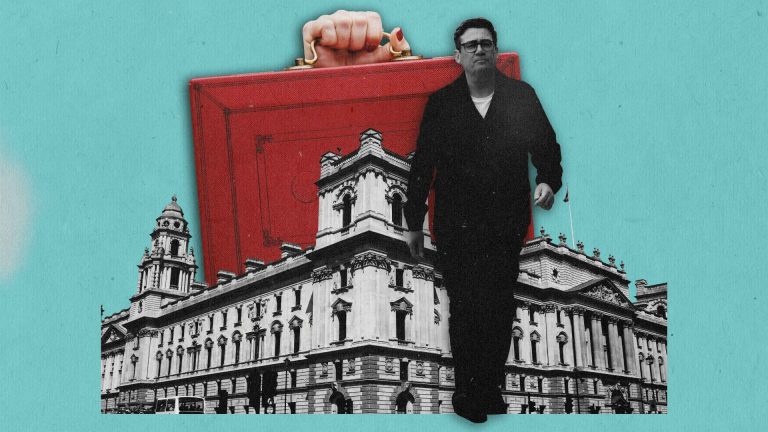
A Critical National Infrastructure superministry could fix Britain
There is more than one way to hate Andy Burnham, though. Another Telegraph columnist, Michael Henderson, a man who previously decried Alan Bennett – who gets annoyed by Alan Bennett? – as “an insufferable snob”, used his allotted word count to claim “Burnham is giving northerners a bad name”.
And Telegraph’s in-house Nostradamus of negativity, the apocalyptic Allister Heath wrote: “Andy Burnham is not so much King of the North as Slayer of the South… He will confiscate what little wealth southerners have been able to cling on to in the face of punitive taxation, stagnant wages and declining house prices, while failing to meaningfully spread opportunity to northerners.”
That’s the angle Heath and the Telegraph will stick doggedly to through the early months of Burnham’s premiership: He’s a chippy northerner out to steal your stuff.
The Sun’s leader column told readers to “be wary of what could be yet another false prophet.” In case they could not be bothered to read the article, it appeared under the headline “False Prophet”.
The Daily Mail’s Quentin Letts, reminding readers he has “sketched every PM since James Callaghan” – making him the parliamentary sketchwriting equivalent of Japanese knotweed – was enraged to have been denied a seat for Burnham’s Manchester speech. His first attempt at caricaturing the next PM was to say “behind the eyelashes, there was nothing there. Just scented air.”
Pleased with that image, Letts returned to it in a column published two days later: “He has become the Invisible Man, a scented vacuum, some distant nimbus on the north-western horizon.” The aim here is to present Burnham as a coward who has snuck into power.
Suggested Reading


How should Burnham treat Trump? Try ignoring him
In The Times, which might at least have pretended to give Burnham the benefit of the doubt, its captive Tory lords, Finkelstein and Hague, used their columns to declare “Burnham’s German lesson won’t translate here” and warn that “Andy Burnham’s vision needs a lot more substance”. That’s Daniel Finkelstein, advisor to failed leader of the opposition William Hague, and the actual failed leader of the opposition himself writing there, so Burnham should definitely listen to their no doubt entirely well-intentioned advice. The paper’s leader column also offered the next prime minister some guidance, saying he “should get on with it” while sarcastically calling him “the messiah”.
Even before Burnham takes power, it’s clear how the press is developing its picture of him: He’s a 1970s throwback who only cares about the north and has no mandate of his own. From the moment he enters Downing Street (or perhaps pulls up the shutter on No 10 North), the clamour for a snap general election will grow.
If he’s reading his press, Burnham, a big Smiths fan, may find himself humming Bigmouth Strikes Again. Hey, at least that’s from the ‘80s…
Mic Wright is the author of Breaking: How the Media Works, When it Doesn’t and Why it Matters