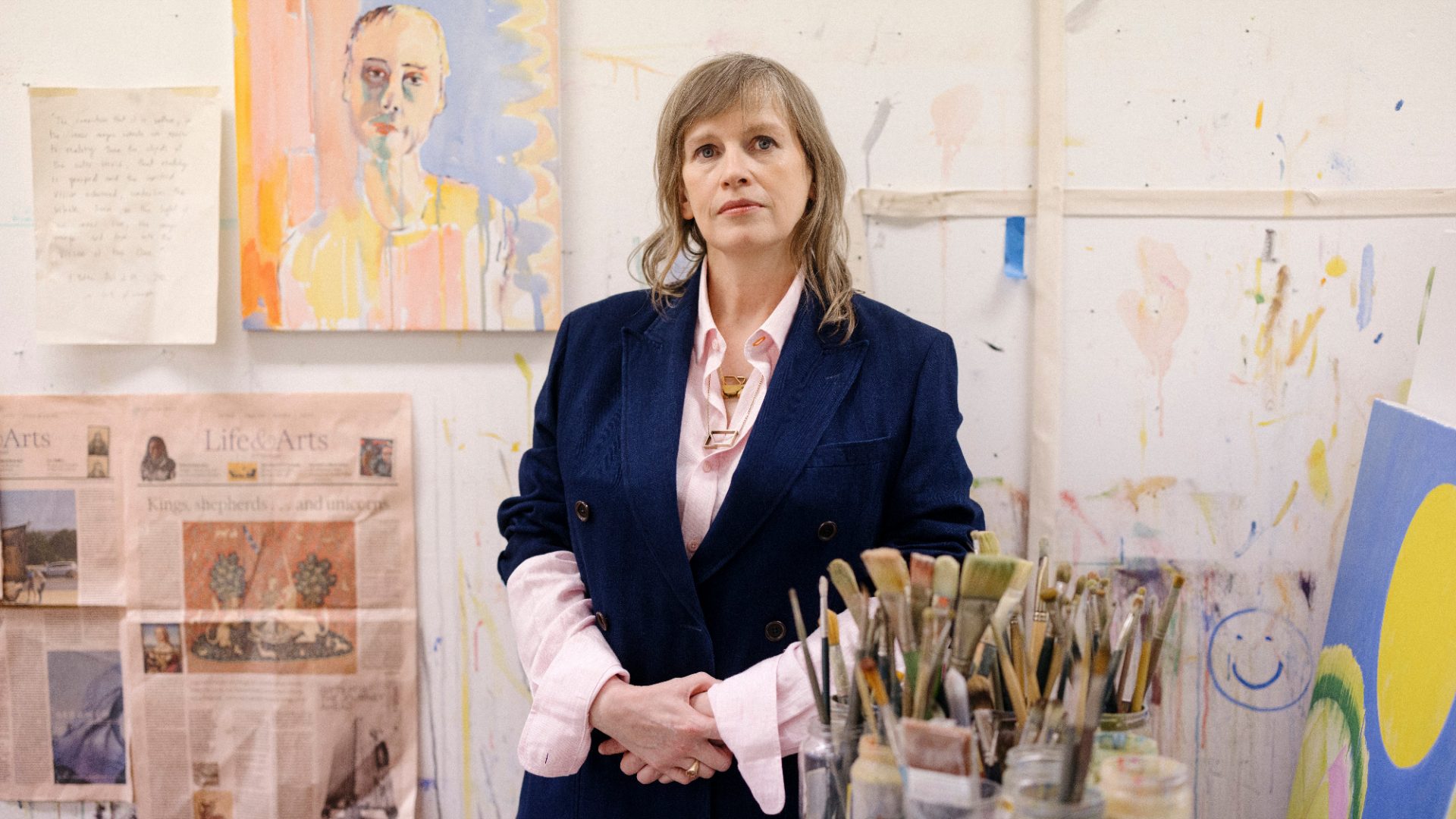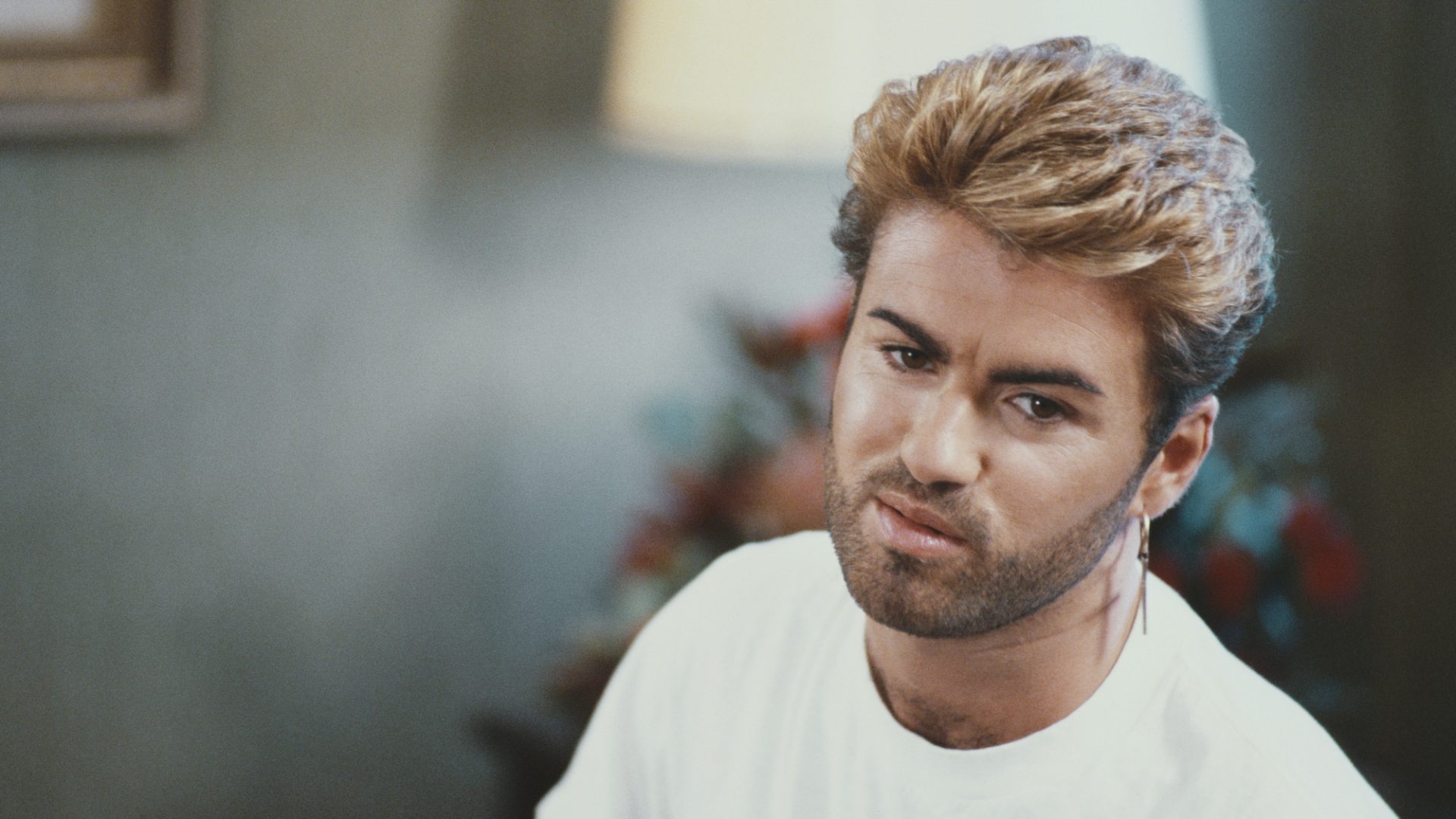
Sathnam Sanghera fell in love with George Michael’s music four decades ago.
Others have not always shared his enthusiasm. “I grew up in a macho culture, and everybody was always taking the piss about my George Michael fandom,” the 49-year-old British journalist and bestselling author tells me from his home in Highgate, north London. “Being a George Michael fan has not always been easy.”
Partially, it stems from a fear of looking uncool. Even today, when he is with friends or family, Sanghera refuses to play Michael’s music. Whenever Michael comes on the car radio, Sanghera typically changes the station.
The writer once attended a premiere of a documentary about Michael’s life. But after spotting a fellow journalist in the audience, he left before the screening began. And Sanghera had tickets to what turned out to be Michael’s last-ever live performance, at Earl’s Court, London, in October 2012. But in a last-minute moment of panic, he gave them away.
Then there’s Highgate itself. Michael lived there too, and tributes were left on the small green opposite his home when the singer died on Christmas Day 2016. “Almost all of my neighbours in Highgate have a story about meeting George Michael,” says Sanghera, who doesn’t.
“I don’t really listen to George Michael by myself, unless I’m drunk,” he confesses in Tonight the Music Seems So Loud: The Meaning of George Michael. It’s not a conventional or authorised biography. Sanghera begins with a question. Why, he asks, does listening to George Michael’s music feel like a stigma, a dirty secret, or a guilty pleasure?
Self-deprecating jokes notwithstanding, Sanghera is sincere. So too is his book’s larger question: why do critics, and our culture more generally, not take George Michael’s music seriously?
Other artists do. Elton John has called Michael “one of the greatest songwriters [Britain] ever produced”. Stevie Wonder has spoken about “[feeling] the pain” when George sang about painful situations.
Still, nearly a decade after Michael’s death, there has been no George Michael tribute concert, no major physical memorial unveiled, and very little collective national or international reflection about Michael’s enormous contribution to modern popular culture.
Which seems odd given the stats of Michael’s career. Thirteen number ones on the UK singles chart; 10 number one songs on the US Billboard Hot 100m and more than 120m album sales. On Spotify, Careless Whisper (1984) Michael’s most successful song, has more than 1.5bn hits.
That road to global stardom began in Bushey, Hertfordshire, in 1981, when Michael – with Andrew Ridgeley – formed the pop duo Wham! Three years ago, two academics published Postcolonial paths of pop: a suburban psychogeography of George Michael and Wham!
The obscure paper argued that Wham!’s remarkable success (selling 30m records between 1982 and 1986) can be seen within a wider context “of postcolonial journeys and suburban circumstances that have shaped UK popular music” since the end of the second world war.
Michael’s father, Kyriacos Panayiotou, a Greek Cypriot immigrant, arrived in Britain in the summer of 1953 with less than £1 in his pocket. Cyprus was then still a dominion of the British empire. Panayiotou later married Lesley Angold Harrison, an English dancer with Jewish roots. Michael’s maternal grandmother was Jewish, but she married a Gentile and raised her children to have no knowledge of their Semitic ancestry.
Ridgeley’s father, Alberto Mario Zacharia, who was half Italian and half-Yemeni, also hailed from a Jewish background. In 1956, the same year as the Suez crisis, Zacharia fled Alexandria, Egypt, by boat. In Britain, he changed his surname to Ridgeley, after spotting a road called Ridgeley Gardens.
As a child of two Punjabi immigrants, Sanghera can identify with this cosmopolitan story and its inbuilt prejudices. He is also familiar with the geopolitical and historical forces that shaped Michael’s fate.
“If British imperialists hadn’t got involved in Suez and Cyprus, neither Ridgeley nor Michael would have been born in Britain and their respective musical careers would probably never have happened,” says Sanghera, whose bestselling books include Empireland: How Imperialism Has Shaped Modern Britain (2021) and Empireworld: How British Imperialism Has Shaped the Globe (2024).
For this book, Sanghera interviewed Ridgeley, who faded into cultural obscurity after Wham! split in March 1986. The British TV satire puppet show Spitting Image once portrayed Ridgeley as just a pair of dancing buttocks.
When speaking about his former bandmate, Michael was generally complimentary and gracious. Occasionally, though, he stuck the knife in. “The fact that [Andrew] didn’t contribute anything must have been a terrible blow to his ego. I often wonder why he let himself be overpowered by me,” Michael told Julie Burchill in 1986.
By the middle of the 1980s, Michael’s music seemed to provide a fitting soundtrack to yuppified Thatcherite Britain and its culture of excess. So too did the accompanying videos. They have not aged well, Sanghera admits. Especially the bad hair, the fluorescent gloves, and the silly dance moves.
And yet, Sanghera claims Michael was more politically conscious than he was ever given credit for. He was also incredibly generous, donating hundreds of thousands of pounds from his record royalties towards HIV/Aids initiatives. He also gave millions of pounds to the charity Help a London Child.
“Charity was a routine part of George Michael’s life, as was supporting progressive causes,” Sanghera explains. This included a performance at the Miners’ Benefit at the Royal Festival Hall in London in September 1984.
Wham! mimed their way through the performance, as the audience booed and heckled.
Later, Michael told Record Mirror that he “didn’t like” Arthur Scargill, president of the National Union of Mineworkers and a leading figure during the violent standoff that erupted between Britain’s miners and Thatcher’s militant right wing government throughout 1984-85.
Michael was “definitely left wing, but also a contrarian,” Sanghera explains. “When asked to join Red Wedge, a left wing group of musicians in the 1980s, he said no. But on the other hand, he was one of the first musicians to publicly criticise Tony Blair in the build-up to the Iraq war.”
Michael also had no time for Cool Britannia, once describing it “as a lot of bollocks”.
This was New Labour’s attempt in 1997 to celebrate modern British culture with newfound pride and optimism.
Noel Gallagher was a leading proponent. Oasis’s chief songwriter later had a public spat with Michael following the release of Michael’s satirical song Shoot the Dog (2002). It features a smarmy reference to Tony and Cherie Blair’s sex life.
Suggested Reading

How Brexit spurred a malaise across Europe
The video, meanwhile, portrays Blair as George W Bush’s poodle. Gallagher claimed “it was laughable for Michael to try and make social comment after [hiding] from the public for 20 years”.
This was a subtle reference to the fact that Michael did not come out of the closet until April 1998. He made the announcement in a CNN interview, just days after being caught masturbating in front of a Los Angeles police officer in a public toilet at Will Rogers Memorial Park in Beverly Hills. Michael was subsequently arrested.
The press coverage that followed, particularly in Britain, was brutal. Many assumed that the shame would finish his career. But “George Michael handled the episode brilliantly,” says Sanghera. “He fought back by controlling the narrative and by refusing to hide from the public.”
Sanghera says Michael’s years in the closet need to be seen in historical context. “It was impossible to be gay and successful in [Britain] during the ’80s because the tabloid culture and the social culture was so homophobic.”
Sanghera claims the British press’s “obsession with Michael’s sexuality” created an unfair impression that there was something fake or manufactured about Michael’s character. “Many journalists who lavished praise on George Michael when he died were among those who gave him the hardest time in his own lifetime.”
George Michael’s death came unexpectedly. He was discovered unresponsive in bed, aged 53, by his then partner, Fadi Fawaz. His Twitter account alleged that Michael had attempted to take his own life several times, and that he had been HIV positive. Later, Fawaz claimed that those tweets were the result of hacking.
The following March, a coroner pronounced that Michael had died from dilated cardiomyopathy with myocarditis and fatty liver, conditions that are intensified by substance abuse. “There is no mystery or conspiracy surrounding George Michael’s death,” says Sanghera. “He was an addict, addiction is an illness and the illness killed him.”
Sanghera says Michael’s problems with addiction were ongoing for more than a decade and included regular use of cannabis, liquid ecstasy, and occasional use of crack cocaine. He also notes that Michael had a long battle with depression. There was a family history of mental illness on his mother’s side of the family too, including schizophrenia and suicide.
Sanghera describes Michael as a “control freak”. This constant need for control, and a suspicion of the press, meant he tried to retain the narrative of his life, even as things fell apart, the author points out. “I don’t think the public, or the people around him, appreciated just how much trouble George Michael was in prior to his death.”
Michael was neither saint nor sinner, Sanghera claims. “He could be incredibly generous; he could engage fully in a wide range of topics, including politics, but he could also be absent-minded, spiky, and self-involved.”
Writing about Michael’s life has helped Sanghera think harder about his own.
“I only got married very recently, at the age of 48. Prior to that – partially because I come from a very conservative [Indian] family – I bought into the idea that life is about freedom,” Sanghera says.
“Writing this book has taught me that true freedom isn’t found by living for yourself, but about engaging in life with relationships, responsibilities and having a family,” he concludes. “I really wish that George Michael had learned that too. His life was cut short too soon, but he left behind a lot of beautiful art.”
Tonight the Music Seems So Loud: The Meaning of George Michael by Sathnam Sanghera is published by Picador