This is the heyday of horror. Every year, the most interesting films seem to be horror movies. In the last three years alone, Weapons, Sinners, Obsession, Backrooms, The Substance, Bring Her Back and Talk to Me have all broken through with audiences.
There’s always a buzzy horror film to catch. They’re often by young new filmmakers, frequently with no big stars. On the small screen, Mike Flanagan racks up shows like Midnight Mass and Fall of the House of Usher. On the big one, a generation of directors from Jordan Peele to Ti West, Jane Shoenbrun to Rose Glass are their names in the genre. There’s even a studio – Blumhouse – dedicated to it.
There’s the gorefest of the Terrifier films, the artiness of the A24 production company, the filigreed gothic of Robert Eggers, the postmodern queer metahorror of Teenage Sex and Death at Camp Miasma. Horror films now win Oscars (Sinners, Weapons, The Shape of Water); even Cannes’ Palme d’Or was won by body horror Titane.
In October, the genre gets an entire month to run crazy and such is the triumph of the revolution that think-pieces are run advising what to watch at the cinema if you’re a bit of a scaredy-cat and gore gives you the heebie-jeebies.
There was a time when horror movies were considered the outcast of movieland. Horror movies weren’t taken seriously by critics or academics; didn’t win Oscars, weren’t nominated, weren’t even invited to the ceremony. They were the ugly exploitation films; controversial by their very nature, scary, icky, creepy and perverse. One stretched piece of panty-elastic away from porn.
This story was never absolutely true.
Horror films have been around since the birth of cinema. The first – The House of the Devil – came courtesy of no lesser maestro than Georges Méliès in 1896.
Works like Robert Weine’s The Cabinet of Doctor Caligari (1920), Nosferatu: A Symphony of Horror (1922) directed by Friedrich Murnau, and Victor Sjöström’s The Phantom Carriage (1921) are considered foundational classics in world cinema. They were soon joined by a slew of Universal classics based on iconic 19th century creations such as Mary Shelley’s Frankenstein, starring Boris Karloff and directed by James Whale, or Bram Stoker’s Dracula, starring Bela Lugosi and directed by Todd Fielding: both films coming out in 1931.
Suggested Reading

Widow’s Bay, the best horror-comedy since An American Werewolf in London
Though these films might seem tame by today’s standards, at the time the British censors felt compelled to add an H classification for “Horrific” and ban audiences under 16 from being exposed to the terror within. This obviously had an effect on ticket sales and gave studios an incentive to make their horror movies less horrific, so as sequelitus ran rampant, the comedy was amped up and the gruesome scares toned down.
Just so we don’t dismiss the early horrors too quickly, let us recall that in Edgar Ulmer’s The Black Cat (1934), Bela Lugosi flays Boris Karloff alive. It also introduces the trope of the villain playing Bach on a huge organ, which became much parodied.
This was the exception, however, and – in an early attempt to squeeze more money out of their IP, Universal brought the favourites back again and again and merged them with their comedy acts. Once Abbott and Costello show up, you’re dead as a horror franchise.
Horror wouldn’t return to the mainstream as a ‘serious’ proposition until 1960 with Alfred Hitchcock’s Psycho. In a thoroughly modern, Freudian twist, the Jekyll and Hyde character is now a psychopath with a split personality. Instead of a magic potion, we have childhood trauma. To paraphrase Garth Merenghi, subtext is for cowards.
Hitchcock’s film made the disreputable watchable, and the shocking commercially viable. He used Hollywood stars – Janet Leigh and Tony Curtis – and the backing of a major studio to tell a tale of a transvestite murderer who used violence as a replacement for sex. Adulterous assignations, larceny and murders in motels, a stabbing in a shower, a stabbing on a staircase, the disposal of a body in a swamp, the flushing of a toilet – another first for American cinema – are all crammed in.
Hitchcock himself was a respectable director who made thrillers rather than horror films – though his silent take on the Jack the Ripper legend – The Lodger – could be seen as an early try out, but he shot in cheaper black and white and wanted the film to feel cheaper as well.
The 1960s and ‘70s saw serious directors inspired by Hitchcock take on horror, and again the genre achieved a level of box office success and respectability with such films as Rosemary’s Baby (1968), The Exorcist (1973) and Carrie (1976). Even a director of the stature of Stanley Kubrick saw fit to adapt a Stephen King novel, The Shining, in 1980, while Spielberg produced (and if rumours are true, secretly directed) Poltergeist (1982).
And suddenly – throughout the 1980s – horror was once more in the mainstream, whether it was children’s films like Ghostbusters and Gremlins – both released in 1984 – or slasher franchises like Nightmare on Elm Street (1984) or Friday the 13th (1980).
Suggested Reading

This is why women are obsessed with stories about women being murdered
Although talk of ‘elevated horror’ has twisted a lot of knickers in the fan community in the last decade, the truth is there have always been these divisions. There are the hardcore fans of gorehounds like Lucio Fulci alongside those who demanded something more psychological; the period dramas of Roger Corman and the Hammer films alongside creature features and Italian Giallos. Add to that the science fiction horror which was firmly established as something other than Blobby trash by Ridley Scott’s Alien (1979) and John Carpenter’s The Thing in 1982.
Then there have been mainstream name directors like Kubrick, Francis Ford Coppola and Kenneth Branagh who try out horror almost as an exercise in style. It always looks and sounds like an opera singer belting out the hits of Buzzcocks.
The ecosystem of horror can best be seen via a punkish, often exploitation-based undergrowth which occasionally explodes, and the spores drift into the mainstream and create a bloody slaughterfest on the streets of the city. Examples: George Romero’s The Night of the Living Dead: filmed in 1968, ultra-low-budget, no star actors, subversive political content, far gorier than most films. It created an instant revolution that is still walking (dead) or running (28 Days/Weeks/Years Later).
Or John Carpenter’s Halloween, which set Michael Myers loose and set the template for the endless slashers to come. Or Wes Craven’s early films The Last House on the Left (1972) and The Hills Have Eyes (1977). After his breakthrough with digitally challenged Freddy Krueger, he came to satirize the form with Scream in 1996. The Blair Witch Project and Paranormal Activity then highlighted how modern, cheap and accessible technology could be used to make very low-budget movies which brought phenomenal returns at the box office.
But is there some danger in the most recent supremacy of horror? I once talked to Canadian critic Adam Nayman on my amazing podcast Writers on Film (available wherever good podcasts live), and he decried “the gentrification of horror”.
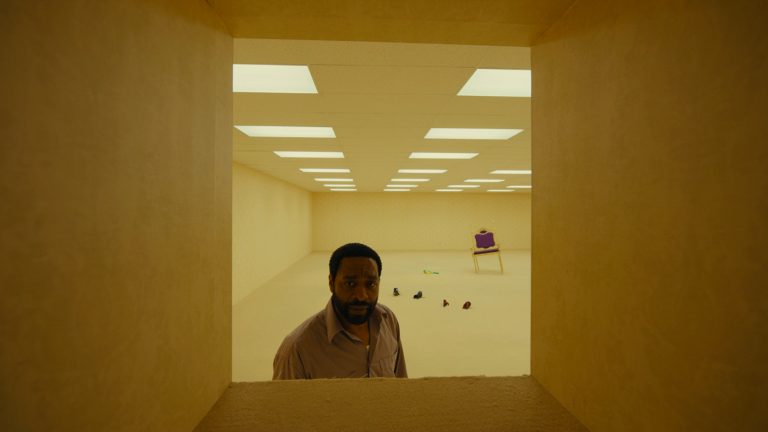
At the time, he was referring to Ari Aster and Robert Eggers and specifically Hereditary and The Witch. Their subsequent films have become even more gentrified; by which he meant dialled down to aim for a wider audience. I find myself wondering while watching a lot of recent horror films: why am I not actually scared?
Take the work of Guillermo del Toro. His explanations of his films are better than his films. He has an ongoing mission to show that the monster is not actually a monster.
In his early Spanish-language film Pan’s Labyrinth, Franco’s Spain works as a counterweight to the nightmarish creature Pan, but by dint of repetition, many of his films – like Tim Burton’s movies – are more about set design than fear. The Creature in The Shape of Water (2017) is soppy, not scary and in Frankenstein (2025), Jacob Elordi is a swoony proto-Wolverine.
In fact, horror at Halloween is beginning to resemble what Mariah Carey is to Christmas. It makes me want to Cannibal Holocaust the genre (if you squirm, you know). A lot of films feel like they’re cosplaying the genre rather than genuinely engaging with it.
In Jane Schoenbrun’s Camp Miasma, a queer filmmaker talks and talks about her relationship to a slasher franchise she is set to revive, leading Gillian Anderson to respond: “You talk about it so academically – Camp Miasma wasn’t about cultural depictions of monstrosity or gender trouble or any of that stuff. It was about two very simple things… flesh and fluids.” But self-awareness of arsewittery is not a license for arsewittery: and irony is what the joyless have instead of a sense of humour.
I really wanted to like Schoenbrun’s film; the way I always want to like Del Toro’s films. But the problem is that I agree with the thesis too much. And horror shouldn’t start with a thesis.
Horror is visceral. It is about provoking a physical reaction, and here the relationship to pornography is one of close cousins. In searching for that shock, it has to be ingenious, original, and it is constantly stabbing itself to death, because once you get used to how it operates, it must reinvent itself in order to be effective.
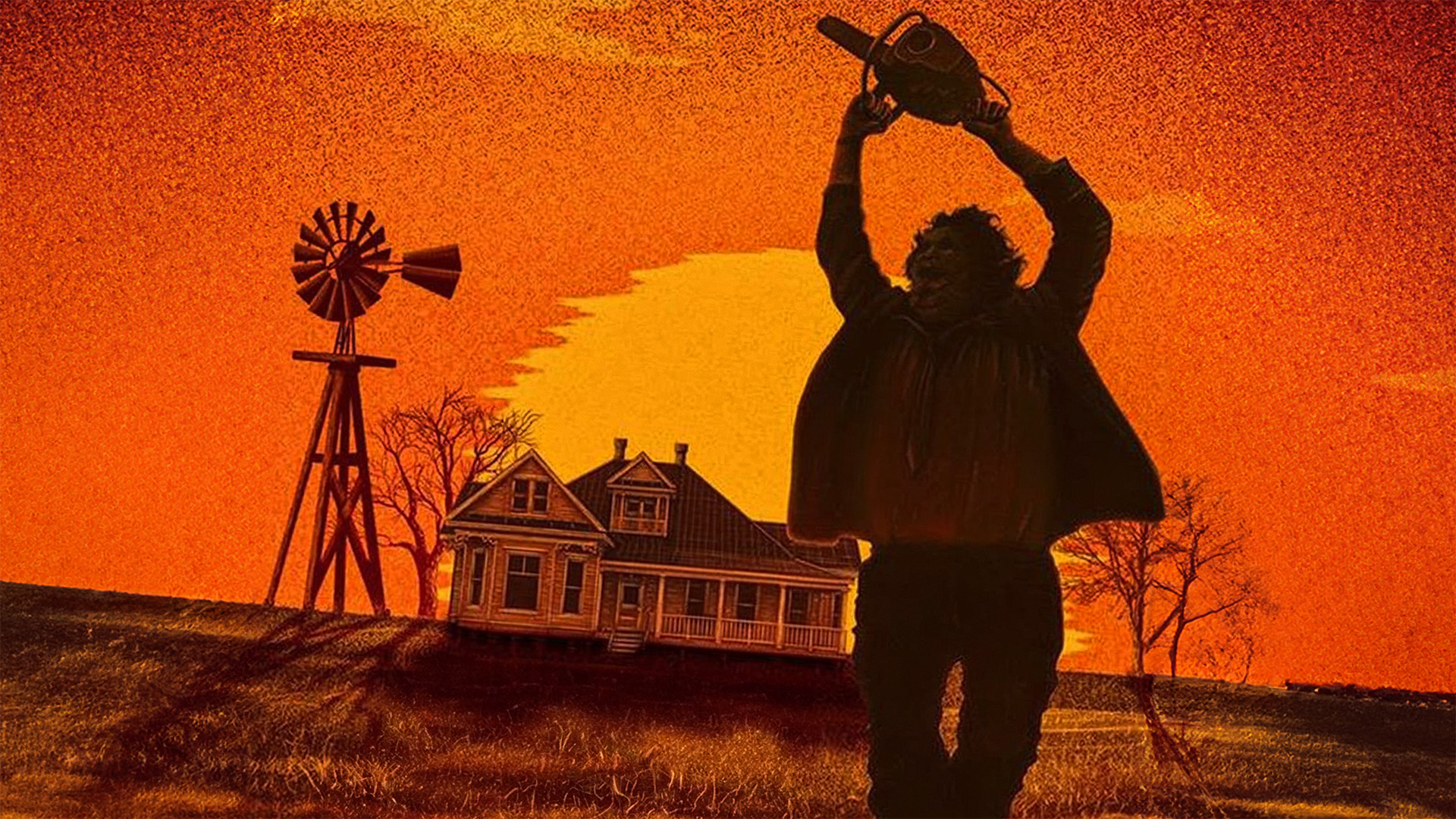
This is why so many horror films stop being horror films the second time around and become comedies. As Karl Marx wrote in his online review of The Texas Chainsaw Massacre II, “horror repeats itself first as tragedy and then as farce.”
So enjoy Halloween. But I’m looking forward to the day horror becomes disreputable once more.
 Most popular
I went looking for Trump’s America – this is what I found
18 things that will absolutely, definitely happen if Trump gets whopped in the midterms


Emily Maitlis’s diary: Why are we turning away the people who could make Britain richer?

‘The deep state stole my mini-budget’: An exclusive extract from Liz Truss’s new book