PICK OF THE WEEK
Widow’s Bay (Apple TV)
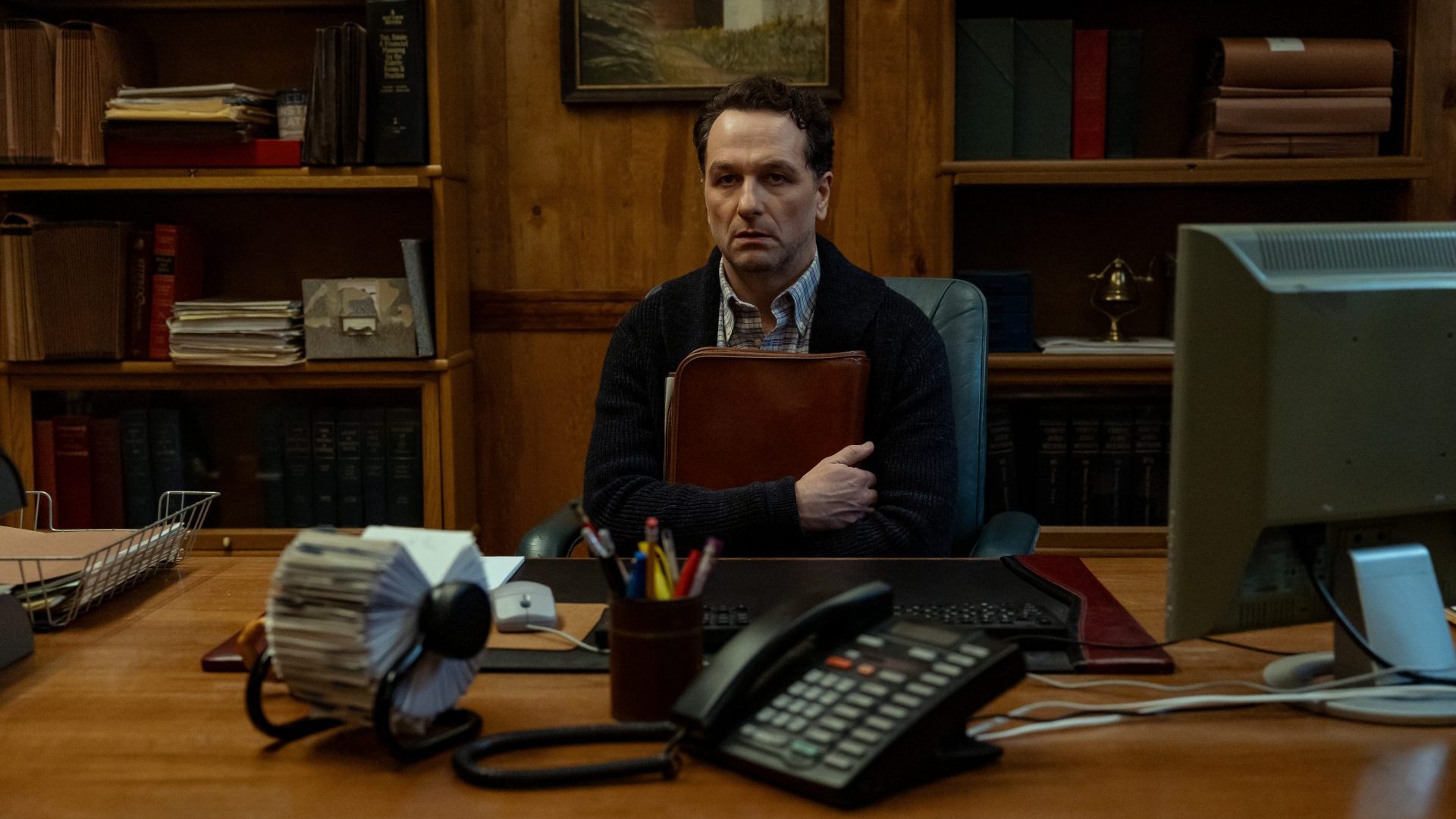
Tom Loftis (Matthew Rhys) is having a bad day – and you just know it’s going to get worse. As mayor of Widow’s Bay, an island township 40 miles off the coast of New England, he has finally persuaded a New York Times journalist to write a piece on its potential as a tourist destination. But his colleagues and the townsfolk – mired in folklore, superstition and a more prosaic collective inertia – are being distinctly unhelpful.
When a fisherman goes missing, Tom’s nemesis, sozzled seadog Wyck Crawford (Stephen Root, excellent as always), warns that evil ancestral forces are stirring. “The island is waking up, and that’s when bad things happen,” he says. “You think the fog out there is natural? It already took Shep – and it’ll take the rest of us tonight!”
Up to that point, Katie Dippold’s terrific ten-episode series is shaping up to be a mash-up of John Steven Spielberg’s Jaws (1975) – in which the mayor famously tries to keep Amity Island open, in spite of the bloody big shark – and John Carpenter’s The Fog (1980). But this is only the start of the show’s gleeful eclecticism, which could have been a narrative and aesthetic disaster but delivers instead the best horror-comedy since John Landis’s An American Werewolf in London (1981).
As in Robin Hardy’s The Wicker Man (1973), many of the townsfolk positively revel in the island’s dark past. At the local museum, Gerrie (Nancy Lenehan) tells the NYT writer Arthur (Bashir Salahuddin) about its historic witch-hunts: “Great source of pride. We caught `em, we burned `em!”
In spite of it all, Arthur thinks that Widow’s Bay could be the next Martha’s Vineyard. Over dinner, he tells the frazzled mayor. “I see what’s going on here. You don’t want to be Nantucket. You want to be Salem…It’s a nice town. You don’t need the gimmick.”
Of course, the last thing Tom wants is for his town to be Salem. Which is too bad, because what follows is a rollercoaster of horror tropes: a demonic clown, straight out of Stephen King’s It (1986); a masked slasher-killer, in a nod to Hallowe’en (1978, Carpenter again); a haunted inn that turns out to be a quaint version of the Overlook Hotel in Stanley Kubrick’s The Shining (1980).
Speaking of which: Kate O’Flynn, as Tom’s chief assistant Patricia, is pointedly rocking Shelley Duvall’s haircut from that horror classic, as well as stealing every scene she’s in. Kevin Carroll is great, too, as town sheriff Bechir, who, for reasons that become clear, is desperate to get his pregnant wife off the island before she gives birth.
But it is Rhys himself who anchors the whole whirlwind phantasmagoria. Best known for his intensity as an actor in shows like The Americans (2014-18) and last year’s The Beast in Me, he gets the chance to show off his impressive comic chops.
There is plenty of slapstick, but Rhys is also extremely funny in his moments of social awkwardness and bureaucratic exasperation (“Does anyone on this island work?”; “I think there are some people who want to be miserable”). A unique and very entertaining show.
ART
Zurbarán (National Gallery, London, until August 23)
I can recall few more powerful openings to a major exhibition than the 1627 Crucifixion by Francisco de Zurbarán (1598-1664), his first signed and dated painting and one of 21 works commissioned from the artist by the Dominican order of San Pablo el Real in Seville. Remarkably, this masterpiece languished for almost 200 years behind a grille in the order’s tenebrous sacristy.
The austerity of the image – the absolute contrast between the darkness that surrounds Jesus and the unsparing realism with which Zurbarán renders his agonised body – is stunning. It is an unambiguous call to devotion and unmediated identification with the suffering Christ; an artefact of Counter-Reformation Europe and, specifically, the militant Catholicism of the Spanish kingdom where Muslim rule had only ended in 1492.
Astonishingly, the National’s tremendous show is the first major UK exhibition of this great contemporary (and friend) of Velázquez. Almost 50 canvases have been assembled, leaving the visitor in no doubt of Zurbarán’s genius and, less predictably, his versatility and capacity for innovation.
Alongside the works of monumental piety – the transcendent images of St Francis in Meditation (c.1635-9), for instance, or Christ on the Cross with the Virgin, Mary Magdalene and Saint John (1655) in which the cry of Jesus corresponds with the grief of the others – there is a gallery devoted to the exquisite still lives painted by Zurbarán and his son Juan (1620-1649).
Meanwhile, the images of Hercules fighting Cerberus and the Cretan Bull (both 1634) were commissioned for the Hall of Realms in Philip IV’s palace of Buen Retiro in Madrid (the Habsburgs claimed descent from the hero of divine myth).
Even within the stern parameters of the sacred, Zurbarán explored new ways to tell ancient stories. His Veil of Veronica (1658) depicts the face of Christ not as a formal portrait but a blurred image, a mystical relic of the path to Golgotha. In Christ and the Virgin in the House at Nazareth (c.1640), as Daniel Sobrino Ralston (co-curator with Francesca Whitlum-Cooper) writes in the magnificent catalogue, “he conceived an entirely new and tender iconography.” A must-see exhibition.
Suggested Reading

Richard Gadd’s Half Man is brutal, thrilling and unforgettable
FILM
The Devil Wears Prada 2 (general release)
In the 20 years since David Frankel’s original adaptation of Lauren Weisberger’s bestseller – a movie that was snootily received by some critics – it has been correctly recognised as one of the stone-cold entertainment classics of the century’s first quarter.
Time has not been so kind to print journalism in general and the glossy magazine sector in particular; and it is against this transformed technological backdrop that we return to the world of fashion bible Runway, still overseen by the iconic Miranda Priestly (Meryl Streep, sublime). Against all her instincts, she is making at least a token effort not to be rude about New Jersey or body positivity and, hilariously, is learning to hang up her own coat.
In the intervening years, Andy Sachs (Anne Hathaway) has been building a reputation as a serious reporter, and, when we meet her again, is picking up an award for her work at the New York Vanguard. But – even as her name is announced as the winner – she and all her colleagues are sacked by text.
A lifeline presents itself when Runway gets into a serious reputational jam over its coverage of a fashion brand which turns out to profit from sweatshop labour. To clear up the mess, Andy is called in as features editor by the magazine’s owner. Her old friend Nigel Kipling (Stanley Tucci) doesn’t miss a beat: “Look what TK Maxx dragged in.” Miranda doesn’t recognise her former assistant (or does she?) and pointedly gives her a poky office.
Off they go, desperate for ads, to Dior where Emily Charlton (Emily Blunt) is now a marketing supremo. “Am I having a hallucination?” she says as Andy walks in. Emily, it transpires, is also dating tech billionaire Benji Barnes (Justin Theroux), who thinks that a mission to Mars lacks ambition and that the sun is a more fitting destination. He has also given up water and is running “an aqua deficit”.
Apart from its visual splendour and fantastic soundtrack – Lady Gaga performs at Runway’s gala dinner in Milan – this sequel owes much to the pin-sharp screenplay by Aline Brosh McKenna, another returnee from the original. This is modern screwball at its best: “Stockholm called, they want their syndrome back”; “Integrity? Lah-di-dah!”; “When can I relax?” “I’d say – coffin.”
Once again, Streep allows us glimpses of Miranda’s vulnerability and empathy, without surrendering a scintilla of her magnificence. She presents the character – loosely based upon Vogue’s legendary Anna Wintour – as a myth who is also a human being: an alchemy of which very few actors would be capable.
It is also Miranda who smuggles in the movie’s serious message, about the inability of AI to match beauty, artistry and “the best in human achievement”. But, like its predecessor, The Devil Wears Prada 2 is an unashamed fairy tale, an escapist caper and a blast from start to finish.
Suggested Reading
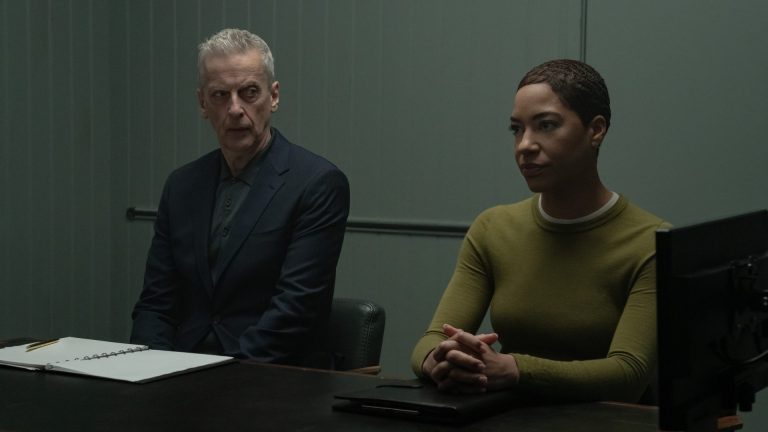
Criminal Record has the makings of a classic
BOOK
Walter Benjamin: The Pearl Diver by Peter E Gordon (Yale University Press)
The first English-language anthology of Walter Benjamin’s work, Illuminations (1968), edited and introduced by his friend Hannah Arendt, is one of the most influential texts in modern cultural writing and critical theory – but was published almost 30 years after his death by suicide in 1940.
Not surprisingly, therefore, much less is generally known about the great German-Jewish intellectual himself, as opposed to his ideas about the mass reproduction of art, the function of criticism, the tension between materialism and theology, and the “ruin” of history. This fine and concise biography by Harvard professor Peter E Gordon is a beautifully written corrective.
Born into affluence in Berlin in 1892, Benjamin hoped for a university position and, as he wrote to his friend Gershom Scholem “to be regarded as the foremost critic of German literature.” A stable academic career eluded him, however, and his adult life was peripatetic and often penurious; he scratched together an income from grants, essays and translations of Proust and Baudelaire.
The only upside of this precarious existence was complete philosophical freedom and Gordon expertly charts his subject’s evolution from Romantic criticism to a deep and experimental fascination with modernity – photography, cinema, urban multiplicity – notably in his great essay The Work of Art in the Age of Mechanical Reproduction (1935) and uncompleted Arcades Project about 19th century Paris, its boutiques, consumer culture and technology. It was his omnivorous appetite for meaning and metaphor that inspired Arendt to call him a “pearl diver.”
As Gordon writes, “Benjamin was better at longing than commitment”, torn between the influence of his Marxist friends, Theodor W Adorno and Bertolt Brecht, and the entreaties of Scholem, who encouraged him to embrace Jewish tradition and – with greater urgency after the Nazis came to power in 1933 – to join him in Jerusalem.
It was after a failed attempt to escape across the Pyrenees that he took a fatal dose of morphine: a prophet of modernity destroyed by savage fascism. As he reflected in Theses on the Philosophy of History (1940): “There is no document of culture which is not at the same time a document of barbarism.”