“Happy families are all alike; every unhappy family is unhappy in its own way,” says Tolstoy in Anna Karenina. The recent Karlovy Vary International Film Festival (KVIFF) was full of works about the latter group, all unhappy in their own unique ways.
If you want an obvious example, take the bluntly and ironically titled A Happy Family, directed by Swiss filmmaker Jan-Eric Mack and co-written with Nikita Afanasjew, Eva Kienholz, and the lead actor Anna Schinz. Here we open in the kitchen as a harassed mother Niki (Schinz) ineptly prepares her two children’s breakfast before sending them off to school.
There’s no milk for the cornflakes – “You prefer them dry!” she offers – and everything feels strained. Which is when the social worker is revealed, sitting quietly in the corner taking notes.
Mack’s film is the anti-Fjord, the Telegraph column-turned-film which triumphed at Cannes earlier this year. Far from the heavy handed Norwegian children services of Christian Mungiu’s movie, here the Swiss authorities skew almost too supportive of Niki, and their aim is to keep her and her children together as she struggles to get out from under debt and keep her two poppets happy and healthy while holding down two jobs and training for another.
She finds support too in the community around her with a helpful male friend who – unusually for this sort of social realistic drama – is without guile. Yet ultimately, Nikki is overwhelmed.
There are some twists I don’t entirely buy, but Schinz’s performance, which won her a deserved best actor award, is determined and cheerful, funny and occasionally unhinged as she ferociously tries to keep then win back her kids.
Sophia Petersen’s transcendent Olivia features a young woman (Agustina Sconochini) who is too old to just be a daughter and yet still lives with her abattoir-worker father in the wilds of an acutely realised and textured Tierra del Fuego. She is childlike, somnambulant and dreamy, spending her days collecting insects and her nights wandering the environs surrounding the fairy-tale wigwam house they live in.
Suggested Reading


This is Christopher Nolan’s world, and we’re lucky to live in it
When her father fails to come home one night, Olivia must venture out into a world of other people in search of him. It’s an elliptical tone poem which mesmerises and occasionally jolts. It refuses to spoonfeed the audience with anything as daytime as what Joyce called “go-ahead-plot”, but for those willing to take its hand, the film will lead to a magical place.
Speaking of jolting, Mads Mengel’s The Guest has jolts aplenty, some of them hilarious, some of them cringing, some of them heartbreaking. It’s a remarkable film which was awarded the special jury prize and best director.
The original Danish title – Gæsten – echoes Thomas Vinterberg’s Dogme-95-inaugurating Festen (1998) and the film is likewise set during a family get together, this time a secular christening for the son of a pleasant couple Karl (Simon Bennebjerg) and Emilie (Mette Klakstein Wiberg) and her pleasant if a bit dull family, whose biggest drama seems to be whether to have salmon appetizers or asparagus or both. Things take a turn for the worse when Karl’s mother Vibeke (a stunning Trine Dyrholm) unexpectedly turns up, invited without Karl’s consent by his sister Rikke (Josephine Park).
Suggested Reading

Olivia Wilde’s The Invite is the year’s best film so far
At first, it feels as if Vibeke is the kind of unconventional mum designed to make adult sons squirm and in the filmic universe she’s the alternative lifestyle, non-conformist sent by the movie gods to liven things up, a Jack Nicholson or Nick Nolte character, take everyone to the casino and get them to finally enjoy themselves. But as the film goes on, we become aware and gradually so do the characters that all is not well in the state of Denmark and the film shifts from comic discomfort to genuine unease.
In the end, the film triumphs in taking its characters – all of its characters – seriously. A tragedy, someone once said, is when everyone is right. This is one of those situations: Karl, Rikke and Vibeke are all right to some extent, but they’re all wrong as well.
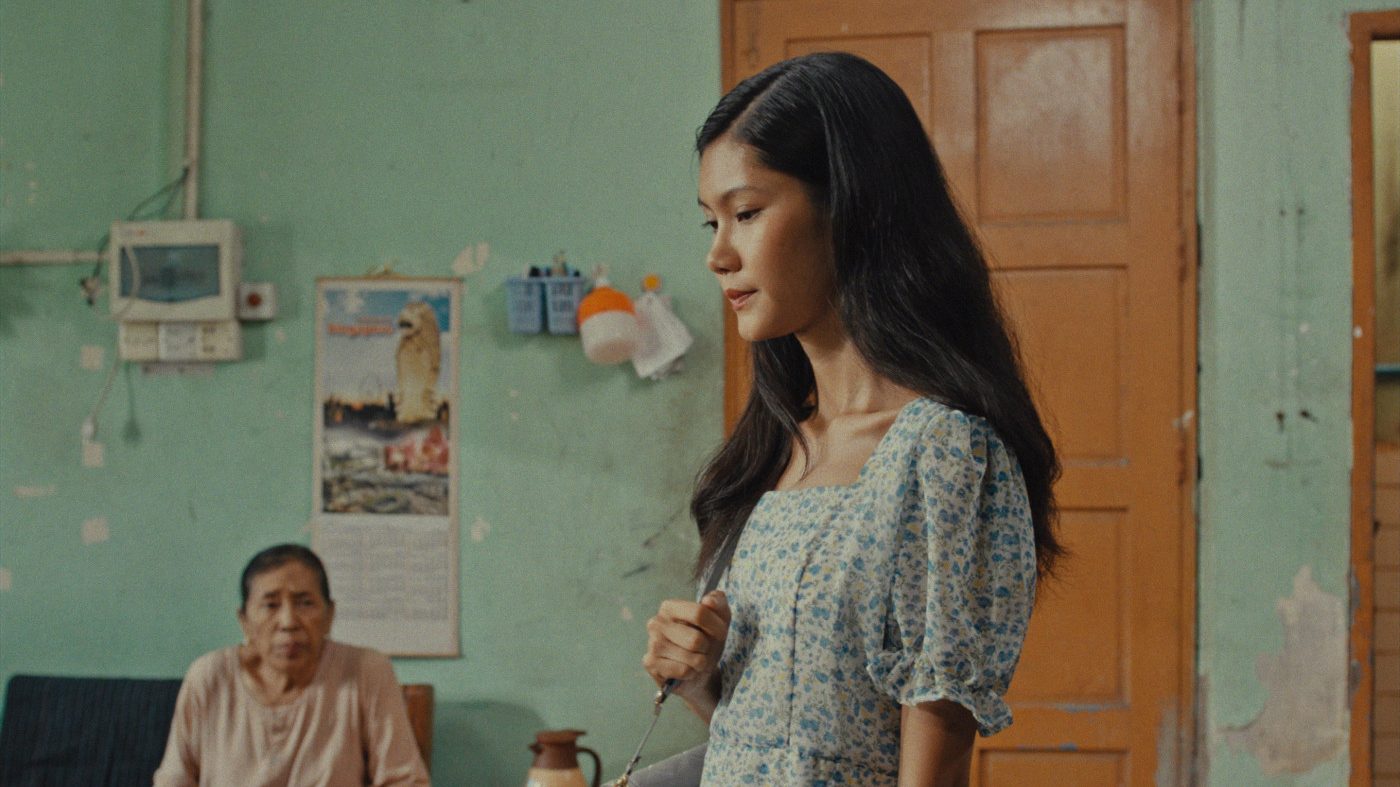
Fruit Gathering took home the top prize – the Crystal Globe – is a tale of love in a time of final-stage capitalism. Here, young textile worker San Kyi (Nandar Myat Aung) befriends Theint (Nandar Myint Lwin) and their friendship grows into something more yearning and, according to Theint, impossible.
Family pressures include an ailing grandmother, a bossy mother and her insistence that Kyi find a husband, all driving Kyi further into a dreamlife where she imagines her idyllic rural homeland in the north of Myanmar, where the harvest of the title seems always imminent but which is in reality a place of violence.
It’s a delicate and deserving film, never entirely settling on what is happening for real and what is only in Kyi’s imagination, but it also proposes hope which lies in a modern future rather than a nostalgic and already impossible past.
 Most popular

The uncomfortable truth about Ariana Grande


Is the future communist?

Keir Starmer’s resignation shows him for what he really is


Face it: Trump’s going mad