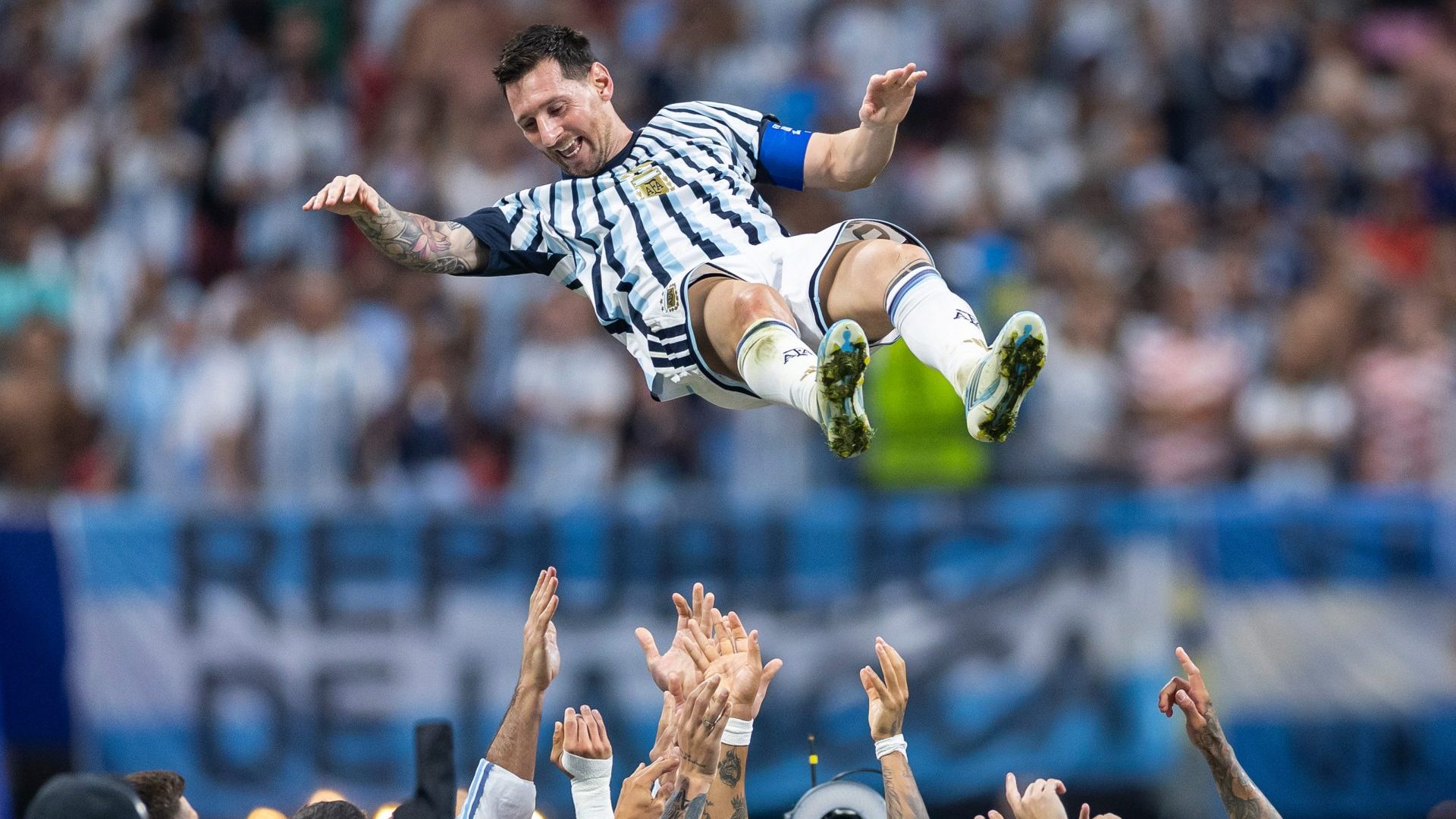
Argentina occupies such a cherished space in my heart, when I discovered they’d play England in the World Cup semis, I felt genuinely conflicted.
Living there changed me in unexpected ways. Many people I meet in the same boat experienced a similar epiphany. They say it didn’t occur in other countries in which they’ve lived. I even own the iconic Messi number ten top. The light blue offsets my eyes.
I will, of course, cheer for England – I don’t fancy being lynched by any jingoistic Reform voters down the pub. In truth, I’ll be secretly happy whoever wins.
Others won’t feel so conflicted – and England will have some supporters who’ve never set foot inside the UK.
That’s because other South American countries have a complex relationship with Argentina. It’s more nuanced than love/hate. It’s envy, rivalry, playful sparring, begrudging admiration and a wry resentment of being looked down upon by a country which has long had one of the world’s worst economies.
Some of it, of course, comes down to football. Argentina is the reigning champion, defending their title, and Messi is their messiah. Brazilians will tell you they’ve won the most ever World Cup titles (five to Argentina’s three); both are the only South American countries in the top five of all time.
It explains why I saw England flag emojis posted by Brazilians on Instagram in that “what’s on your mind” thought bubble.
Others say Argentina plays dirty.
Suggested Reading


My night watching the World Cup’s cruellest fixture
It goes deeper than sports, though. Argentina was once the richest country on earth, and has never forgotten it. You’ll hear the word “arrogant” used to describe them. Some claim they’re snobs and look down on their neighbours in a way that infuses tensions around race and identity.
Buenos Aires gets called the “Paris of South America” due to its elegance in architecture and cultural tastes, from tango and its vibrant theatre district to playing upon the urban legend that it has more bookstores per square metre than any other city. Italians, Spanish, even some Nazis all came to Argentina. As such, they see themselves as having a more European character than their neighbours, because the Europeans chose them. There are undertones of white supremacy to this perceived snootiness that cause understandable resentment.
There’s some schadenfreude to Argentina being the country that repeatedly had everything then squandered it all – money, economic success, natural resources, icons, world cup titles, democracy, the Falklands, cultural relevance, female presidents, left wing governments. All have been and gone in Argentina. Some – democracy, world cup titles – they claw back.
Parallel to their miraculous eleven minute 3-1 comeback against Switzerland, Argentina somehow does it again and again, against all odds, making them resilient and defiantly optimistic. They’ve come back from hyperinflation and a military dictatorship. It never became the powerhouse country people expected, but Argentines sometimes, somehow, pretend it did.
Politics, of course, also comes into it. My Argentinian not-quite-boyfriend disliked Chile. The country quietly provided intelligence and logistical support to Britain during the Falklands war. They’d also previously almost come to conflict over the Beagle Channel, and saw Argentina as the bigger threat. My Chilean Spanish teacher rolled his eyes with a wry smile when he heard my immediately harsh Argentinian accent. It encapsulated the affectionate irony with which the country is widely regarded in its own region – the problematic relative you love deep down.
Suggested Reading

The most unwelcoming, expensive World Cup in history
The not-quite-boyfriend disliked the fact that some Venezuelans in Argentina vocally supported the radical right wing populist Milei, who he despises. It tracks; they’d left Venezuela because they’d been stung by the worst consequences of interventionist socialism; everything Milei stands against.
Just like when American exceptionalism is expressed in 2026, the most logical reaction to Argentinian exceptionalism would be, really?
But it’s that very chutzpah that charmed me. It was fascinating to view this as an outsider: a combination of the very biased rose-tinted spectacles of a privileged gringo and the objectivity of an erstwhile ignorant observer.
When I saw how passionate they are about their country, I saw endearing patriotism instead of jarring nationalism. In truth, it’s both. Not one Argentinian made me feel anything but warmly welcome in their country as a Brit, even though they’re the last country we went to war with.
Like England’s perceived rivalry with France, much of it is neighbours affectionately jousting.
That said, I’ve folded away my Messi number ten top for now. I don’t want all of England and much of South America coming for me this week.
Gary Nunn is a freelance writer who lived in Argentina 2023 – 2025
 Most popular

The extent of Trump’s foreign policy humiliation is now clear

Why the papers say Burnham is stuck in Life On Mars


Ann Widdecombe changed politics – and I should know


France, Germany, Britain: which one’s in the deepest shit?