More than six years after he made it, Boris Johnson’s Greenwich speech, delivered in February 2020, remains the touchstone for Brexit hubris. Amid the splendour of the Painted Hall at the Royal Naval College, surrounded by murals depicting British naval power, Johnson set out his vision for our future outside the European Union.
If Britain would only emulate the success of buccaneering imperialists of the 18th century, he said, it could exploit its newfound freedom of action to restore its geopolitical power and greatness. “We have the opportunity, we have the newly recaptured powers, we know where we want to go, and that is out into the world.”
Britain’s role, he said, would be to fight against mercantilism and for free trade. Like Clark Kent we would emerge from our phone booth as the “supercharged champion of the right of the populations of the earth to buy and sell freely among each other”.
He promised not just a trade treaty with America but to replace the Brexit agreement by a similarly comprehensive treaty with Europe. He genuinely believed it possible that the UK, by quitting Europe, could “tilt” the focus of its trade, defence and cultural engagement from the western hemisphere to Asia.

It was spectacularly deluded. Not only are we now mired in a tariff war with Trump’s America, but we are voluntarily cast adrift from a market of half a billion people on our doorstep. In a new age of Great Power competition, we are bereft of geopolitical power and relevance.
One of the biggest paradoxes of Brexit is that “freedom” from the EU’s Common Foreign and Security Policy (CFSP) has left us with less geopolitical clout than when we were inside it. It was well understood that, under the Trade Co-operation Agreement, we would be “rule takers” on trade. We would also be “rule takers” on jurisprudence via the European Court of Human Rights.
Less well understood is how the consolidation of EU geostrategy without the UK, has left us facing several faits accompli.
The CFSP is, famously, intergovernmental – it is supposed to be set by capitals, not by Brussels. And the UK was probably the most ardent supporter of this framework. It always opposed the concept of European Strategic Autonomy, preferring to see Nato, or bilateral coalitions, as the security vehicle of choice. And it was the standout opponent of European protectionism and state intervention in defence industrial policy. In its response to crises, the UK made sure the EU was aligned to US preferences on, for example, sanctions.
After Brexit the contrast was stark. Both the Covid crisis and the full-scale invasion of Ukraine triggered the EU’s Integrated Political Crisis Response mechanism, untroubled by British obduracy or disinterest.
At the same time, strategic autonomy morphed from a French obsession to a stated policy of the commission, again largely in response to Covid, with the goal of Open Strategic Autonomy (OSA) first embedded in the 2020 trade review, and the goal of “European geo-economic power” entering the lexicon.
Suggested Reading

I didn’t rate Starmer as PM – so why do I feel so sad?
Since then, the EU’s push for strategic autonomy has begun to drive real and significant actions. It passed a regulation enabling third countries to be locked out of EU public procurement markets if they don’t play fair. In December 2023 it created the Anti-Coercion Instrument (ACI), handing the Commission powers to enact tariffs and import controls on hostile states, and moving to qualified majority voting for triggering such actions. It also adopted Europe-wide screening rules on Foreign Direct Investment, and a new, defensive strategy on supply chains.
Underpinning all these measures is a new mindset – not shared by the far right parties challenging the European consensus, nor by all centrist administrations so enthusiastically – that accepts the breakup of the global order into competing blocs, and understands the strategic dilemma: in the new Great Game, Europe is either a player on equal terms to the US, Russia and China, or it will become the chessboard.
Against these massive, concrete developments, Johnson’s time in office was characterised by drift and denial, filled with displacement activities like the “Indo-Pacific Tilt” in defence. He rejected the idea of a foreign and security angle to the Brexit agreement, leaving a void to be filled by ad hoc reactions to crisis. Every move to strengthen the EU’s freedom of action in the emerging global competition was framed as “protectionism”.
Truss’s 49 days in office enhanced the failure of comprehension. And Sunak returned to drift, albeit without Johnson’s delusion that an era of free trade might be opening.
As for Keir Starmer, in his two years in office he has made a lot of emollient noise about resetting the relationship with Europe, but pursued no obvious or enthusiastic path of alignment with the EU’s self-defence and assertion mechanisms.
Nowhere is the price for this drift clearer in the sphere of defence industrial strategy. Labour, from the outset, adopted a dirigiste “build in Britain” approach – partly to offset decades of self-defeating reliance on US technology and kit, and to enhance the domestic growth impacts of the rise in defence spending it would have to sell to the public.
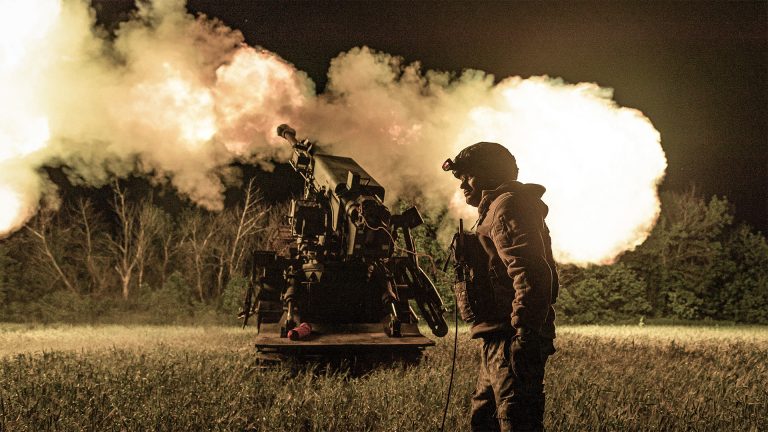

But in the meantime, the EU has developed two massive and highly impactful instruments: the European Defence Industrial Strategy (EDIS) and the SAFE mechanism – a €150bn central fund which lends to national defence ministries to pay for rapid rearmament. A sense of the impact can be gained from the fact that, while the British Cabinet split over the difference between £13.5bn and £15bn extra for defence over four years, SAFE handed €15bn to Romania in a single swoop.
The EU’s defence strategy is designed to remedy severe dysfunctions: massive reliance on the US, massive duplication of effort, and poor cross-border collaboration and investment. Armed forces within the EU, for example, currently field 17 types of main battle tank, 29 types of frigate and 20 types of combat aircraft
Given the penchant of European capitals for “picking winners” among national defence champions, there were low expectations for this defence industrial strategy. But the injection of the SAFE money has handed the Commission the power to shape national defence investment plans.
Anecdotally, around half of all such plans submitted to Brussels by nations seeking defence loans were refused, and forced into revisions that made them collaborate cross border and converge on generic items of kit.
The UK, however remains locked out of SAFE, and in danger of seeing its national defence industrial strategy eclipsed and shaped by that of the EU.
The bottom line is that as the EU flexes its muscles, producing a confident cadre of politicians and officials on the global stage, the UK is in its shadow – its strategic reliance on the US turned into a weakness, not a strength.
A strategy to turn that around via ad hoc defence partnerships with individual states, coalitions of the willing, and a perpetual balancing act between Brussels and Washington is better than no strategy at all, but the best solution is for the UK to state and understand that its future in a four- or five-power competition between economic blocs is firmly inside the one closest to us – both geographically and in terms of values.
 Most popular

My day out with Danny Tommo

I was at Eton with Charles Spencer – this is how it explains his battle with the royals

Emily Maitlis’s diary: Trump doesn’t fear the AI apocalypse – but he’s terrified about the midterms

Memo to Burnham: this is how you beat the populists