Every writer has a tell. Some kind of turn of phrase or rhetorical concept they lean on, maybe even unconsciously sometimes. Mine is “this is a story about stories.”
It’s found its way into multiple of my investigative podcasts – from my investigation into Qanon back in 2021 through Havana Syndrome and into my most recent show about a Russian influence operation called Tenet.
I say this not as an opportunity to plug my work as a maker of longform documentary-style shows – well, not just for that – but to establish my mindset when I got to the Angelika Village East cinema in downtown New York to watch You Can See Everything, comedian Nathan Fielder’s three-hour documentary epic about Theranos founder Elizabeth Holmes.
You’ve most likely already heard of this film, even though it isn’t scheduled for release in the UK until November 20 almost a month after it hit theatres in the US. It’s everywhere on social media already, and is surrounded by intense hype.
Its first London screenings sold out as soon as they were released; the creative director of Picturehouse Cinemas described the hunger for tickets to the Guardian as “bonkers.” The UK cinema chain Everyman posted on Instagram, “Experiencing insane levels of Lance Oppenheim and Nathan Fielder fomo on this side of the pond? Same.” That quote made its way into a British GQ article headlined “Release delays are killing movie culture in the UK”.
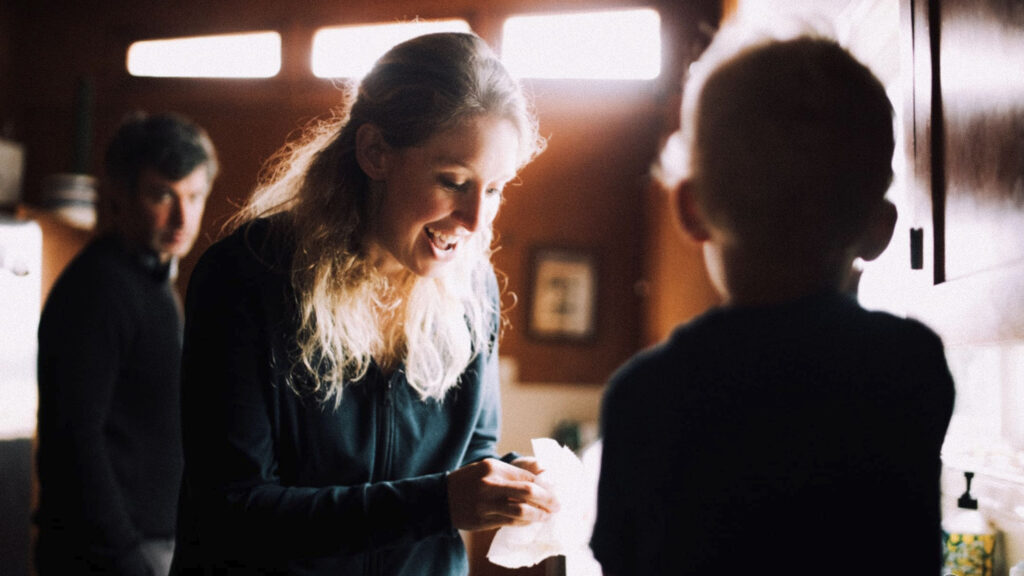
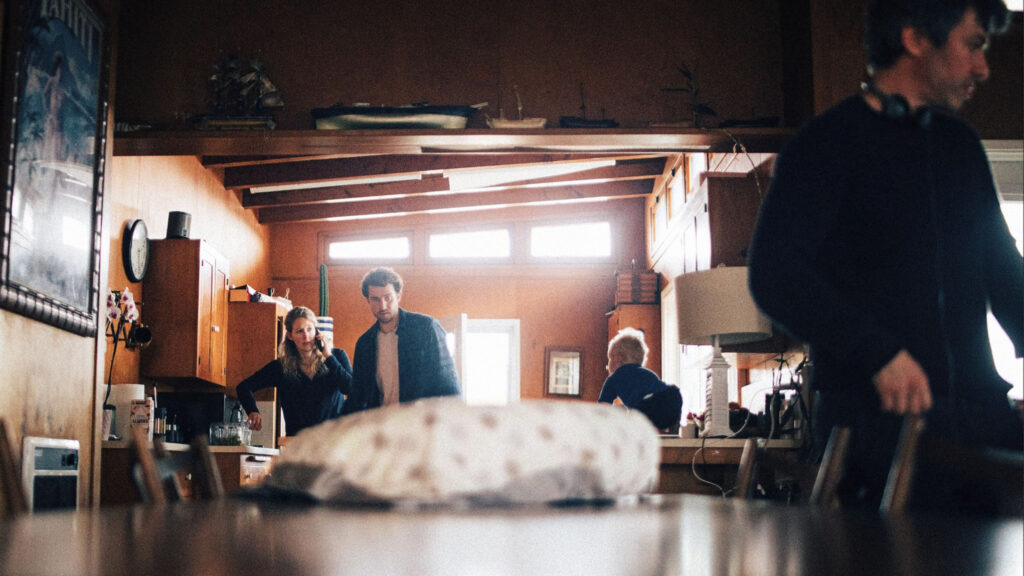
Finding a showing in New York that wasn’t already sold out was hard; my friend and I nabbed almost the last two tickets going. It’s not hard to see why: Fielder and co-director Lance Oppenheim obtained an almost unheard-of level of access to Holmes and her husband Billy Evans, to the point of literally moving into their house for several weeks in 2023 as Holmes prepares to begin her 11-year prison sentence for fraud.
This isn’t a review as such, so I won’t spoil. But let’s get one thing out of the way: the movie is a pretty wild ride.
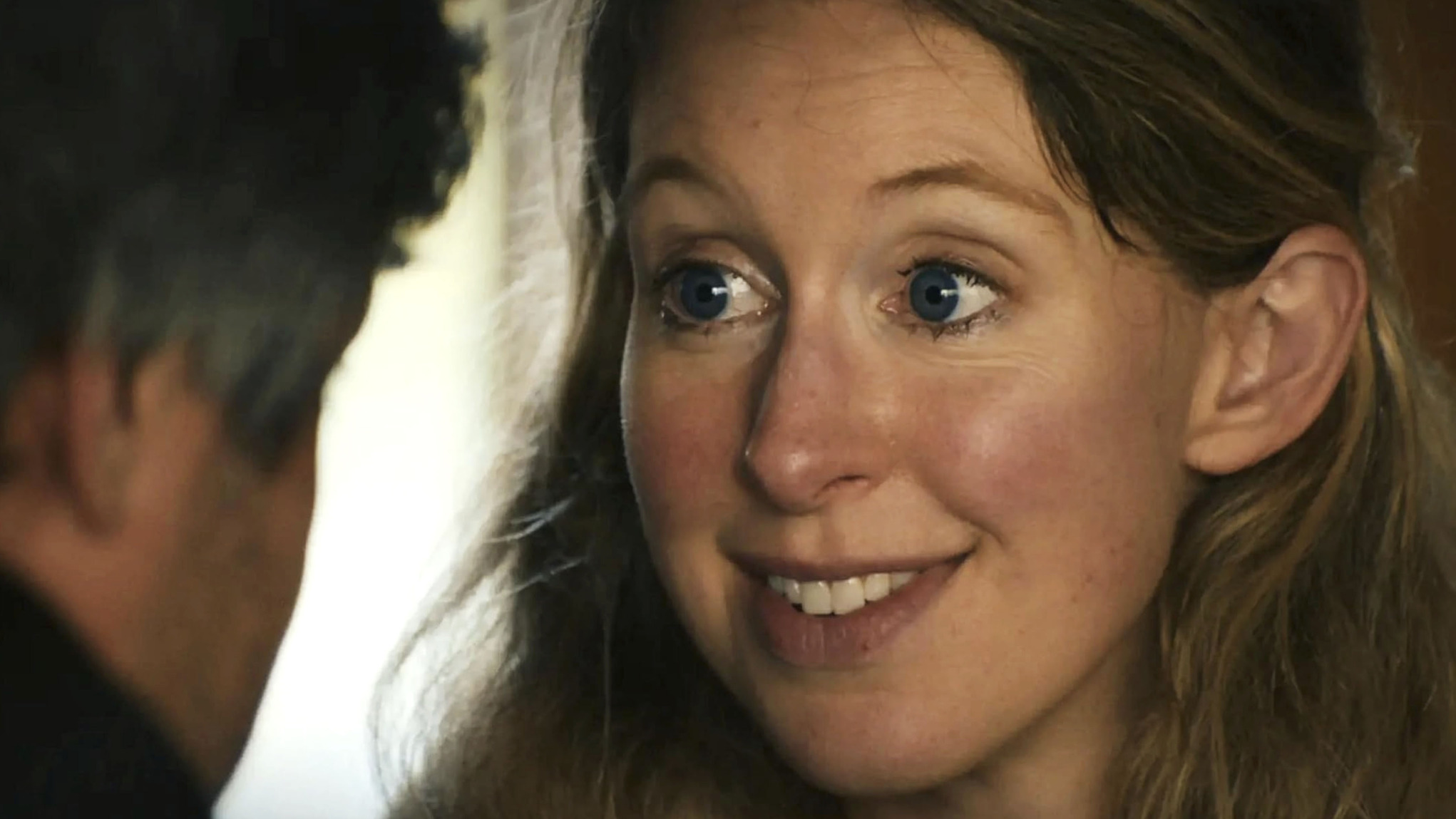
Her meteoric rise and dramatic downfall made Holmes a figure of huge public fascination at the time. A striking blonde with massive, unsettlingly alien blue eyes, she was widely lauded as the female Steve Jobs – an image she worked to cultivate, directly aping the Apple founder’s black turtleneck look.
She became the youngest female billionaire on paper in America in 2015 when her biotech startup, Theranos, was valued at $9bn (£6.8bn) after raising $400 million (£301m )in funding with a who’s-who of backers like Rupert Murdoch, former secretary of defense James Mattis and Henry Kissinger, all taken in by the narrative and persona she cultivated.
Holmes, who dropped out of Stanford to found the company in 2003, claimed to have developed a revolutionary technology – a machine that could run medical tests in seconds using a pinprick’s worth of blood rather than the more substantial amount required for medical assays. Such a machine would indeed have been revolutionary if it had worked. But, of course, it didn’t.
After a bombshell investigation by Wall Street Journal reporter John Carreyrou revealed the company to be based, essentially, on bullshit, everything came crashing down. Holmes was eventually convicted on charges of defrauding investors.
For the seven-year course of her fall and trial, she avoided any kind of public statement or appearance, shunned the media, and stayed out of sight, which is why her participation in the film – which she describes early in the film as “radical transparency” – and with Nathan Fielder no less, made the trailer go enormously viral when it dropped a few months ago.
Fielder was previously best-known for comedy quasi-reality TV like Nathan For You and The Rehearsal, in which he goes to great lengths, building extraordinarily detailed sets and using actors and various other devices to trick a sometimes-unaware subject in various ways.
They’re sort of prank shows, albeit with pretentious high-mindedness and a veneer of “helping” people. The meta-bit is the extreme lengths Fielder and his team go: in one episode they built a near-perfect reproduction of a real bar in Brooklyn and hold a fake trivia night, nominally in order to help someone overcome their social fears. For another episode, Fielder spent years training to get a real commercial pilot’s license.
Personally, I’ve never quite gelled with them: they often strike me as a little mean-spirited, and Fielder’s ultra-deadpan schtick rubs me up the wrong way a bit. I got weird vibes from him – which is the point, I guess – but I’m clearly in the minority because the shows are immensely popular.
The fact that not only is Fielder not a journalist but that his previous work is already all about blurring the lines between reality and artifice, means the film has been controversial. Some have said that giving Holmes the oxygen of publicity all over again plays into her hands.
Indeed, it was Holmes who approached the production company – in order to rehabilitate her image and, critics have said, she has succeeded. Some think the movie shouldn’t have been made at all.
“He’s given Liz Holmes a second act, whatever his intent was,” an investigative journalist friend said. “Look at the discourse. By their fruits ye shall know them.
“It has worked exactly as Holmes wanted it to work… It’s turned her into interesting discourse fodder in a movie that I do know excludes all of her actual wrongdoing because lots of people closely involved who have seen it have said so.”
Tyler Schultz, a Theranos employee who blew the whistle on the company’s fraud – and who was disowned by his grandfather, former US secretary of state George Schultz, another in the long list of eminent Theranos investors who fell under Holmes’s spell, for doing so – agrees. He wrote after the film’s release that “either Fielder was misled, or Fielder chose to allow Elizabeth to mislead the audience.”
Carreyrou, the reporter who broke the story, also wrote in a review that the film was Holmes’s “chance to take control of the narrative and counter the unflattering story told in Bad Blood,” the book Carreyrou wrote based on his experience reporting out the Theranos scandal.
“A few readers have taken me to task for ‘missing the point of the film,’ which is apparently that Elizabeth Holmes is unknowable and everything is ambiguous,” he posted later on Twitter. “Here’s my response: She went after Tyler Shultz and [another of Carreyrou’s sources] Erika Cheung with everything she had. I was threatened with litigation on a daily basis for months on end. It was a ruthless cover-up of a breathtaking fraud, and she was at the controls.”
Carreyrou is nonetheless a fan. “By the way, I loved the film. #BestPicture, IMO,” he added.
You Can See Everything has arrived at a moment when lies from tech oligarchs are forefront in the public consciousness. It wasn’t just that Holmes defrauded investors like Kissinger et al – I’m not gonna cry over that – but that Theranos put real patients at risk, rolling out its device for medical use under claims they, and Holmes, knew to be false.
Suggested Listening
You Can Touch Every Grass
Yet it is also far from the only company to have juiced its capabilities to open the private equity investment spigot. “The biotech industry has evolved such that hype-driven valuation is the central mechanism of raising capital,” my friend who I saw the movie with, who is a bioscience researcher, said afterwards. “The rule, not the exception.”
And it’s not just biotech, obviously. Just last week, Tesla just debuted what purports to be a flying car, to widespread rave reviews, despite it actually bearing little more relation to something that could be described in any meaningful sense as an actual car than Theranos’s device did to a real medical tool. I was also reminded of when I covered one of the earliest instances, back in 2016, of Elon Musk’s fake promise of “autopilot” on Teslas literally killing people.
Just this week, the New York Times broke a heartbreaking story about a software engineer called Bowen Wan who died after ChatGPT encouraged her to stop taking her epilepsy medication – a story which hit close to home for me; I too am epileptic, and am on the same meds Wan had been.
All that doesn’t change Holmes’ culpability, but that’s not what the film is about, or why it’s become such a massive shared cultural moment. What Carreyrou described in his post as her unknowability and ambiguity – and the act of trying to figure someone out as a person – is much more the film’s premise than holding her to journalistic account, but it’s no less worth seeing for that. It’s not trying to re-litigate the Theranos case.
And even though Holmes still claims, in the film – and in the trailer, which is all people in the UK have so far seen – to have done nothing wrong, Fielder and Oppenheim don’t give that much shrift.
Ultimately, it’s a film about the relationship between documentarian and subject. It doesn’t shy away from the fact that Fielder develops a closeness with his subject that affects his objectivity; in fact, the blurring of that line becomes the movie’s key theme.
It is, with apologies, a story about stories. I like those – that’s why I keep making them – and this is just a really good one. Sorry
 Most popular

Liz Truss’s new mini-book is every bit as bad as her mini-budget

His dad tried to overthrow Putin – now Pavel Prigozhin runs an African country
I was at Eton with Charles Spencer – this is how it explains his battle with the royals


Forget the Terminator – the age of AI weaponry is already here