PICK OF THE WEEK
You Can See Everything (general release)
At the risk of sounding pretentious – a pretty big risk, actually – this astonishing film reminded me of a meeting with Jacques Derrida in Cambridge in 1992 when I was writing for The Times. I asked the great French philosopher, who, after much controversy, was receiving an honorary degree, what he meant by “deconstruction”.
He sighed, just a little, as Jack Kerouac used to when pressed to explain what “Beat” meant. The point, he explained, was to ask whether or not texts were sources of stable truth; to look beyond authorial intent; to focus instead upon the hierarchies that discourse takes for granted and the narratives it favours.
I did warn you.
But really: You Can See Everything, a three-hour documentary directed by Nathan Fielder and Lance Oppenheim, is the howl of a culture that has absorbed every obscure work of postmodern theory, yielded to its pathological ironies and now wants to turn them into art.
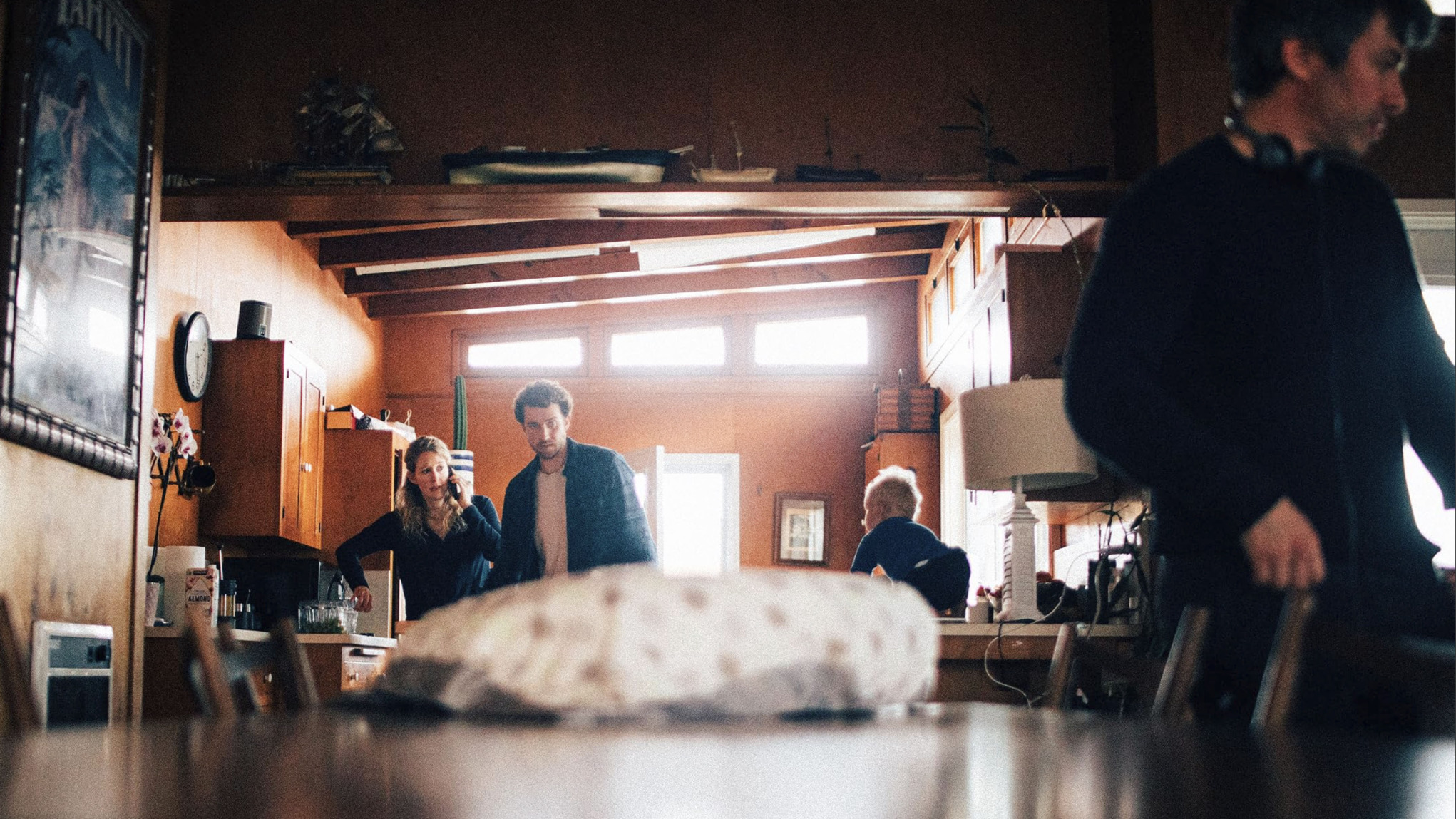
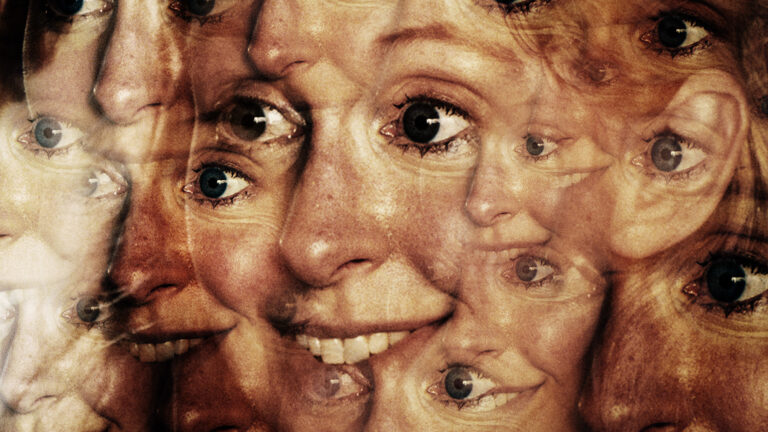
In 2023, Elizabeth Holmes, the convicted founder of the Silicon Valley startup Theranos, and her partner Billy Evans invited the filmmakers into their beachfront home in Del Mar, California, to document the 34 days left until she was due to go to prison.
Fielder, the Canadian situationist genius responsible for Nathan for You and The Rehearsal, also appears in front of the camera: his deadpan delivery, baffled stare and social awkwardness often reminiscent of a lost child. At other moments, as he looms over the couple, he channels the menace of the voyeur.
“It starts with who I am and what my intent was and still is,” Holmes tells him as he presses her on her failed health tech business and her fraudulent claim to have replaced traditional phlebotomy with a tiny blood vial (the “nanotainer”) that could screen patients for a whole spectrum of diseases.
“All I know is my truth,” she tells him, eyes wide and winsome. “Are you being real right now?” Fielder asks. “I’m always being real,” she replies.
Evans, scion of a hotel dynasty, is a controlling, increasingly devious presence, cutting interviews short, pressing Holmes to “fucking stand up for yourself”, and berating the film crew for supposedly overloading the home wi-fi. His defence of the mother of his two young children is that “she’s really weird, she’s not normal.”
Halfway through, after she reports to Bryan federal prison camp in Texas, the movie shifts gear dramatically with the introduction of Amanda Seyfried, who won an Emmy for her performance as Holmes in The Dropout (2022). In scenes of dizzying meta weirdness, she reenacts conversations that Holmes has had with Fielder.
As herself, she clashes with Evans, an ardent admirer of Charlie Kirk, and tells Fielder afterwards that he is “batshit fucking crazy”. He seems to have unilateral control over Holmes’s social media channels and – strangest of all – has uploaded a full-body and facial scan so that he can recreate her AI image at whim.
The movie, already a box office smash and tipped for Oscar glory, will elevate Fielder from a cult sensation to the top tier of the film world’s avant-garde. As for Holmes, she has reopened an old case – retold in podcasts, books, television shows and Alex Gibney’s more conventional documentary The Inventor (2019) – and reframed it spectacularly.
The focus is no longer the quest for justice, the arrogance of the entitled liar and the price paid by the ordinary patients who were so deplorably misled. She seeks to rebrand herself from soulless tech villain to icon of cultural fascination: from the tawdry image of the defendant on the stand to the Delphic smile of the digital Mona Lisa. The product she wants to relaunch is herself.
Worst of all, perhaps, we the audience become complicit in the great game. Because if there is no such thing as truth, if the defining feature of our Instagram world is what the late literary theorist Fredric Jameson called the “new depthlessness”, if everything is kayfabe and competing narratives, then it is all just a game. And, it must be said, an absolutely riveting one.
You Can See Everything may yet prove to be the white flag of a civilisation that once believed quite otherwise. It is certainly a milestone in modern cinema.
Suggested Reading
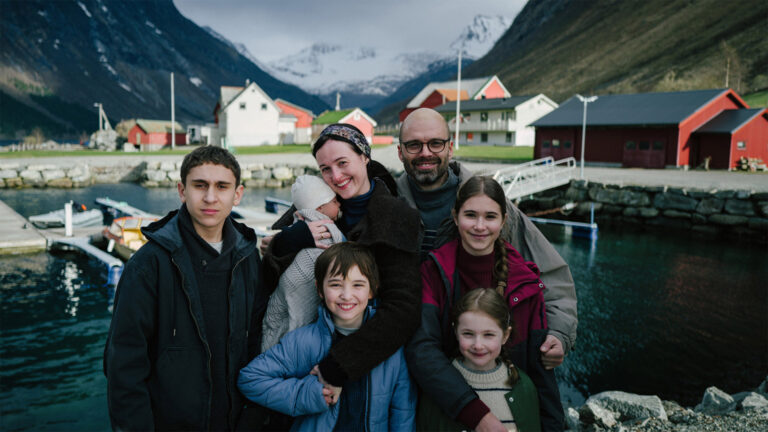

The inquisition comes to Norway in Cristian Mungiu’s superb Fjord
THEATRE
Lear (The Yard Theatre, until January 2)
Before this remarkable adaptation by Simon Stephens and Jay Miller, staged to mark the reopening of the 220-seat venue in east London, Ian McKellen had performed in King Lear 708 times.
I saw two of those performances: in Trevor Nunn’s Royal Shakespeare Company production, transferred to the West End in 2008, in which McKellen famously appeared fully naked as the deranged king; and ten years later, directed this time by Jonathan Munby, fully clothed but no less formidable.
This is something very different: a pared-down reading of the play that Keats called “the fierce dispute,/ Betwixt damnation and impassion’d clay” in which McKellen’s own reflections upon his eight decades as an actor, upon mortality and upon the purpose of theatre are interwoven with Lear’s rage, despair and longing for redemption.
It also marks the 87-year-old actor’s first major theatrical role since June 2024, when he fell from the stage while playing Falstaff in Robert Icke’s Player Kings. The experience, he muses in phone recordings whose transcriptions are projected on to the auditorium wall, has made him think more often about human frailty as, in Lear’s words, we “crawl toward death.”
Clocking in under 80 minutes, this is mostly a one-man show, in which Lear himself recalls, with appropriate scorn, the words of Goneril and Regan, and addresses a teddy bear standing in for the Fool. Yet, in a moment of true theatrical grace, Taylor Russell as Cordelia joins him late in proceedings for the reunion that is the play’s tragic emotional heart.
On opening night, which I was lucky enough to attend, McKellen was clearly revelling in the intimacy of the venue and the experimental spirit of the venture, up to and including moments of audience participation. A tender tour de force.
STREAMING
The Altruists (Netflix)
Three years after Michael Lewis’s readable but credulous Going Infinite, Graham Moore – who won the best adapted screenplay Oscar for The Imitation Game (2014) – takes a more successful and intriguing swing at the morality tale of Sam Bankman-Fried, now serving 25 years for wire fraud and conspiracy, and the collapse of his $32 billion crypto empire.
Sharing show-runner’s duties with Jacqueline Hoyt, Moore frames the eight-episode drama as a folie à deux, in which Bankman-Fried (Anthony Boyle) and his on-off girlfriend and business partner Caroline Ellison (Julia Garner, Emmy-worthy) are the emotionally dysfunctional Bonnie and Clyde of unaccountable tech; a nerdish Tom and Daisy, “careless people” who pursue staggering wealth, present themselves as noble philanthropists but pay no heed whatsoever to the human wreckage in their wake.
From their first meeting in 2015 at the proprietary trading firm Jane Street Capital in New York City, Bankman-Fried and Ellison – both prodigies educated at MIT and Stanford respectively, both the children of academics – are attracted to one another by their shared social unease, unfettered ambition and certainty that they are special and different (check out the needle-drop of The Jesus and Mary Chain’s Just Like Honey).
“All in,” he says, “every time” – as if the world they intend to conquer were a casino table, and the colossal trades they make just piles of chips moved across the digital baize.
Jumping between timelines and locations (principally Hong Kong in 2018 and the Bahamas in 2022), The Altruists tracks the foundation of Alameda Research, a crypto hedge fund with which Bankman-Fried and Ellison hope to fund good causes according to the tenets of “effective altruism”; a school of utilitarian philosophy that, to this day, remains hugely influential in Silicon Valley; and then FTX, a shiny new crypto exchange.
The relationship between the two financial entities is as fraught, unregulated and morally compromised as their own emotionally stunted connection. Long after they have embezzled $8 billion of FTX customer money to prop up Alameda, even as the tech temple they have constructed crashes around them, they continue to rationalise this insanely reckless ploy. “It’s not like it’s stolen,” says Ellison, “it’s just, um, borrowed, indefinitely.”
Alex Lawther is, as always, excellent as Sam Trabucco, Bankman-Fried’s best friend at MIT and co-CEO of Alameda alongside Ellison. Where there should be fiduciary oversight there is a gang of startlingly immature tech geeks, wielding immense power with little grip on reality and less on the global consequences of what they are doing.
When chief technology officer Gary Wang (Eugene Young) – “we’ve been boys since math camp” – is told the scale of the felonies they have been hiding, he is furious only because he has been excluded from the criminal caper.
In a stand-out scene, the team spends an evening at an old-school arcade (“They’ve got Donkey Kong!”), where Bankman-Fried tells chief operating officer Constance Wang (Madison Hu) that “FTX is our game, right?” – and, as such, should have its own “Konami Code” (a gamers’ cheat from the 1980s).
Everything is reducible to an algorithm, to a social media post, to a trade in status, sex or wealth: the shimmering torrent of numbers down huge screens hides any real sense of value. The walls of greed camouflaged as virtue come tumbling down, leaving only a ruined playground of the unloved.
Suggested Reading
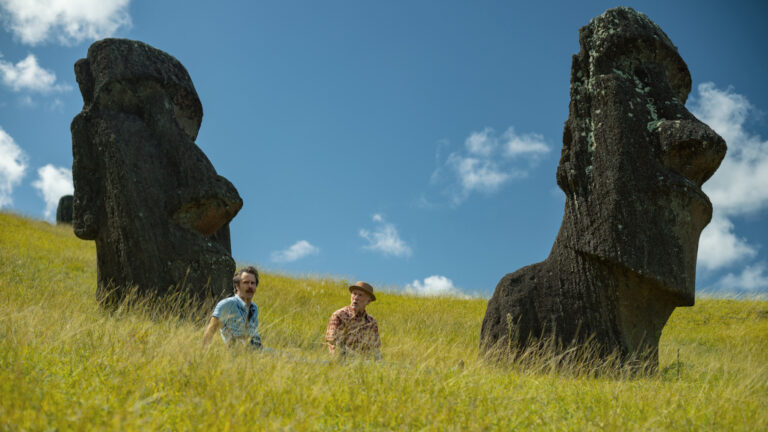
Wild Horse Nine is a darkly funny buddy movie with a body count
EXHIBITION
Van Eyck: The Portraits (National Gallery, until April 11)
In his classic work of cultural history, The Waning of the Middle Ages (1919), Johan Huizinga wrote of Jan van Eyck’s Arnolfini Portrait (1434): “The sound of his voice still seems to linger in the silence of this room. All that tenderness and profound peace, which only Rembrandt was to recapture, emanate from this picture. That serene twilight hour of an age…suddenly reveals itself here.”
It does indeed. A jewel of the National’s collection since 1842, the painting is joined in this extraordinary exhibition by the other nine portraits that have been confidently attributed to the early Netherlandish master: in a dazzling coup for co-curators Emma Capron and Nicholas Flory, the first time that they have all appeared together.
Born around 1385-90 – some 40 years after the Black Death – van Eyck died in 1441, 11 years before the birth of Leonardo da Vinci and 14 before Gutenberg’s Bible. In their naturalism and exquisite detail, his portraits are a portal into the half-century during which the later medieval era flowed into the Renaissance.
Witness the stubble and pursed lips of the man crowned by a flamboyant scarlet chaperon (perhaps van Eyck himself) in Portrait of a Man (1433); the forbidding image, painted around 1435-40, of Baudouin de Lannoy, Lord of Molembaix, wearing the collar of Philip the Good’s chivalric Order of the Golden Fleece; the separate painting (about 1435-8) of the man in the Arnolfini Portrait, his face relaxing into the suggestion of a smile; and the 1439 oil on wood of the artist’s wife, Margaret van Eyck, the earliest dated European portrait of a named woman who was not royal or an aristocrat.
The forensic precision is lightning captured in a bottle and cast into the sea of time. In the many inscriptions, word-games and signatures on his frames, van Eyck sends messages and witticisms down the centuries – of which the most mischievously faux-humble is his motto, Als Ich Kan (“as well as I can”).
Humanity is rarely rendered with such breathtaking accuracy. Not to be missed.
BOOK NOW
Un ballo in maschera (Royal Opera House, November 30-December 18)
Pavarotti once said that if he had “to sing one character for the rest of my days, it would be Riccardo from Un Ballo in Maschera”. Inspired by the fate of King Gustav III of Sweden, Verdi’s 23rd opera, which received its premiere in Rome in 1859, was performed – and still is, in many productions – in disguised form as the story of Riccardo, governor of Boston.
But in Philipp Stölzl’s directorial debut at Covent Garden, the action takes place in Sweden, in a surreal, dream-like version befitting a man who has made pop videos for Madonna, Mick Jagger and Anastacia. The casting of acclaimed American tenor Charles Castronovo, who has played the role of Gustavo/Riccardo at the Met, in Berlin, Munich and Zurich is a real draw, as is the prospect of Swedish soprano Malin Byström as Amelia, with whom the king is in love. The bad news is that she’s married to his best friend Count Anckarstroem (Russian baritone Aleksei Isaev).
In the pit is Jakub Hrůša, now well-established as the ROH’s music director after successful productions of Peter Grimes and Parsifal. Though Un ballo gets fewer outings than La traviata or Rigoletto, plenty of hardcore Verdians consider it the Swan of Busseto’s finest work. A perfect pre-Christmas treat for opera lovers – or (more to the point) those who want to give it a try.
 Most popular
I read David Walliams’s autobiography – and one revelation in it could spell trouble

The Join campaign starts here. And it’s all about the future
You Can See Everything is the most elaborate con since Elizabeth Holmes herself

Burnham’s new EU deal has left Farage trapped and humiliated