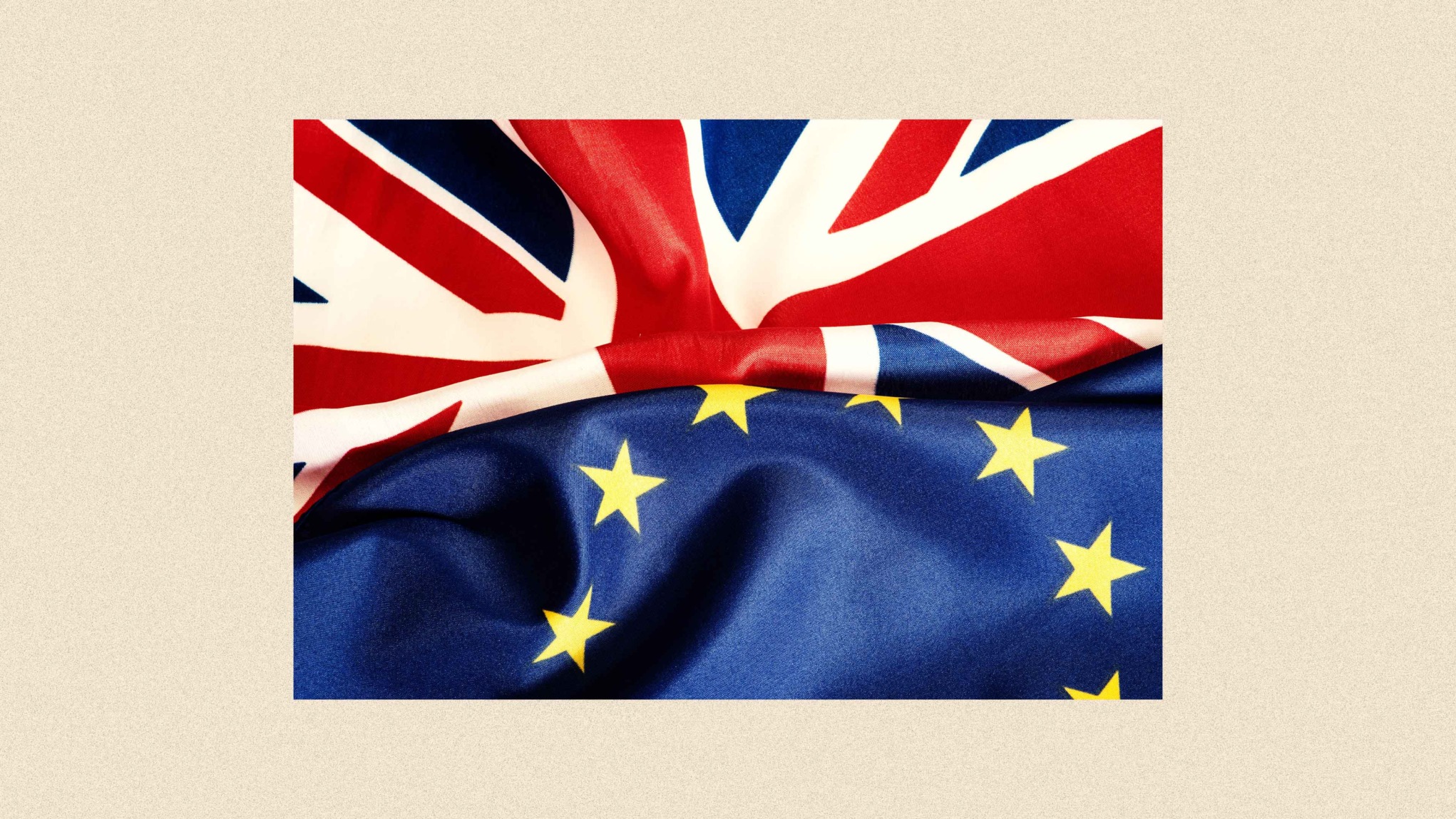
As Andy Burnham packs his blue passport for the EU-UK summit and tells the nation it has “lost more than it gained” from Brexit, some might say it’s a welcome, if long overdue, statement of the bleeding obvious.
And when he compares Brexit to the Emperor’s new clothes, where “no one is prepared to say the obvious truth”, all I can honestly say to my fellow Liverpudlian is: yer wha? Here at TNW, we’ve been pointing out the naked embarrassment of Brexit for a fair bit, mate.
It’s reasonable politics for Burnham to make his argument where he has; unfolding the receipts from 2016 and comparing promises to delivery. Our new prime minister has to establish a narrative for his departure from the inane “I will make Brexit work” chorus of each of his predecessors since the vote.
Burnham has been brave. He’s presented an array of options on Europe. He’s talked, daringly, about freedom of movement. He’s even said out loud that full membership of the EU is a possibility. These are dizzying times for those of us who have campaigned hard and long for such an opening.
But as an argument for what should come next – that the United Kingdom must seek to join the European Union at the earliest possible opportunity, starting with a commitment on the ballot paper at the next election – he must quickly stop looking backwards and face forward.
So where should he begin? What is it Burnham really wants to get out of the Brussels summit? And what should we want for ourselves, citizens of these islands in the first years of the second quarter of the 21st century?
The answer cannot, categorically, be “to join the European Union”. That is a means, not an end. What, then, are the ends?
First might be to reverse the prospect that the next generation of Britons will grow up poorer than their parents, and to generate the economic growth necessary to provide social care for our ageing population.
Second might be our ability to defend ourselves against Russia, the aggressor that is, as we speak, prosecuting an illegal war on our own continent, at a time when the fabric of Nato has never been more challenged – and challenged by America, the very country we used to depend on as protector.
Third: ensuring that the UK maintains international relevance and influence in a world experiencing profound geopolitical change and existential challenges in the shape of the climate crisis and AI.
These are the big picture attainments Burnham must have in mind when he speaks of his 10-year plan. It just so happens that the prospects for every one of them are advanced by EU membership.
Suggested Reading
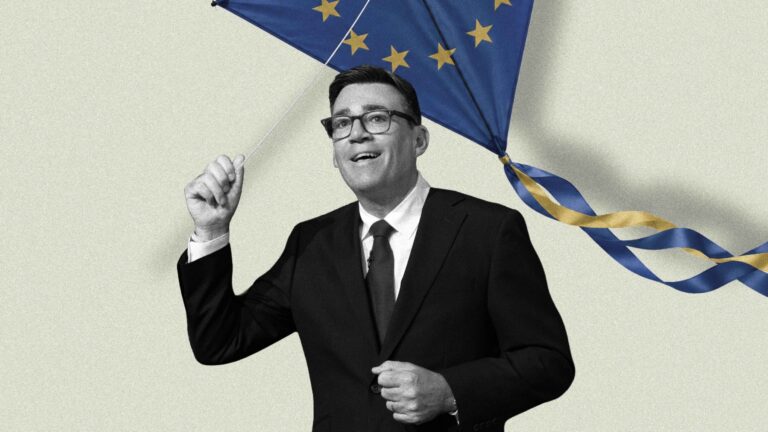
Andy Burnham thinks he has found Britain’s Brexit escape route
The single market is the biggest economic growth lever any government could pull. But growth alone is not the prize.
With America no longer a reliable protector, Europe’s defence is increasingly being organised, and paid for, through the EU. And in a world of rival blocs, lying on the fringes of a continent as an increasingly isolated and detached medium-sized power, albeit one with some extraordinary qualities and advantages, makes us vulnerable.
So when we campaign to join the European Union, it must be argued not as a goal in itself, but as the enabler, the unlocker, of these higher goals. Not the halfway house of the single market, or the customs union – which could bring some of the growth but none of the say – but full membership, with a seat at the table and a vote.
Helpfully, if their recent flurry of admonitions and warnings is anything to go by, our opponents – in the shape of Michael Gove, Nigel Farage and, most recently, Boris Johnson – are determinedly stuck in 2016 campaign mode. To borrow James Carville’s memorable phrase, they all absolutely reek of yesterday.
And then there’s David Cameron, who now thinks the idea of joining is far too hard and not worth the trouble. It’s seriously disappointing. One thing I thought we could depend on from the sons of Eton was at least an overbearing sense of national ambition.
What kind of nation recoils from the prospect of a greater future because it is difficult? The kind of nation that deserves its place among the also-rans.
As for the campaign lining up against us, I have to say, if I’d been gifted the opportunity to hand-pick the slogan our opponents would be forced to deploy, then Stay Out would top the list. Nakedly hostile, angry, regressive. None of the hypnotic cleverness of Take Back Control. It’s perfect.
Let them refight 2016. We will focus on the possibilities of the next 10 years.
The prize is a nation enjoying growth, more secure in itself and in its ability to defend itself from its enemies. A country that feels like it’s on the up again. A nation with the influence to bend the future towards its values, not one stuck on a trajectory of decreasing relevance in global affairs. Not one that has the values of others – be they old friends or foes – imposed upon it.
As regular readers will know, everyone here at The New World is under strict contractual obligation to use the word Join, not Rejoin. That’s no more than the legal truth: Article 49 makes no provision for an exited member to pick up where it left off, but requires it to go through the accession process afresh.
But the semantics are important too. It’s a question of perspective. Not looking backwards to rejoining the EU we left, but looking forward to joining one that is itself being remade by the world of 2026.
Last month, at our Cadogan Hall event celebrating the launch of Alastair Campbell’s book Persevilience (and boy oh boy are we going to need some persevilience in the coming years), I got the chance to chat with a number of our subscribers.
Uniformly, they expressed a sense that the national mood had changed. The phrase I heard over and over was “the tide has turned”.
They weren’t talking about the shift in the polls against Brexit itself. They were talking about something more recent: a swelling sense of the possibilities ahead, and the fact that people felt positive again about the prospect of joining the European Union – and sooner than any of us had imagined possible.
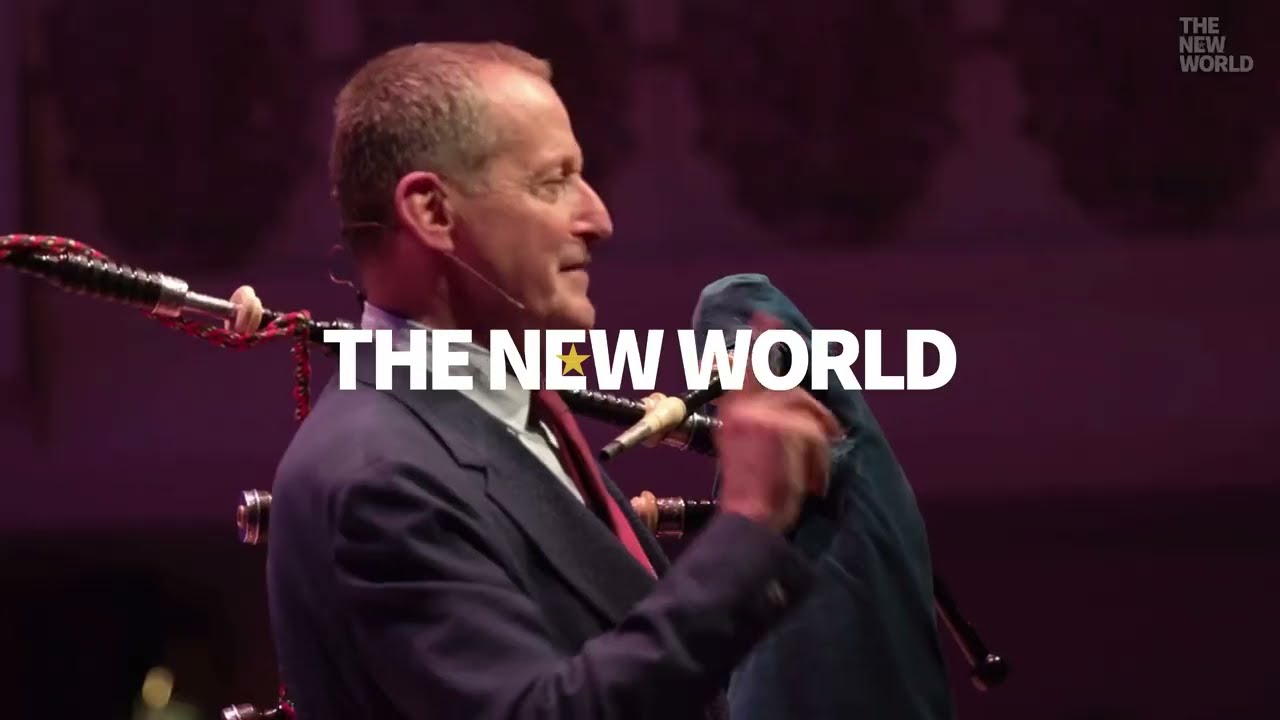
Now, I’m guessing the occupants of Cadogan Hall that evening were heavily European Union-inclined. It would take a special kind of masochistic Brexit fan to pay £35 to sit through a solid hour and a half of Alastair, closing with Ode to Joy on the bagpipes.
All the same, the phrase resonated with me.
And it isn’t only Cadogan Hall: YouGov’s latest tracker has 55% of Britons supporting the principle of joining, with 34% against.
But I’d caution this: turning is what tides do. They ebb and they flow. YouGov has also found that support falls to 35% if we had to join without our old opt-outs. We know the playbook with which the right wing press will fight against this, we know how Farage et al will dissemble (he’s already got a new slogan for the bus, this time with £750m a week on the side), and we can’t depend on our opponents to stay so Stay-Out hapless for long.
So rather than assume the tide of sentiment will carry us home, we need to build concrete structures; pillars of evidence, bridges of argument, making the case to join the EU not as a matter of principle but as a pragmatic solution to deliver the things that really matter.
Let Gove, Farage and company be the dogmatists going on about sovereignty. The difference this time is that we all now have 10 years of solid evidence of how much that dogma delivered.
For our part, I hope this magazine has, in its small way, helped get us to this point. It hasn’t always been this fashionable to note what a disaster Brexit was, and to give a platform to the voices willing to argue that.
The next phase of campaigning, though, requires renewed energy and purpose, and the willingness to face into all the difficulties; no rebate, the euro, Schengen, whether the EU actually wants us.
But, unlike David Cameron, we will do so in the belief that the possibilities – to be a nation that matters, a nation that thrives, a nation of purpose – are well worth the fight.
Matt Kelly is the founder and editor-in-chief of The New World
 Most popular
16 things that will definitely now happen on the British right

Johnny Depp’s Ebenezer uncancellation is the worst kind of Christmas present

The dangerous myth of ‘neutral’ technology

Why does everyone hate Laura Kuenssberg?