
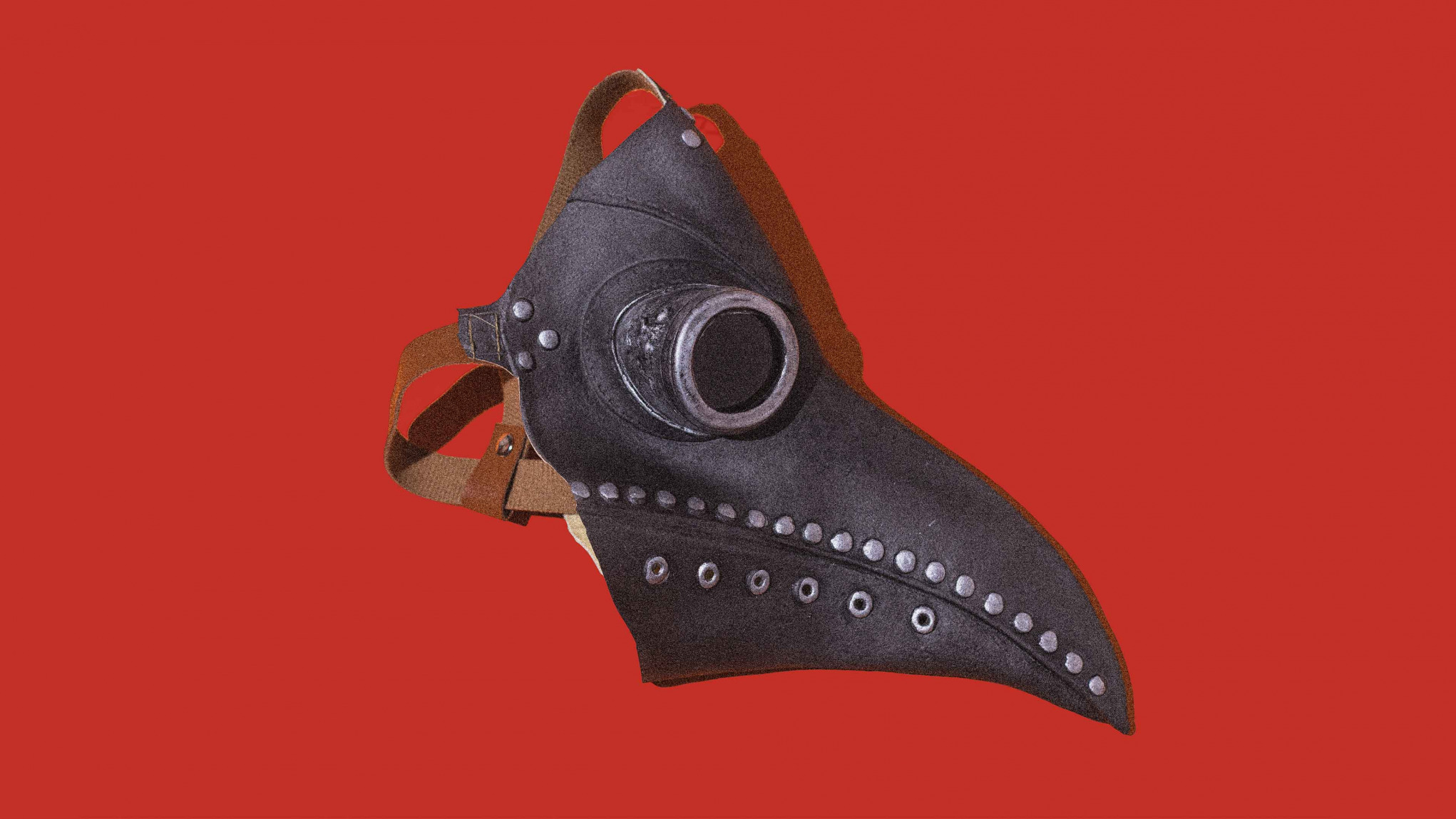
Seven centuries after the Black Death devastated Europe, mention of the plague still arouses deep alarm. Reports of a fatality in Russia that may have been caused by this historically dreaded disease has prompted widespread speculation about another deadly epidemic. But on this occasion, the white horse of pestilence does not seem about to ride forth before judgment day.
Here’s what we know. A female lab worker in an anti-plague research institute in the town of Shelekhov, situated in the Irkutsk administrative district (oblast) of Siberia, has died in hospital of suspected pneumonia that may have been caused by accidental exposure to pneumonic plague in the laboratory.
Russian government officials deny this interpretation, telling the World Health Organization that, in the words of its director general Tedros Adhanom Ghebreyesus, “no case of plague had been recently reported in the Irkutsk oblast and that they had placed about 200 contacts in quarantine”.
The WHO has asked the Russian authorities for more information, including on reports of a second employee “with pneumonia of undetermined cause” at the lab.
The plague is caused by a bacterium (Yersinia pestis), and it has been suggested that the worker became infected after breaking a vial containing a culture of the bug. Bubonic plague – the main cause of the Black Death in the 14th century – has the same origin as pneumonic, but attacks the lymph nodes rather than the lungs.
Virologist Angie Rasmussen of the University of Saskatchewan in Canada has said: “I don’t think that most people need be particularly concerned about this.” Pneumonic plague, she says, is indeed “really deadly”, with a fatality rate of 71% of those infected, but it is not very transmissible from person to person. “You really have to be exposed to a lot of it” for the bacteria to accumulate in the lungs and cause fatal pneumonia.
Why are the Russians even studying the plague in a remote Siberian institute? As troubling as it might sound at first, there is a good reason for it: plague is endemic in Siberian fauna. “It isn’t very unusual for plague cases to happen in this region,” Rasmussen has said – what is unusual this time is that it happened in a laboratory.
Despite the habitual reticence of the Russian authorities, there’s no reason to suspect any diabolical biological-warfare scenario. “I understand why people find the idea of plague in a laboratory alarming”, immunologist Zania Stamataki of the University of Birmingham told the BBC, but she says that better understanding the plague remains important given that it is still harboured by animal populations in Africa, Asia and the Americas, regularly causing small outbreaks.
Suggested Reading


The quantum algorithm that could crack the world
There’s no denying that Siberia was indeed where the Soviet Union once conducted a covert biological weapons programme, including plans for deploying the plague. But that’s no basis now for a conspiracy theory, even if (and it really is if) this latest event was indeed caused by, in the now infamous term, a “lab leak”.
“On the surface, [this] reminds people of Covid,” Rasmussen says. “But the good news for most people is that plague has been around for a very long time,” and so is well understood and can be treated with antibiotics if diagnosed early. There’s also a Russian vaccine, albeit not a very effective one. What’s more, it can’t spread through a population anything like as readily as the coronavirus. This is why the outbreaks that occur elsewhere from time to time can be relatively easily contained and stamped out.
So while there’s plenty we still don’t know about the event, there is no cause for panic. “While it is technically possible that this outbreak [if it is indeed pneumonic plague] could turn into a major epidemic,” says Rasmussen, “the likelihood is extremely small. You are more likely to die from a boring old rhinovirus infection – the common cold – than you are to get pneumonic plague.”