PICK OF THE WEEK
Knife: The Attempted Murder of Salman Rushdie (selected cinemas, September 30)
As TS Eliot warned: “human kind/ Cannot bear very much reality.” But there are times when we have no right to avert our gaze; when we have a duty to confront the consequences of terrible actions, without refuge in euphemism, moral evasion or craven mitigation.
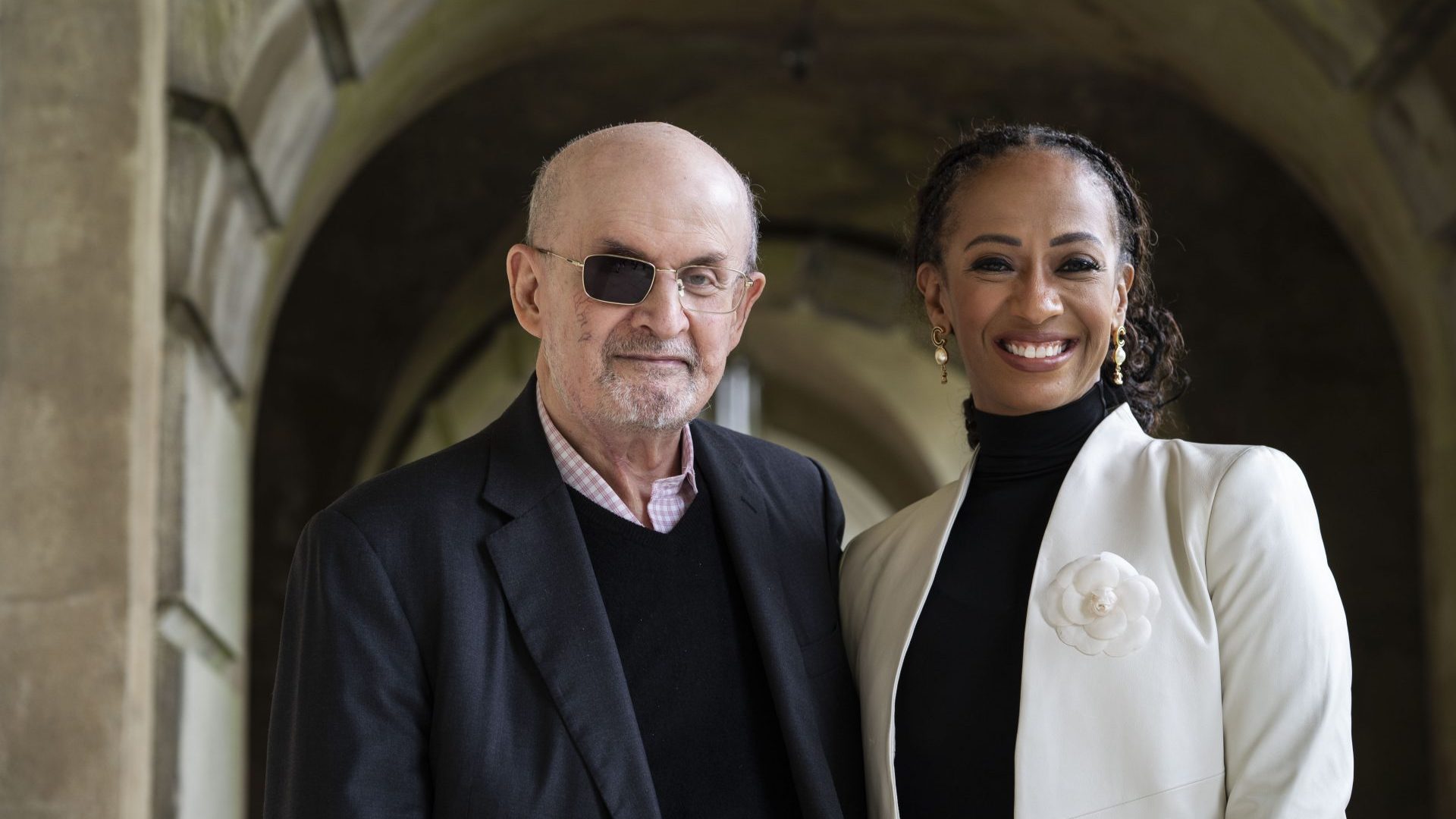
This is one of many reasons why Alex Gibney’s compelling documentary, based on Salman Rushdie’s memoir of the brutal attack upon him at a literary event in Chautauqua, upstate New York, in August 2022, is required viewing for anyone who cares about artistic freedom, the republic of letters and basic humanity.
Thirty-three years after the Ayatollah Khomeini’s fatwa, a death sentence on the novelist and “all those involved in [the] publication” of The Satanic Verses, he was stabbed 15 times in 27 seconds by 24-year-old Hadi Matar, who later said that Rushdie was “someone who attacked Islam” and “not a very good person.” Matar is now serving 25 years in prison and faces a life sentence after his conviction in July of additional terrorism charges.
The novelist, who was 75 at the time and suffered haemorrhagic shock from massive blood loss, was initially fighting for his life. Once it was clear that he was likely to survive, he and his wife, the poet and photographer Rachel Eliza Griffiths decided, with extraordinary creative courage, to document his recovery. “It’s not just about me,” says Rushdie.
The footage of the novelist’s first days in hospital, his right eye lolling gruesomely on his cheek, his left hand devastated, his body stitched back together, is hard to watch. But watch it we must. I hope that all 800 fellows of the Royal Society of Literature, which scandalously declined to condemn the attack – confining itself to “sending strength” – have the decency to behold its true human cost on screen.
“If you can avoid having your eyelid sewn shut, avoid it,” Rushdie says. “It was the closest thing to unbearable pain I’ve ever experienced. Yes, including the knife blows.”
Yet the documentary also records two distinct but entangled victories. First, Rushdie, now working on a novel about Enheduanna, a Sumerian high priestess and the world’s first named author, remains a creative force of nature. In keeping with his joyously eclectic writing style, Knife draws playfully upon Georges Méliès’ Le Voyage dans La Lune (1902), Sidney Lumet’s 12 Angry Men (1957), Robert Wise and Jerome Robbins’s West Side Story (1961), Kurosawa’s High and Low (1963), Don Chaffey’s Jason and the Argonauts (1963), the imaginative world of Philip Pullman and the music of Bob Dylan. While convalescing, he chats on the phone to his director friend, Wes Anderson.
Second, the movie, like the memoir, is a love story, a deeply moving account of the fierce bond between Rushdie and Griffiths and what he has called the “wounded happiness” they have nurtured together.
Absolutely right that Knife includes, in full, the footage of the attack itself, in all its chaotic, unbearable violence. Even better that it ends with the writer, accompanied by his wife, returning to the auditorium where it happened.
“I’m standing up in the place where I fell down,” he says. Magnificent.
Suggested Reading
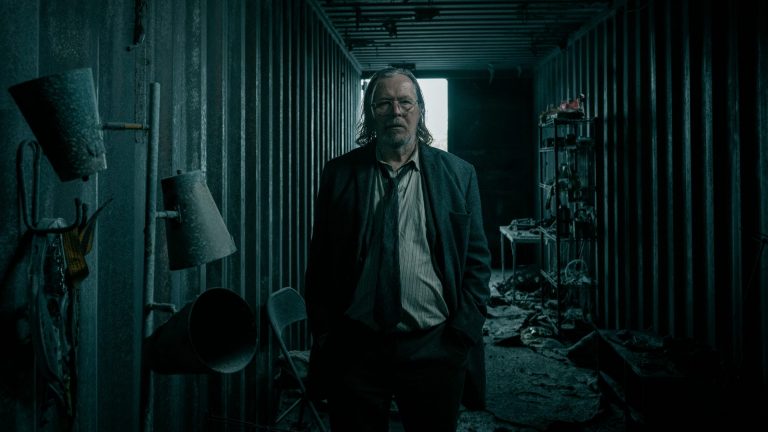

The Slow Horses ride again in Britain’s spy renaissance
THEATRE
Who’s Afraid of Virginia Woolf? (Soho Place Theatre, London, until December 19)
Alongside Vladimir Nabokov’s Pale Fire (1962), Saul Bellow’s Herzog (1964) and John Williams’s Stoner (1965), Edward Albee’s classic 1962 play turned the American campus into a stage for the human condition and, after the massive expansion of US higher education, the state of the nation.
Inevitably and enduringly, it is associated with Mike Nichols’s 1965 movie adaptation, for which Elizabeth Taylor won her second Oscar, starring opposite her husband Richard Burton. But Marianne Elliott’s terrific production, which I saw in preview, is undaunted by precedent and in Gillian Anderson as Martha and Billy Crudup as George, has two world-class actors firing on all cylinders in three acts of marital combat, intellectual games and unreachable sadness.
From their first row at 2am over the movie in which Bette Davis says “What a dump!” (it’s King Vidor’s Beyond the Forest, but we never get that far), the associate history professor and his wife – whose father happens to be the president of this unnamed New England college – circle and savage each other.
“I swear if you existed, I’d divorce you,” Martha tells George. “In my mind, Martha,” her husband says, “you are buried in cement right up to your neck. No… right up to your nose… that’s much quieter.”
They have an audience, too, in the young biologist Nick (Josh Dylan) and his wife Honey (Phoebe Horn), whom Martha has impulsively invited to their home for a post-party nightcap that lasts until dawn.
Old enough to remember visiting a New York speakeasy as a schoolboy, George sees this ruthlessly ambitious 28-year-old as the awful incarnation of the new tyranny of science in which a uniform “race of men” will rise and “assure the sterility of the imperfect.”
As Martha seduces Nick in front of him, he reads – or pretends to read – from Spengler’s The Decline of the West. He guesses, correctly, that the younger man has married Honey (frequently offstage, throwing up or asleep on the bathroom floor) for her money. “You disgust me on principle,” he says to Nick, “and you’re a smug son of a bitch personally, but I’m trying to give you a survival kit.”
The play’s working title “The Exorcism” was retained by Albee for the third act, and it is in this final devastating hour, as George chants passages from the Latin Requiem, that the great lie at the heart of the marriage is disclosed. “Truth or illusion, George,” says Martha, “you don’t know the difference.” But he does, and so does she; which is where the real terror dwells.
Suggested Reading

The Bayeux Tapestry and the continuing allure of all that Norman wisdom
FILM
Heart of the Beast (general release)
“Somewhere in Alaska” reads the opening location caption, as we pan down to a battered pick-up, slowing as the unnamed driver, played by Inuk actor Anna Lambe, sees a weary-looking German shepherd in the middle of the road.
Rewind a week and the dog, Odin, is with his former military handler, retired special forces sergeant major James Belmont (Brad Pitt), flying in a Cessna to the remotest wilderness that the “Last Frontier” state has to offer. They fish, hike, make camp, and head out to “find some trouble”: James’s code for rough-and-tumble play that has them both forgetting the real troubles they have clearly shared in combat. At night, it is a different story as Odin, who has titanium teeth and a prosthetic leg, suffers from PTSD-related nightmares.
Reunited with Fury (2014) director David Ayer, the 62-year-old Pitt grounds the movie as a veteran who is very far from the super-soldier of standard Hollywood survivalist movies. Calamity strikes when he suffers a heart attack in the cockpit and the plane goes down. Thereafter, it is one damn thing after another: a giant grisly, a perilous bridge made of two tree trunks, roaring rapids, a pack of wolves. Man and dog alike sustain a series of injuries as they struggle to cover the 58 miles to the nearest road.
Before the crash, JK Simmons has a pleasing cameo as Watkins, a retired gold miner who spends an evening shooting the breeze with James and drinking his Belgian brown ale (“a damn fine beverage”). Is this setting up his character for a pivotal third-act role?
Not a bit of it. His departure by kayak in the morning underscores quite how far from Kansas the battle-scarred duo really are. Odin keeps James going, because the ex-soldier’s only mission now is to ensure that his beloved dog survives.
Mauro Fiore’s cinematography is stunning, and the movie tips its cap to the great American mythology of Jack London’s Yukon stories, William Faulkner’s story “The Bear” 1942), Cormac McCarthy and Alejandro G. Iñárritu’s The Revenant (2015). But let’s face it: the dog, played by a canine actor named Uber (well, Lyft would have been worse, I suppose) with the help of three of his sons, is the star of the show.
Pitt is actor enough to understand this, which is why Heart of the Beast works and why, heart-rending though it is, it never descends into mawkishness. It is, in fact, a movie that does exactly what it says on the dog food tin.
BOOK ENDS…
Though Marlon James’s The Disappearers is definitely the bookies’ favourite to win this year’s Booker Prize, I was delighted to see that M John Harrison’s wonderful post-apocalyptic novel The End of Everything – a dreamscape populated by aliens, vigilantes and refugees (headed for Europe) – is on the shortlist.
It also gives me the opportunity to recommend another fantastic example of the thriving dystopian genre. From its unforgettable opening line, Exit Party by Emily St. John Mandel (Picador) grips the attention: “In the first spring after the collapse of the United States, the blossoming of the jacaranda trees felt to Ari like grace.”
During the Covid crisis, Mandel’s vivid speculation about life after a global pandemic, Station Eleven (2014), found a vast new readership. In this, her seventh novel, she imagines two timelines and two versions of future America in which each character has their counterpart.
In the “fracturing continent” in which she lives, Ari is just out of prison, while her double, Ibari, is a government intelligence officer in the authoritarian “United State” where the binding doctrine is: “Harmony at any cost.”
Because Mandel writes so beautifully, this two-worlds fiction is so much more than yet another MAGA-inspired tale of doom. Her gift is to lift the reader out of the narrowly defined and fretful political discourse of our times and let the imagination run riot. There is only one Margaret Atwood, and Mandel is a terrific novelist in her own right: but she is also the greatest legatee of the Canadian master writing today.
 Most popular


Emily Maitlis’s diary: Trump doesn’t fear the AI apocalypse – but he’s terrified about the midterms
The decline of the Daily Mail
If Shabana Mahmood is tough, why is she so slow to crack down on Danny Tommo and the far right?
What the rich and powerful are really saying about AI