PICK OF THE WEEK
Marilyn Monroe: A Portrait National Portrait Gallery, London, until September 6
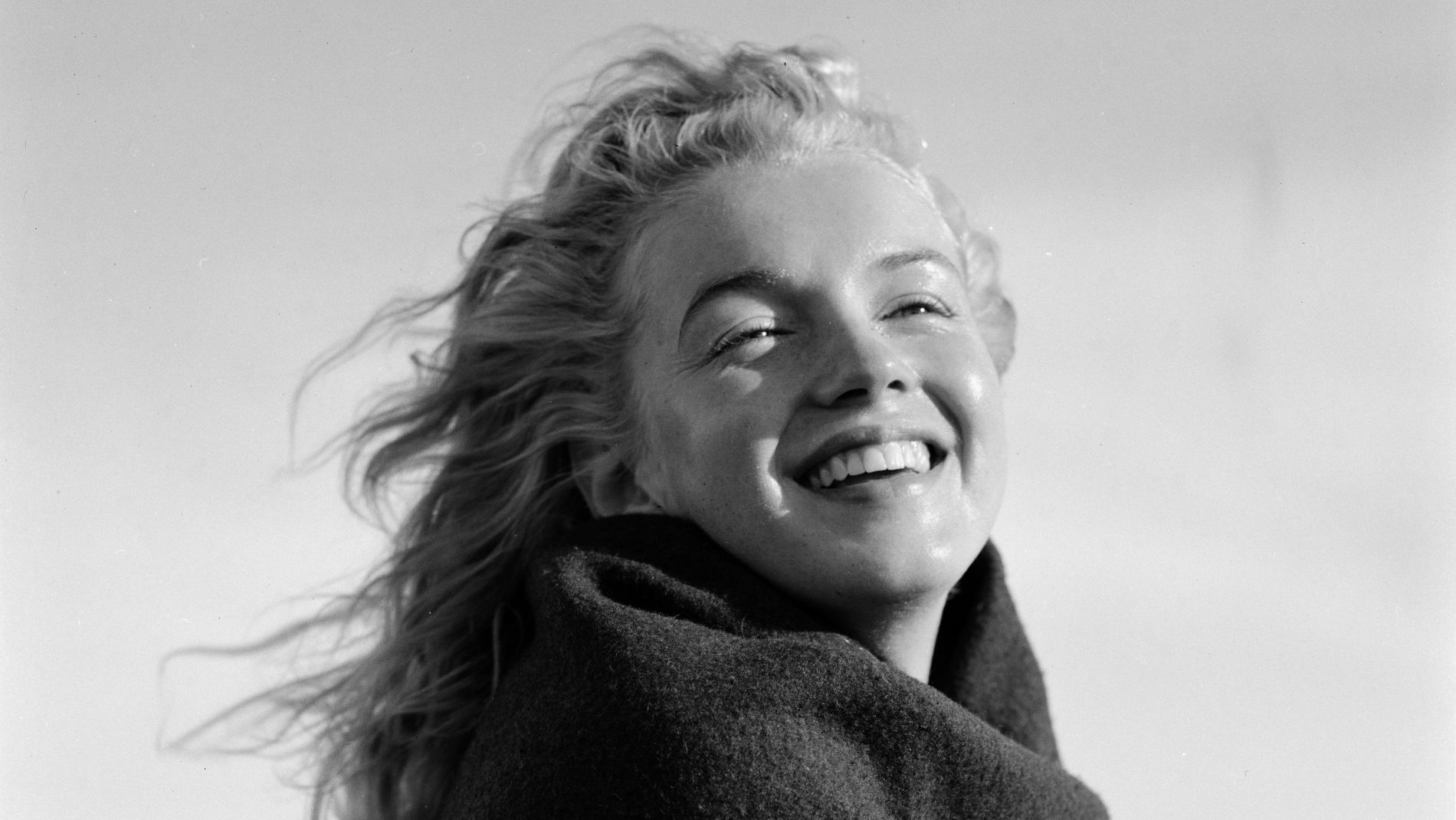
“She is gone but she is everywhere”: so said the fashion photographer Bert Stern, who shot a series of images of Marilyn Monroe for Vogue shortly before her death on August 4, 1962, aged only 36. The posthumous cultural ubiquity that he identified is both opportunity and challenge for an exhibition such as the NPG’s, which marks the 100th anniversary of her birth.
In the first gallery – as if to confront the problem at the very start – a faded monochrome photobooth self-portrait of Norma Jeane Baker in around 1940 faces Andy Warhol’s Nine Multicolored Marilyns (Reversal Series) 1979-1986, which are screenprint reversals in acrylic paint of the Pop artist’s earlier silkscreen versions of Gene Korman’s iconic publicity still of Monroe for Niagara (1953). It is an image of an image of an image.
The response to this dilemma of co-curators Rosie Broadley and Georgia Atienza is to centre Monroe’s agency; her insistence, as the former writes in the exhibition catalogue, on being “an active partner in the creation of an extraordinary body of photographs.”
Though broadly chronological, this terrific show is defined by a series of such collaborations: with Cecil Beaton, Eve Arnold, Sam Shaw, André de Dienes, Richard Avedon, Philippe Halsman and many more. Avedon recalled how she would “pore over the contact sheets for hours.”
When de Dienes photographed her on Malibu beach in 1946 – the year before her first on-screen bit part in Sol M Wurtzel’s Dangerous Years – she evoked, in his words, “[a]n entire spectrum of life, depicting happiness, pensiveness, introspection, serenity, sadness, torment, distress – I even asked her to show me what ‘death’ looked like in her imagination. She threw a blanket over her head; that was how she interpreted it.”
Sixteen years later, when death was no longer a performance on Californian sands but an imminent reality, she was still sending back contact sheets to Stern, crossing out the images she disliked.
Many accounts of Monroe’s life are structured around her often toxic relationships with men – Joe DiMaggio, Arthur Miller, the Kennedys, studio moguls – to the extent that Andrew Dominik’s controversial movie Blonde (2022), starring Ana de Armas, was essentially an artefact of the #MeToo era. The NPG’s exhibition does not gloss over the male gaze or its impact upon Monroe (“A sex symbol becomes a thing, I just hate to be a thing.”)
But it devotes more space to her individuality, intellectual ambition – she read widely, studied “The Method” with Lee and Paula Strasberg, and became immersed in psychoanalysis – and yearning for creative pilgrimage. Halsman’s shot of her in jeans, working out with dumbbells in 1952, is a million miles removed from, say, Shaw’s legendary image of her, taken two years later, in a billowing white dress on the set of Billy Wilder’s The Seven Year Itch (1955).
Instinctively or otherwise, Monroe anticipated the postmodern world and the age of Instagram, in which the self would be fragmented but could be redefined by rummaging in the dressing-up box of available identities: creation would be curation. As she observed: “People had a habit of looking at me as if I were some kind of mirror instead of a person.” Yet, as this exhibition shows triumphantly, her legacy is so much greater than a hall of a billion mirrors.
Suggested Reading

This sublime, audacious Whistler exhibition is an absolute must-see
STREAMING
Cape Fear (Apple TV)
From the opening credits, featuring Bernard Herrmann’s dread-inducing theme from both J Lee Thompson’s original 1962 movie and Martin Scorsese’s sensational 1991 remake, you know that this take on a classic tale of vengeance is going to be true to its roots. But do we really need a third, ten-episode iteration?
In truth, the involvement of Scorsese and Steven Spielberg as executive producers, working closely with showrunner and writer Nick Antosca, always suggested that this was unlikely to be a by-the-numbers retread. And ten minutes in, as married attorneys Tom and Anna Bowden (Patrick Wilson and Amy Adams) celebrate their affluence and good fortune at an idyllic July 4 cook-out with friends by the pool of their gorgeous home in Savannah, Georgia, it’s clear that we are in for a first-class slice of prestige television.
All that the Bowdens have to worry about, it seems, is the possibility of a summer rain shower and the teenage moods of Natalie (Lily Collias) and Zack (Joe Anders). “Do you ever look and wonder: do we deserve all this?” asks Anna. “No,” replies her husband, grinning ear to ear. Uh-oh.
It helps hugely, of course, that the part of Max Cady, returning from 17 years in prison and seeking vengeance from the couple – Tom prosecuted him, Anna was his defence attorney – is taken by the mighty Javier Bardem. In Scorsese’s version, Robert De Niro delivered an unforgettable performance as a savage force of nature, bellowing Biblical homilies as he set about ruining the lives of Nick Nolte and Jessica Lange. Quite an act to follow.
With sheer grace and artistic magnificence, Bardem offers a much more nuanced and layered version of the character: a suave former restaurateur, who is as capable of wit and charisma as he is physically menacing and driven by a barbarous appetite for retribution. Hours after his release, he turns up at a fundraising gala for Anna’s legal charity, all smiles and silken goodwill, and says to Tom: “No hard feelings, my brother”. Only Bardem could invest that line with such terror.
Beneath the Spanish moss creepers of southern live oaks, in the hidden crawl holes in mansion walls, in flickering lights and in the Afro-Caribbean Santería religion which Max has embraced in prison, the spirit of American Gothic looms large. Yet the new version also leans into the threats of the modern age: AI fakery, catfishing, online shaming and the sea of camera phones that light up wherever there is violence and trauma.
There is more time, too, to explore Max’s deepest wish, which is to turn the Bowdens against one another; to prise open the fault-lines in their cosmetically perfect life and make the family complicit in its own destruction.
“You believe Max more than your wife?” Anna asks Tom at one point. Max says to Tom that what he fears is “Entropy. Chaos. Disorder”, and the lawyer’s face tells us he has struck a nerve.
There are plenty of callbacks to earlier versions – one so bold it will take your breath away. The cast is uniformly superb (as always, CCH Pounder is great as Anna’s colleague Noa Toussaint).
The tension, twists and jump scares are all fantastic. Not to be missed.
Suggested Reading
Gary Oldman’s Beckett masterclass
THEATRE
Glengarry Glen Ross (The Old Vic, London until July 18)
Having directed Kieran Culkin, Bob Odenkirk and Bill Burr in David Mamet’s classic account of macho salesmanship on Broadway last year, Patrick Marber has now brought his production to London – with an all-female cast.
Far from being a gimmick, this is something that Mamet himself has long wanted to try on the professional stage, and with a first-class ensemble and Marber’s directorial touch, it works a treat.
Rosa Salazar is electrifying as Ricky Roma, the Chicago real estate salesman on a winning streak, and was justly rewarded with a round of applause at the performance I attended after she delivered the famous restaurant monologue (“all train compartments smell vaguely of shit…”)
As Shelly “the Machine” Levene, a once-great operator long past his best, Indira Varma strikes just the right balance between not-so-quiet desperation and residual hunger. “All I’m saying,” he tells office manager John Williamson (Dorothea Myer-Bennett), “put a closer on the job.” Levene is even willing to give Williamson a percentage of his cut, if he’ll only slip him some of the precious Glengarry leads.
But his boss doesn’t think that Levene has been a closer for years; and, in the merciless world of huckster capitalism that Mamet captured in 1983, this is all that really counts. More than four decades on, Glengarry Glen Ross has evolved into that most unsettling of dramatic hybrids: a period piece that feels piercingly contemporary.
Suggested Reading
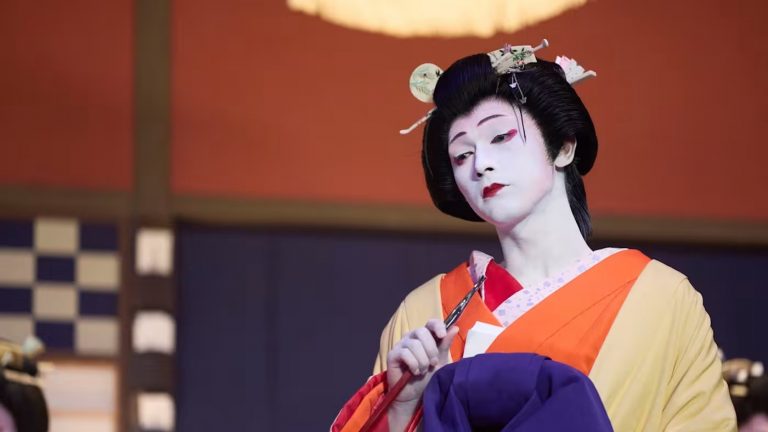
Kokuho, the dazzling, savage Japanese epic you must not miss
FILM
Leonora in the Morning Light (selected cinemas)
In his great memoir Knife (2024), Salman Rushdie writes that, as he convalesced in hospital after being brutally stabbed at a literary event in Chautauqua, New York, he had a vivid hallucinatory dream “that looked like Géricault’s great painting The Raft of Medusa brought to life, except that the people on the raft were all Surrealists – Max Ernst, René Magritte, Salvador Dali, Luis Buñuel, even Leonora Carrington.”
Born into a wealthy Lancashire family in 1917, Carrington was for many years known primarily as a muse to the Parisian Surrealist circle. This subtle and visually sumptuous biopic, adapted from Elena Poniatowska’s 2012 novel and directed by Thor Klein and Lena Vurma, does indeed address the relationship between Carrington (Olivia Vinall) with the older Ernst (Alexander Scheer) and their life together in Saint-Martin-d’Ardèche in the south of France before his arrest as a German citizen in 1939.
But the movie makes admirably clear Carrington’s contempt for the Surrealists’ patriarchal veneration of the femme enfant. “This deification of women is absurd!” she tells André Breton (Denis Eyriey) at a salon where Dali (Cat Jugravu) is also present.
Instead, the movie gives justified emphasis to her post-war life in Mexico where she absorbed and channelled ancient folklore, Mesoamerican culture and the spirit of tarot and worked closely with her artist friend Remedios Varo (Cassandra Ciangherotti). She believed strongly in creative destiny and the duty to pursue it. “Otherwise, you start every sentence with: ‘I wish I had-’” she says at the opening of an exhibition of her work.
Since her death in 2011, Carrington’s reputation has soared. Two years ago, her 1949 painting Les Distractions de Dagobert fetched £22.5 million at Sotheby’s, making her the highest-selling female British artist in history. For more on her remarkable career check out the exhibition at the Freud Museum in Hampstead (until August 10).