Taiwan, long seen as a potential flashpoint for a superpower showdown, has become an even bigger question mark after Donald Trump’s meeting with Xi Jinping in mid-May.
Speaking at Asia’s premier annual defence conference, the IISS Shangri-La Dialogue, in Singapore on May 30, Trump’s war secretary Pete Hegseth described relations between the US and China as “better than they’ve been in many years”. Significantly, his speech did not directly mention Taiwan.
Makes sense. What is there to say?
China claims Taiwan, a self-governing democracy barely 100 miles away, as part of its territory. The United States has a nearly 50-year-old agreement with Taiwan to deter any military moves by Beijing.
But months after Trump launched his war of choice against Iran, there are fears the US might be too distracted by its Middle East misadventures to pay much attention to the issue. Might Trump weaken official language – and actions – that cover US support for Taiwan? Meanwhile, Beijing is stepping up efforts to win Taiwanese support for “reunification”.
There is more to Taiwan than its status as a geopolitical chess piece or a “problem without a solution”, in the words of foreign policy wonks. The 89-mile-wide island, officially known as the Republic of China, is greater than the sum of its parts, which include its world-beating semi-conductor industry and great night markets.
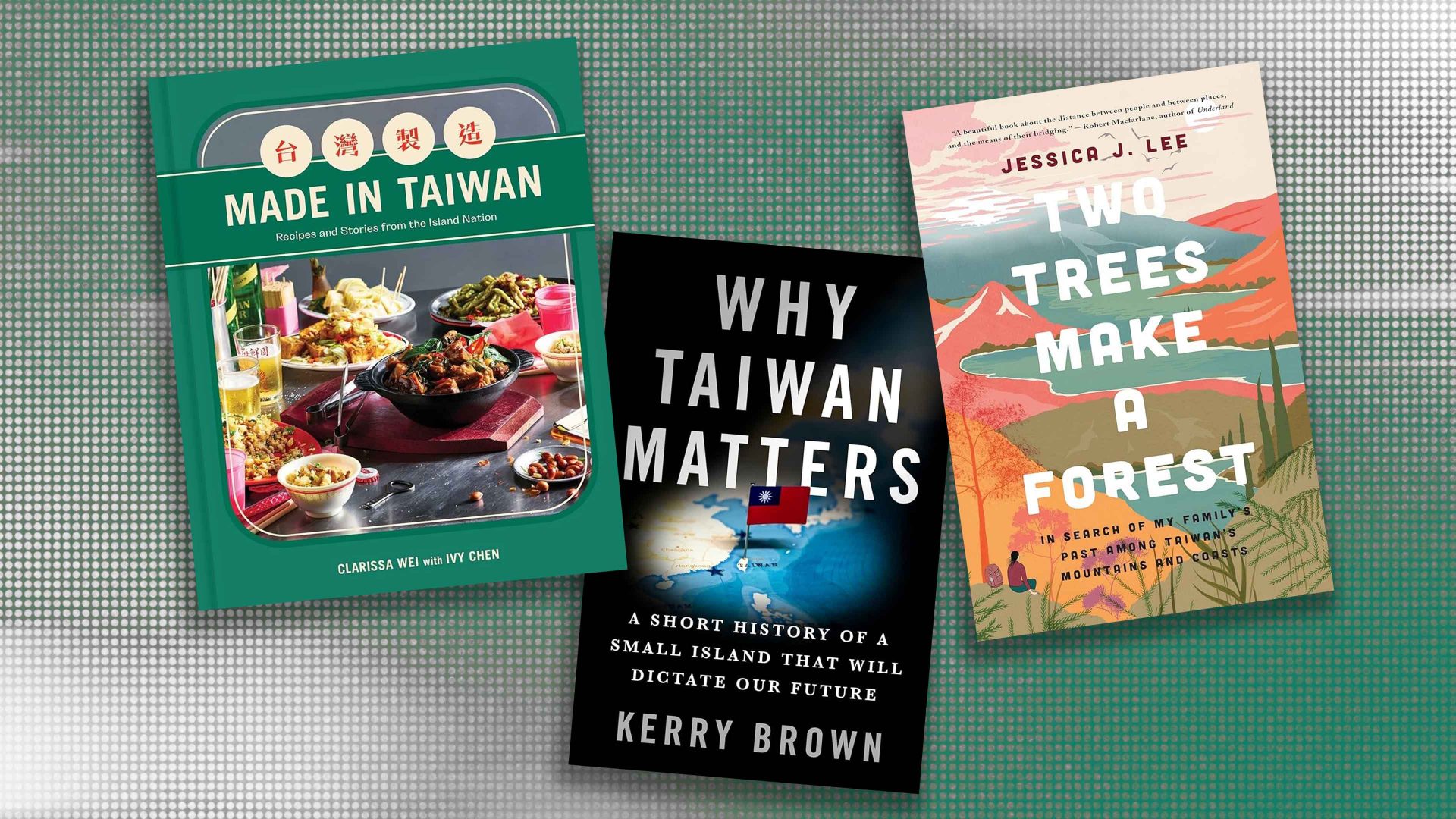
My Substack This Week Those Books examines current affairs through fiction and non-fiction. So with the Taiwan question still bubbling away, here are three useful servings: A cookbook that stirs politics into Taiwan’s signature soy sauce. A cocktail of family lore and nature-writing. And a side order of political history and realism.
Suggested Reading

The books that explain why everyone wants Greenland
The point about Made in Taiwan: Recipes and Stories from the Island Nation by Clarissa Wei is the political charge it gives to anodyne condiments like soy sauce and black vinegar. Wei, born and bred in the US to immigrant parents with Taiwanese roots, notes that Taiwan’s soy sauce has both Chinese and Japanese influences. Its black vinegar, she says, is more like Worcestershire sauce than the equivalent Chinese condiment.
All of this is pungent stuff in the context of Chinese attempts to convince Taiwan and the world that the island is merely an appendage of the mainland. In fact, as this 2023 book makes clear, Taiwan’s food has flavours that aren’t very Chinese at all. In Wei’s telling, Taiwan comes through as an independent nation, both in culinary and cultural terms.
Wei categorises Taiwan’s cuisine by the six major historical periods in the island’s life.
The Dutch, who ran Taiwan for just under 40 years in the 17th century, started Taiwan’s aquaculture industry, after which milk fish became a staple of the Taiwanese diet. Chinese pirate Koxinga, who ousted the Dutch, is credited with inventing Taiwan’s signature oyster omelette. It’s thickened with starch from the sweet potato, which grows like a weed on the rainy island.
Suggested Reading
Is Trump quietly abandoning Taiwan?
The Qing dynasty’s 200 years in Taiwan left the island with moreish traditions such as kueh, intricate rice-based dumplings and puddings, and Formosa Oolong tea. A half-century of Japanese rule had an outsize impact because this period “industrialized and monopolized” many core pantry ingredients of Taiwanese cuisine, including rice wine.
After world war two, Taiwan experienced two trends in parallel – regional Chinese food via the people fleeing the new Communist regime in mainland China and American influence via aid. The Chinese introduced fried crullers and scallion pancakes. The Yanks inspired cheap steakhouses serving up stringy cuts smothered in sweet black-pepper sauces. Taken together, this feeds into a current culinary identity that’s “one large fusion genre”, harking back to the island’s 1980s transition to democracy.
Fusion is part of Jessica J Lee’s exploration in Two Trees Make a Forest: In Search of My Family’s Past Among Taiwan’s Mountains and Coasts.
An environmental historian, born in Canada to a Welsh father and Taiwanese mother, Lee’s book interweaves her family’s history with Taiwan’s geography and political character. In a reflection on demographic change on the island, Lee notes that her grandparents and their descendants are known in Taiwan as waishengren or “people from outside the province”. The term, generally used to refer to someone whose paternal ancestral home is not in Taiwan, makes Lee’s family still uncertain if they can even call themselves Chinese.
Retracing her family’s footsteps through Taiwan, Lee notes the island’s unique language and landscape, an island positioned between tectonic plates – in the Earth’s crust and in politics. This unusual book, about multi-layered identities and belonging, may reflect the confusions and yearnings of modern Taiwan.
Unfortunately, there is little chance of sorting out the politics any time soon, according to veteran China-watcher Kerry Brown. In his 2025 book Why Taiwan Matters: How a Small Island Will Dictate the Global Future, Brown takes a long, hard look at the issue.

He examines the evolving Taiwanese view of their situation. Do they relate to China like a New York resident who says they are a New Yorker and also an American? Or are they more like a British person saying they are European, which means a looser, more distant relationship? Incidentally, a majority of Taiwan’s residents recently said they saw themselves as just Taiwanese, not Chinese.
Brown, professor of Chinese studies at King’s College London and a former British diplomat in Beijing, also addresses China’s view of the Taiwan question. In 1972, Mao could tell US President Richard Nixon that China “can wait, maybe even 100 years” for unification. Not so much today. Since 2013, Xi has insisted that issues like Taiwan cannot be dragged on “generation after generation”.
In the circumstances, Brown suggests a bland solution: continue the stalemate. In other words, pragmatic inertia.
It’s not clear whether that will be an option in the Trump era.
Rashmee Roshan Lall’s Substack This Week Those Books explains current affairs by recommending books by experts