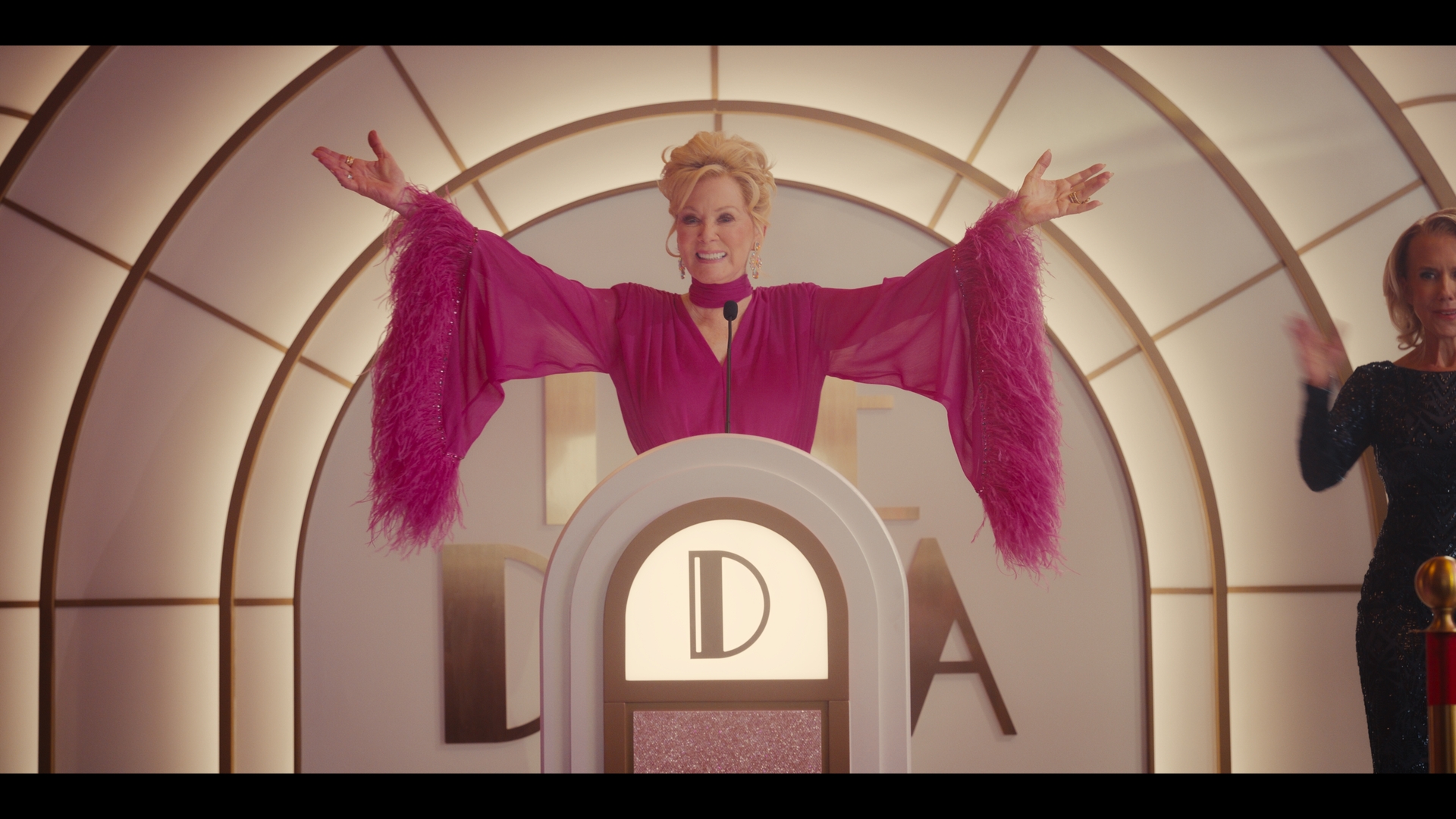
AVA: And they’re naming a street after you.
DEBORAH: I know. Deborah Vance Drive. It’ll probably be a dead end with an abortion clinic on it.
Paul Schrader is not happy. He is a legend of American cinema, the man wrote Taxi Driver, Raging Bull and Blue Collar, but the cause of his unhappiness isn’t modern movies, it’s a TV show.
A few days ago, Schrader posted on Facebook: “HACKS. Have loved this show from the get-go. But why did they puck in the final episode? It’s like corporate word came down: ‘violate everything that is true about our show so we can eke out another year of episodes.”’
It might seem like a lot of emotion to direct at a TV series finale, but Hacks is the kind of show that inspires strong feelings. It’s a sitcom based on a simple premise: failing Las Vegas stand-up comic Deborah Vance hires a much younger writer called Ava Daniels, and their relationship forms the basis of the comedy.
Deborah – based fairly closely on Joan Rivers – is an old-school comic whose stand-up isn’t so much near the knuckle as gnawing through the knuckle and spitting it out, while Ava is a mixture of PC woke and personal chaos. They are, to quote The Simpsons out of context, the original odd couple: and the show is all leads and no feeds, two strong (female) characters who begin by trading insults – harsh, brilliant, hilarious insults – and end up finding some sort of accommodation.
Suggested Reading

We’re addicted to apocalypse porn
Deborah, as played by Jean Smart, gets the best lines – “I’ve never said this to anyone before in my life: you should read less” is one, “You look like a ball girl at the US Open, and not one of the fast ones” is another – but Ava (Hannah Einbinder) is also capable of deep, unthinking offence: and the show’s settings – first Las Vegas, then the live circuit and then, gloriously, late-night chat TV – amplify the chaos, the neediness and the bitchiness.
Hacks is a show about the old and the new, represented by Deborah and Ava, but it’s very much rooted in the old. It can trace its waspish, gay-adjacent brilliance through Joe Heenan’s scripts for Frasier all the way back to Joseph L Mankewiecz’s movie All About Eve and George S Kaufman and Moss Hart’s play The Man Who Came To Dinner: all comedies that rely on Wildean wit and verbal cruelty (and the 2019 production of The Man Who Came To Dinner even starred Frasier’s John Mahoney).
As it progressed over its five seasons, Hacks was able to explore its main characters and their relationships in more detail – until its fifth and final season, when everything changed.
Sitcoms are famously different from other shows. Traditionally, the characters existed in a kind of self-rebooting bubble, where at the end of the half hour or 23 minutes everything would go back to the way it was and that week’s crisis would be resolved. Over time, however, long-running shows permitted the characters to change, to mature or even have families: the enormous 1990s hit Friends is a good example of this, as the characters began to pair off: or the British sitcom Only Fools And Horses, which became less of a cartoon as time went on.
There is a downside to character growth and change, however. As Maurice Gran, co-writer of classic British comedies like Birds Of A Feather and Goodnight Sweetheart, puts it, “One of the downsides of character developments and story arcs is at the end of it you’ve come a distance from where you started – you start with two drunks in a lighthouse and you end up with one reformed alcoholic and the other is doing a PhD. It’s not the same show any more.”
There’s a famous expression people use when a series goes off the rails: jumping the shark. It tends to refer to a show going crazy and shaking off the bonds of sanity, but most comedies lose their way more subtly. Only Fools And Horses destroyed its own premise when Del Boy actually did get rich (writer John Sullivan made him poor again, thereby saving the show), while Frasier firebombed one of its own central planks by letting Niles and Daphne get married.
Hacks didn’t go completely nuts, but it did change in several unwelcome ways. Minor characters became elevated to supporting characters, their cartoon flimsiness tested to the limit (looking at you, Randi). Instead of showing us how hilarious or droll someone was, we instead had people telling us how hilarious or droll they were. There was the weird phenomenon of the “hive character”, when a group of wildly different characters started to act in exactly the same way as each other, thereby removing conflict, interplay and fun.
Suggested Reading

Why we’ve finally fallen out of love with Love Island
Worst of all was the sudden tide of niceness. Hacks began with two characters who were diametrically opposed to one another: much of the joy of the show was in their constant sniping which sometimes flowered into open war. As time went on, they inevitably grew to understand each other, but it didn’t stop there: they became friends and they learned to love one another, and slowly everything turned into a love-in.
Once Deborah delivered lines like, “You look like someone that eats their lunch on a steel girder”, now she said things like “You’re right” and “I’m sorry.” Characters started telling other characters how great they were. Scenes ended with speeches and standing ovations (literal standing ovations): and people weren’t rude to each other, they were hugging each other.
“As they said on Seinfeld: no hugging, no learning,” says Gran. “I think that’s a good thing.”
Hacks ended with lots of hugging and lots of learning: two great characters walking off into the sunset together into a future where nothing is certain except there will be no one-liners. Once it was brilliant, and now it’s over. That’s showbiz: but it could have been so much better.
David Quantick wrote for Veep, The Thick of It and Avenue 5. His sitcom Whatever Happened To Baby Jane Austen? starring Dawn French and Jennifer Saunders returns to Radio Four soon.