PICK OF THE WEEK
Kokuho (selected cinemas)
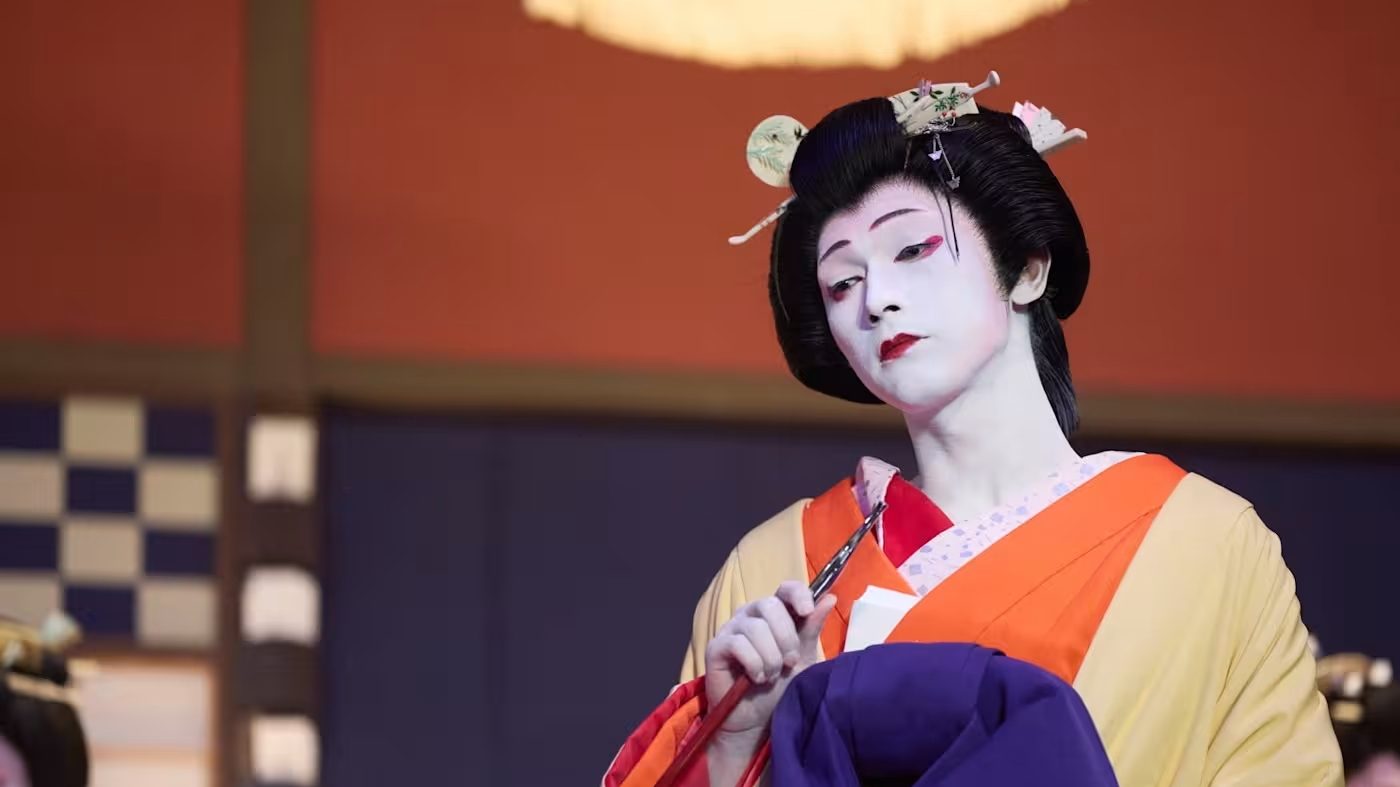
Nagasaki, 1964: Hanai Hanjiro II (Ken Watanabe), a revered master of kabuki – the traditional Japanese theatrical form, dating back to the Edo period of the 17th century – is working in the city under the protection of yakuza boss Gongorō Tachibana (Masatoshi Nagase).
At a lavish banquet, he is impressed by the promise of the crime lord’s 14-year-old son, Kikuo (Sōya Kurokawa), performing as an onnagata: a man or boy playing a female part. This centuries-old practice was decreed by the shogunate, on the stern patriarchal grounds that women would encourage decadence in the arts.
When Tachibana is slaughtered in the snow by a rival gang, Hanjiro takes on Kikuo as his apprentice in Osaka, studying alongside his son Shunsuke (Keitatsu Koshiyama). The two teenagers quickly form a deep but complex bond: inseparable friends, pupils in Hanjiro’s elite studio, and rivals in the race to be his successor.
Lee Sang-il’s dazzling epic – the highest-grossing live-action Japanese film of all time – spans five decades of intense dynastic drama and national cultural transformation. From the start, kabuki is presented as a harsh, rigorous and often brutal discipline, requiring immense physical and mental resilience. Hanjiro routinely strikes his students in the pursuit of perfect posture and dramatic expression.
Though Shunsuke is heir to his father’s position in a world dominated by bloodline, his mother Sachiko Ōgaki (Shinobu Terajima) warily acknowledges the scale of Kikuo’s ambition and readiness to learn: “He’s so bottomless, it’s scary.” Her husband agrees: “An empty vessel.”
Therein lies the deep and often savage conflict at the heart of the movie. Kikuo (played as an adult by Ryo Yoshizawa) envies his surrogate brother’s lineage: “What I crave now is your blood, Shunsuke. I don’t have it to protect me.” But when Hanjiro is injured in a car-crash, he chooses Kikuo to take his place. “Just like a thief,” says Shunsuke (now played by Ryusei Yokohama). “You broke in and stole my belongings.”
Kikuo does indeed seek the mythical status of the kokuho or “national treasure.” But the price he and those around him must pay for this zealous quest is exorbitant. In one scene, as he is borne in a carriage to the cheers of crowds, he simply ignores his young daughter running alongside.
In this particular respect, Kokuho recalls Powell and Pressburger’s The Red Shoes (1948), Ingmar Bergman’s Persona (1966), Todd Field’s Tár (2022) and, of course, the legend of blues musician’s Robert Johnson’s midnight deal with the Devil at the cross-roads (to which Kikuo obliquely alludes). But Lee’s movie is much more than a portrait of an individual artist and the solitude of perfectionism.
From his beginnings as a tattooed yakuza’s son, most of whose relatives have died of the “A-bomb disease”, to his middle-aged mission to preserve the formal dignity of kabuki in a nation increasingly defined by corporate competition rather than ancestral tradition, Kikuo’s path mirrors that of post-war Japan.
Sofian El Fani’s cinematography, Yohei Taneda’s art direction and Kumiko Ogawa’s costumes are all extraordinary. One of the most remarkable films you will see this year.
Suggested Reading

Widow’s Bay, the best horror-comedy since An American Werewolf in London
STREAMING
Legends (Netflix)
How to follow The Gold, Neil Forsyth’s excellent two-season dramatisation of the 1983 Brink’s-Mat bullion robbery? With an ingenious and gripping true story that ought to be famous but isn’t, set at the tail end of the Thatcher era.
The director of British Customs, Angus Blake (Douglas Hodge) is tasked by an unnamed home secretary (Alex Jennings, obviously) – who, historically speaking ought to be Douglas Hurd or David Waddington, but is more of a composite ruthless cabinet minister – to deliver the Iron Lady a big drugs bust she can present as a triumph: “Mrs Thatcher needs a crisis she can solve and here it is.”
The catch is that there is no new money or manpower. Instead, and against the odds, Blake must quickly recruit a unit of undercover officers from the ranks of the customs service: civil servants who check luggage at airports, investigate illegal cross-border porn sales and chase VAT fraud. To select and head the team, he appoints Don Clark (Steve Coogan), who has extensive (and painful) experience of this kind of work.
After a rapid and merciless screening process at a Yorkshire facility owned by the intelligence services, Clark picks a team of four: Erin (Jasmine Blackborow) to handle analysis and logistics; Kate (Hayley Squires) and Bailey (Aml Ameen) tasked with infiltrating the heroin trade in Liverpool; and lone wolf Guy (Tom Burke), who heads for Green Lanes in north London to work his way into the Turkish gangs.
The whole enterprise – risky to the point of recklessness – depends upon the ability of these customs officials, completely unfamiliar with covert ops, being able to inhabit the fake identities that they are given. “Your legend has to be part of you. One wrong word, one wrong decision, and you’re a goner,” says Clark.
The cast is uniformly excellent but it is Coogan and Burke who make this six-part thriller a must-watch. Based on a real-life undercover officer and author of The Betrayer (2022), Guy starts referring to his alter ego in the third person: “It’s about not fighting who he is. It’s about understanding who he is and how he ended up that way.”
Nor does he bother to conceal how exhilarating he finds the danger – an appetite that both impresses and alarms his boss. “This is not a job. This is permanent,” Clark warns. “The danger never leaves. And legends never die.”
Suggested Reading
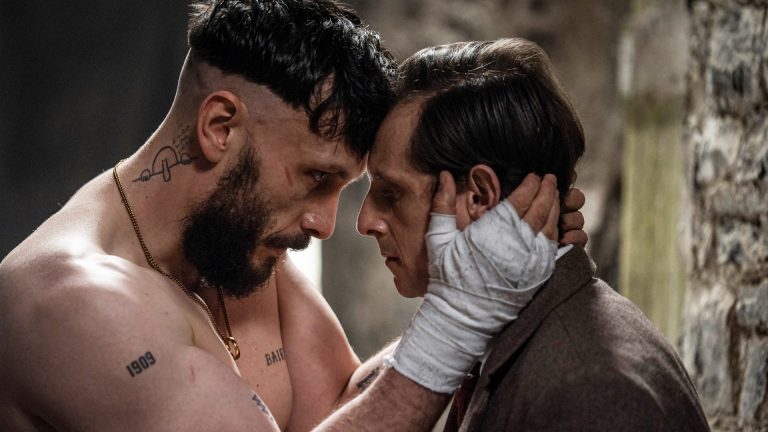
Richard Gadd’s Half Man is brutal, thrilling and unforgettable
ALBUM
SPLAT! by Deep Purple (pre-order now, released July 3)
The year 1981 was quite something when it came to new albums: Soft Cell’s Non-Stop Erotic Cabaret, The Cure’s Faith, Street Songs by Rick James, Dare by the Human League, Kraftwerk’s Computer World…the list goes on. But, to be completely honest, the LP – a double album, in fact – that I can most vividly recall buying from my local Our Price is Double Trouble by Gillan.
So I can only imagine how 13-year-old me would have reacted if told that, 45 years later, he would be sitting in Soho with Ian Gillan himself (now 80, witty, full of enthusiasm, and dressed less like a mountain shaman these days than a start-up investor) to listen to the terrific new studio album by Deep Purple: their 24th, if my calculation is correct.
First formed in 1968, Purple deserve to be ranked alongside Led Zeppelin and Black Sabbath as one of the founding forces of heavy rock: just listen to Deep Purple in Rock (1970), Machine Head (1972) and Burn (1974) and you will hear the soundtrack of a billion club nights and pub nights across seven decades; the cross-generational roar of 120 million album sales.
Though the line-up has changed repeatedly, with key members taking time off and returning, it is remarkable that Gillan (vocals), Ian Paice (drums) and Roger Glover (bass), who were part of the classic post-1969 iteration, are still delivering fantastic rock’n’roll – inspired to go back to basics, according to Gillan, by the recruitment of Simon McBride (a strip of a lad at 47) as the band’s permanent guitarist in 2022, joining Don Airey, who replaced the late Jon Lord as keyboardist in 2004.
Recording in Nashville, Purple whittled down 60 songs to a tight 13 (my own highlights being Sacred Land, Scriblin’ Gib’rish and My New Movie). An 86-show tour kicks off next month, and I, for one, will be there when they play the Royal Albert Hall in November. Book tickets here.
Suggested Reading
What everyone gets wrong about The Stranger
STREAMING
Man on Fire (Netflix)
“Cool guys don’t look at explosions” sang The Lonely Island – and former CIA contractor and special forces operative John Creasy (Yahya Abdul-Mateen II) certainly wouldn’t dream of taking a peek back at a huge fireball he has just triggered as he strides away in slow-motion.
After a plan goes badly wrong and every other member of his team is executed, Creasy hits the bottle hard, works in a warehouse and suffers horrific bouts of PTSD. At the end of his tether, he drives his car at top speed into a concrete pylon; only to wake up in hospital, in bad shape, but with an unexpected visitor in the form of his old commander Paul Rayburn (Bobby Cannavale). Would Creasy like a fresh start doing private security work in Rio de Janeiro? Well: what else is he going to do?
This is the third adaptation of AJ Quinnell’s 1980 best-seller: the first, in 1987, directed by Élie Chouraqui and starring Scott Glenn, was unmemorable; but the second, in 2004, directed by Tony Scott, with Denzel Washington as Creasy, was a fine thriller, enhanced by a stand-out performance by the young Dakota Fanning as nine-year-old Pita Ramos, the girl he is hired to protect.
So it is to the credit of showrunner Kyle Killen and Abdul-Mateen that this seven-episode take on the story so quickly slips the moorings of past interpretations of the damaged but relentless Creasy and does its own thing. After a major terrorist attack, he has no option but to get his head back in the game and protect Rayburn’s 16-year-old daughter Poe (Billie Boullet) who is a witness to the crime.
Slow to trust, Creasy nonetheless teams up with driver Valeria Melo (Alice Braga) who introduces him to some additional recruits in Rio’s favelas. As he waits for his old CIA handler Henry Tappan (Scoot McNairy) to arrange exfiltration, he also has to deal with Brazilian security minister Prado Soares (Thomás Aquino), who is less of a desk man than a paramilitary in a blazer.
Needless to say, Creasy is the kind of character who says things like “I’m just making sure people reap what they sow” and tells Poe that, as long as they are in danger, they must act with the ice-cold precision of “surgeons.” His interrogation methods are also not for faint-hearted viewers. But Abdul-Mateen – on his way to being a big star – has the panache and presence that the role requires. With four more Creasy books left to adapt, we can expect the franchise to flourish.
FESTIVAL
Charleston (Charleston in Firle, east Sussex, May 13-25)
As the books and arts festival season gets going, this is one of the very best – in a magnificent setting that was one of the gathering points of the Bloomsbury group.
This year’s line-up is world-class: Reni Eddo-Lodge, Ocean Vuong, Nazanin Zaghari-Ratcliffe, Irvine Welsh, Olivia Laing, John Kampfner, Ece Temelkuran, Kae Tempest, Jung Chang and many more. Highly recommended. Read more here.