PICK OF THE WEEK
The Rapture (BBC iPlayer, July 26)
Liz Jensen is one of the finest contemporary writers of speculative, philosophical and uncanny fiction – as well as an extraordinary memoir of personal tragedy, Your Wild and Precious Grief (2012) – and this adaptation of her acclaimed 2009 novel is very good indeed.
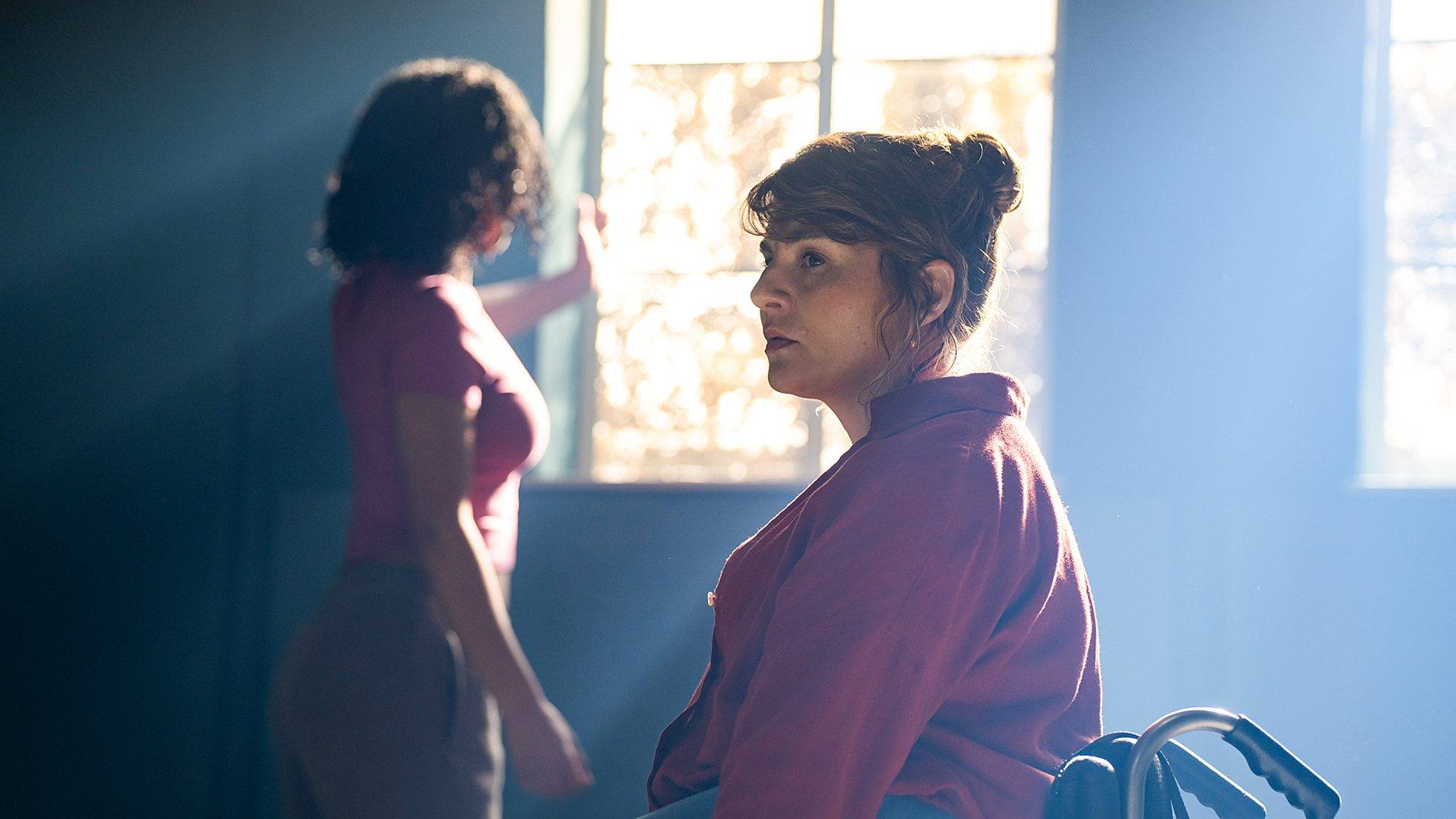
After she is disabled in a car crash, clinical psychologist Dr Gabs Fox (Ruth Madeley, excellent) takes up a position at the Oxsmith Psychiatric Hospital in the Welsh coastal town of Porth Hen. In the unit, her new patient, 17-year-old Bethany Krall (India Amarteifio), convicted of murdering her mother Carys and detained under a section 41 restriction order, is considered especially challenging – not least because her estranged father Leonard (Sam Hazeldine) is the leader of a hugely successful religious movement, the Faith Way, ensuring that the media spotlight is never far away.
It is also a time of heightened social stress, as extreme heat exacts a terrible toll around the world. In his church gatherings, books and viral online talks, Leonard steers young people “out of the doom loop” of “the so-called climate crisis”. Meanwhile, the activist group Climate Front is stepping up its campaign, on the streets and in court, to stop fossil fuel extraction and energy-sapping new data centres.
Working with mental health nurse Rafiq Khemiri (Naby Dakhli), whom Bethany trusts, Gabs works hard to establish a rapport with her patient and is astonished to discover that her feverishly executed automatic drawings (“I get messages from the earth”) seem to represent authentic premonitions. Bethany is also convinced that the world is heading towards the “rapture”: the moment when, according to some biblical interpretations, resurrected and living believers will ascend to heaven before the Second Coming.
When one of Bethany’s scribblings clearly shows the face of a woman, implying that she is in mortal peril, the psychologist turns sleuth to discover her identity before it is too late – fractiously collaborating with disgraced local hack Dick Carwyn (Iwan Rheon). As their investigation leads to some dark secrets, she also finds herself becoming romantically involved with Frasier Melville (Jack Farthing), a renewables expert working for megacorporation, Trenmoor Energy.
Frasier’s menacing boss Max Leland (Stephen Campbell Moore) is clearly up to no good. Gabs’ own therapist Mel Thomas (Ruth Jones) tries to keep her out of the rabbit hole – but it is too late for that.
How to join the dots? And who can she trust at the hospital, which appears to enjoy an oddly close relationship with the Faith Way? Screenwriters Bryony Kimmings and Rebecca Manley ensure that the ideas explored in the series – climate emergency, religious apocalypticism, post truth, and the corruption of elites by Big Oil – are matched by a lively pace across five episodes, by sharp dialogue and by a pleasing depth of characterisation. More Jensen adaptations, please.
Suggested Reading
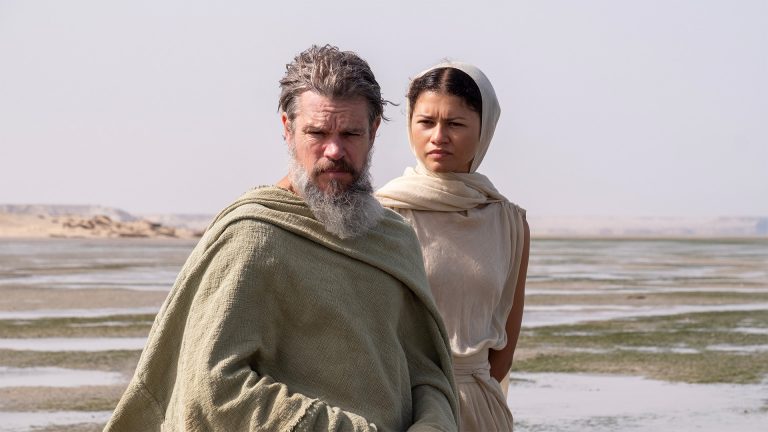

The Odyssey is a masterwork that reinvents the epic
FILM
Nostalgia (4K restoration, selected cinemas)
In her great book, The Future of Nostalgia (2001), the late Svetlana Boym distinguished between the “restorative” variety, which can lead to paranoid nationalism, and the “reflective” type, which “is more oriented toward an individual narrative that savors details and memorial signs”.
Andrey Tarkovsky’s penultimate film (1983) certainly falls into the second category, exploring the profound alienation of Russian writer Andrei Gorchakov (Oleg Yankovskiy) who is in Italy to research the story of the 18th century composer Pavel Sosnovsky, based upon the real-life Ukrainian maestro Maximilian Beryozovsky (1745-77).
Andrei argues with his interpreter and guide Eugenia (“You don’t understand anything about Russia” “Nor you Italy, then!”) and rejects her romantic interest. But, in the Tuscan spa town of Bagno Vignoni, he is drawn to Domenico (Erland Josephson) – a holy fool straight from the pages of Dostoevsky – who is shunned by the locals as a madman, abandoned by his wife and children. As Domenico edges towards martyrdom, Andrei is possessed by the impulse to honour his sacrifice – paving the way for one of the most haunting final scenes in all cinema.
Working with his cinematographer Giuseppe Lanci, to the soundtrack of Verdi’s Requiem and Beethoven’s Ninth Symphony, Tarkovsky constructs a world from ruins, deserted churches and desolate interiors that is more of a dreamscape than a conventional vista of Italian architectural majesty. As always, he lingers in liminal space, in the marchlands between countries; between past, present and future; between reverie and reality.
Of this extraordinary aesthetic vision, he writes in Sculpting in Time (1986): “These fragments of a civilisation at once universal and alien, are like an epitaph to the futility of human endeavour, a sign that mankind has taken a path that can only lead to destruction.”
Nostalgia was the first movie the director made outside Russia and expresses poignantly the sense of loss he felt as an exile (he defected to the West in 1985); the knowledge that “from now until the end of my days I would bear the painful malady within myself”. Alas, he was to make only one more film – The Sacrifice (1986) – before his death in Paris from cancer, aged 54.
TV
The Undeclared War (Channel 4)
Four years after its first season, a welcome return for this enjoyable spy thriller series, co-created by Peter Kosminsky and Colin Callender and starring Simon Pegg as Danny Patrick, director of operations at GCHQ. After the nerve-shredding geopolitical crisis and Russian cyber-attacks portrayed in the initial run of six episodes – efficiently recapped at the start – there is no let-up for Danny as FSB coder Vadim Trusov (German Segal), the source handled by ace analyst Saara Parvin (Hannah Khalique-Brown), turns up in China, seconded to Shenzhen as part of the Putin-Xi alliance.
Crucial to this season is Danny’s marriage to Barbara Napier (Siân Brooke), a former MI6 officer, now senior analyst in GCHQ’s China section – who is caught off guard by the unexpected arrival in London of one of her informants (an ex-lover).
Meanwhile, Danny is dealing with the deployment to his office of a unit from the 14th Signal Regiment, under the command of Lt Colonel Roz Cavendish (Chloe Pirrie), who is ominously styled “Director of Rapid Response” and reports to the slippery Richard Marston (Ed Stoppard) – quickly promoted from the MoD to the high office of foreign secretary. “You like to listen, when you’re not interrupting,” she warns her new civilian colleagues. “We like to act.”
To cap it all, it soon becomes clear that there’s a mole at GCHQ, which could spell doom for the already frayed relationship between the British and US intelligence communities and propels Charlie Francis (Danny Sapani), head of security and Danny’s best friend, into the thick of the action.
After six Mission Impossible movies – and 22 years since Shaun of the Dead – Pegg is now entirely plausible as the lead in a high-quality thriller series, and these six episodes will leave you longing for a third season.
Suggested Reading
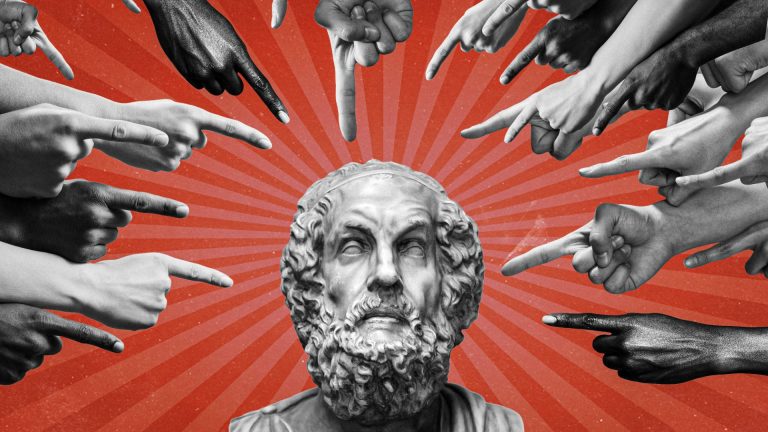
Have you got ‘Odyssey Derangement Syndrome’?
BOOKS
“Zeus’s Law” made easy…
As Christopher Nolan’s masterly adaptation of The Odyssey continues to storm the global box office, I have been asked by a few people – as I was after the release of Steven Spielberg’s Disclosure Day last month – to make some reading suggestions to help put the movie in context.
Obviously, the place to start is with Homer’s poem itself and here you are spoilt for choice. Emily Wilson’s 2017 translation, which certainly influenced the director, has been the subject of much controversy and misrepresentation: in fact, it is a wonderfully suggestive and lucid retelling, and a terrific gateway into Bronze Age mythology. Her introduction explains the archaic Greek rules of hospitality, social order, and “guest-friendship” (xenia) that are so central to Nolan’s movie (referred to on-screen as “Zeus’s Law”).
Equally riveting is Daniel Mendelsohn’s profoundly literary, lyrical rendering, published last year – complementing his memoir, An Odyssey: A Father, a Son and an Epic (2017) which tells the tale of the role that reading Homer played in his relationship with his own father.
A third option is the 1996 Robert Fagles translation, written as if to be read aloud, and still, for many, the mightiest modern English version. As a side recommendation: if you have seen the movie, you may already know that it also draws heavily upon Virgil’s Aeneid – and for that, you can’t go wrong with Sarah Ruden’s acclaimed translation, significantly revised in 2021.
Another clear influence upon Nolan is Dante’s Divine Comedy and, specifically Inferno, Canto XXVI, in which the Florentine poet encounters Ulysses (the Romans’ name for Odysseus) imprisoned in the bolgia (trench) of fraudulent counsellors (try the 2013 Clive James translation). There is a heart-rending chapter in If This Is a Man (1947), in which Primo Levi recalls that he would have given “today’s soup” to have been able to explain fully the beauty of this canto to a fellow prisoner at Auschwitz.
As an introduction to the enigmatic bard, Adam Nicolson’s The Mighty Dead: Why Homer Matters (2014) is tremendous, alongside Homer’s Iliad & Odyssey: A Biography (2024) by Alberto Manguel and Henry Power’s new study, Homer-Haunted: The Many Afterlives of an Ancient Poet.
Published last month, Wilson’s collection of writings, Crossing the Wine-Dark Sea: Journeys through Ancient Literature, is a treasure trove of ideas and insights. For a gripping account of the radical impact of Homer’s narrative realism upon the history of storytelling, try the first chapter of Eric Auerbach’s classic work, Mimesis (1946).
For another intriguing perspective: in Dialectic of Enlightenment (1947), the Frankfurt school philosophers Max Horkheimer and Theodor W. Adorno argue that Homer’s portrayal of Odysseus is the founding text of modern individualism.
As Nolan has shown once again and to such powerful effect, the potential readings of this towering epic are without number; and his movie has already launched countless conversations – an achievement rightly celebrated by Mendelsohn on X three days after its release: “If you’d told me 5 years ago that the entire planet would be talking abt this 2,700-year-old Greek text, I’d have laughed. So let’s be grateful.”