One of the greatest jokes in history was told by Alexei Sayle more than 40 years ago. “I’m going to vote for Shirley Williams,” snarled the self-styled Marxist comedian. “Because she’s got nice teeth!”
This surreal line was funny because Sayle invested it with such terrifying commitment. But it also hinted at a deeper truth: that people will say that they like or dislike someone or something for amazingly stupid reasons.
I have thought a lot about this gag since May, when Elon Musk decided that he was going to lose his mind (or lose it even more, if that is possible) over Christopher Nolan’s The Odyssey. Almost a week since the movie‘s release, the world’s first trillionaire is still at it.
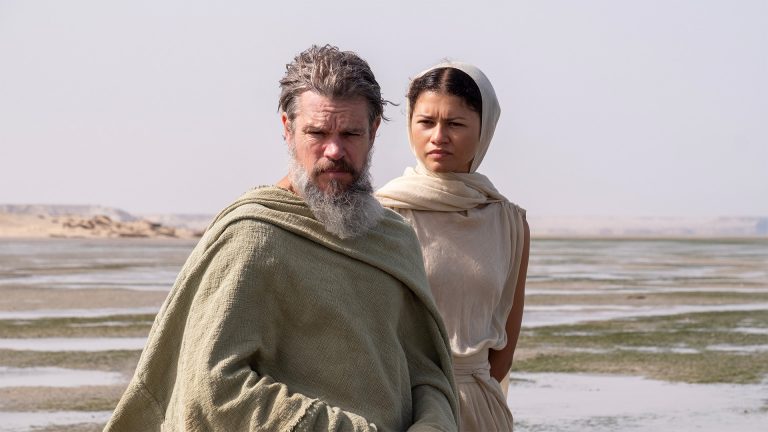
From the start, Musk’s principal objection was that Helen of Troy is played by the Oscar-winning Lupita Nyong’o and that Elliot Page, who is transgender, had been cast as a male soldier, Sinon, fighting for his king and general, Odysseus (Matt Damon).
According to the sane and rational tech tycoon and ketamine enthusiast, this was DEI trophy-hunting by Nolan; a shabbily woke ploy to add more Oscars to the two he has already won for Oppenheimer (2023). The director, Musk posted on X in May, had “desecrated the Odyssey so that he would be eligible for an Academy Award” and was “pissing on Homer’s grave.” Uh-huh.
Matt Walsh of the Daily Wire, who describes himself as a “theocratic fascist”, has also lent his considerable online influence to this demented campaign. Yesterday, he wrote on X that, in this treacherous casting, “Christopher Nolan transports you into the mind of a liberal woman in 2017.”
The flannel-shirted Walsh, who looks like a guy who has never quite recovered from being reduced to a spear-carrier in his high school play, went on: “If someone made a movie set in Africa and based on ancient African folklore, and then populated the cast with white people and other random races and ethnicities that have nothing to do with Africa, everyone would say that the casting is ridiculous and distracting at best (and I would agree). Yet the same thing is done in the reverse to a foundational text of western civilization and even conservatives line up to defend it. It’s pathetic, honestly.”
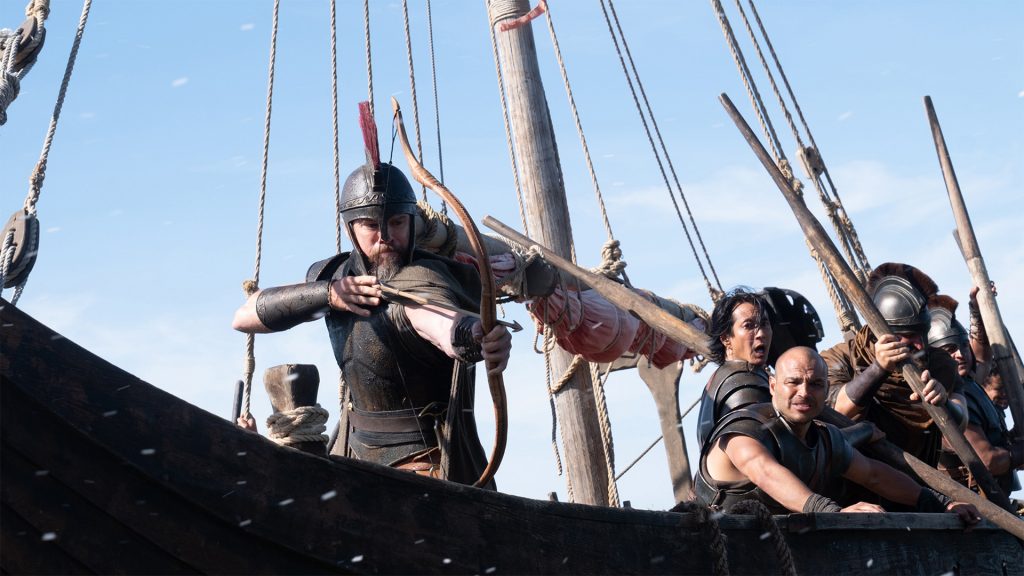
If you find this rant exhausting, let me tell you: there’s plenty more where that came from. Apparently uninterested in the real top line of the story – that Nolan has turned one of the founding texts of western civilisation into a blockbuster IMAX hit and a planetary talking point – the extremely online right just will not take “yes” for an answer.
So great is their addiction to perceived treachery and alleged subversion of all that is good and true by the “radical lunatic Left” that they cannot see what is staring them in the face: that this has been a sensational week for western cultural heritage.
Regrettably, that is not the end of it. The rave reviews and packed houses with which The Odyssey has been justly rewarded have been matched by bonkers, idiotic and mind-blowingly silly responses across the ideological spectrum.
I was quick to defend Nyong’o’s casting – not only as Helen, but as her sister Clytemnestra – because she is a terrific actor and, having graced the cover of Vogue at least five times, plainly more than qualified to play the semidivine beauty, whose abduction by Paris, prince of Troy, is the proximate cause of the ten-year war.
Suggested Reading

This is Christopher Nolan’s world, and we’re lucky to live in it
So it was depressing to hear her offer the following advice to Homer: “I would be like, ‘So, Homer, how do you feel about the screen time given to these women considering how little you spent with them?’”
Where to begin with this? According to legend, Homer was blind, so even allowing for time travel and hypothetical access to an IMAX cinema in ancient Ionia, his grasp of “screen time” would have been limited.
Second: there is a resilient theory, first advanced by Samuel Butler in the 19th century and expanded by Robert Graves in the 1955 novel, Homer’s Daughter, that the bard was, in fact, a Sicilian princess. What would Nyong’o say to her?
Third: before asking Homer how he feels about being a patriarchal bastard (assuming, that is, that he was a man) it might be worth – oh, I don’t know – reading the poem. Because to do so is to experience a narrative in which female characters have extensive agency and, in many cases, agency far beyond that of Odysseus.
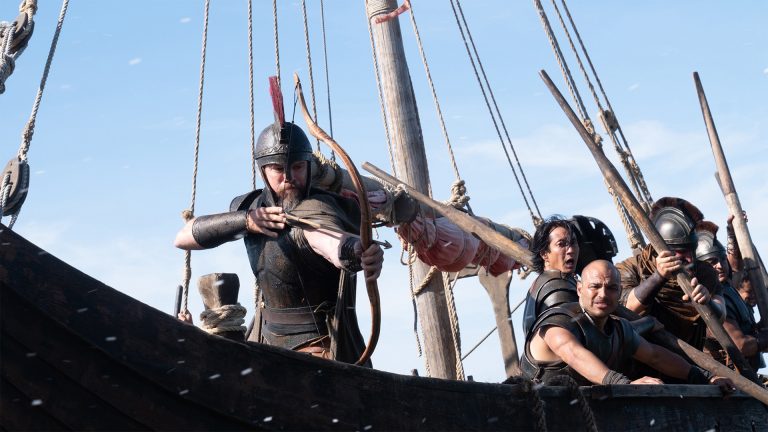
And if ploughing through 12,000 lines is too much to ask, then just watch the movie that Nolan actually made: Odysseus’s intermittent companion throughout his journey is the goddess Athena (Zendaya), who plays an all-important role in the film’s denouement and in Odysseus’ horrified recognition – too late – of what the sack of Troy portends; he spends seven years on an island with Calypso (Charlize Theron) who is invariably streets ahead of him; and, among the many escapades in which he and his crew are embroiled, the most memorable features the astonishing Samantha Morton as the sorceress-goddess Circe, who turns the men into pigs.
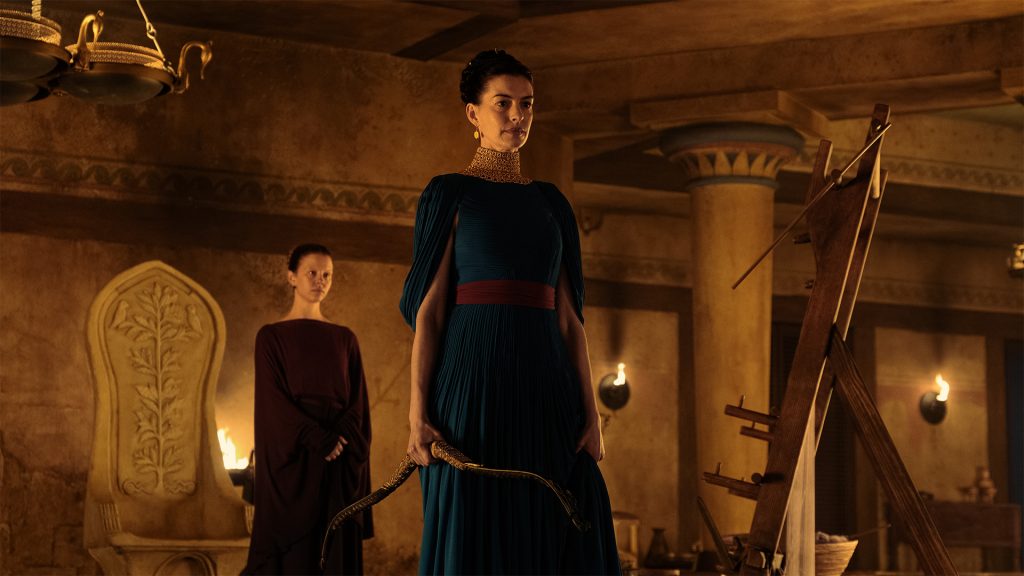
As for Penelope (Anne Hathaway), the queen of Ithaca keeping 108 suitors at bay during her 20-year solitude: she gives her son Telemachus (Tom Holland) an Olympic-standard verbal kicking about the price that women pay for the delusions of men and suggests that it is about bloody time that Ithaca had a female monarch. Speaking for myself, I wouldn’t have wanted to be on the sharp end of that one.
Even Nolan’s choice of movie locations turns out to have been ideologically wicked. Among the six countries that the director chose for his $250 million production was Morocco, including four days shooting in Dakhla, Western Sahara whose coasts did service for Ogygia, Calypso’s mythical island.
It is also a region that international lawyers say is colonised land and should not be used without the consent of the Indigenous Sahrawis. In the Guardian on July 17, the artist Mohamed Sleiman Labat claimed that those “cinematic shots sold to audiences as the places and moments where historical epics took place were captured at the expense of the Sahrawi people’s suffering.”
Well, at least this is a coherent argument. Which is more than can be said for the declaration of Sarah Yerkes, writing on July 9 for the Carnegie Endowment for International Peace, that the Sahrawis’ grievance was now “the production’s largest issue.” Seriously? The largest one?
While we’re at it: what about the Greeks? Well, guess what. They’re angry, too. In another Guardian piece, published on June 3, Chris Cotonou complained that “the Greek diaspora in Hollywood” had been shamefully overlooked by Nolan and his casting team and that “We Greeks are simply asking not to be written out of the journey.”
I guess he meant it when he wrote it. But I wonder whether Cotonou, in the spirit of fairness, has been similarly indignant when actors of Greek heritage, like Olympia Dukakis, Jennifer Aniston, John Stamos and Zach Galifianakis have played non-Greek roles. Not so much, perhaps.
All this supposed erasure, “writing out”, colonialism, woke catastrophe in one three-hour movie; so many complaints from left and right, and everywhere in between.
Suggested Reading

The Odyssey is a masterwork that reinvents the epic
And yet the most unhinged outbreak of “Odyssey Derangement Syndrome” to date happened in the most unexpected setting; namely on BBC’s Today programme.
In an end-of-show item about the movie yesterday, the normally wise presenter Nick Robinson asked whether the IMAX format was “an indulgence” given “that a single print of this film is almost 11 miles long”.
Tori Brazier, a film and entertainment reporter at Metro, singled out the health and safety hazard that “you could get quite a sore neck if you’re too close to the front”.
Robinson’s colleague, Justin Webb, chipped in with the observation that big screens might well now be “beyond the normal experience of people, inasmuch as they don’t demand it anymore.” Which was a downright weird thing to say, given that The Odyssey made its money back in its first weekend and that the 70mm IMAX cinemas in London are sold out until the middle of September.
It is madness, all of it. Where does it come from? Partly it reflects contemporary contrarianism in the face of magnificence; a surly reluctance to submit to awe, wonder and collective joy; a reflex that is encouraged by the idiot algorithm, the tribal din and the relentless longing to make noise instead of (occasionally) listening. Nolan’s movie is just the latest piñata, the thing you can hit as hard as you like and about which you can say absolutely anything and stand a good chance of getting your pretend complaint reported in the media.
Second, because – even though many of the supposed grievances are notionally connected to identity groups – what really drives them is the more basic fear of missing out. Never forget the ancient god of irrelevance-anxiety, the mighty Fomo.
To say that a cultural phenomenon like The Odyssey is “worse than Hitler/Mao/imperialism/a sore neck” is just another way of saying: “Hey – what about me? Remember me?” It is neurotic narcissism masquerading as moral indignation.
And then, of course, there is the eternal question of Shirley Williams’ teeth. People do love focusing upon the peripheral, the secondary, even the irrelevant.
The Mona Lisa? What a terrible dress. Mozart? No good with money. JD Salinger? Pathetic at parties. If the Trojans were around today, they would say that the horse was the wrong size, was missing a USB port, or didn’t match the bathroom décor.
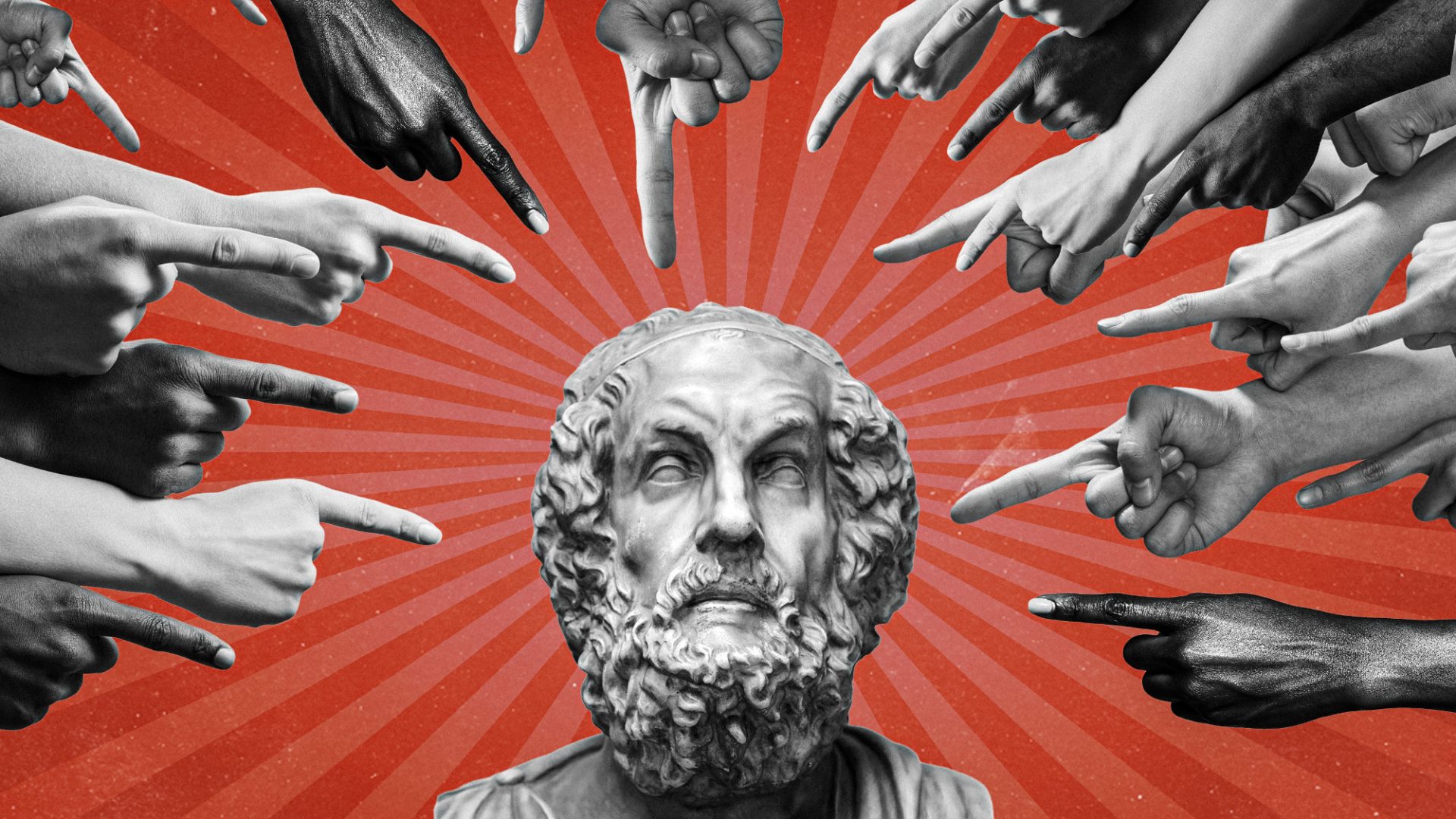
Jonathan Swift was right: wherever there is genius, there is a confederacy of dunces.