American exit polls don’t work like the ones we get in the UK. In a British election, polls close at 10pm and only then does the process of counting votes – always by hand – even begin. That means that broadcasters have three to four hours of airtime to fill before they’ve got any number of actual results to discuss.
As a result, UK exit polls are heavily focused on predicting the result of an election that’s already over – something Americans simply don’t need. Thanks to electronic voting, early voting, and earlier counting – coupled with networks’ willingness to project results early, once they’re sure enough – US elections have real results to discuss within minutes of polls closing.
That means that US exit polls focus on why people voted the way they did, rather than how they voted. With the US midterms, some of this was exactly what you might predict: the economy and the cost of living were the leading issues named by voters, followed closely by corruption and fear for the future of US democracy.
That’s almost exactly what you’d expect to see in a set of elections that went disastrously badly for Donald Trump and his Republican Party. But one aspect of the exit polls was distinctly more unusual, and less predictable.
Voters were asked how important the issue of AI and data centres – the kind of issue that would usually struggle to enter voters’ top 20 priorities – was to their Congressional vote. A full 56% of voters said the issue was either “crucial” or “a major factor” in deciding their vote.
In other words, the midterms result was almost as much a repudiation of big tech as it was of MAGA – something that could have global repercussions.
On one level, big tech being unpopular hardly feels like new information. The era of tech CEOs being vaunted by the media and hailed among the heroes of the Arab Spring feels like a very long time ago. But there is a vast difference between being just another corporation that people mistrust – like oil and gas bosses, big pharma, or any number of other industries – and being high on voters’ lists of priorities.
Big tech needs a lot from the American government in the next few years. The industry is looking to secure approval for huge new data centre projects across the country, claiming these are vital to winning the AI race, and essential to the USA’s economic growth story. Beyond that, it needs the electricity generation to power those data centres, either through waivers allowing them to run polluting gas turbines on site, or else costly expansions of the national grid.
It needs government support setting up a friendly regulatory regime for AI – one that purports to address “existential risk” to humanity, while conveniently minimising product liability and clearing up ambiguities around training models with other people’s intellectual property. Social media companies need political support in fending off mounting lawsuits, now potentially costing hundreds of billions of dollars.
To get everything it needed, almost the entire tech industry placed a bet on Donald Trump and the Republicans. Silicon Valley was once seen as a bastion of hardcore liberals and progressives, and the tech industry was for a time among the wokest of professions.
Any love affair between big tech and the progressive left disintegrated through the 2010s. First, the toll of social media abuse and harassment became impossible to ignore, and claims from social media companies that they couldn’t do any more to tackle it rang hollow as they racked up billions of dollars in profits.
The Cambridge Analytica scandal raised awareness of the data harvesting happening on a much wider scale across the industry. Big tech seemed unable, or unwilling, to tackle election interference and political manipulation by malign actors on its systems. Democrats started to talk about bringing big tech to heel, and Republicans grew furious any time tech companies tried to moderate or improve their networks.
This came to a head during Joe Biden’s presidency. In the wake of the Capitol riot on January 6, 2021, fomented in large part on US social networks, Biden appointed Lina Khan as chair of the Federal Trade Commission, and she loudly and aggressively pursued big tech in the courts. But despite being cheered on by most of the left and centre left, Khan shot and missed.
Her ambitious cases failed to deliver results within the four years she had, and tech emerged in a more dominant position than ever before, now with a grudge to bear. Big tech felt it had tried to play nice with Democrats, and it hadn’t paid off. Republicans didn’t like big tech, feeling it “censored” them, but maybe they could be won over?
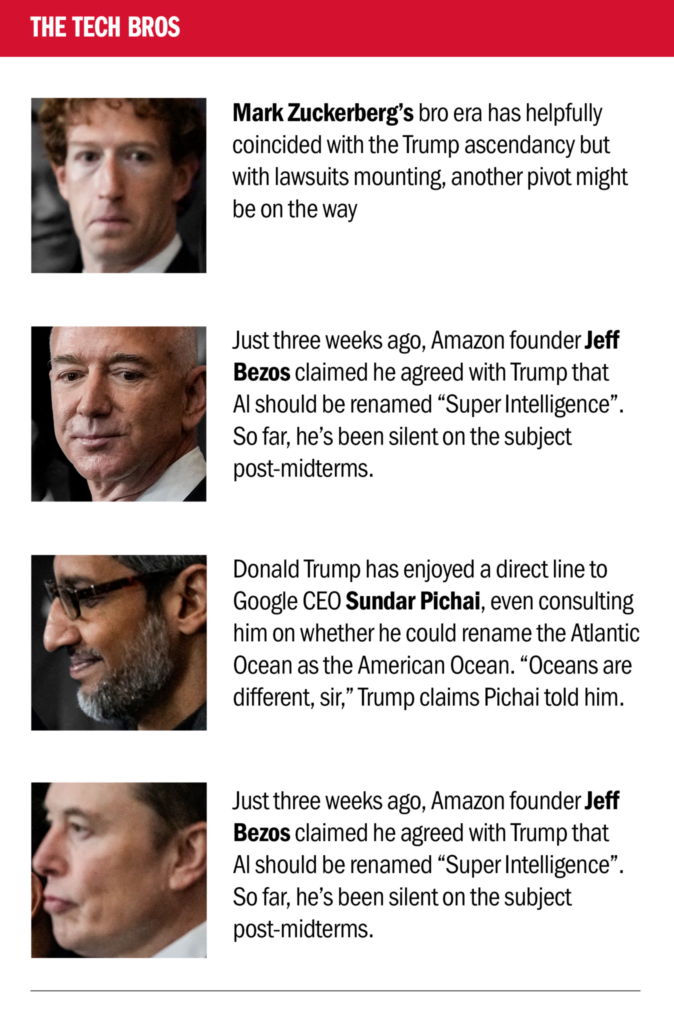
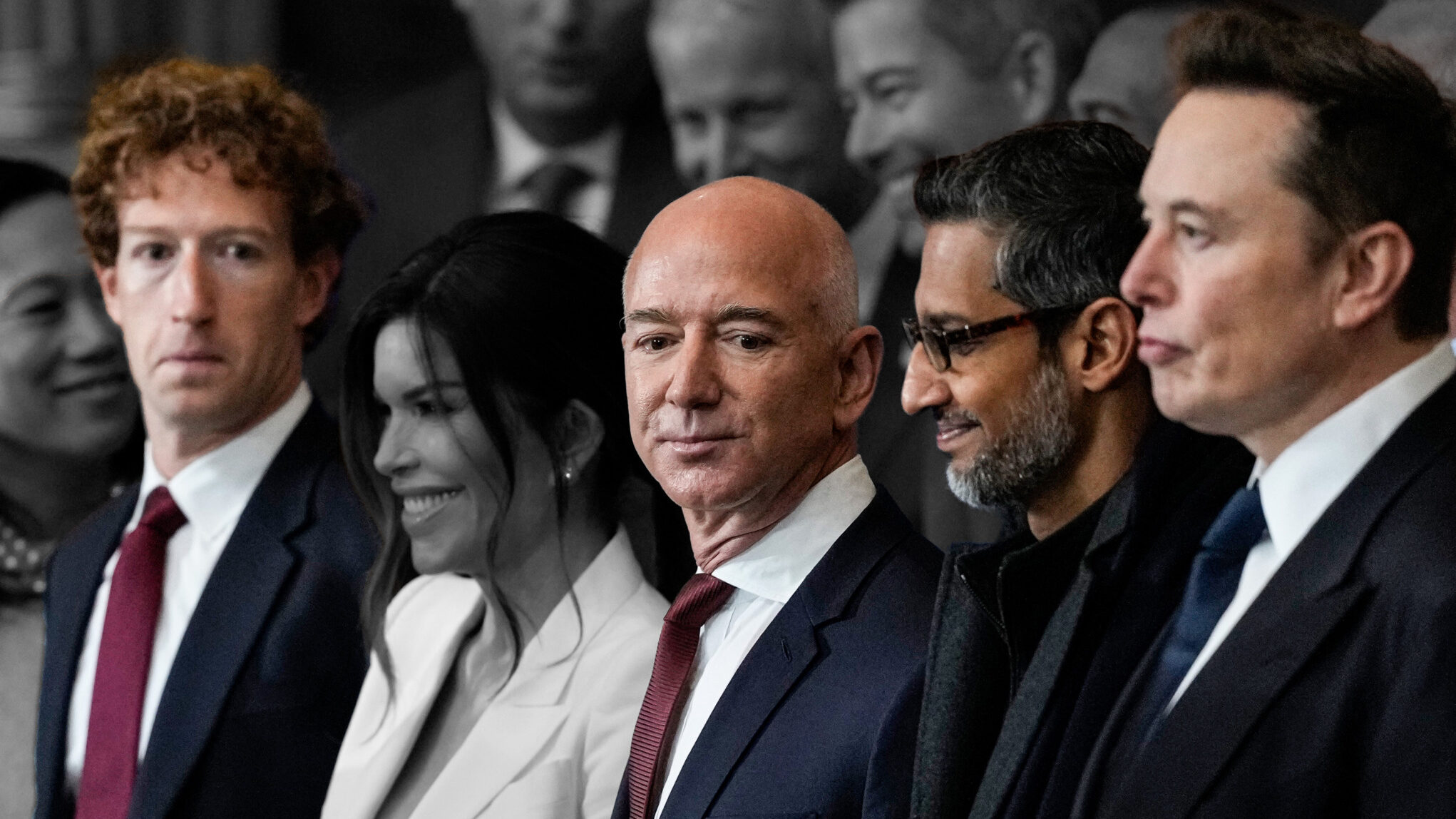
This is what led to the spectacle of big tech CEOs publicly paying homage to Donald Trump following his 2024 election victory – attending his inauguration, praising him in public, and going out of their way to deliver what Republicans wanted. Just days after Trump returned to the Oval Office, Facebook announced sweeping, global moderation changes, which among other measures made it permissible for users to suggest homosexuality was caused by mental illness. Triggering the libs became outright desirable.
Tech CEOs care about the USA in a way they don’t care about the rest of the world. US users generate vastly more profit per head than users anywhere else in the world. Almost every major tech company is based in the US, and so worries far more about US regulation and US lawsuits than others. Until tech ownership is global, that will continue to be the case – alienating Europeans, or most of the world, is
low risk.
By so openly embracing Donald Trump, though, big tech told half of America they didn’t matter, and did so right at a time when AI needed more political and public support than the industry had ever needed before. AI data centres are bigger, noisier, more polluting, and use more energy than anything that came before. They would always become politically contentious.
Building them at pace just as you’ve become more divisive than ever was always going to end badly. Now, we have a sense of just how badly: the 2026 midterms included 41 ballot measures on restricting data centres in particular areas. Big tech won just one of those votes.
Hundreds of billions are now being wiped off the value of the US tech giants. In the case of Nvidia, the chip maker at the heart of the AI industry, that is down to the stunning revelation that Jensen Huang, the firm’s CEO, had an extramarital affair with a woman who was allegedly a Chinese spy. In the aftermath of that revelation, Nvidia’s shares dropped by 6%, wiping $250bn off the company’s value.
But more broadly, as questions grow about what increased scrutiny will look like, and how quickly, if ever, the massive, market-raising investment in AI will pay off, the tech industry is going to have to work out how to rapidly change course once again.
It cannot easily abandon MAGA or the Republicans while Donald Trump is still in the White House, and still so visibly thin-skinned and vindictive. But with Democrats controlling statehouses across the nation, as well as both chambers of Congress, it cannot ignore them either. The chief executives are going to have to work out how to dig themselves out of an awfully deep hole.
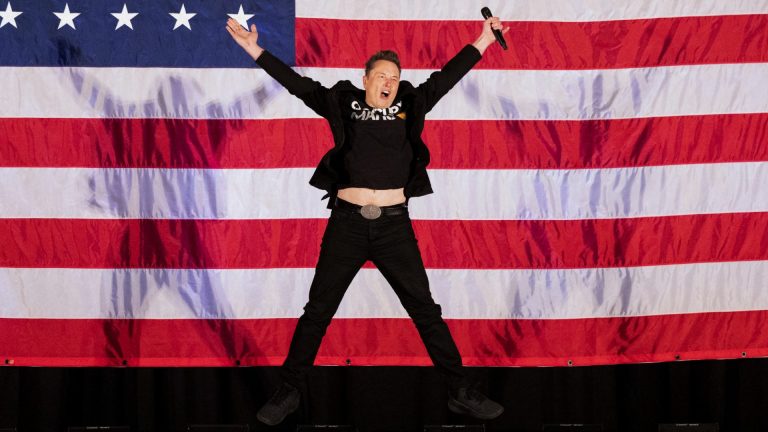
Most of them can take comfort in one thing, and one thing alone: at least they are not Elon Musk. The world’s richest man has built his entire business empire through cunning exploitation of government tax breaks and subsidies, multibillion-dollar government contracts, and canny management of the agencies that regulate his businesses and his stock market antics.
Suggested Reading


The book Zuckerberg wants to kill
More than any other CEO in history, Musk went all-in on one political party: he is the Republican Party’s biggest donor, briefly joined Trump’s administration, and relocated himself and his businesses from California to Texas, so as to be in what he thought was a safely Republican state.
Texas is now a bright blue state. Yes, it has a Democratic senator in James Talarico, but it also has a Democratic governor, lieutenant governor, attorney general, and a clean sweep of virtually every statewide office. Musk and his companies are now about to face a wave of scrutiny at both the state and federal levels.
More than that, Musk spent $446m on the midterms, and around $200m of this was estimated to be spent in Texas alone – trying to keep out each and every one of the Democrats now in office, often through viciously personal and often untrue attack adverts. Musk went all-in on Texas, and now the state looks an awful lot less friendly to him than it did just a year ago.
There is an argument to be made that Musk is the biggest loser in American political history, without his name having ever appeared on a ballot. As the world’s richest man, he has more to lose financially than anyone else should his political bets go awry.
But he has damaged what remained of his mystique, too: by throwing so much money at political races, all of which went against him, often by huge margins, he has dispelled the myth that money can do everything in politics.
Sometimes, positions and politicians are so unpopular that no amount of spending can overcome that. Now that’s been revealed, people will not be so scared of him next time.
Musk has spent the last few years getting ever higher on his own supply, truly believing himself to be The Great And Terrible Elon.
The midterms just might be what has revealed the small man cowering behind the curtain, once and for all.