As a child, I had two key interests. Tables of used-car prices – name any make, model and year, and I could give you a valuation; and garden machinery – especially if powered by a two-stroke engine. My parents were understandably concerned.
Imagine my delight, though, when I discover there is such a sport as mower racing, and its home is in Western North Carolina (WNC). My motorcycling odyssey, which I have called the Harley Conversations, has brought me here as I continue seeking a more nuanced picture of the South than one of rednecks and religious absolutists.
I pull up at the entrance to the Belt Burners’ racetrack near Wilkesboro, and a woman sits cross-legged on a stool in a small booth. “Ah, I know you,” she asserts. “You wrote me. I didn’t respond, I thought you was a hoax.”
Her face expands into a broad grin and, with a flourish, she attaches a band to my wrist and waves me on to join the racers warming up their machines. Later on, I compete in a race myself and finish with bruises anaesthetised by adrenaline.
Behind the eccentricity of this sport, there is a deeper message about American life. Andy Soots is one of the founding fathers of American mower racing, and he relishes the memory of the halcyon days when “it wan’t nothin’ for 3,000 rednecks to get up on a Saturday night all hollerin’ and hoopin’” as their friends and relatives zoomed around with no protection other than a crash helmet.
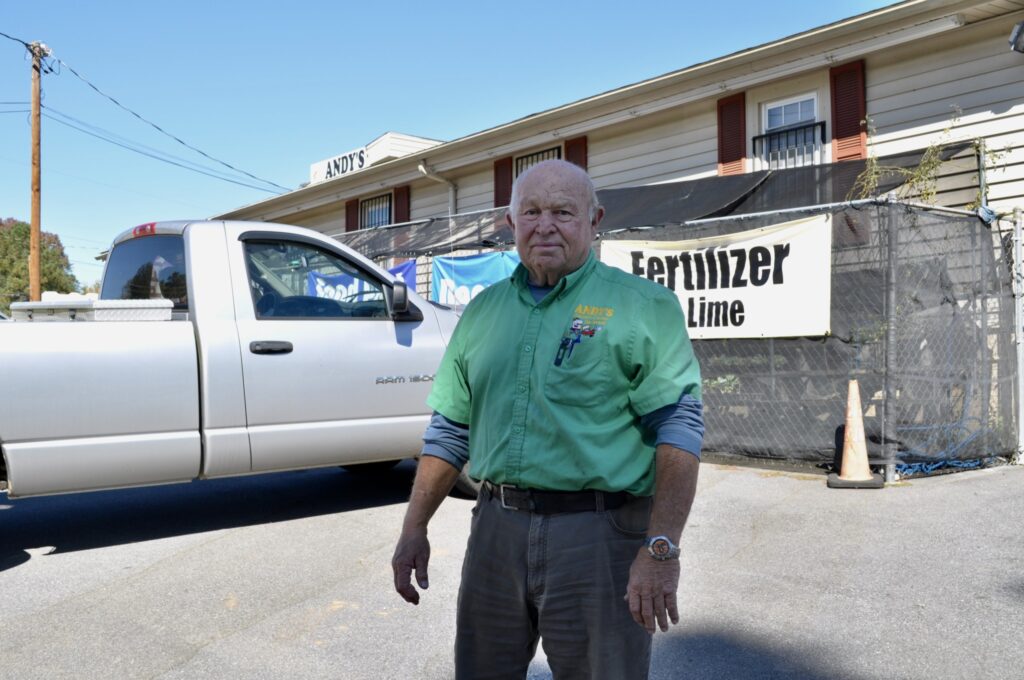
The Belt Burners’ engines are modified to produce four or five times their intended horsepower output – as powerful as a small roadworthy car. They can reach speeds of 80mph or more. But that requires investment of thousands of dollars.
There’s too much money and too much competition involved these days, and the everyman is being priced out of it, Andy laments.
America – the world leader in commercialisation. Even mower-racing is sponsored. And for people like Andy, it’s killing off the fun of innocent, if bizarre, rural pastimes.
Some observers reckon that, for many men in particular, this kind of financial exclusion at a time of high cost of living and decreasing job security is causing a masculinity crisis.
Jesse Ball, a much-published author and professor at the University of Virginia, cites the enormous pickup trucks and marketing of everything aimed at men as “tactical”. Tactical trousers, or pants, as they call them here. Tactical underwear, even.
Jesse’s thesis is that, as American law enforcement has presented itself and behaved in a more and more militaristic manner, the general sense of fear and danger in society has grown in tandem.
Couple this backdrop with a diminishing sense of male relevance – perhaps because of the decline in meaningful work and the increasing elusiveness of the American Dream – and you may see why so many American men have turned to preparing themselves for some phantom insurrection. The politics of scaremongering has found easy targets.
Suggested Reading
I went looking for Trump’s America – this is what I found
A local journalist hears about my presence in Wilkesboro and has read my previous report from Kentucky. They say that, quite apart from the Republicans’ specious harmonisation of politics and religion, many people are fully aware of who Trump and his movement are and what they represent, but can’t bring themselves to support any alternatives.
But this picture does not apply everywhere in the South, as recent election results have clearly demonstrated. Asheville, also in WNC, is dubbed the San Francisco of Appalachia.
I first test this notion in Asheville’s Riverside Arts District (RAD), which was all but washed away when Hurricane Helene struck in 2024. A storm of Biblical floods and apocalyptic destruction, it left heaps of mud in its wake.
At Odyssey Ceramics, Jason Rojas tells me that he found some of his pots poking out of these mounds, along with pictures and other creations from neighbouring studios. It was nature’s most dystopian installation, he says.
Two years on, and the RAD is back in action. Hans Doellgast runs Jade Mountain Builders and says he is one of many employers who pay way above market rates and provide perks like healthcare insurance and pension plans.
He attributes this more beneficent approach to capitalism to Asheville’s long association with health, of the good life. Indeed, the heir and art collector George Vanderbilt built his estate here because of its curative reputation.
Josh Drummond, a Kiwi, is now the company’s construction superintendent. Stranded in America just before the pandemic hit, his construction business in New Zealand collapsed.
But here in Asheville, five years on, he is back on his feet with his wife and family prospering again. “Land of opportunity and all that,” he affirms.
Across the road is Mountain True, a non-profit environmental organisation. There, Greg Parlier speaks of the transience of the city’s population, especially its creative types. This constant churn is like an oscillating ocean current, we agree, churning up deep nutrients for nourishment on the surface.
His organisation is also noticing a heartening trend. North Carolina is generally very Republican – though it has just returned a Democratic Senator and the Democrats’ Jamie Ager has flipped House District 11 in spite of Republican gerrymandering intended to stymie such an outcome. This is Blue Dog Democrat politics in action – generally liberal, but with more conservative flavours. Think Blue Labour.
There is at least one unifying theme amid the social and political tensions of WNC, and that is high regard for public land. To the south of Asheville is Cherokee County, where the erstwhile board of five commissioners (elected municipal officials) asked the US Forest Service to release land surrounding the pristine Lake Hiwassee for commercial development.
In a meeting last summer, Dan Eichenbaum, the first commissioner to propose the move, suggested it would be “nice, for instance, to have a Marriott resort on the lake”. Cherokee County residents booed in response, according to the minutes. After a petition signed by more than 4,000 – around 20% of the County’s adult population – the commissioners rescinded the application.
A new board of commissioners adopted a resolution in September expressing “support for the responsible stewardship and conservation of public lands and natural resources within Cherokee County”.
Back in Asheville, not everyone is riding the gentrification wave. David and Beverley Marshall – not related – are African-American political campaigners. They highlight the common curse of gentrification, with many poorer people forced out of the housing market. They say districts that were once home to Asheville’s black communities are particularly affected.
But many are working hard to help the less-well-off. Meschiya Lake is a musician who moved to Asheville from New Orleans three years ago. She wanted to be close to the mountains – and to live somewhere where it was safe to drink the tap water.
She had lived through the devastation of Hurricane Katrina in 2005 before moving to Asheville, and then suffered a second dose when Helene struck in 2024. But the response, she says, of the communities affected was markedly different. “In Asheville, everyone just helped everyone else out. Nobody cared about politics,” she says.
Suggested Reading


Will Melania stick with Trump until the end – or will she jump?
Meschiya stays afloat thanks to the generosity of venue owners who pay living wages to musicians, and help them out with charitable bundles of bucks in envelopes when the going gets tough. The musical community in Asheville is eclectic, she says, and remains so because of the support of those who know that artists will otherwise be forced out by the city’s increasing prosperity.
In Old Fort, 30 minutes’ drive to the east of Asheville, Jason McDougald runs Camp Grier. This former Presbyterian retreat is now a hub of outdoor activity in a town that was also demolished by Helene.
Jason himself was watching television when a tree, destabilised by the more than 30 inches of rain that fell within 72 hours, came crashing through the roof of his house. It missed him by metres.
Jason and other local pioneers are putting into practice a strategy that echoes that I saw in Hazard, Kentucky. A combination of philanthropy, grants and pay-what-you-can personal contributions extends the prospect of home ownership to more people than the open market permits.
Jason’s team has restored miles of hiking and biking trails destroyed by Helene. These winding routes throughout the woods are the bedrock in this community for further economic development.
In downtown Old Fort (only around 800 live here), Stephanie Swepson Twitty is leading the renovation of a former industrial facility. It will provide units for small businesses to set up shop and, in time, manufacturing and larger-scale commercial activity may return to this town that once provided timber products and was home to a high-end furniture maker.
Old Fort residents are excited about upgrades to the crossings on the single-track line that once transported these wares. It will be open to passenger traffic sometime in the 2030s.
This hyper-local economic-development approach flies in the face of Trumpian MAGA diktats to repatriate “stolen” industry, to go back to the future, and is one that starts in many ways with the end goal of any community: being a pleasant place to live.
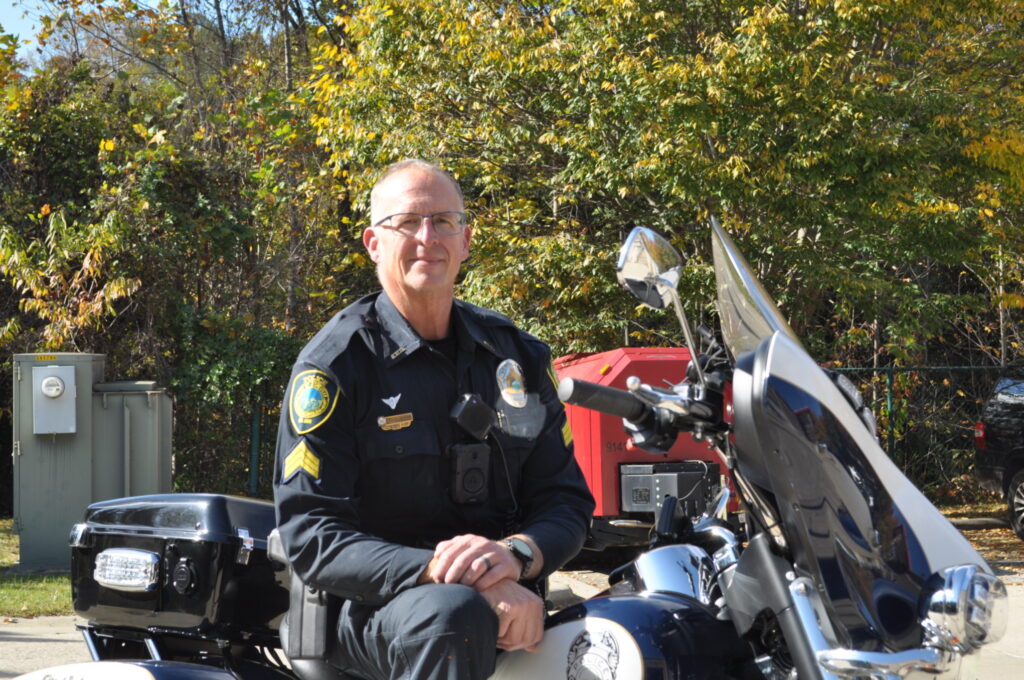
As I leave WNC, I meet Sergeant Scott Fry, a motorcycle cop with the Asheville Police Department. We mainly talk bikes – and I, of course, request a blast on the horn and to admire the blue flashing lights – but in passing he mentions that Asheville is “one of a kind” and “the cultural mix makes it kinda odd”.
It’s an oddness that perhaps more of America could do with.
Follow Guy Kiddey on Instagram. His podcast is The Harley Conversations
 Most popular

Watching the fall of Trump with New York’s MAGA hardcore


The uncomfortable truth about Ariana Grande

The John Lewis Christmas advert meltdown is Britain’s most idiotic new tradition


Kid Rock, gold wheelbarrows and a bigger recount: How Trump and his inner circle spent election night in his half-built ballroom