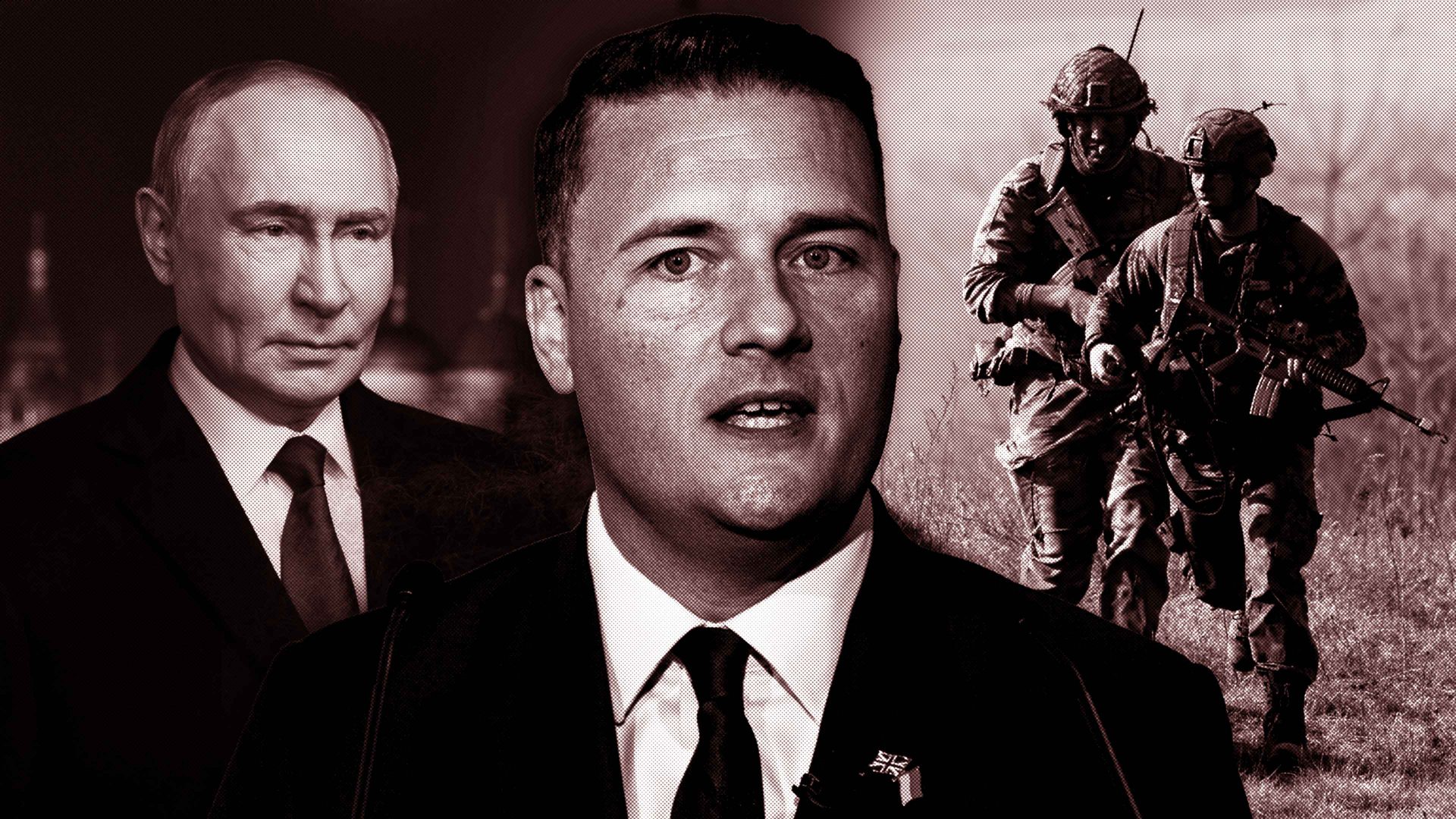
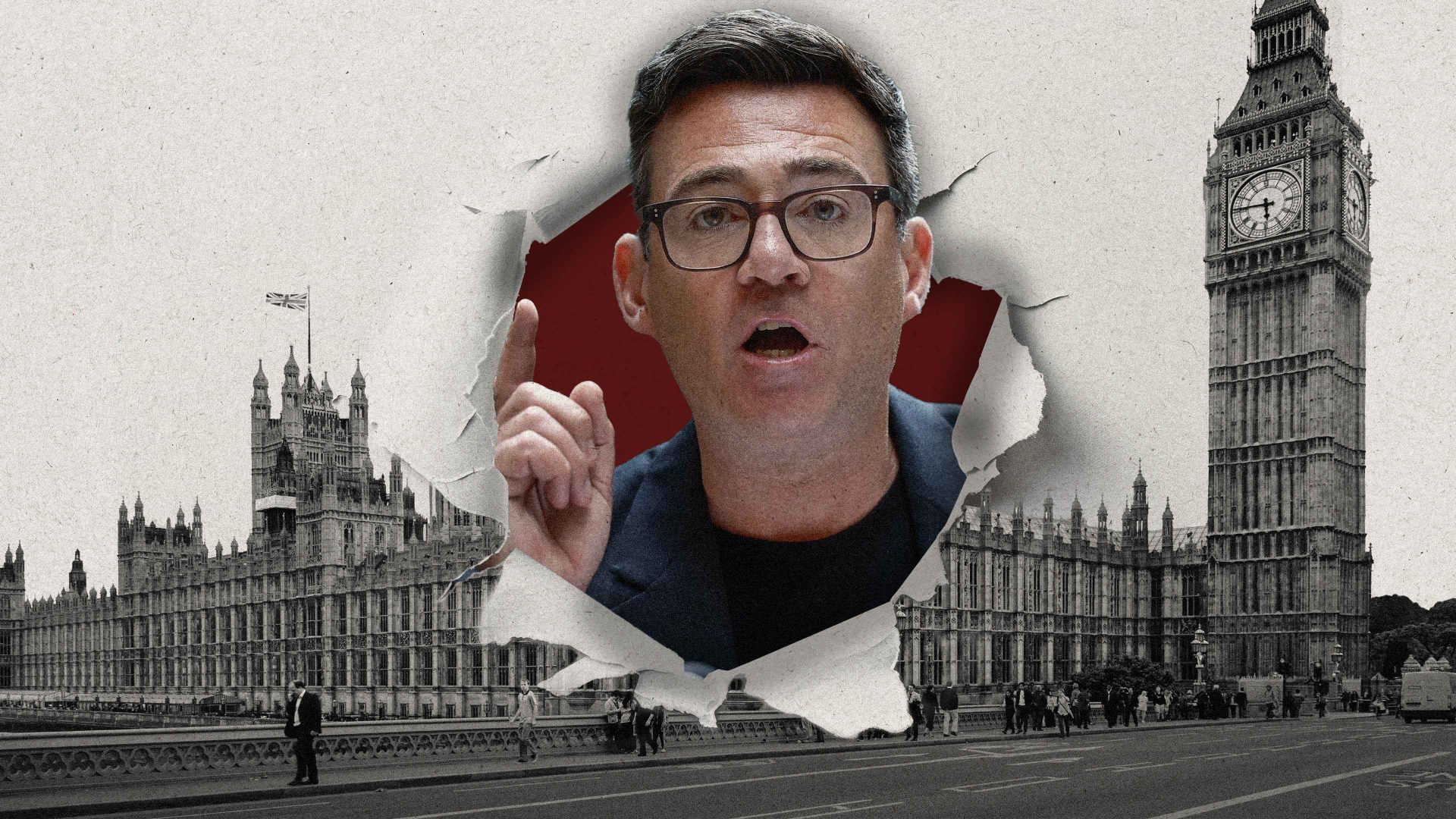
Let’s go back to first principles. What should a new prime minister – any new prime minister – be doing in 2026?
Not to hold together the Labour Party, or to satisfy the Westminster media, or to maintain a fractious coalition of single-issue campaign groups: what does the country need from a leader capable of radical candour and ready to take meaningful political risks?
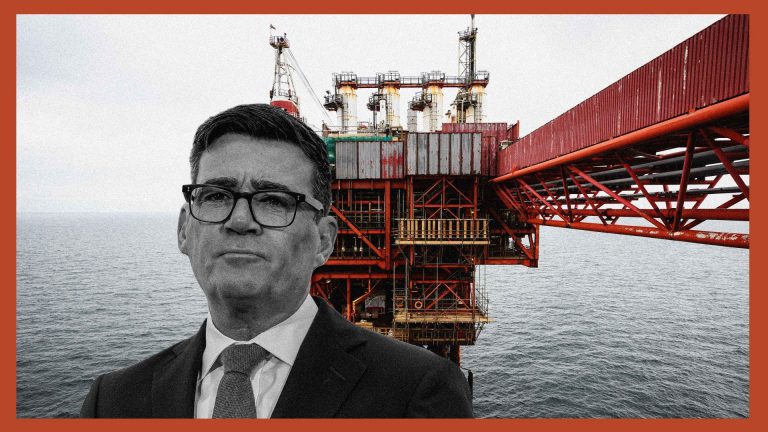
Since arriving in what must now be referred to as “No 10 South”, Andy Burnham has unveiled a series of bite-sized retail policies: scrapping VAT on energy bills; capping bus fares in England and Wales; cutting business rates for pubs, clubs and live music venues; pausing the contentious early prison release scheme.
This pulse of announcements has been about communication first, and content second. Quite rightly, the PM is seeking to establish radio contact with the electorate and to convince them that the frequently aphasic technocracy of Keir Starmer’s premiership is definitely in the rear-view mirror.
In which respect: the word “vibes” – usually preceded by the word “just” or “only” – has been seriously debased by lazy overuse to include any form of charisma, communication or popular rapport. I am sure Burnham is grateful to all the commentators warning him that he will need a highly imaginative fiscal strategy, a crash course in foreign and security policy and an ability to say “no” as well as to people-please (though he is also entitled to ask why many of the same observers have also accused him of factional ruthlessness in his reconfiguration of the Cabinet).
Suggested Reading
Do you care that Burnham is a Catholic? You should
But his first and daunting task is to say to the voters: “I see you, I hear you, and I get it.” This is the precondition of everything else he seeks to do. For context: a collaborative study published three weeks ago by the new UK Extremism and Democratic Resilience Centre and More in Common UK found that 61 per cent of Britons think that the social contract is broken; only 23 per cent believe it is still functioning; and 15 per cent already regard political violence as acceptable in some circumstances.
All of which means that Burnham is not addressing a nation of sceptical political consumers who can be won back to the Labour supermarket by a loyalty card here and a price-matching strategy there. He is dealing with an electorate that is close to believing that liberal democracy no longer works at all, and that the political levers which voters can pull achieve nothing.
So – how to put this politely? – proportional representation, citizens’ assemblies, and the abolition of the Daily Mail aren’t going to do the trick. To stand a chance of dragging this country into the 21st century and seeing off the threat of poisonous nationalism, Burnham has to go right back to the foundational questions of contemporary statecraft. This task is as essential as it is politically perilous.
I am still not quite sure what precisely he means by “the end of neoliberalism”, as he put it in an interview with ITV News on May 16. But it is clear that, in theory at least, he is committed to audacious and sweeping reform.
“I am going to do things differently. I am going to break with the more of the same approach that has got us here,” he said on June 29. “The change will be the biggest change in our lifetimes to the way the country is run.” Lectern-free in Downing Street on July 20, he promised “a circuit breaker for Britain, bringing forward the biggest changes in the last 40 years. A new political model and a new economic model.”
But what? I approach this from an entirely practical and empirical position. Which is to say, just look out of the window to get the measure of the colossal challenges facing Britain: ferocious inequality between and within its regions; the scandal of social care; the pressures upon public policy posed by increasing longevity; the transformation of the UK’s defence requirements on a volatile, multi-polar world stage; climate emergency; the urgent need for a new intergenerational contract; the appalling absence of affordable housing; pandemic resilience; the all-important test posed by AI as an economic opportunity but also a threat to employment, the information ecosphere and personhood itself.
It should be obvious that the old social democratic pact forged by New Labour – free market capitalism shaking hands with social justice – no longer matches the moment. Why should it? The landscape that Tony Blair and Gordon Brown faced in 1997 has been transfigured.
Suggested Reading

The trouble with Andy Burnham’s place-first politics
Three decades on, in dramatically different circumstances, what is required is not incremental change, or a refurbished version of previous Labour strategies, but a completely new approach to political leadership. No Third Way, no “cake-ism”, no split-the-difference. Nor is endless talk of “trade-offs” sufficient to the day.
The future will (or should) inexorably involve bigger and (one hopes) smarter government. Again, this is a pragmatic deduction rather than an ideological declaration. Burnham has to persuade the public of the scale of the challenge to the state and, of necessity, to each and every one of us.
This will (or should) involve tectonic change to any number of the assumptions we make about the nature of citizenship. In essence, we still inhabit the political map whose borders were established in John Locke’s Second Treatise of Government (1690): “The great and chief end… of men’s uniting into commonwealths, and putting themselves under government, is the preservation of their property.”
More than 300 years later, it remains orthodox (except on the fringes of the Left) that what we own and earn is ours unless the state can make a case for confiscating a variable proportion of it to serve the common good. That orthodoxy isn’t going to be overturned completely. But it does now have to be interrogated afresh.
In their seminal work of political philosophy, The Myth of Ownership: Taxes and Justice (2002), Liam Murphy and Thomas Nagel offered an outright “rejection of the idea that people’s pretax income and wealth are theirs in any morally meaningful sense… Property rights are the rights people have in the resources they are entitled to control after taxes, not before.”
An even more influential text is Peter Singer’s The Expanding Circle: Ethics, Evolution, and Moral Progress (revised 2011), which insists that “Reason is inherently expansionist. It seeks universal application.” In Singer’s ethical framework, the circle of moral concern expands progressively from family, via tribe and nation, towards a position of universal impartiality. On this basis, partiality towards those we love or know or with whom we share a national identity is an ethically adolescent tendency out of which humanity will evolve.
This position is not only intellectually dubious but empirically absurd.
As the New York University professor Samuel Scheffler has argued, “for morality to reject partiality in a general or systematic way would be for it to set itself against our nature as valuing creatures”; and “any coherent morality will make room for partiality, not merely in the sense that it will permit or require partial behaviour in some circumstances, but also in the sense that it will treat reasons of partiality as having direct moral significance.”
In other words: it is not only pointless to attack the natural instinct to prioritise our families and those we love; it is also morally wrong. Political scientists distinguish between “sociotropic judgment” (I accept my obligation to wider society) and “pocketbook judgment” (I have to put my kids’ needs first). The second impulse is ineradicable; the first must now be dramatically strengthened.
Any political leader who seeks – as Burnham must sooner or later do – to take more of what voters earn and own must begin by respecting and recognising their commitments to their families and their communities.
In this context, I am not sure how helpful it is for multi-millionaires – however well-meaning – to write letters to the press demanding that they, personally, be taxed more. This is as likely to trigger public resentment as admiration. The very wealthy, by definition, have money to spare. Not so the middle-class family already over-stretched on, say, a household income of £70,000.
This means that a new fiscal settlement lies at the end, rather than the start, of the political story that the PM must now craft. His task is to convince those who are already struggling that collective security in all its forms – defence, care for the elderly, Net Zero, readiness for AI – requires a greater contribution from almost everyone and a more clearly articulated concept of solidarity.
Suggested Reading
Andy Burnham’s ruthless reckoning for the Starmerites
Some forms of insurance and protection can only function effectively if overseen by the state, and they are proliferating fast. This is observably the case. But it is still a very hard sell at a time when public trust in government has cratered.
To lead the public to a place where it is willing to spend more of its income and wealth upon the common good will be a formidable undertaking. But half-measures and beige rhetoric are a waste of time.
The greatest test for the PM is the extent to which he is ready to present the public with difficulty; not fatalism, to be clear, but the authentic optimism that is rooted in a recognition of the task’s complexity, magnitude and (in some cases) novelty.
In this respect, he needs to channel the great teacher-politicians of the past – and not only the obvious recent examples of Margaret Thatcher and Blair. A prime minister in 2026 is much likelier to be seen on TikTok than heard over the radio delivering a fireside chat. But the intimacy that Franklin D Roosevelt established with Americans, as he steered them through the New Deal and a second global conflict, remains a model today.
Suggested Reading
Everyone else has failed on climate – will Burnham do any better?
After his death in April 1945, his widow Eleanor found that people would stop her in the street to tell her that “they missed the way the President used to talk to them. They’d say ‘He used to talk to me about my government.’ There was a real dialogue between Franklin and the people.”
Such dialogue is the mains cable through which a true statesman can explain a collective burden and its urgency, and can confront the public with what may be unpalatable realities.
With good reason, Charles de Gaulle is still admired for the clarity with which he publicly committed France to Algerian self-determination in a radio and television address on September 16, 1959. “Le sort des Algériens appartient aux Algériens,” he said – “The fate of the Algerians belongs to the Algerians.” And then: “La décision est prise” – “the decision has been made.”
In such moments of bracing honesty is the greatness of statesmen truly forged. Look at Václav Havel’s famous essay, “The Power of the Powerless” (1978) in which the future Czech president confronted directly the obstacles ahead. “There are times,” he wrote, “when we must sink to the bottom of our misery to understand truth just as we descend to the bottom of a well to see the stars in broad daylight.”
Does Burnham have the steel, the courage and the panache to offer a 21st century counterpart to Churchill’s “blood, toil, tears and sweat”; or to John F Kennedy’s “Ask not what your country can do for you”?
And is he ready for the ferocious backlash ahead? The new liberal statism that he is only beginning to spell out will re-energise the small-state right and give Kemi Badenoch and Nigel Farage a host of fresh tunes to hum.
The Conservative leader will say that the voters can ill afford to waste more money on bureaucracy. Reform will warn ominously of a “Deep State” conspiracy to crush basic British freedoms and herd us all into the “northern gulag”. Both parties will redouble their demands for savage welfare cuts.
It is wildly counter-cultural today to call for more government, centralised or devolved. The PM’s enemies will pounce.
At the same time – and this presents the new chancellor John Healey with the Götterdämmerung of political headaches – the very rich will undoubtedly exploit the hypermobility of modern wealth to disinvest from the UK if they dislike the new fiscal environment.
Why do you think the tech tycoon Peter Thiel has identified world government as the Anti-Christ? Precisely because this ability to move big money instantly from one national tax jurisdiction to another is the cornerstone of 21st century plutocracy. And to this problem there is no glib solution.
In all of this, the PM’s best and perhaps only hope will be a dawning public recognition that his problems are also ours: which is to say that, if he cannot accomplish this historic reconfiguration of the British polity, if the Hail Mary pass fails, we will be left with some form of mean-spirited populism that may nourish our basest emotions but will gravely threaten the social fabric.
I do not know for sure whether Burnham will, or even can, succeed. He probably doesn’t himself. But – to quote the 35th president once more – let us begin.