Tens of thousands died this summer in Europe in lethal heatwaves. Wildfires worthy of the south Mediterranean hit Wales. Schoolchildren cried in overheated classrooms. We have just lived through the 11 hottest years on record. Even spy chiefs warn that the UK’s long term national security is threatened by the shaft to more extreme weather patterns.
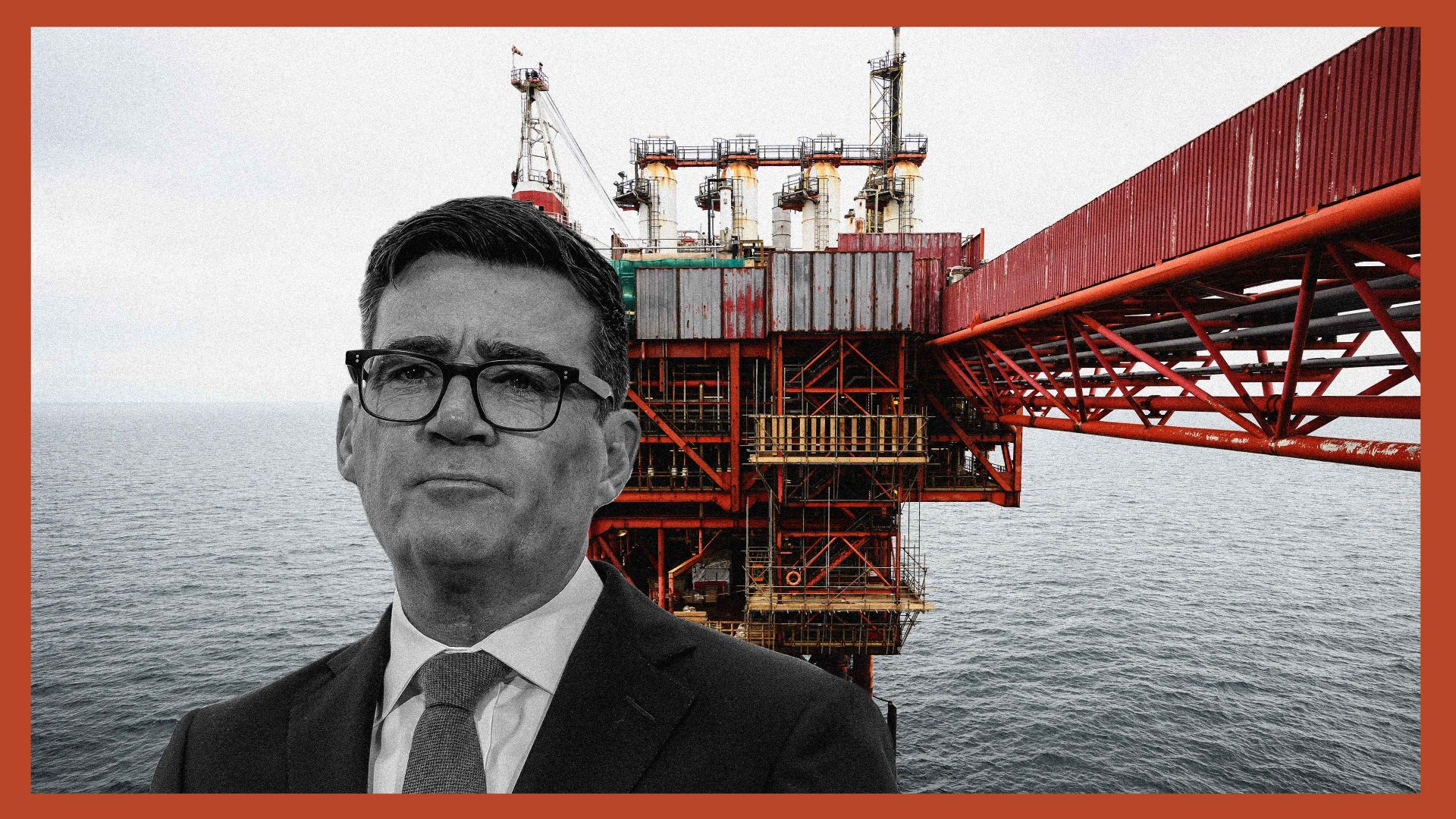
Look out of the window, and you don’t need scientists to tell you that global temperatures are rising alarmingly. Andy Burnham has said he will tackle the big things not properly addressed by politics. But as climate experts and campaigners waited for clues about his policy, the first reports, on possible new North Sea oil and gas drilling, signal not hope, but failure.
As Caroline Lucas, former leader of the Green party put it, “Hard to think of a more damaging start to Burnham’s premiership… if true.”
Dr Maya Singer Hobbs of the Institute for Public Policy Research, told me: “We don’t want him presenting North Sea drilling as a sensible and pragmatic choice. Our and others’ evidence show that it isn’t an economically prudent choice.”
A mature basin with little left to extract, its oil and gas sold abroad and subject to global pricing, the stated benefits of North Sea drilling are wildly misleading. Arctic researcher and climate scientist Dr Ella Gilbert called it “a complete red herring.”
Another red herring is job expectations by unions. Industry figures show developing the Jackdaw gas field would create 27 full time jobs. Jobs in the growing clean energy sector tend to be better paid.
It is not yet clear exactly what Burnham intends. A source close to Labour said it was unlikely he’d break the manifesto pledge, saying: “On the North Sea he’s always had a pragmatic position, in line with science… My sense is they’re going to do a pivot on the North Sea but substance is going to stay the same.”
“It’s one of the paradoxes of our time,” they added. “That the climate crisis is here, and that the benefit of transition is becoming obvious through even better and cheaper clean energy such as solar panels and wind, and that Iran is demonstrating just how problematic reliance on fossil fuels has become.” An analysis by Carbon Brief has found that wind and solar have saved the UK from gas imports worth £1.7bn since the Iran war began.
Clean energy and climate experts hope Burnham holds his nerve – that he doubles down on renewables and invests in improving battery storage and grid connections. Expanding the industry in the north would overlap with Burnham’s stated rebalancing ambitions.
Addressing the cost of living by moving levies for green infrastructure away from energy bills onto general taxation is one way to tackle the cost of living fairly while keeping the income. It’s an idea that’s backed by the Climate Change Committee.
Suggested Reading


What Philip Larkin taught Andy Burnham
Any planning reforms for Burnham’s housebuilding plans should take into account rising temperatures to avoid the need for retrofitting. He will also need to take into account the importance of neighbourhood tree cover and access to public transport.
The climate committee wants more spending on flood protection and a more secure water supply, at a total cost of around £11bn a year, split broadly evenly between public and private funding. But inaction costs more. Without adaptation, by 2050 climate change will cost anything from £60bn-£260bn per year. The think tank Verdant found the June heatwave alone cost the economy at least £2.4bn, including in lost productivity.
The consequences of not spending to adapt for fear of economic damage could be no economy at all, said Bill McGuire, a professor at UCL who has peered into the abyss with his research and his latest book, The Fate of the World: a History and Future of the Climate Crisis.
“We are in absolutely dire straits. The rate of global heating has doubled in the last 10 years… The global average temperature is now climbing at a rate of 1C every 28 years,” he told me.
“The Burnham government will face a stark choice. Throw everything into building as much climate resilience as possible, or suffer economic and societal breakdown.”
Even the spies of the Joint Intelligence Committee are ringing alarm bells about lack of action in a powerful report that’s still partly under wraps. McGuire said Burnham should make this report publicly available and go on a “war footing” to act on its recommendations of slashing emissions and overhauling agriculture.
McGuire holds mainstream politicians “almost entirely responsible for the failure to take any meaningful action to tackle what is the greatest threat humankind has ever faced. Year after year they have refused to see that business as usual is simply not sustainable, and even today refuse to act to rein in fossil fuel production which, in 2024, resulted in 37bn out of 41bn tonnes of CO2 emissions.”
Suggested Reading


What Andy Burnham can learn from, er… Marine Le Pen?
The vitriol directed at Ed Miliband for pushing through the government manifesto explains some of the reticence by others. Even Trump lobbied against him after briefings that he may become chancellor. Miliband is now foreign secretary, a role in which international climate agreements will fall within his ambit. He still has a role to play.
As Manchester mayor, Burnham supported phasing out coal, oil and gas, opposed fracking and Heathrow expansion, supported climate protesters, called for substantial net zero investment and demanded people “stop seeing the environmental agenda as a cost and a burden agenda”. His policies included improved public transport, insulated housing and a clean air zone, although the latter was paused after costs and protests.
As PM he would benefit from a greater environmental focus. The pollsters Persuasion found that faster climate action would regain Labour voters from the Greens with no loss to Reform. Scrapping Net Zero would not lure votes from Reform. More in Common had similar findings.
Praised for his communication skills, Burham once advocated for ”taking control of the climate narrative from those steering it in the wrong direction and turning it around”.
The question is, will he use his skills to persuade the public of the need to act fast? Or will he equivocate, like so many others, while the country burns.
 Most popular

‘The deep state stole my mini-budget’: An exclusive extract from Liz Truss’s new book

Nigel Farage’s attack on the RNLI and co is a new low even for this bottom-feeder

18 things that will absolutely, definitely happen if Trump gets whopped in the midterms

I went looking for Trump’s America – this is what I found