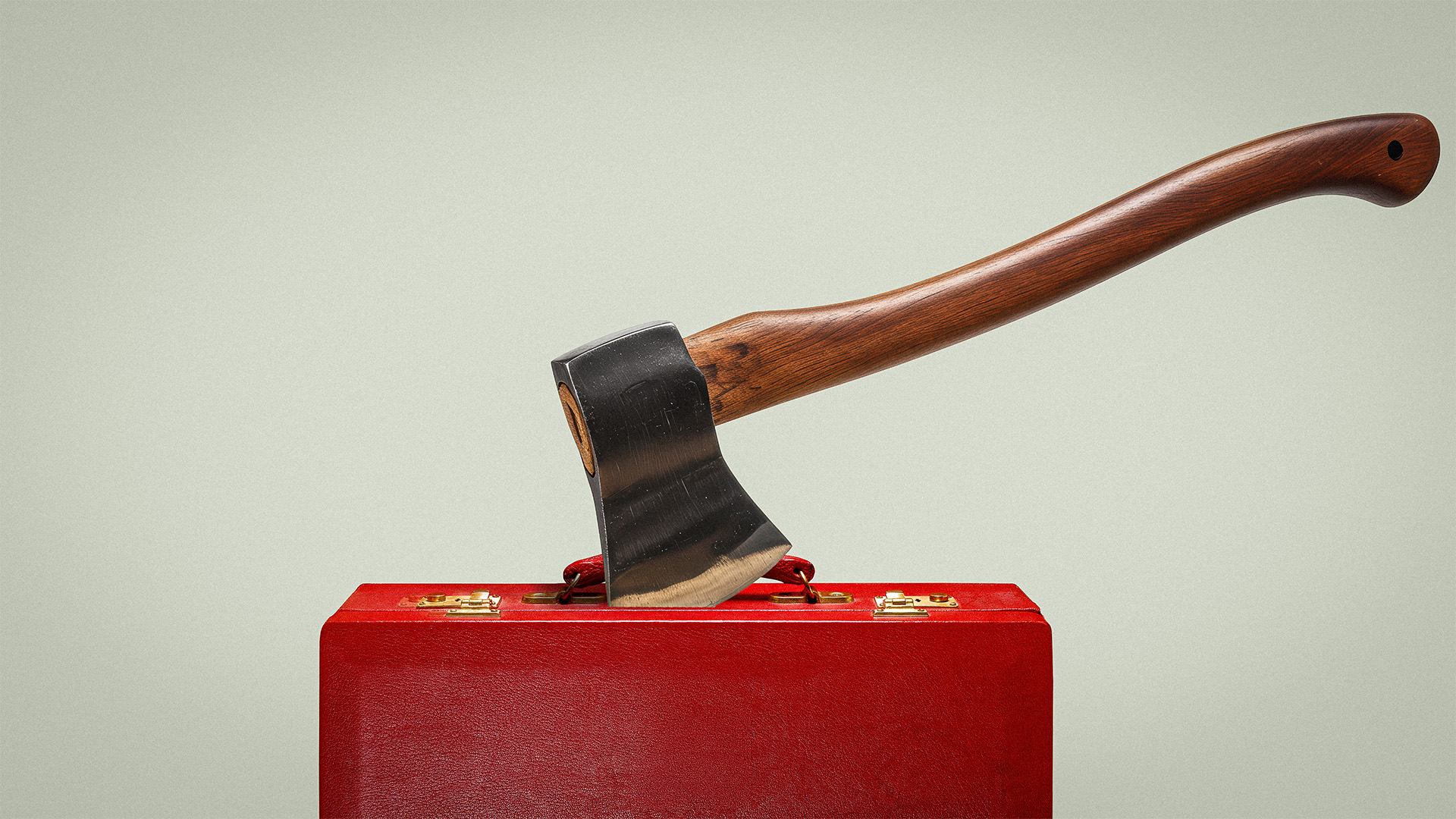
Appointing a cabinet is not the main way a new prime minister tells the story of what his government will be – that’s set out in speeches and in policy. But it does establish who is going to make up the main cast of characters in that narrative, and in turn potential pitfalls that might lie along the way.
Andy Burnham certainly seemed to be in no hurry to make his appointments on Monday. Not a single Cabinet post was filled in time for the 6pm news bulletins, and even late into the evening, key roles were still vacant.
Cabinet appointments always come with some turbulence – people refuse roles, or try to negotiate, creating an ever-shifting plan – but it was not clear whether Burnham’s leisurely timetable reflected that, or just a certain degree of indifference to media deadlines.
Still, as Monday ended, enough roles had been filled to start to sketch in some details as to how this new government might look – and it will look very different to the one that went before it.
The big story of the night is how little Burnham has done to keep Starmer loyalists on side, and just how many people who had exited Keir Starmer’s cabinet for one reason or another before his own removal are now back in government.
The departees
Sometimes with a reshuffle – or, technically, the formation of a new government – the departures can tell you more than who sticks around, and in this case, it told you that Burnham was not interested in playing nice.
The reshuffle made little pretence of keeping on any of the most obvious ministers who were ultra-loyal to Keir Starmer, or seen as on the right of the party: chief secretary to the Treasury Darren Jones, housing secretary Steve Reed, innovation secretary Liz Kendall and business secretary Peter Kyle were all unceremoniously returned to the back benches, which probably did not come as a major surprise to any of them.
Rachel Reeves revealed she, too, would be returning to the backbenches, though in her case it was widely rumoured she had been offered a different cabinet role – more on that later. Other departures were more puzzling. Foremost among them was the well-regarded Northern Ireland secretary Hilary Benn, who had been seen as being on top of a complex brief usually well outside of day-to-day Westminster politics.
Suggested Reading

Do you care that Burnham is a Catholic? You should
Deputy PM and justice secretary David Lammy makes a similarly unceremonious return to the back benches, as does Nick Thomas-Symonds, the minister in charge of the UK-EU ‘reset’, opening the potential for a reset to the reset.
Two of Keir Starmer’s most innovative ministerial appointments both left government, though neither was at cabinet level. James Timpson, who had been CEO of the eponymous locksmithing company, departs as prisons minister – meaning the government loses a committed and competent prison reformer, who had years of policy work in this area before joining the government.
Science minister Patrick Vallance, a former government chief scientist who was again widely respected across his brief, also announced he was leaving government. No clear explanation has been offered for either departure, but their relatively short tenure will surely make it more difficult to persuade other figures from outside politics to have a go as ministers.
The government
It might not be the obvious place to start, but Louise Haigh’s appointment as chancellor of the Duchy of Lancaster is one of the most significant of the day. Haigh was unceremoniously ousted as transport secretary after a story about a previous conviction – which she had declared to Starmer – was leaked to The Times in questionable circumstances.
Some say revenge is a dish best served cold. Others say the best revenge is living well. Haigh can be argued to be doing well on either front: she was one of the first MPs to start building a Westminster operation for Burnham, quietly lobbying to get MPs on side, and paving the way for the complex task of managing his return to parliament.
Had Haigh not been fired as she was, there is every chance Andy Burnham would not be prime minister today. Chancellor of the Duchy of Lancaster is an underwhelming job title for a major role – it is essentially the PM’s fixer and troubleshooter, working across government to bash heads together and solve problems. To make sure there is no doubt as to Haigh’s status, she has the title of first secretary of state, to boot.
The appointment everyone will be talking about, though, is surely John Healey – who resigned as defence secretary last month over the Defence Investment Plan – as chancellor. On one level, this might look like an artful bit of trolling: Healey resigned because the Treasury wouldn’t find enough money for defence. Now, he has to find that money. Fair’s fair, right?
There is, of course, more to the appointment than this. Healey is one of few veterans who served as ministers in the last Labour government – he was a junior Treasury minister for five years under Gordon Brown. He is well-liked across the party, not seen as overtly capital-P political or ideological, doesn’t plot or endlessly brief the media, and is seen as solid and capable.
Now, he’s been given one of the most capital-P political and ideological jobs in government. Healey’s appointment is a signal that No 10 intends to focus closely on economic policy, and call a lot of the plays itself – it wants a chancellor who will reliably allow that.
This has echoes of Gordon Brown’s decision to appoint Alistair Darling as chancellor – though in this instance Brown had been chancellor himself for a decade, while Burnham himself only served six months as a Treasury minister.
Healey’s appointment means that neither Shabana Mahmood nor Ed Miliband have become chancellor. Mahmood is staying as home secretary, where she has been outspoken, kept the issue of immigration high on the agenda, and made it clear she does not intend to water down her approach to appease backbenchers. Burnham’s decision to keep her in the role suggests no major change of approach on immigration policy is likely – which could spark disappointment on Labour’s left.
Miliband, though, is to serve as foreign secretary. This is something of a puzzling appointment for the minister who was the most successful of any under Starmer at delivering his domestic policy agenda. Miliband has shown little interest in foreign affairs, and it may not play to his strengths.
There is still resentment that as leader of the opposition he undermined efforts to secure US and UK intervention in the Syrian civil war, leading to a devastating conflict that sparked a huge asylum crisis, and fuelled the rise of ISIS. The extent of Miliband’s role in that disaster is debatable, but expect to hear more about it.
More than that, Miliband is a lightning rod, deeply disliked by the right-
wing parties and media alike. His presence as foreign secretary may politicise the kind of diplomatic issues governments prefer to try to build consensus upon. However, Miliband has proven a talented minister, and may be able to use the new role to pursue his climate agenda internationally, and his appointment may signal a more positive approach to overseas aid.
Concerns that Miliband’s move away from the energy portfolio might lead to a watering down of his approach to net zero have been largely addressed by the appointment of rising star Miatta Fahnbulleh to the role, where she is widely expected to continue her predecessor’s mission. She has already been warmly welcomed by many Miliband allies.
The defence role, reportedly turned down by Rachel Reeves – which would have led to the pleasing drama of she and Healey swapping sides at the negotiating table – goes to Wes Streeting, in perhaps the most obvious appointment appeasing a non-Burnhamite faction in the party.
Yvette Cooper has been given the health and social care portfolio. Cooper is generally seen as a safe pair of hands, good at keeping a department ticking over without doing anything spectacular. Her appointment seems somewhat at odds, then, with Burnham’s promise to do something major on social care funding early in his premiership.
The new PM has somewhat restructured government departments, having abolished the Department for Science, Innovation and Technology – created only two years ago by Starmer. Most of its responsibilities will return to a beefed-up business department. That will be helmed by a returning Jonathan Reynolds, a Burnham friend and ally who was demoted out of it to become chief whip in Starmer’s last reshuffle.
Responsibility for online safety and internet regulation – the vital and high-profile job of taking on the internet giants – will return to the department of culture, media and sport, which will continue to be helmed by Lisa Nandy, who has spent two years appearing to hate the job, and who has made very little impact within it.
Having taken no action to restructure the BBC board, or to address Ofcom’s inaction over GB News, Nandy will now also have the much more difficult task of introducing the social media ban for under-16s, and tackling Elon Musk’s effort to subvert UK democracy.
There is happier news for others in government, though: Angela Rayner returns to the housing brief she has seemed dedicated to – a move welcomed by those in Labour who want a large boost to housebuilding – while Lucy Powell has displaced Bridget Phillipson, who she beat to become deputy leader last October in a sign of Starmer’s eroding power, to become education secretary. That’s two more close Burnham allies in major cabinet posts, though Phillipson remains in Cabinet with the women and equalities brief.
The headaches that can be caused by alienating former ministers are already becoming clear. Darren Jones wasted no time in causing difficulties from the back benches, revealing on Tuesday morning that the new VAT cut for electricity bills could not possibly be funded by scrapping digital ID, as No 10 claims, because that programme itself was unfunded. That might be a minor headache for the Burnham-Haigh operation, but it’s a headache all the same.
Burnham has given the media – and his own MPs – no shortage of things to talk about already. The early days of his government are set to be anything but boring.
 Most popular

Suella Braverman’s book has sold only 106 copies. This is why
The riots in France are being stoked by Russia and Iran

The mask has slipped – now we can see the real, shameful face of Reform
What the hell has happened to John Cleese?